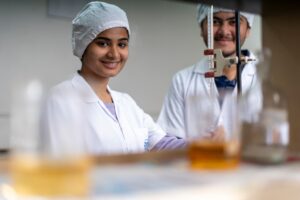
The medicine faculty at Parul University offers the MBBS program. The program is 5.5 years long and approved by the NMC, which is the National Medical Commission. The students get clinical training at the NABH-approved hospitals. There are 7 NABH-approved hospitals with 750+ beds and 1,100+ outpatients daily. There are 2 Ayurvedic hospitals, including Gujarat’s first NABH Ayush Hospital with 263 beds. There are four homeopathic hospitals with 50 beds and NABH facilities along with NABL-accredited clinical research labs, Pragya Lab for skill development.
The full MBBS programme details, eligibility, fee structure, and admission process are documented on the Parul University MBBS programme page, with the corresponding hospital infrastructure at Parul Sevashram Hospital. The NMC institutional listing is accessible at the National Medical Commission portal. The broader Parul University accreditation framework is at the accreditation record, faculty currently serving across the medical programmes is at the faculty record, and parent-facing infrastructure at the parent guide. Scholarship pathways including Defence and Merit for medical students are at the scholarship pathways.
The 5.5-year MBBS programme structure
Parul University is making a diverse plan in medical, with all the new courses and the main one; it continues to work and upgrade through Pragya Labs that have simulators for students so that they get an experience before the real world. The MBBS program at the university is 5.5 years, where 4.5 years are dedicated to academic training while the last year is for a rotating internship. The curriculum is designed in a way that it aligns with NMC’s Competency-Based Medical Education (CBME) framework introduced in 2019. This framework was introduced to restructure the Indian undergraduate medical education that now covers the new requirements and competencies for graduates. The programme covers a wide range of areas stating from pre-clinical (Anatomy, Physiology, Biochemistry), para-clinical (Pathology, Microbiology, Pharmacology, Forensic Medicine, Community Medicine), and clinical phases (Medicine, Surgery, Obstetrics and Gynaecology, Paediatrics, Orthopaedics, ENT, Ophthalmology, Dermatology, Psychiatry, Radiology, Anaesthesiology).
- Phase 1: Pre-clinical (1 year). Anatomy, Physiology, Biochemistry. Foundation in body structure, function, and biochemical processes.
- Phase 2: Para-clinical (1.5 years). Pathology, Microbiology, Pharmacology, Forensic Medicine and Toxicology, Community Medicine. Disease processes, infectious agents, drug actions, and population health.
- Phase 3: Clinical (2 years). Major clinical disciplines through bedside teaching, ward postings, and outpatient clinics at the affiliated hospital network.
- Phase 4: Compulsory Rotating Internship (1 year). The students have a mandatory rotating internship for one year spanning across medicine, surgery, obstetrics, pediatrics, community medicine, and other postings. The internship paves the way for students for provisional medical registration and postgraduate eligibility.
Parul Sevashram Hospital: 750+ beds, 1,100+ daily outpatient
The Sevashram gives clinical training to the students, allowing them to have hands-on experience of dealing with patients. The hospital is NABH-certified at the super-specialty tier, with 750+ beds across general, intensive care, and specialty units. 1,100+ outpatients are treated daily across the multi-departmental setup. Here the super-specialties are those departments where advanced-level medical issues are treated, beyond the internal medicine, surgery, and obstetrics that all teaching hospitals require, with cardiology, neurology, nephrology, oncology, and other care domains on the campus. The operational hours of the hospital are 24 hours a day, 7 days a week, where “clinical hours” means the day shift. Medical students rotate through emergency department postings, intensive care units, and overnight shifts that mirror the operational reality of post-graduation hospital practice. Emergency response times within the 250-acre campus are measured in minutes.
- NABH super-speciality accreditation. The National Accreditation Board for Hospitals and Healthcare Providers gives a certificate to hospitals for quality standards in terms of patient safety, infection control, clinical processes, and outcomes measurement. Super-speciality accreditation positions the hospital among the higher tier within the NABH framework.
- Bed capacity and daily outpatient volume. The capacity of beds is 750+ with 1,100+ daily outpatients, positioning it amongst the major Indian private hospitals, where MBBS graduates also get an opportunity to gain hands-on experience.
- On-campus location. The hospital sits within the Parul University Vadodara campus, allowing medical students immediate clinical access throughout the academic year. The integration removes the off-campus transit that medical students at universities with distant affiliated hospitals typically navigate.
The broader 7 NABH-accredited hospital network
Beyond Parul Sevashram Hospital, the broader Parul Group hospital network includes 6 additional NABH-accredited facilities supporting clinical training across Allopathy, Ayurved, and Homoeopathy. Students at Parul University access the network for cross-systems clinical exposure, with the multi-system access positioning the university distinctively within Indian medical education where Allopathy training and AYUSH training typically operate within separate institutional frameworks.
- 2 NABH-accredited Ayurved hospitals. Including Gujarat’s first NABH Ayush Hospital at 268 beds. The Ayush Hospital provides clinical exposure to Ayurvedic practice including Panchakarma, Kshara Sutra, and the broader Ayurveda treatment pathway, complementing the allopathy training at Parul Sevashram Hospital.
- 4 NABH-accredited Homoeopathic hospitals. Including a 50-bed NABH-accredited facility. The Homoeopathic hospital network supports the Faculty of Homoeopathy’s clinical training while also providing the Bachelor of Homoeopathic Medicine and Surgery (BHMS) and the Master of Homoeopathic Medicine and Surgery (MD Homoeopathy) cohorts with sustained clinical exposure.
- NABL-accredited clinical research laboratory. The National Accreditation Board for Testing and Calibration Laboratories (NABL) accreditation positions the clinical research lab among the laboratories meeting ISO 15189 standards for medical testing. The lab supports clinical research activity across the MBBS and post-graduate programmes.
Also Read: Generation that got placed at TetraPak, and other MNCs
Pragya Advanced Skills and Simulation Centre
Pragya is the Advanced Skills and Simulation Centre for hands-on training in emergency medicine and first-line medical care at Parul University. The centre operates with high-fidelity patient simulators, procedural skill stations, and scenario-based emergency response training that allows medical students to develop competencies in controlled environments before clinical bedside engagement. Simulation-based medical education has emerged as a core methodology in NMC’s Competency-Based framework, with Pragya providing the infrastructure for this dimension of the curriculum.
The Pragya infrastructure spans Basic Life Support (BLS) training, Advanced Cardiac Life Support (ACLS), Advanced Trauma Life Support (ATLS) protocols, neonatal resuscitation, obstetric emergency scenarios, and the broader emergency medicine skill stack. Practice on simulators allows students to develop procedural confidence, decision-making under pressure, and team coordination across emergency scenarios that may not occur frequently enough during clinical postings to support skill acquisition through clinical exposure alone.
Allied Health and paramedical programmes
The Faculty of Allied and Healthcare Sciences at Parul University operates across 9 paramedical specialisations alongside the broader Allied Health programme portfolio. 2,600+ paramedical students were placed across the 2026 season, distributed across the specialisations and the broader hospital and healthcare ecosystem.
- Anaesthesia and Critical Care. Para-anaesthesia and critical care nursing programmes supporting operating-theatre and ICU operations.
- Cardiology Technology. ECG interpretation, echocardiography, cardiac catheterisation lab support, and the broader cardiology technician skill stack.
- Emergency Medical Services. Ambulance services, pre-hospital emergency care, disaster response coordination, and the broader EMS infrastructure.
- Medical Laboratory Technology. Diagnostic laboratory operation across hematology, biochemistry, microbiology, and clinical pathology.
- Neurology Technology. EEG, EMG, nerve conduction studies, and other neurodiagnostic procedures.
- Operation Theatre Technology. Surgical theatre setup, instrument handling, sterilisation protocols, and surgical procedure assistance.
- Optometry. Vision testing, refraction, ocular health assessment, and contact lens fitting.
- Radiography. X-ray, CT, MRI, and ultrasound imaging across diagnostic radiology departments.
- Renal Dialysis. Dialysis machine operation, patient monitoring during dialysis, and the broader nephrology technician skill set.
The M.Sc Clinical Embryology and Reproductive Biology programme covers IVF (in vitro fertilisation), ICSI (intracytoplasmic sperm injection), and PGD (preimplantation genetic diagnosis) techniques. The programme includes a 6-month IVF centre internship in Ahmedabad, providing direct exposure to assisted reproductive technology clinical practice.
Faculty of Homoeopathy and Faculty of Ayurved outcomes
The Faculty of Homoeopathy operates the BHMS and MD Homoeopathy programmes under National Commission for Homoeopathy (NCH) recognition. 50 Homoeopathy graduates have been appointed under NRHM and AYUSH schemes through state-government recruitment cycles. The Faculty of Ayurved operates Bachelor of Ayurvedic Medicine and Surgery (BAMS) and Master of Ayurvedic Medicine and Surgery (MD Ayurveda) under National Commission for Indian System of Medicine (NCISM) recognition. Ayurveda graduates have reached packages of 10 LPA at the high end, with many running their own clinics and hospitals as an entrepreneurial pathway.
The National Commission for Indian System of Medicine and National Commission for Homoeopathy maintain the regulatory frameworks under which BAMS and BHMS programmes operate. Parul University’s recognition from both bodies positions the university within the multi-system medical education framework that the 17 statutory body recognitions support.
Public Health, Physiotherapy, and Nursing placement outcomes
The placement outcomes are impressive and still growing. The public health sector students of Parul University got placed at HCG, Shalby, BAPS, and Sterling hospital networks in Gujarat and India. The placements include roles related to administration, quality assurance, health program management, and operations. Through the Faculty of Physiotherapy, students got international placement in Poland, Switzerland, and Estonia through the exchange program. The Faculty of Nursing operates with Indian Nursing Council (INC) recognition and the broader nursing curriculum spanning General Nursing and Midwifery (GNM), B.Sc. Nursing, M.Sc. Nursing, and Post Basic B.Sc. Nursing pathways.
THE Sustainability Impact Ratings 2026: Top 10 India for SDG 3 (Good Health and Well-Being)
Parul University received a top 10 ranking in India for SDG 3 (Good Health and Well-Being) in the Times Higher Education Sustainability Impact Ratings 2026. This ranking judges how institutions contribute to health and well-being through research, practice, outreach to communities, and teaching content covering health-related SDGs.
The SDG 3 Top 10 India position sits alongside Parul University’s overall Sustainability Impact Ratings 2026 positions, including 7th in India and joint 46th worldwide for SDG 4 (Quality Education, score 81.1), 7th in India and joint 60th worldwide for SDG 5 (Gender Equality), and Top 20 in India for SDG 17 (Partnerships for the Goals). The cumulative ranking pattern positions Parul University across multiple SDG dimensions within the Indian higher education landscape.
FAQs
Is MBBS at Parul University approved by the National Medical Commission?
The medical program MBBS at Parul University is approved by the National Medical Commission; it is the main regulatory the body for medical education in India. It is open under the National Medical Commission Act 2019.
How many hospitals are there at Parul University that provide training as well?
Parul University has 7 NABH approved hospitals that gives clinical training in Allopathy, Ayurveda and Homeopathy. They have super-speciality sections with 750+ beds and 1,100+ outpatients, which is operational 24x7. The 7 hospitals include 2 hospitals of Ayurveda, with 268 beds. 4 of Homoeopathy with 50 beds. The network includes an NABL-accredited clinical research laboratory meeting ISO 15189 standards for medical testing. The Pragya Advanced Skills and Simulation Centre provides simulation-based training across Basic Life Support, Advanced Cardiac Life Support, Advanced Trauma Life Support, neonatal resuscitation, and obstetric emergency scenarios.
What is the Pragya Advanced Skills and Simulation Centre at Parul University?
Pragya is the Advanced Skills and Simulation Centre for hands-on training in emergency medicine and first-line medical care at Parul University. The centre operates with high-fidelity patient simulators, procedural skill stations, and scenario-based emergency response training that allows medical students to develop competencies in controlled environments before clinical bedside engagement. Simulation infrastructure spans Basic Life Support (BLS), Advanced Cardiac Life Support (ACLS), Advanced Trauma Life Support (ATLS) protocols, neonatal resuscitation, obstetric emergency scenarios, and the broader emergency medicine skill stack. Simulation-based medical education is a core methodology in NMC's Competency-Based framework, with Pragya providing the infrastructure that supports this dimension of the curriculum across the MBBS programme.
What are the placement outcomes for medical and allied health graduates from Parul University?
2,600+ paramedical students were placed across the 2026 season at Parul University, distributed across 9 specialisations including Anaesthesia and Critical Care, Cardiology Technology, Emergency Medical Services, Medical Laboratory Technology, Neurology Technology, Operation Theatre Technology, Optometry, Radiography, and Renal Dialysis. 50 Homoeopathy graduates have been appointed under NRHM and Government AYUSH schemes through state-government recruitment cycles. Public Health graduates have been recruited by HCG, Shalby, BAPS, and Sterling hospital networks. Physiotherapy students have been placed in Poland, Switzerland, and Estonia through international exchange and placement partnerships. Ayurveda graduates have reached packages of 10 LPA at the high end with many running their own clinics and hospitals. The M.Sc Clinical Embryology and Reproductive Biology programme includes a 6-month IVF centre internship in Ahmedabad covering IVF, ICSI, and PGD techniques.
What is Parul University's THE Sustainability Impact Ratings position for Good Health?
Parul University holds Top 10 ranking in India for SDG 3 (Good Health and Well-Being) in the Times Higher Education Sustainability Impact Ratings 2026. The ranking evaluates institutional contribution to health and well-being outcomes through research output, stewardship, outreach to communities, and teaching content covering health-related Sustainable Development Goals. The 7 NABH-accredited hospital network, the NABL-accredited clinical research laboratory, the Pragya Simulation Centre, the M.Sc Clinical Embryology programme, the 9 paramedical specialisations, and the broader Allied Health infrastructure contribute to the institutional position the ranking measures. The SDG 3 Top 10 India position sits alongside Parul University's other 2026 Sustainability Impact Ratings positions including 7th India and joint 46th worldwide for SDG 4 (Quality Education) with score 81.1, 7th India and joint 60th worldwide for SDG 5 (Gender Equality), and Top 20 India for SDG 17 (Partnerships for the Goals).