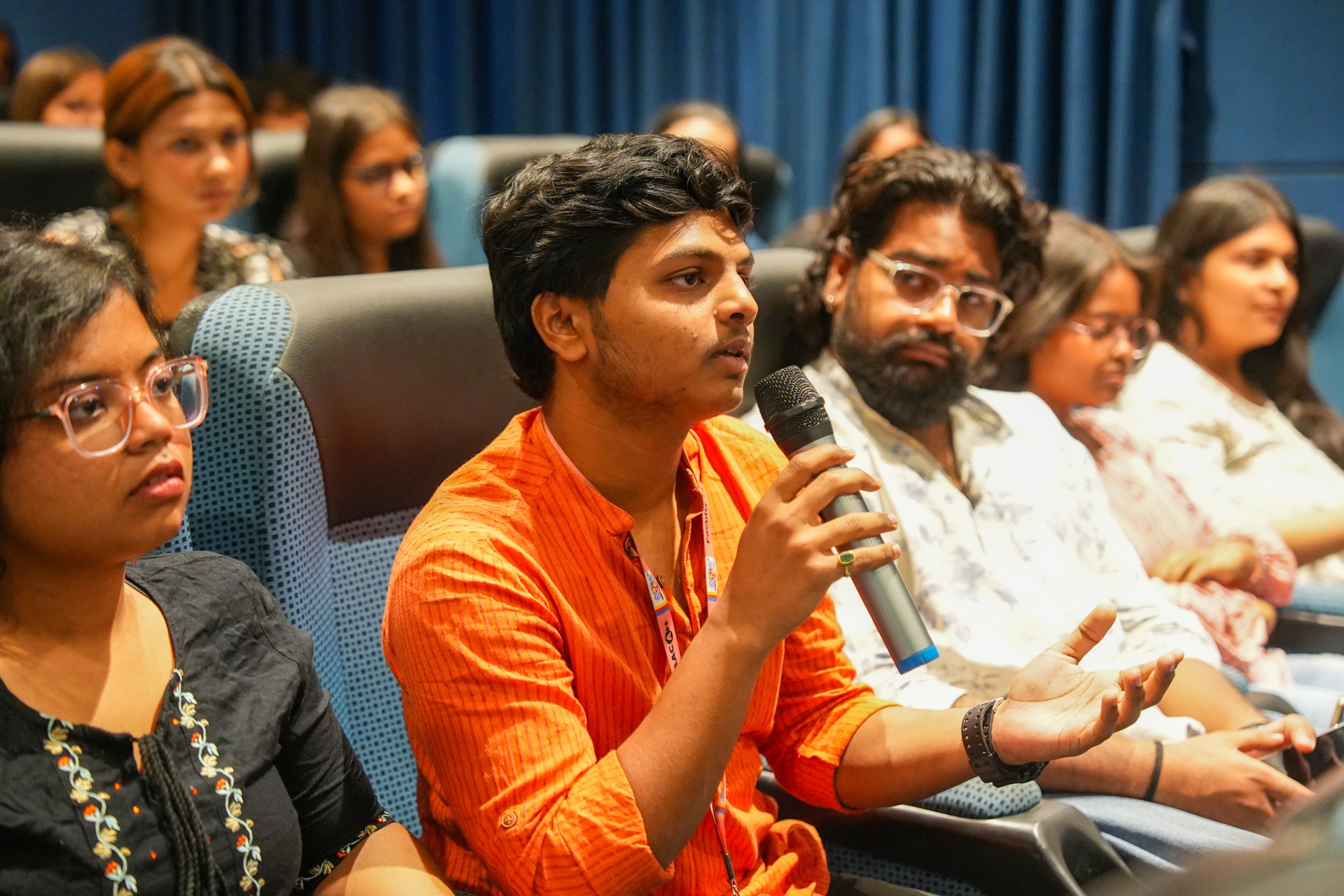
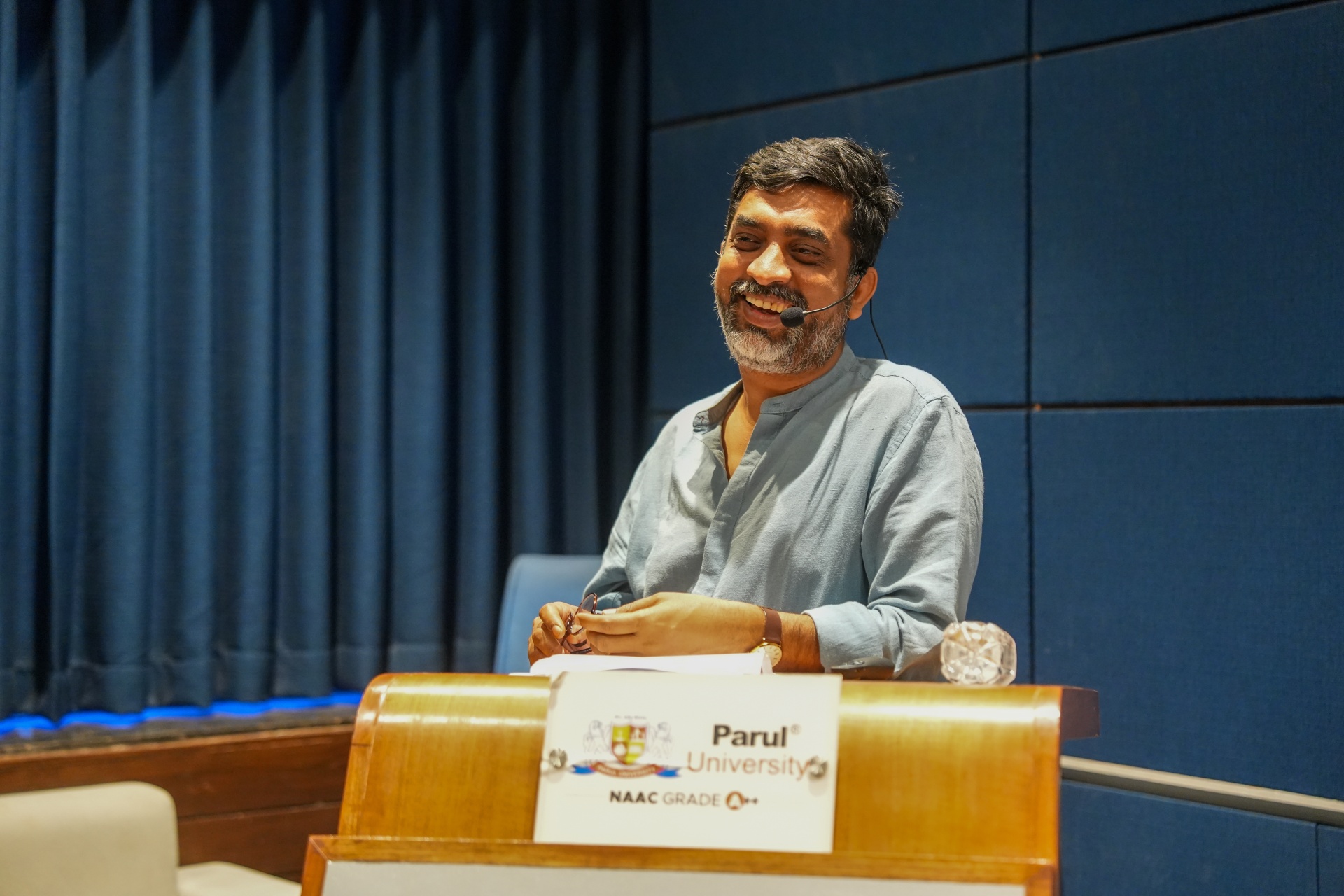
Johny ML placed the entire conversation in historical context. In the 1960s and 70s, artists deliberately tried to make art that could not be bought or sold: performance art, body art, ephemeral works, installations that existed only in a moment. The idea was to take art out of the market’s hands. But the market is incredibly clever. It finds a way to absorb everything. He gave the example of reggae music, born as Black liberation protest, eventually absorbed into the global mainstream.
Marina Abramovic, the mother of performance art, started her career doing raw body-based work completely outside the gallery system. Over time, her work was documented, archived, sold, and exhibited in the world’s most prestigious institutions. She began as a rebel against the system and ended up inside it. Not because she failed, but because the market is that powerful.
He shared a personal story: after finishing studies at Baroda, he approached Delhi galleries with installation art ideas. They were not interested. A respected senior artist, the late A. Ramachandran, listened and then said with gentle humour that he could certainly promote installation art, but perhaps the medium should be oil on canvas. Because that was the only language the big city galleries understood. The 2012 Kochi Biennale changed things. Suddenly the word installation was everywhere in Kerala. People were looking at piles of objects and asking questions. They even put labels on garbage heaps saying this is not part of the Biennale. His conclusion: the white cube is not the enemy. It is one platform. The question every artist must honestly answer is why do you want to work outside it. Turn your passion for art into a meaningful career with BVA Painting at Parul University.
Archana Hande: Following the Work, Not the Fashion
Archana Hande never made a conscious decision to reject the gallery. It happened naturally because of the nature of her research-based practice. She spends long periods studying a subject, and the form grows from that research. Sometimes the work ends up in a gallery. Sometimes it demands a specific site. She does not force it.
She was candid about economics. She shows work in galleries, and that income gives her the freedom and resources to do more experimental, community-based work. She sees both as part of one continuous practice, not separate or contradictory. When invited to site-specific events like the Kochi Biennale with its pepper factories and battery factories, she takes time to read the place, understand its history and geography, and think about how her work can genuinely respond. Bringing an existing painting and putting it on a wall would be lazy, she said. From imagination to expression, begin your journey with the Faculty of Fine Arts at Parul University.
She also addressed the experience of her generation of women artists in the 1990s. Getting gallery space was genuinely difficult. The push toward alternative spaces was partly a response to being excluded. This has improved significantly today, but for her generation it was real. Her message to students: be convinced about what you are doing. Do not work on a site just because someone invited you. Real community art takes time, trust, and genuine engagement.
Arun Kumar HG: Art as Living, Not Just Making
Arun Kumar HG spoke from the most grounded place of any panelist at VVF 2026. Growing up in the Western Ghats, he watched forests shrink, rivers change, and farming traditions disappear. That lived experience became the basis of his artistic inquiry: how do you address these things, and how do you bring people together around them?
He runs a community art centre in rural Karnataka. Over six years, his centre has been involved in reviving 19 lakes in collaboration with local villagers. About 600 students visited the centre in a single month. He also worked with 150 artists on a project using art posters as a low-cost, powerful way for artists to engage with social issues. He referenced Joseph Beuys, who at Documenta 1982 proposed planting 7,000 trees across Kassel, Germany. The exhibition lasted a few months. The trees are still growing. That is the power of an idea genuinely connected to the world.
His philosophy: art is not separate from life. It is a way of living, thinking, and being in the world. If you are genuinely engaged with something, whether a community, an ecological crisis, or a place, and you bring your artistic sensibility to it, that is art. You do not need to call it anything special. Turn your creativity into a meaningful career with Communication Design at Parul University.
FAQ: Art Beyond the White Cube
What does art beyond the white cube mean?
Art that steps outside conventional gallery spaces into public sites, communities, streets, and lived environments. The movement began in the 1960s when artists questioned the gallery system. It includes installation, performance, community art, site-specific work, and social practice. Discussed at VVF 2026 by Johny ML, Archana Hande, and Arun Kumar HG.
Who is Johny ML?
Kerala-born curator, writer, critic, translator, and filmmaker. Studied at Goldsmiths London, MS University Baroda, and University of Kerala. Chief curator of the first United Art Fair (2012).


