Picture this. A pest appears on a cotton field in Gujarat. The farmer, maybe he’s been farming thirty years, maybe he learnt from his father who learnt from his father, does what he has always done. Reaches for the chemical spray. Kills the pest. Also kills half the living things in that topsoil. And the residue? Sits on the crop. Travel to the mandi. Ends up on someone’s plate in Ahmedabad or Mumbai or your kitchen. Nobody checks. Nobody knows. And the cycle repeats next season, except now the soil is a little bit more dead than it was before.
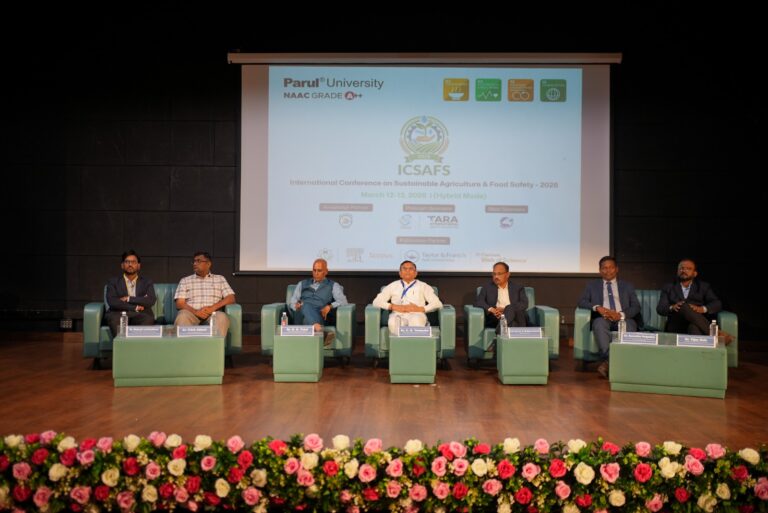
That’s where Dr. Patel began his session. Not with a PowerPoint full of Latin names. With reality. Farmers routinely use harsh chemicals to fight pests and diseases. Those chemicals leave harmful residues on food and damage the environment and the damage isn’t a one-time thing, it compounds. Weaker soil, more chemicals needed, weaker soil again, more chemicals again. A trap disguised as a solution.
So what’s the exit? Biological control. And the concept isn’t some lab fantasy cooked up last year. Dr. Henry Smith of the University of California was the one who first put a name to it, using natural living organisms to suppress harmful insects and plant diseases. Forget the toxic spray. Instead, you bring beneficial microorganisms into the soil or onto the leaves of the plant. These good microbes, Dr. Patel kept calling them that, “good microbes,” and the phrase stuck, they target only the harmful pathogens and insect pests. They work through strong, specific mechanisms. And while they’re doing that, here’s the bonus nobody expected when this field started: the plants actually grow faster and healthier. Not a side effect. A built-in feature.
Dr. Patel didn’t stop at selling the idea though. He cracked it open.
The Four Mechanisms of Biological Control
Four biological pathways through which beneficial microbes wage war on the things destroying crops. Dr. Patel explained each one, and honestly, the elegance of how nature already solved this problem long before any chemical company existed, is something worth sitting with.
- Competition for food. Here’s what happens underground. Plants push carbon and nitrogen out into the rhizosphere, that’s the root zone, the few centimetres of soil immediately surrounding the roots. Harmful fungi need that food. It’s their fuel for attacking. But when you introduce a microbe like Trichoderma into that same zone? Trichoderma eats first. Faster. More aggressively. The pathogen shows up to the table and the food is already gone. Starved out before it even begins. Brutal, if you think about it. And completely chemical-free.
- Mycoparasitism. This one’s more violent. No polite competition here. Beneficial fungi produce enzymes specialised, targeted enzymes that dissolve the protective cell walls of harmful fungi. They don’t outcompete. They attack. Cell wall broken open, contents destroyed, pathogen dead. Nature’s own search-and-destroy programme.
- Antibiosis. The beneficial microbes release natural antibiotics directly into the soil. Not pharmaceutical antibiotics or biological ones, produced by living organisms in the ground. These compounds kill plant diseases rapidly. The soil itself becomes poisonous to the pathogen. The crop stays untouched.
- And this is the one that made me lean forward when Dr. Patel explained it. Induced systemic resistance. The beneficial microbe connects with the plant at a molecular level. Communicate with it. And in doing so, strengthens the plant’s own immune system. After that initial connection, the plant fights off future attacks by itself. On its own. You’re not just curing the disease. You’re teaching the plant to never get sick again. That’s… that’s a fundamentally different philosophy from spraying poison and hoping for the best.
The Biocontrol Toolkit: Key Fungi and Bacteria
Theory is nice. Names and products and field results that’s what a farmer or an entrepreneur can actually work with. Dr. Patel gave both.
Biocontrol Fungi
- Trichoderma first. The workhorse of biological farming. It sits in the soil and protects roots against soil-borne diseases, specifically the ones that block water transport inside the plant’s vascular system. You’ve seen the result even if you didn’t know the cause: yellowing leaves, wilting stems, eventual death. That’s a soil-borne pathogen choking the plant’s plumbing. Trichoderma prevents it.
- Then Paecilomyces. Sounds complicated but its job is beautifully simple. It’s a nematode killer. Root worm nematodes lay their eggs in tiny sacs in the soil. Paecilomyces cracks those sacs open and kills the eggs before they ever hatch. No eggs. No worms. No root damage season after season.
- Beauveria bassiana and this one has a market name worth remembering: BIOSOFT. It’s a bioinsecticide, a powerful one too. Goes after sucking pests and caterpillars. But here’s what makes it different from a chemical spray. It doesn’t need to be eaten by the insect. It sticks to the insect’s body from outside. Attached. Penetrates. Paralyses. The insect doesn’t choose to ingest the poison. The poison finds the insect. Makes it much, much harder for pest populations to develop resistance, which is the whole problem with chemical sprays in the first place.
- Verticillium lecanii. Market name: Vertisoft. If you’ve ever noticed a white cottony mess clinging to a plant stem or a branch, that’s usually mealybug.
- And Metarhizium anisopliae, sold as Metasoft. This one works underground. Soil level. Goes after termites and white grubs that chew through plant roots in places you can’t see until the plant collapses. By then it’s too late unless you had Metasoft in the soil already.
Biocontrol Bacteria
- Pseudomonas fluorescens. Very effective against seed and root diseases. But Dr. Patel was upfront about a limitation, you can’t just grow this bacterium any old way and expect it to survive sitting in a packet. It requires careful, controlled factory production to maintain shelf stability. The manufacturing precision matters as much as the biology. Get it wrong in the factory and the product arrives dead.
- Bacillus subtilis and Bacillus amyloliquefaciens. Completely different story. These two are shelf-life champions 2 to 3 years sitting in a packet without losing their potency. Two to three years. That matters enormously for distribution in a country as big as India where a product might sit in a warehouse in Rajasthan for months before a farmer buys it. They work as foliar sprays apply them onto the leaves and they’re effective against powdery mildew and leaf spot diseases. Reliable, stable, practical.
Neem Products
Neem got its own segment in the session, and rightly so. The active compound is Azadirachtin. If you’ve ever bitten into a raw neem leaf and if you grew up in India, chances are somebody made you do it at least once you know the bitterness. Insects can’t tolerate it either. Azadirachtin repels them on contact. But it does something worse to them than just chasing them away. It disrupts their growth cycle. Larvae can’t develop into adults. Adults can’t reproduce properly. The population collapses over one or two generations. Agriland Biotech sells this under the market name VANGUARD.
10 Agricultural Innovations Students Can Turn Into Businesses
This was the part of the talk where the room changed. You could feel it. Up until now, interesting science. Dr. Patel looked at a room full of students and said: here are ten things you could build a company around.
- One. Surface Technology. Most people grow microbes in liquid tanks. Conventional method. Works fine. But surface technology growing them on solid surfaces instead produces organisms that are dramatically stronger. Massive spore production. Better efficacy in the field. And potentially cheaper at scale. If you’re starting a biocontrol manufacturing unit, this is where your R&D begins.
- Two. Carrot Hairy Root Culture. Product name: MYCOZONE. And I’ll be honest, this one sounds strange until you understand it. You grow Mycorrhiza fungi inside glass bottles using living carrot roots as the medium. The carrot root provides the biological scaffolding. The fungus colonises it. When you apply that fungus to a crop, it acts as extra roots literally extending the plant’s reach into the soil, pulling more water, more nutrients. The yield boost? Up to 15%. From a fungus. Grown in a bottle. With a carrot. Sometimes innovation sounds ridiculous until you see the yield data.
- Three. Parapheromones for fruit flies. Product name: Life TimeBlock. Simple wooden blocks. You soak them in attractant scents Methyl Eugenol or CueLure and hang them in the orchard or field. Fruit flies can’t resist. They come. They get trapped. Done. Five blocks. One acre. Four months of protection. The cost is negligible. The damage fruit flies cause if you don’t control them? Not negligible at all.
- Four. Pheromone impregnation. More scent technology, but this one’s cleverer. It doesn’t trap the pest. Moths. Caterpillars. Specifically, American Bollworm and Pink Bollworm in cotton. The pheromone disrupts their ability to find each other for mating. Can’t find a mate, can’t reproduce, no next generation. The population crashes without killing a single insect. Currently available for 11 different pest species. Eleven. That’s a product line, not a product.
- Five. Microencapsulation technology. There’s a whole family of products here: Biofield, Phosphocell, Biomobile-K, Nitrocell, Rhizocell, AZOSPEE. What microencapsulation does is take liquid biofertilisers which normally spoil quickly and pack them into tiny capsules that hold stable for 2 years on a shelf. Inside those capsules, the microbes are pulling nitrogen straight out of the air and fixing it into the soil. Shelf-stable biological nitrogen fixation. In a packet. If that doesn’t sound like a business opportunity to you, read it again.
- Six. Spray drying technology. Takes spore-forming bacteria Bacillus, primarily and converts them into a dry powder that survives in storage for up to 3 years. Three years of viability from something that was alive. The technology here isn’t biology. It’s the drying process. The engineering of preservation. That’s where the intellectual property sits.
- Seven. Freeze drying technology. Spray drying works for bacteria that form spores. But what about Pseudomonas and other non-spore-forming bacteria? They’re delicate. They die easily. Freeze drying preserves them safely for up to 2 years. Different problem, different solution, same shelf in the farmer’s storeroom.
- Eight. Microbes for waste composting. Product name: Debrista. Here are the numbers, and they’re worth memorising. Five microbial strains mixed together. One kilogram of the mix. Converts one ton one full ton of farm waste into rich, usable compost. One kilogram turns one ton. Think about that in business terms. Your raw material is waste. Literal agricultural garbage that farmers are already trying to get rid of. Your input cost is one kilogram of product. Your output is a ton of compost that has market value. The margins on that business model are… Well, work them out yourself.
- Nine. Precision agriculture. Drones scanning fields from above. Smart mobile apps telling farmers exactly which patch needs water and which patch needs nutrients. Wireless sensors buried in the soil sending real-time data to a phone. This isn’t science fiction from a TED talk. This is field-level reality in 2026. And here’s the thing: the hardware exists. What’s missing are the people who build the software, the apps, the data platforms that make the hardware actually useful for Indian farming conditions. Specifically Indian. Not American precision agriculture tools translated into Hindi. Tools built from scratch for Indian soil, Indian weather, Indian farm sizes.
- Ten. Biostimulants. Plant health supplements, basically. Seaweed extracts. Amino acids. Antioxidants. They don’t kill any pests. They don’t fight any disease directly. What they do is make the plant tougher. More resilient to stress, heat, drought, disease pressure. Preventive health care. The wellness industry, except for crops. And just like the human wellness market, this one’s growing fast because prevention is always cheaper than cure.
The Market Opportunity: Why India Is the Biggest Gap
Dr. Patel saved this for last. Smart man. He’d spent the whole session building the case, here’s the science, here are the products, here are the innovations. And now, right at the end, he showed them the money.
Biopesticide use worldwide? Growing at 16% annually. Not gently trending upward. Sixteen percent compound growth. Year on year. Who’s buying? The USA consumes 40% of all biopesticides produced globally. Europe takes 20%. Between them over 60% of the world market.
And India. Here’s where the room got quiet. One to two percent. That’s it.
A country with the largest agricultural labour force on the planet. A country where farming isn’t a quaint rural tradition, it’s the economic backbone for hundreds of millions of families. That country accounts for 1 to 2% of global biopesticide use. While America sits at 40.
Let me be blunt about what that means. That’s not a market gap. That’s not an opportunity. That’s a continent-sized vacuum waiting to be filled by whoever shows up first with the right product, the right price, and the right distribution network.
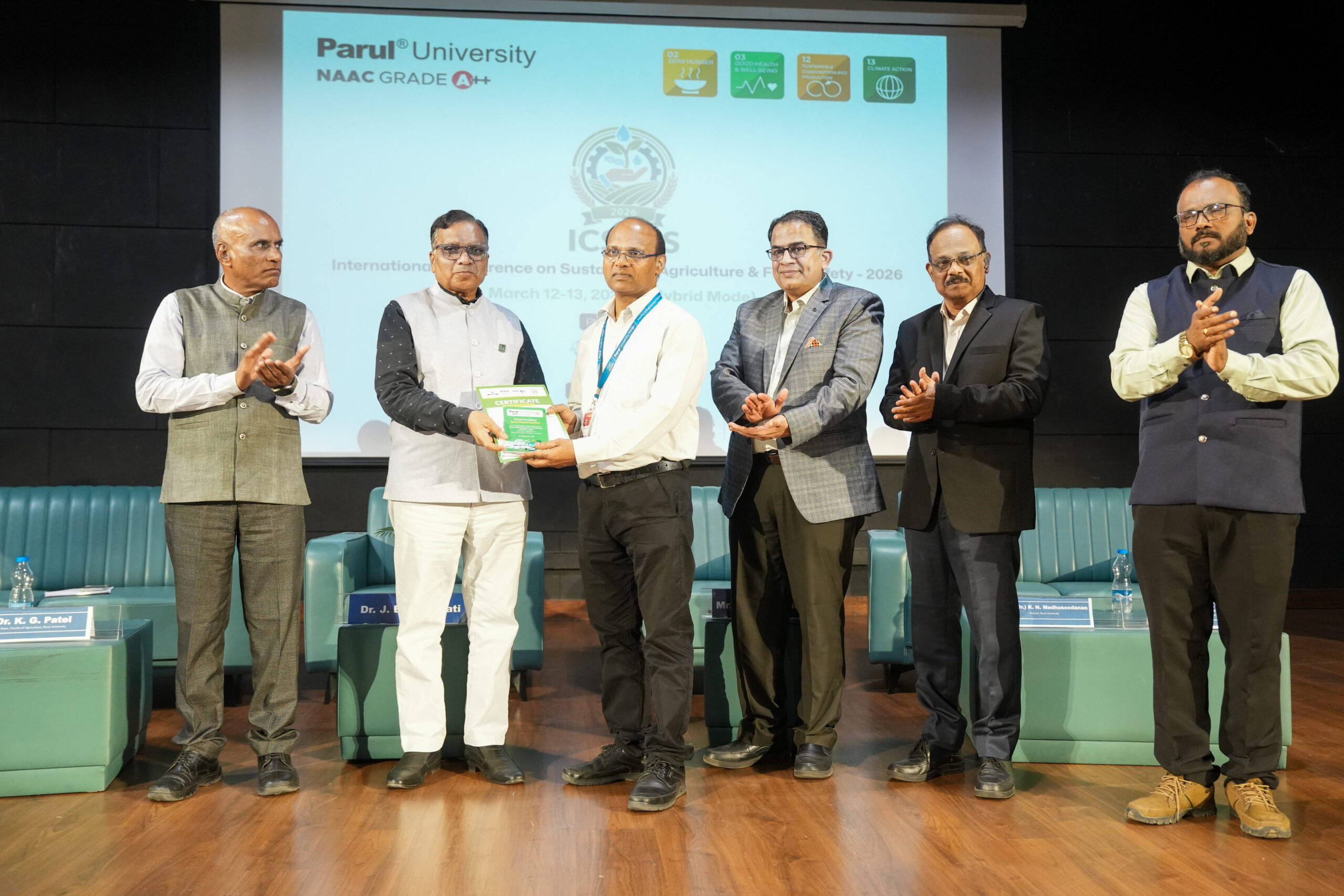
Dr. Patel, a man who built his company in Vadodara 30 years ago and now manufactures 55+ biological products, was standing in front of agricultural students at a university in the same city, essentially drawing them a treasure map. Apply now for the Master of Science in Agriculture – Agronomy at Parul University and take the first step toward building a career in modern, sustainable farming.