

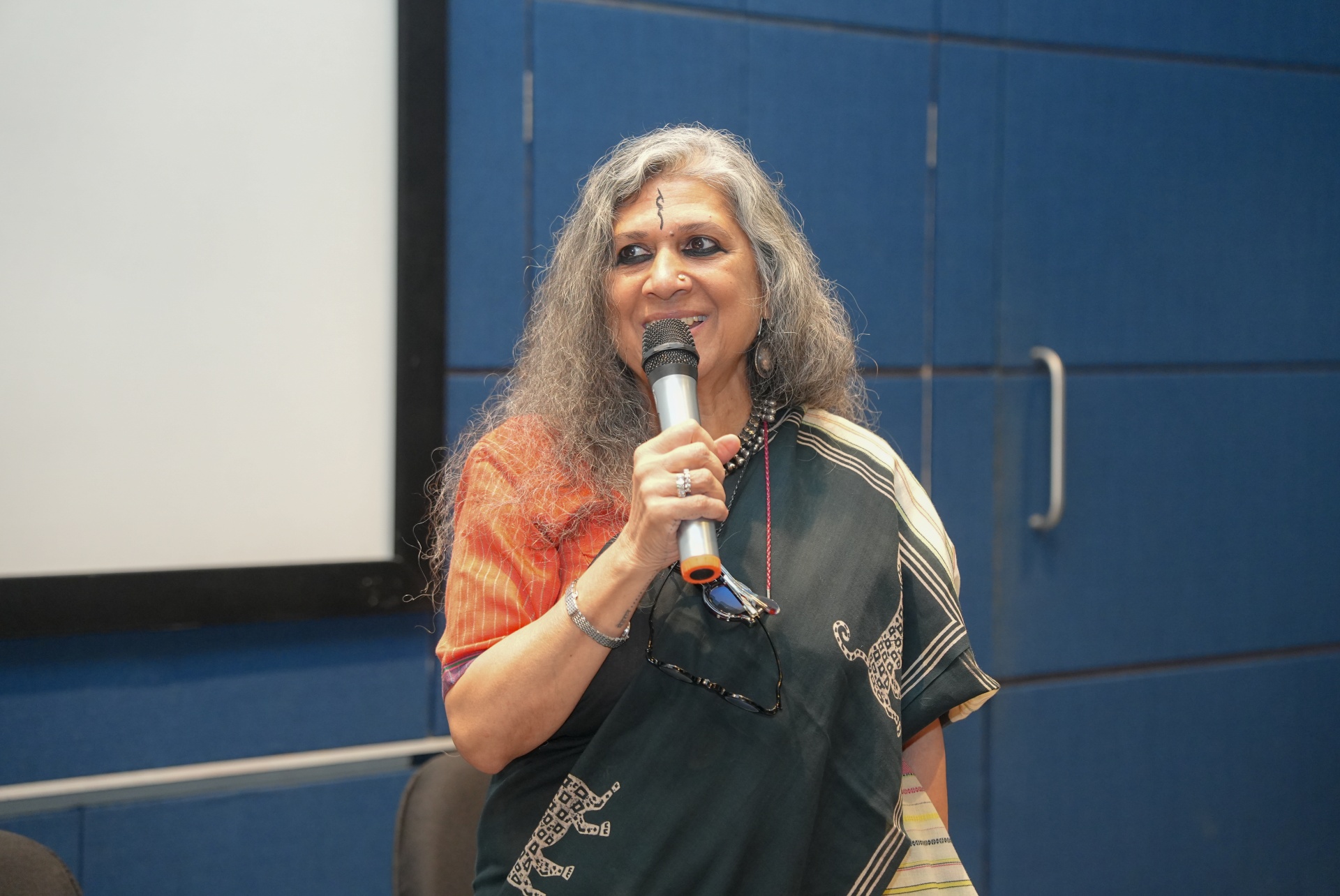
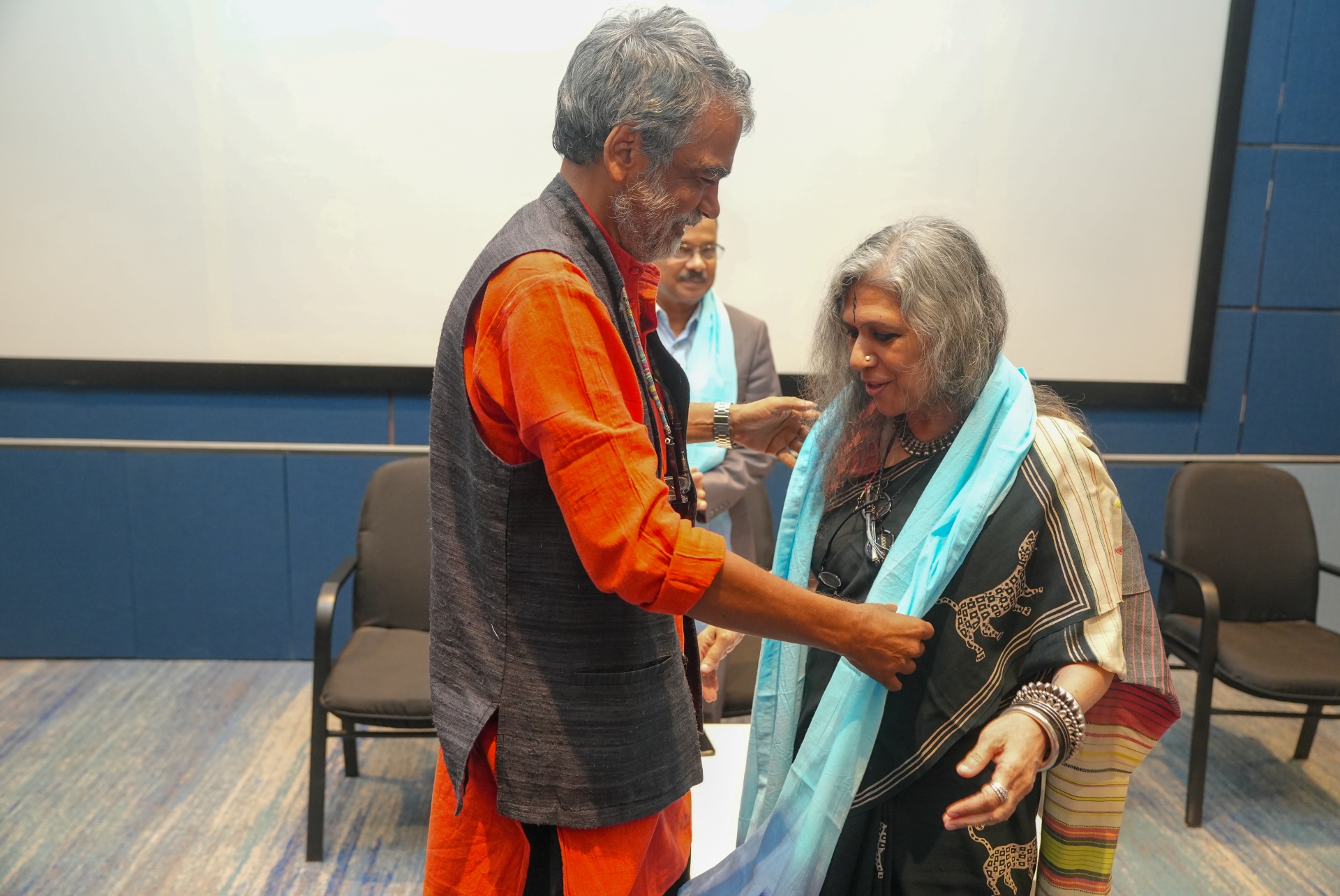
Rekha Rodwittiya opened by separating two things that are often confused. Professionalism in art has always existed, she said. What did not exist, or existed only at the edges, was the commercial infrastructure around it. When she was studying in the 1970s and 80s, life and art were not treated as separate things. The aspiration was not to find a teaching job and sell occasionally. The aspiration was to practice.
Her definition was precise: professionalism is your personal responsibility to yourself with whatever you do, and the delivery of your discipline to what you want to place as representing yourself in the outer world. She has been with the same gallery for almost four decades. That relationship, she said, is as strong as a marriage. There is loyalty, affinity, empathy, passion. Not a commercial arrangement sitting on top of those things. Those things are the foundation. She has supported herself entirely from her art practice since 1984.
In the Indian gallery system, she was direct. It is not working against artists. It never has been. The system functions like a machine that requires all components to work together: galleries, artists, curators, printers, collaborators, collectors. The artists she has seen struggle are not usually the ones who were rejected. They are the ones who never understood what kind of ecosystem they were trying to become part of.
In her inaugural address earlier that morning, Rekha said something that stayed with the room: the true wealth of a nation is its educated population. Said by someone who has spent her career making art education count in a country that often treats it as secondary. She also runs the Collective Studio in Baroda with Surendra Nayar, a pro bono space they have maintained for over forty years where artists come, work 40 to 80 hours, and build visual literacy through art history, theory, cinema, and political history.
On entitlement, she was equally firm: do not expect the gallery system to come to you. It is perfectly fine to take a job to support your art practice. Economic freedom is what allows you to spend time with your work. She also practises what she preaches about self-criticism: she burns work she thinks is bad, even when her gallery objects. The goal, she said, is not originality. Nobody is original. The goal is uniqueness. Make it unmistakably yours. And if you want to pursue more, head here to explore BVA Painting at Parul University!


