The graduates who thrive in 2026 aren’t the ones who avoided risk. They’re the ones who learned to take calculated risks repeatedly. Here’s the evidence from India’s Largest Startup Carnival.
Traditional graduate skills looked like this:
- Technical expertise
- Domain knowledge
- Communication ability
- Teamwork
Those still matter.
But at Vadodara Startup Festival 6.0, a different skill kept emerging as the differentiator between graduates who thrive and those who plateau:
The ability to take calculated risks not once, but repeatedly.
The Evidence: 250+ Startups, ₹100+ Crores Raised, 1,400+ Jobs Created
PIERC (Parul Innovation & Entrepreneurship Research Centre) has incubated 250+ startups since 2015.
Investment raised by these startups: ₹100+ crores.
Employment generated: 1,400+ jobs.
But here’s what matters more than the numbers:
These founders didn’t just take one risk. They took multiple calculated risks over time, adjusting based on feedback.
That pattern serial calculated risk-taking is becoming the core graduate skill.
Risk-Taking ≠ Recklessness (The VSF - Vadodara Start-up Festival 6.0 Definition)
Before diving into evidence, clarity on what risk-taking actually means:
Reckless: Quitting your job with no savings to start a business you haven’t validated
Calculated risk: Testing your business idea on weekends while employed, gathering data, then transitioning when traction validates the model
Reckless: Spending ₹10 lakhs on product development before talking to customers
Calculated risk: Spending ₹10,000 on a prototype, getting customer feedback, iterating based on data
The difference? Information gathering before commitment.
Yogesh Brahmankar (Innovation Director, AICTE) told VSF – Vadodara Start-up Festival students: “The PIN code to every problem is the situation.”
Translation: Context determines whether a risk is calculated or reckless.
Evidence #1: The ₹20,000 to ₹10 Crore Risk Ladder
Anurag Sundarka’s entrepreneurial journey is a textbook example of progressive risk-taking:
Risk #1: Saralife.com (Vegetables)
Investment: Time + minimal capital
Outcome: ₹20,000 total revenue, business failed
Risk level: Low (student, no dependents, small capital)
Learning: “Understanding what initiative means”
Risk #2: Street Plays + Scrap Collection
Investment: Time, no capital
Outcome: Few thousand rupees generated
Risk level: Very low (no capital at risk)
Learning: Community engagement, sales basics
Risk #3: Aatisbazi.in (Crackers)
Investment: Time + small capital
Outcome: Failed
Risk level: Low (still student phase)
Learning: Market timing, product-market fit
Risk #4: Writing Book
Investment: Significant time
Outcome: Book completed, couldn’t find publisher
Risk level: Low (no capital, only time)
Learning: Publishing ecosystem gap identified
Risk #5: ZebraLearn (Publishing Platform)
Investment: Significant time + capital from own pockets
Outcome: Initial inconsistent revenue (₹6 lakh, then nothing for months)
Risk level: Moderate (now self-funded, but validated concept)
Learning: Product-making process needs fixing
Risk #6: Pivot to Children’s Books
Investment: Redirecting ZebraLearn resources
Outcome: Consistent revenue, 10K-20K books monthly
Risk level: Moderate (existing platform being redirected)
Learning: Product-market fit achieved
Current State: ₹10.7 Crore Revenue, Shark Tank Deal
Each risk was slightly larger than the last.
Each was informed by previous attempts.
Each failure made the next risk more calculated.
That’s the pattern emerging as core graduate skill: Progressive, calculated risk-taking based on accumulated learning.
Evidence #2: The Desalination to Solar Pivot
Yash Tarwadi’s journey demonstrates strategic risk assessment:
Initial Risk: Desalination Project
Context: Chemical Engineering student, college project
Investment: ₹2 lakh SSIP grant
Outcome: Working prototype (20 liters/day recycling capacity)
Risk level: Low (grant funding, academic context)
But then: Market analysis revealed established players dominating desalination with decades of infrastructure
The Calculated Choice
Most students would have either:
- Pushed forward anyway (reckless)
- Given up entirely (risk-averse)
Tarwadi did neither.
He assessed:
- His resources (limited capital, no industry connections)
- Market conditions (dominated space vs. untapped opportunity)
- Adjacent opportunities (renewable energy knowledge transferable to solar)
Decision: Pivot to rooftop solar
Why This Was Calculated, Not Random
The pivot leveraged:
- Existing knowledge: Tech-enabled infrastructure solutions
- Market gap: Gujarat’s low solar adoption despite high demand
- Government support: Subsidy schemes for rooftop solar
- Lower barriers: Each installation independent, no need for massive scale upfront
Result: Awards from Piyush Goyal, GITEX Global 2023 presentation, UK company licensing interest
The risk was calculated because it was informed by market analysis, not just enthusiasm.
Evidence #3: From Job Security to Six Startups
Rajat Singhania currently manages six different startups.
But his risk progression over 35 years shows how calculated risk-taking compounds:
Early Career: Job-Oriented Parents, Entrepreneurial Choice
First risk: Choosing entrepreneurship over employment despite parents’ expectations
Risk level: Moderate (cultural and family expectations)
Outcome: Validated that he could succeed outside traditional paths
Business #1-3: Learning Through Failure
Transport business: Exited despite success (lack of satisfaction)
Synthetic yarn: Ended due to co-founder conflicts
Typewriter ribbons: Failed due to technology-climate mismatch
Risk level: Progressive increase as he gained experience
Outcome: Each taught specific lessons about satisfaction, partnerships, and market validation
Business #4: Cement (29 Years and Counting)
Risk: Supplying cement to region with no existing chain
Risk level: High (significant capital, infrastructure building required)
Outcome: Reached #3 position in region, famous “999 Incident” (reducing payment cycles from 90 to 9 days)
This risk succeeded because previous failures taught him:
- What to look for in partners
- How to validate market gaps
- When to challenge industry norms
Current: Six Simultaneous Startups
Including HyLyt (cloud-based data organization) and yuniTALK (business communication)
Risk level: Distributed across multiple ventures
Strategy: Portfolio approach reduces single-point failure
This complexity is only possible because 35 years of progressive risk-taking built:
- Risk assessment capability
- Resource management skills
- Network for support
- Financial buffer for experimentation
Evidence #4: The Language Barrier Risk That Created 3.1 Million Readers
Kavish Gadia’s story shows personal risk-taking leading to systematic impact:
Risk #1: Clearing CAT Despite Limited Awareness
Context: Thought CAT was an actual cat
Risk: Academic reputation if he failed
Outcome: Got into IIM Lucknow
Risk level: Moderate (scholarship student, family expectations)
Risk #2: Learning English at IIM
Context: Weak English, bullied for Rajasthani accent
Risk: Delivering first-trimester presentation perfectly despite language weakness
Risk level: High (reputation among peers, self-confidence)
Outcome: Graduated with 14 job offers from top firms
This risk was calculated because: He didn’t just “hope” to improve—he systematically worked on English skills
Risk #3: Choosing Mission Over Prestige
Context: 14 job offers from KPMG Corporate Finance and others
Risk: Turning down high-paying roles to pursue education-focused mission
Risk level: High (financial security, career trajectory)
Outcome: Founded Stones2Milestones (2008)
Current Impact: 3.1 Million Children
ExcelOne (PISA for Schools): Benchmarking Indian schools against international standards
Stones2Milestones: 600 employees, 3.1 million children helped to pick up reading
Amrit Vidyalaya: Goal of 50 schools by 2035
That impact only exists because Gadia took calculated risks repeatedly:
- Academic risk (CAT, IIM presentation)
- Career risk (choosing mission over money)
- Scaling risk (building infrastructure for millions of children)
Evidence #5: The PIERC Infrastructure for Risk-Taking
Why do Parul students take calculated risks more effectively?
Because PIERC deliberately builds infrastructure that makes risk-taking safer:
Safety Net #1: SSIP Grants (₹14.53 Crores Disbursed)
Students can test ideas with grant funding, not personal savings.
Example: Tarwadi’s ₹2 lakh grant for desalination prototype
Example: Rideaway, Eternia, Destinofy.ai, Mastiskya Yantra, all received SSIP support
Impact: Reduces financial risk of initial testing
Safety Net #2: Prototyping Labs
Students can build and test without major capital investment.
Impact: Reduces technical risk of development
Safety Net #3: Mentor Network
Founders who’ve taken similar risks provide guidance.
Impact: Reduces knowledge risk (learning from others’ mistakes)
Safety Net #4: Peer Community
250+ startups incubated means peer founders facing similar challenges.
Impact: Reduces isolation risk (emotional support during uncertainty)
Safety Net #5: Investor Access
50+ VC firms and angel investors connected through PIERC.
Impact: Reduces funding risk (multiple capital sources)
Combined effect: These safety nets don’t eliminate risk, they make risk calculable and manageable.
Evidence #6: The Four-Stage Risk Journey
Brahmankar’s framework from VSF – Vadodara Start-up Festival 6.0:
- People ignore you = Risk of being invisible
- They laugh at you = Risk of mockery
- They resist you = Risk of active opposition
- They take credit = Risk of not being recognized
Every graduate faces these risks, not just entrepreneurs.
Corporate Example
Employee proposes process improvement:
- Stage 1: Manager ignores the suggestion
- Stage 2: Colleagues mock it as “unnecessary”
- Stage 3: Department resists implementation
- Stage 4: Manager presents it as their own idea
Same four stages. Different context.
The graduates who navigate these risks successfully are those who learned the skill in college.
Why Risk-Taking Is NOW a Core Skill (Evidence from Job Market)
Shift #1: Job Security Is Gone
Old model: Join company, work 30 years, retire with pension
New reality: Average job tenure is 4.1 years (LinkedIn data)
Implication: Graduates will change jobs 10+ times in their career
Each job change = calculated risk (Will new role work out? Will I succeed? Will the company thrive?)
Students who’ve practiced calculated risk-taking in college navigate these transitions better.
Shift #2: Industries Are Volatile
Old model: Choose stable industry (banking, government, manufacturing)
New reality: Entire industries disrupted within 5-10 years
Examples from VSF – Vadodara Start-up Festival context:
- Typewriter ribbons (Singhania’s failed business) → extinct
- Traditional publishing (Sundarka’s rejection) → disrupted by digital
- Manual solar quotes → disrupted by tech platforms (Tarwadi’s model)
Implication: Graduates must take risks on new skills, new industries, new models
Those who’ve practiced risk-taking can pivot faster.
Shift #3: Entrepreneurship Is Mainstream
Old model: 95% employment, 5% entrepreneurship
New reality: Gig economy, freelancing, side hustles, portfolio careers
PIERC data: 1,400+ jobs created by 250+ startups
Implication: Many graduates will create their own opportunities rather than waiting for jobs
Risk-taking becomes mandatory, not optional.
Evidence #7: The Correlation Between Early Risk and Later Success
At VSF – Vadodara Start-up Festival 6.0, pattern recognition across successful founders:
Pattern: Early Small Risks → Later Large Opportunities
- Sundarka: Small risks (vegetables, scrap, crackers) → Large success (₹10 crore publishing)
- Gadia: Small risk (CAT exam) → Medium risk (IIM presentation) → Large impact (3.1M children)
- Tarwadi: Small risk (desalination prototype) → Calculated pivot (solar) → Recognition (awards, international interest)
- Singhania: Multiple early exits → Long-term cement success → Six current ventures
The progression isn’t accidental. Early risk-taking builds:
- Judgment: What risks are worth taking?
- Resilience: How to recover when risks fail?
- Network: Who to ask for guidance?
- Resources: Capital and skills for bigger risks
That compounding is why early risk-taking matters.
Three Types of Risks Every Graduate Will Face
Based on VSF – Vadodara Start-up Festival founder experiences:
- Type #1: Career Path Risk
The decision: Safe corporate job vs. uncertain entrepreneurship
Evidence: Gadia with 14 job offers choosing mission over money
Graduate application: Every career choice involves risk even “safe” choices carry hidden risks (company restructure, industry decline)
Risk-taking skill: Assess all options with full information, not just perceived safety
- Type #2: Skill Development Risk
The decision: Invest time in emerging skill with uncertain payoff
Evidence: Gadia spending months learning English while being bullied
Graduate application: Learning AI, Web3, sustainable tech any emerging field requires risk that investment will pay off
Risk-taking skill: Bet on skills that compound, not just current job requirements
- Type #3: Initiative Risk
The decision: Propose something new vs. maintain status quo
Evidence: Singhania reducing payment cycles from 90 to 9 days
Graduate application: Every workplace improvement, process innovation, or new project proposal carries rejection risk
Risk-taking skill: Make proposals backed by data, adjust based on feedback
What Monday Morning Looks Like for Risk-Taking Graduates
Risk-averse graduate:
- Waits for clear instructions
- Avoids proposing new ideas (might fail)
- Stays in comfort zone
Career plateau: Within 5 years
Risk-taking graduate:
- Proposes solutions to visible problems
- Tests ideas quickly with minimal resources
- Learns from failures publicly
Career trajectory: Continuous growth
The difference compounds over decades.
Three Practices for Building Risk-Taking Skills
Practice #1: The 1% Risk Rule
Concept: Take one small calculated risk per week
Examples:
- Propose an idea in a meeting
- Apply for an opportunity you’re 70% qualified for
- Email someone you admire for advice
- Test a side project idea with minimum investment
Why it works: Builds risk-taking muscle in low-stakes environments
VSF – Vadodara Start-up Festival evidence: Sundarka’s progression from ₹20K vegetables to ₹10 crore, each step slightly riskier
Practice #2: The Risk Journal
Concept: Document every risk you take
Template:
- What was the risk?
- What information informed it?
- What was the outcome?
- What would you do differently?
Why it works: Turns experience into transferable knowledge
VSF – Vadodara Start-up Festival evidence: Gadia’s systematic English improvement, documented what worked
Practice #3: The Safety Net Build
Concept: Build support infrastructure before taking big risks
Actions:
- Connect with PIERC or local incubator
- Build mentor relationships
- Create peer founder network
- Secure small funding sources
Why it works: Makes larger risks calculable
VSF – Vadodara Start-up Festival evidence: PIERC’s infrastructure enabling 250+ startups to take risks
The PIERC Advantage: Risk-Taking as Institutional Culture
What makes Parul different from most universities?
Most Universities
Message: “Get good grades, secure placement, minimize risk”
Infrastructure: Library, labs, placement cell
Outcome: Graduates skilled at avoiding risk
Parul + PIERC
Message: “Test ideas, learn from failure, take calculated risks”
Infrastructure:
- SSIP grants (₹14.53 crores)
- Prototyping labs
- Mentor network
- 250+ peer startups
- Investor connections (50+ firms)
Outcome: Graduates skilled at taking calculated risks
The institutional culture shapes risk tolerance.
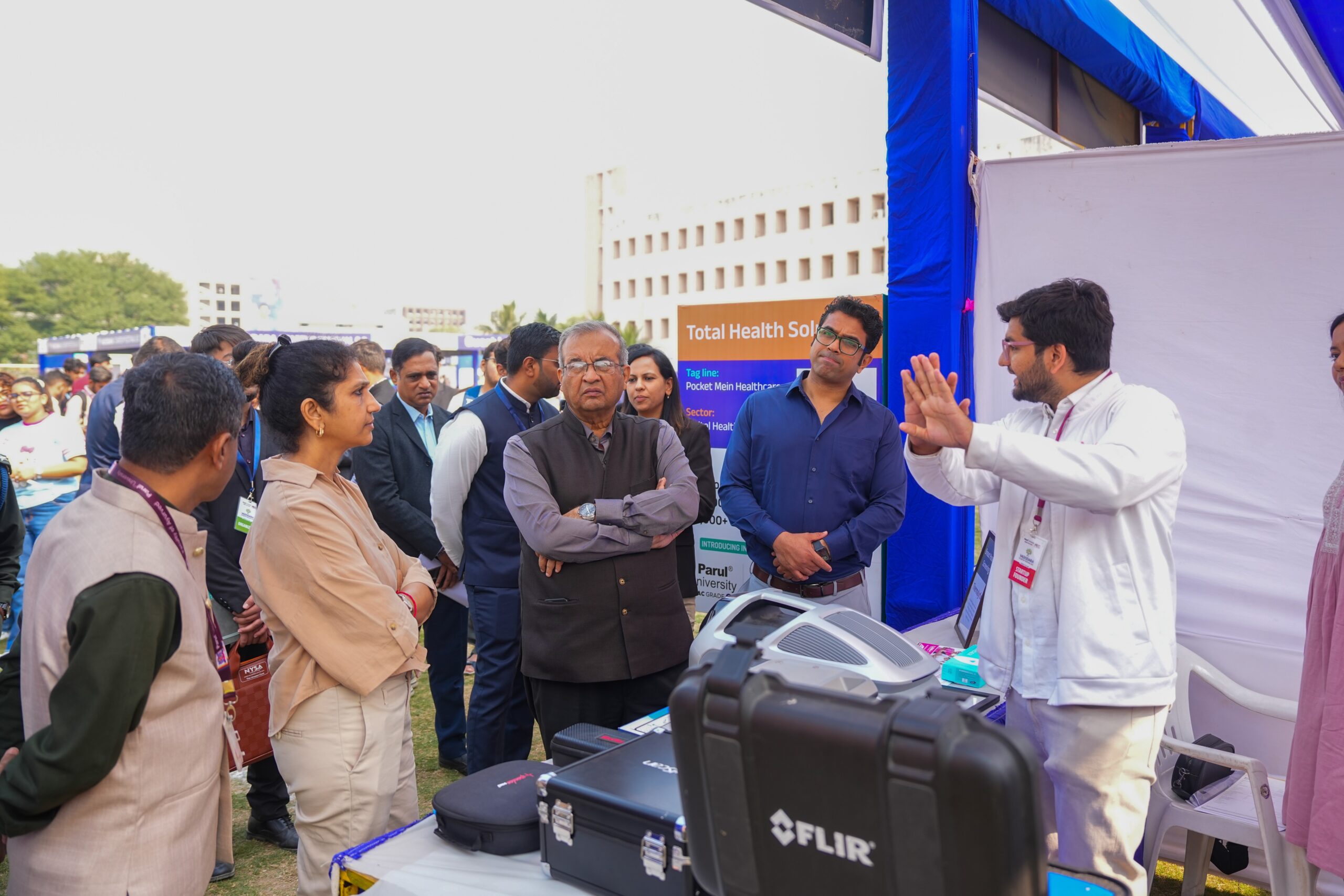
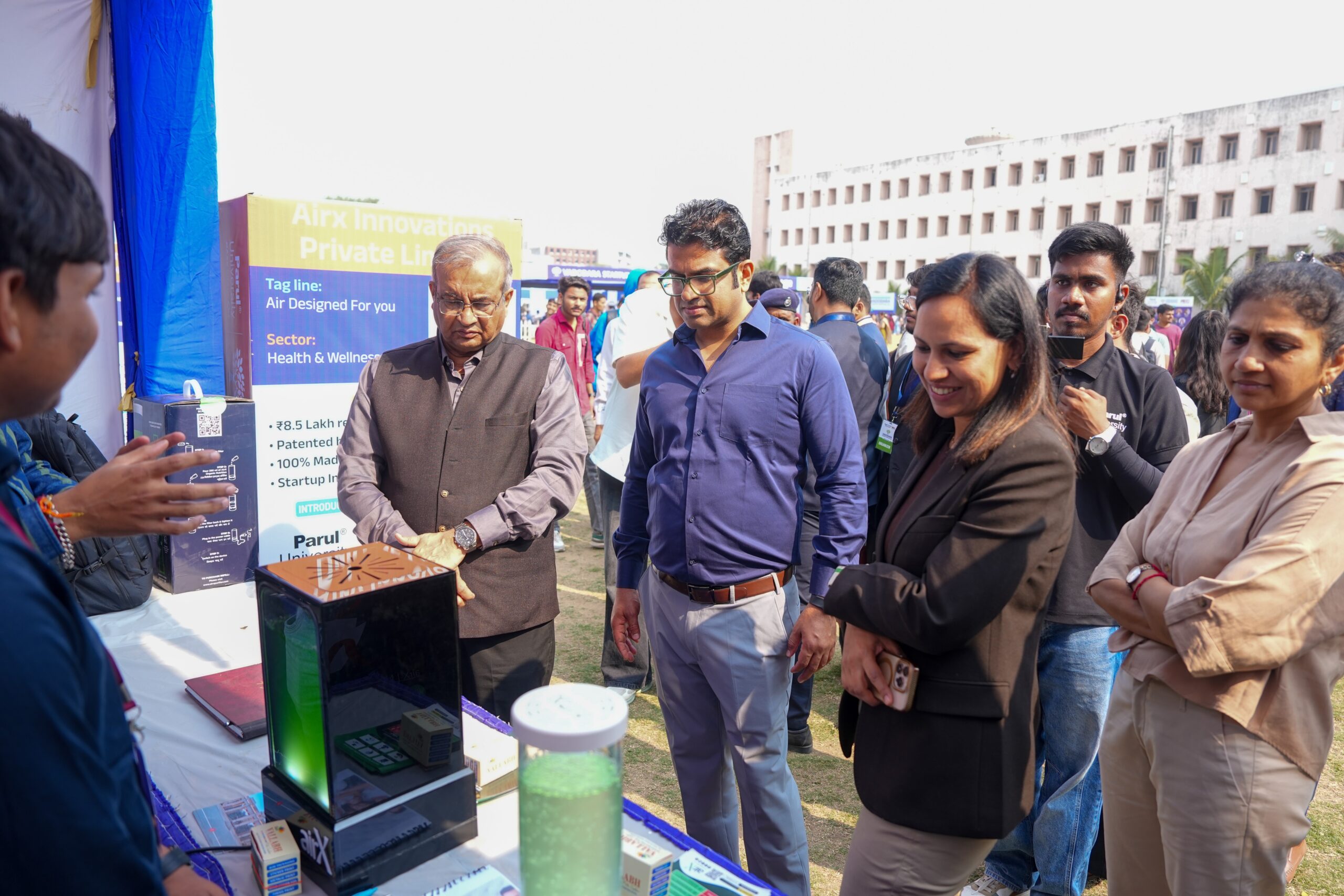
Why VSF - Vadodara Start-up Festival 6.0 Is Evidence, Not Just Event
India’s Largest Startup Carnival isn’t just motivational speeches.
It’s three days of risk-taking examples across every industry:
Day 1-3 showcased:
- 50+ startups exhibiting
- Multiple founders sharing failure stories
- Investors explaining risk assessment
- Government officials supporting ecosystem
- Corporate partners seeking innovation
Students didn’t just hear about risk-taking. They saw it across:
- EdTech (ZebraLearn, Stones2Milestones)
- Renewable Energy (Solnce Energy)
- Home Décor (EasyRugs)
- Mobility (Rideaway)
- Mental Health (Eternia)
- Construction Tech (Destinofy.ai)
- Healthcare (Mastiskya Yantra)
Pattern across all sectors: Calculated risk-taking drove success.
The Final Evidence: Your Next 40 Years
Here’s the simplest evidence that risk-taking is a core graduate skill:
Question: What will determine your career success from 2026 to 2066?
Not: What you know in 2026
But: How quickly you learn and adapt from 2026-2066
And adaptation requires: Taking calculated risks on new skills, new industries, new opportunities
The graduates who practiced this skill in college have a 40-year head start.
What Changes Monday Morning
If you’re a student reading this:
Monday morning, identify one calculated risk you can take this week.
Not reckless. Calculated.
Not life-changing. Just 1% riskier than your current comfort zone.
Examples:
- Apply for that SSIP grant
- Pitch your idea at PIERC
- Email that founder for coffee
- Test your business hypothesis with ₹1000
- Propose that process improvement
The skill compounds. Start building it now.
FAQs
1. Why is risk-taking considered an important graduate skill today?
Industries change rapidly, and careers evolve faster than before. Graduates who can take calculated risks adapt quickly, explore new opportunities, and innovate within organizations.
2. What is the difference between calculated risk and reckless risk?
Calculated risk involves gathering information, testing ideas on a small scale, and making informed decisions. Reckless risk involves making large commitments without validation or research.
3. How does PIERC support students in taking entrepreneurial risks?
PIERC provides SSIP grants, mentorship, prototyping labs, investor connections, and a startup ecosystem that allows students to experiment with ideas while minimizing financial and technical risks.
4. Can risk-taking benefit students who don’t want to start a company?
Yes. Risk-taking helps graduates propose ideas, lead projects, switch industries, and adapt to new technologies, which are essential skills even in corporate careers.
5. What can students do to start developing risk-taking skills?
Students can start small by pitching ideas, testing side projects, applying for startup grants, networking with founders, and learning from failures to build confidence in decision-making.
The Vadodara Startup Festival 6.0 was organized by PIERC at Parul University from January 21-23, 2026, showcasing 250+ incubated startups, ₹100+ crores in investments, and 1,400+ jobs created. For more information about risk-taking infrastructure, visit pierc.org..


