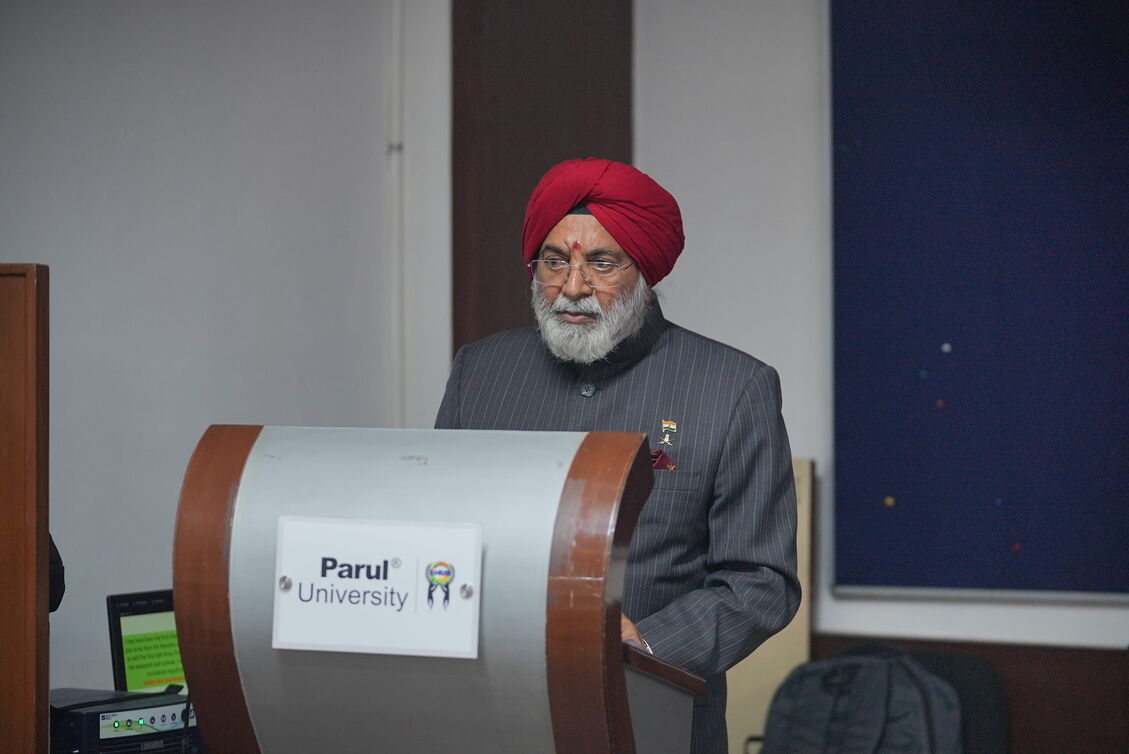
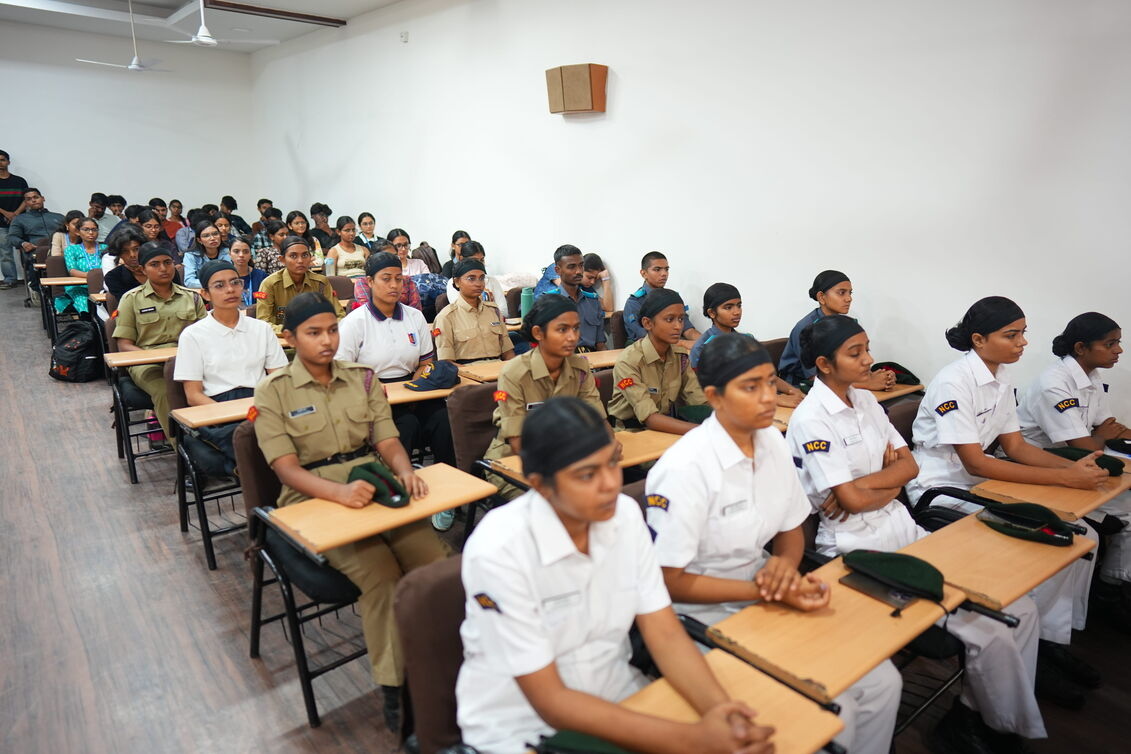
So a student stood up and asked about something that had been all over the news — Iran attacking an Indian cargo ship in the Strait of Hormuz. Should India hit back? Militarily? It is the kind of question that gets heads nodding in a room full of twenty-year-olds.
First piece. Fighting a war in the current context is not a simple affair. You do not, you simply do not, walk into a conflict unless you carry the conviction that you will win it. He was not being philosophical. He meant it operationally.
Second piece, and this one cut through all the noise. The conflict was started by America and Israel. Not by India. So tell me, what strategic purpose does Indian involvement serve? None. Zero. You do not bleed for someone else’s war when you have nothing to gain and everything to lose.
What was the real lesson buried in all that? Strategic patience. It beats reactive aggression. Always has. India’s government conveyed displeasure through diplomatic channels — the kind of response that keeps your options open instead of shutting them down. Escalating into armed conflict would have served someone else’s strategic objectives while India paid the bill. General Singh was not going to recommend that. Not in a thousand years.
Question 2: What Should India’s Youth Do If War Comes?
This one felt personal in the room. You could tell. A young person asking a general with 46 years of service, if war comes, what do you expect from us?
He could have given them something stirring. A call to arms. A patriotic moment. He gave them something tougher instead.
Self-sufficiency. That was the word he kept coming back to. India must be self-sufficient in military power. Must be able to defend itself against any aggression without depending on anyone else’s goodwill. Pakistan is an adversary. China is also a challenge. India has to be prepared. Not sometimes. Always.
And then he said the part that really landed. India cannot wait for other countries to help. That help might show up. It might not. You cannot build national defence on a maybe. Whatever India does has to flow from national interest. Nothing else gets a seat at that table.
So what is the youth’s actual job here? Build. Build a self-sufficient nation. In armaments. In capability. In deterrence. Build it so that if anyone, anyone, threatens India, the response comes from a position of strength. Not from a position of panic. Not from a position of scrambling to assemble what should have been ready years ago. He was not asking those students to pick up a gun tomorrow. He was asking them to build the country that makes guns matter.
Question 3: Why Is There a Shortage of 9,000 Officers in the Indian Army?
This student had done the homework. Came armed with numbers. Authorised strength 50,083 officers. Currently serving 41,000. Shortage, approximately 9,000. That is not a rounding error. That is a gaping hole in the leadership structure of the world’s largest volunteer army.
General JJ Singh did not flinch. Acknowledged the gap straight away. But then he flipped the framing entirely.
Do you know how the NDA examination works? Out of 20,000 to 30,000 candidates who sit for it, somewhere between 300 and 400 come through the other end. Three hundred out of thirty thousand. Sit with that number for a moment. That is roughly a one percent selection rate.
And his position on it was immovable. Good officers are not easy to come by. The army will not dilute the standards of the people who lead it. Will not. Cannot. He used the word non-negotiable, and he meant it the way soldiers mean things, as a line that does not move regardless of pressure. Short service commissions help fill gaps, sure. Officers who get promoted from the ranks contribute too. But the quality bar for commissioned officers? It stays exactly where it is. High. Deliberately, stubbornly, unapologetically high.
What he was really telling that room full of students and some of them understood instantly is that 9,000 positions sit empty right now. The opportunity is enormous. But enormous opportunity does not mean easy entry. The path demands exceptional ability. Wanting it badly is not enough. You have to be good enough. That is a different conversation entirely.
Question 4: What Happened After the Pahalgam Attack?
The question came wrapped in something broader, how do the armed forces and the government actually coordinate? But General Singh did not stay in the abstract. He went straight to Pahalgam. The recent terrorist attack. The tourists who were killed.
When Pakistan killed innocent tourists in Pahalgam, he said and his tone shifted noticeably when he said it, the decision was made to give them a lesson. That was his phrase. Give them a lesson. Operations were launched. Pakistan was put under pressure.
But here is the part that separates doctrine from rage. He drew a line. India targeted only military installations. Air bases. Radars. Military targets. Not a single civilian target. He was emphatic about that. Almost insistent. And rightly so because that distinction is not just a tactical choice.
It tells you something about who India chooses to be even when it has every reason to be furious. You hit the military infrastructure. You do not hit the people. Even when your own unarmed tourists were the ones who got killed first. India held to its rules of engagement during offensive operations. That commitment cost nothing in effectiveness and gained everything in credibility.
Question 5: How Does the Army Stay Relevant When Machines Get Smarter?
Now this was a question from someone who had clearly been reading beyond the syllabus. The balance between human soldiers and technology that keeps leapfrogging ahead, information technology, cyber warfare, space warfare, artificial intelligence. Where does the person holding the rifle fit when algorithms start making battlefield decisions?
General Singh did not wave the question away. He took it seriously. Leaders must be aware of all these domains, he said. All of them. The army already works with academia and the private sector to modernise, and that collaboration is not ceremonial. But he was also honest about something that a less secure person might have glossed over. India may not yet match China, America, or Israel in some technology areas. He said it plainly. No hedging.
What he said next, though, carried real weight. The country is catching up quickly. Indian minds are sharp. The learning curve is steep but the speed is real.
And here is the part that should have made every engineering and computer science student in that auditorium lean forward. The Indian military’s modernisation push does not happen inside some sealed-off government building. It needs talent. From universities. From classrooms exactly like the one General Singh was standing in. People who understand AI. People who can think about cyber threats. People who know what space warfare even means in practical terms. The collaboration between defence and academia — and Parul University has already formalised this through its MoU with the National Defence Academy is not a symbolic gesture printed on letterhead. It is an operational necessity. The army needs what universities produce. General JJ Singh said that out loud, to an audience that could actually do something about it.
Question 6: Why Doesn’t India Take Stronger Offensive Action?
This question carried frustration in every syllable. And honestly? It is a frustration that runs deep in an entire generation. Terrorism crosses the border. Provocations keep coming. Soldiers die. Civilians die. And then — at least from the outside — India appears to hold back. Again. Why?
General Singh neither dismissed the frustration nor indulged it. He did something harder. He explained it.
What we see in the world today, he said, is that powerful countries sometimes violate rule-based international law. They do it because they can. India is a responsible nation. India should not behave the way some of those powerful nations do.He let that sit. And then came the other half. Delivered quietly, but with the kind of quiet that comes from a man who once commanded a strike corps during Operation Parakram and knows exactly what offensive capability feels like when you are the one holding the trigger. When the situation demands it, he said, and when India is challenged, we will fight to win. Before that moment comes, India should not be the aggressor.
Do not misread that as timidity wearing a diplomatic suit. It is a doctrine. Strategic restraint married to strategic capability. India maintains at all times the capability to strike decisively. But it holds that capability in reserve until the situation genuinely and unmistakably demands its use. The restraint does not come from weakness. It comes from knowing the strength is already there, coiled and ready, and choosing not to use it until there is no other honest option. That is a fundamentally different thing from being unable to act. General Singh wanted those students to feel the difference in their bones, not just understand it intellectually.
Question 7: Is There a Decision You Would Reconsider Today?
Last question of the session, and someone had the nerve to ask a former Army Chief whether he would do anything differently. Looking back. Second-guessing, maybe. It takes a certain courage to ask that to a man with four decades of command behind him.
General JJ Singh handled it with grace but zero apology. Decisions in defence, he explained, are always taken based on national interest and the information available at that time. That last part at that time he stressed deliberately. The armed forces do not operate in hindsight. They anticipate what the enemy might do. They plan responses. And then they act.
He acknowledged something that civilians, especially young ones, sometimes forget. It is extraordinarily easy to look back and suggest a different path. Hindsight is generous that way. It shows you every fork in the road, every alternative you did not take, and it makes each one look obvious. But at the time? You take the decision with the best information you have, with incomplete data, with the clock running, and with the weight of knowing that soldiers’ lives depend on what you choose. You act to protect national interest.
And then you live with it. That answer gave the room something that no lecture hall and no textbook can replicate. A glimpse into the gap between commentary and command. The distance between knowing the right answer after the fact and choosing the best answer in the moment when everything is uncertain and the stakes are human lives. General Singh spent 46 years living inside that gap. For a few minutes, those students got to look through his eyes and see what it actually looks like from the inside. Not comfortable. Not clean. But real.
FAQ - Student Q&A With Former Army Chief
What did General JJ Singh say about the Iran-India situation?
He told the students to think before reacting. The conflict was started by America and Israel not India and walking into an armed conflict without the conviction that you will win makes no strategic sense. India should not get perturbed by an isolated incident. The broader war is not India’s fight, and diplomacy was the right proportional response.
Why is there a shortage of officers in the Indian Army?
The NDA examination lets through roughly 300 to 400 candidates from a pool of 20,000 to 30,000. General Singh was firm, the army cannot and will not dilute its selection standards because the quality of the officers who lead it is non-negotiable. Short service commissions and promotions from the ranks help bridge the gap, but the bar for commissioned officers stays exactly where it is.
What did General Singh say about AI and technology in the military?
He was straight about it, India may not yet match China, America, or Israel in certain technology areas. But Indian minds are sharp and the country is closing the distance fast. The army works with academia and the private sector to modernise across information technology, cyber warfare, space warfare, and artificial intelligence. That collaboration, he made clear, is not optional.


