Technically, 1.02 lakh startups have at least one woman director or partner, according to data shared in the Lok Sabha as of January 2026. That 48% share means women are not a niche category within India’s startup ecosystem. They are close to half of it. Geographically, 50% of women-led ventures now operate in Tier II cities rather than metros.
Rebecca Sudan at Parul University!
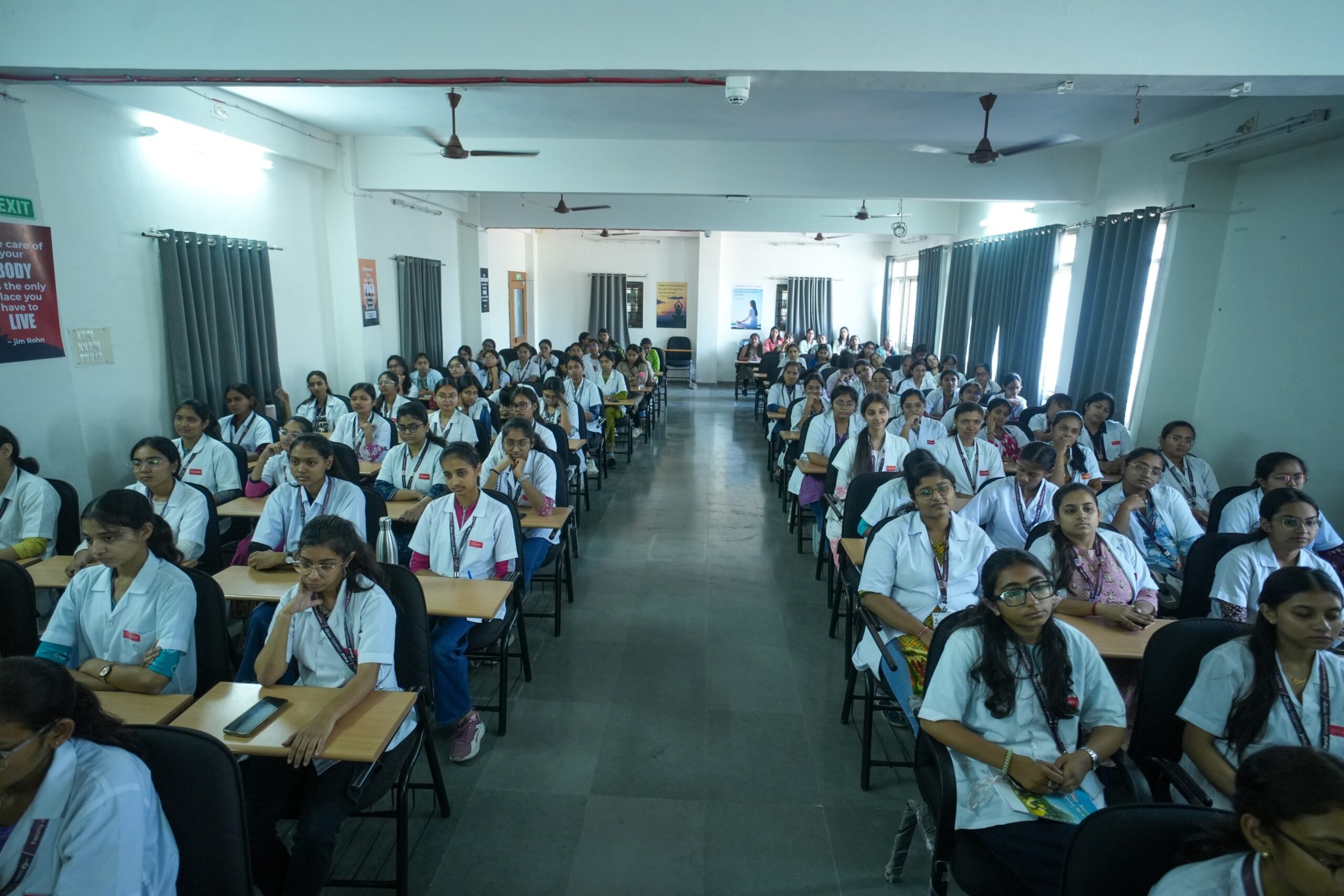
Women Startup Meet 6.0 got Rebecca Sudan in the room, a behavioral coach who has spent 20 years working with people across industries, over 18,000 of them. She brought seven women founders with her. Not keynote speakers reading off slides. Founders who have actually built something, failed somewhere, and kept going anyway.
The conversations were refreshingly unfiltered. India has crossed 1.02 lakh women-led startups recognised by DPIIT. That number did not happen by accident. It happened because somewhere, someone gave a young woman a room full of people who had already done it. That is what Meet 6.0 was. A room worth being in.
Vikshit Bharat 2047: Why India Needs Women Building Companies!
The Startup India initiative, launched in 2016, is firmly aligned with India’s march toward Vikshit Bharat 2047, the vision for a developed India by its centenary. This is not just an economic goal. It is a structural transformation that requires innovation emerging from diverse founders across diverse geographies. India cannot become a developed nation by 2047 if half its potential founders are discouraged from starting. The data shows this is changing: women now lead 48% of DPIIT ventures. But policy alone does not build companies. Universities that create founder pipelines do.
Startups have generated over 17.28 lakh direct jobs. The third option that Dr. Foram Vaghela described at Parul University, between a job and higher studies, is startup. That third option is what India’s youth need to internalise.
PIERC: How Parul University's Incubation Centre Produces Founders
PIERC, the Parul Innovation and Entrepreneurship Research Centre, is the official incubation centre of Parul University, supported by SSIP and aligned with India’s national startup infrastructure.
To explore further, a dedicated 3-day Startup Bootcamp has been organized from 23rd to 25th March 2026, specially designed to empower female students with the knowledge, skills, and confidence required to build and scale their own startups.
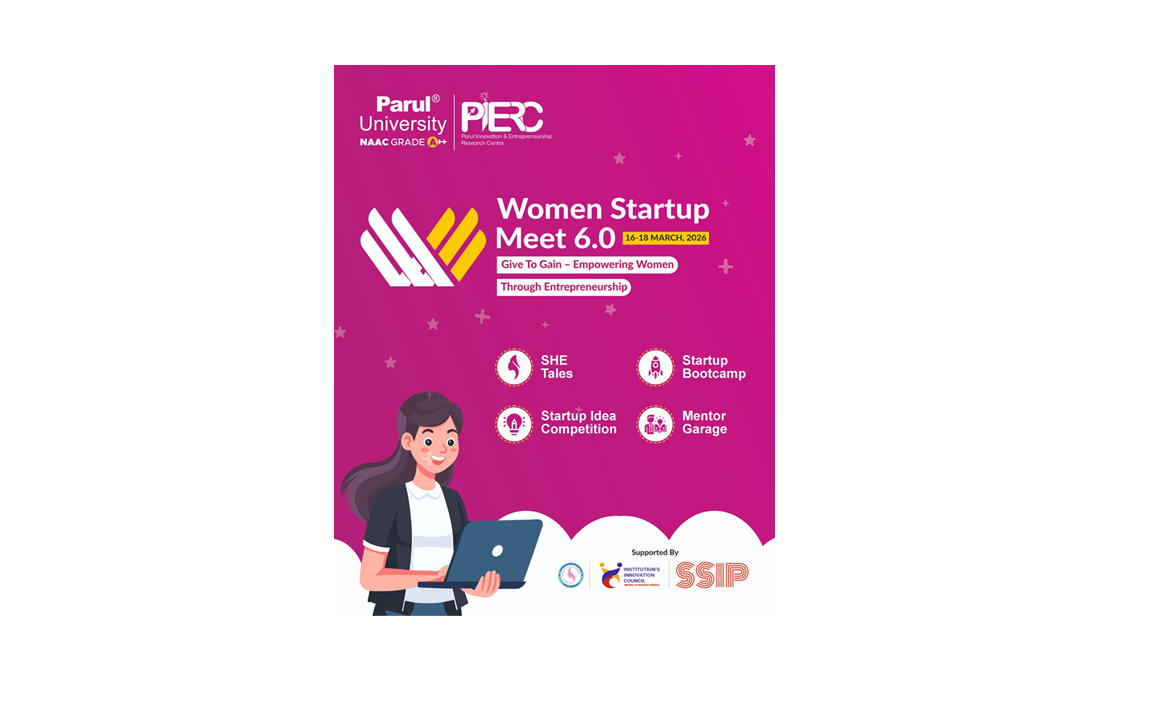
Additionally, a Startup Idea Pitching session was organized exclusively for female students with entrepreneurial ideas, where more than 60 participants presented their concepts in collaboration with PIERC, creating a dynamic platform for innovation, mentorship, and real-world feedback.
The incubation process includes market research, mentor matching, budget creation, and meeting real customers. Grants come through government-backed schemes including SSIP and iHub Gujarat. PIERC does not charge students for this support. It is free, government-funded, and designed to remove every barrier between a student with an idea and a student with a company.
The results speak for themselves. Anjali Khichar received an SSIP 2.2 grant in her first year and now runs three ventures. Priyanshi Rathod received ₹1.2 lakh and is running paid pilots with three universities and two schools. At Women Startup Meet 6.0, seven women founders spoke to students across three days. Two of those seven were current PU students. That ratio matters. It means the pipeline is not aspirational. It is operational.
What Students Can Study at Parul University to Build a Startup
MBA in Entrepreneurship and Startup Acceleration is designed specifically for founders who want to accelerate while they study. BBA provides the business foundation for undergraduates, with direct access to PIERC from day one.
But startups do not only come from business students. Priyanshi Rathod studies Computer Science. Dr. Foram Vaghela comes from Analytical Chemistry. Anjali Khichar arrived with no business background at all. The programmes that support the broader founder ecosystem include B.Tech CSE in AI and Data Science, BBA in Digital Marketing, MBA in Digital Marketing and Sales, Integrated BBA-MBA, and B.Sc. Agriculture. Every student at Parul University, regardless of programme, can access PIERC’s incubation infrastructure.
Parul University provides this within a 200+ acre NAAC A++ campus with 70,500+ students, 3,500+ faculty (200+ from IITs, NITs, IISc), 2,200+ recruiters, 60 LPA highest package, ₹25 Crore+ research funding, and ₹15 Crore+ startup funding.
India’s Women Startup Ecosystem 2026:
2.12 lakh DPIIT-recognised startups. 1.02 lakh with at least one woman director/partner (48%). ~₹294 crore Seed Fund allocated to women-led ventures. 17.28 lakh+ direct jobs created by startups. 3rd largest startup ecosystem globally.
FAQs
What is PIERC at Parul University?
PIERC is the official incubation centre of Parul University. 230+ startups incubated, 37 women-founded.
Can students build startups while studying at Parul University?
Yes. Anjali Khichar (first year) runs three ventures. Priyanshi Rathod (second semester) runs paid pilots with 3 universities and 2 schools. Both received PIERC grants. MBA Entrepreneurship, BBA, and all B.Tech programmes have direct PIERC access.
How does this connect to Vikshit Bharat 2047?
Vikshit Bharat 2047 requires innovation from diverse founders across diverse geographies. Women leading 48% of DPIIT startups is structural progress.


