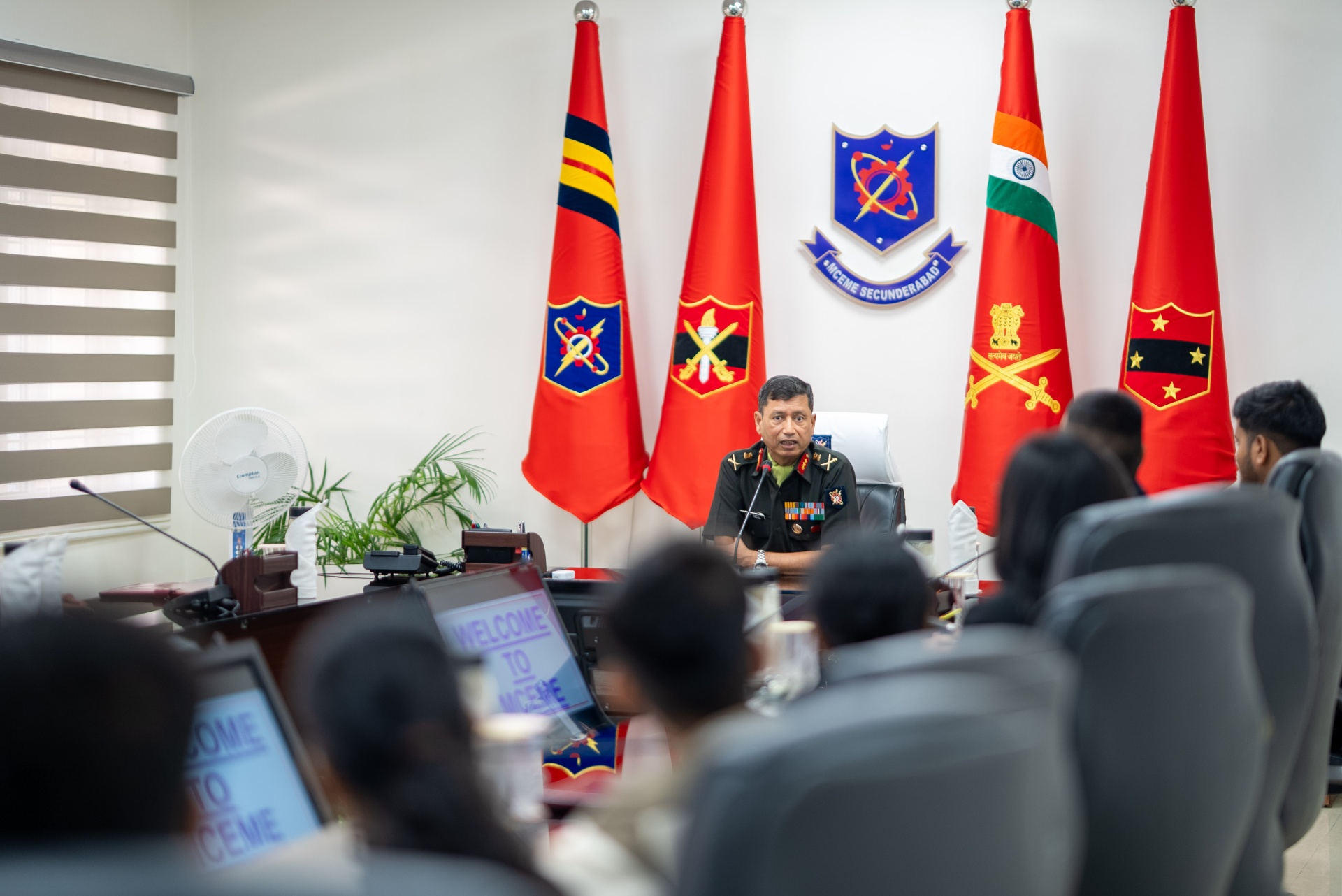
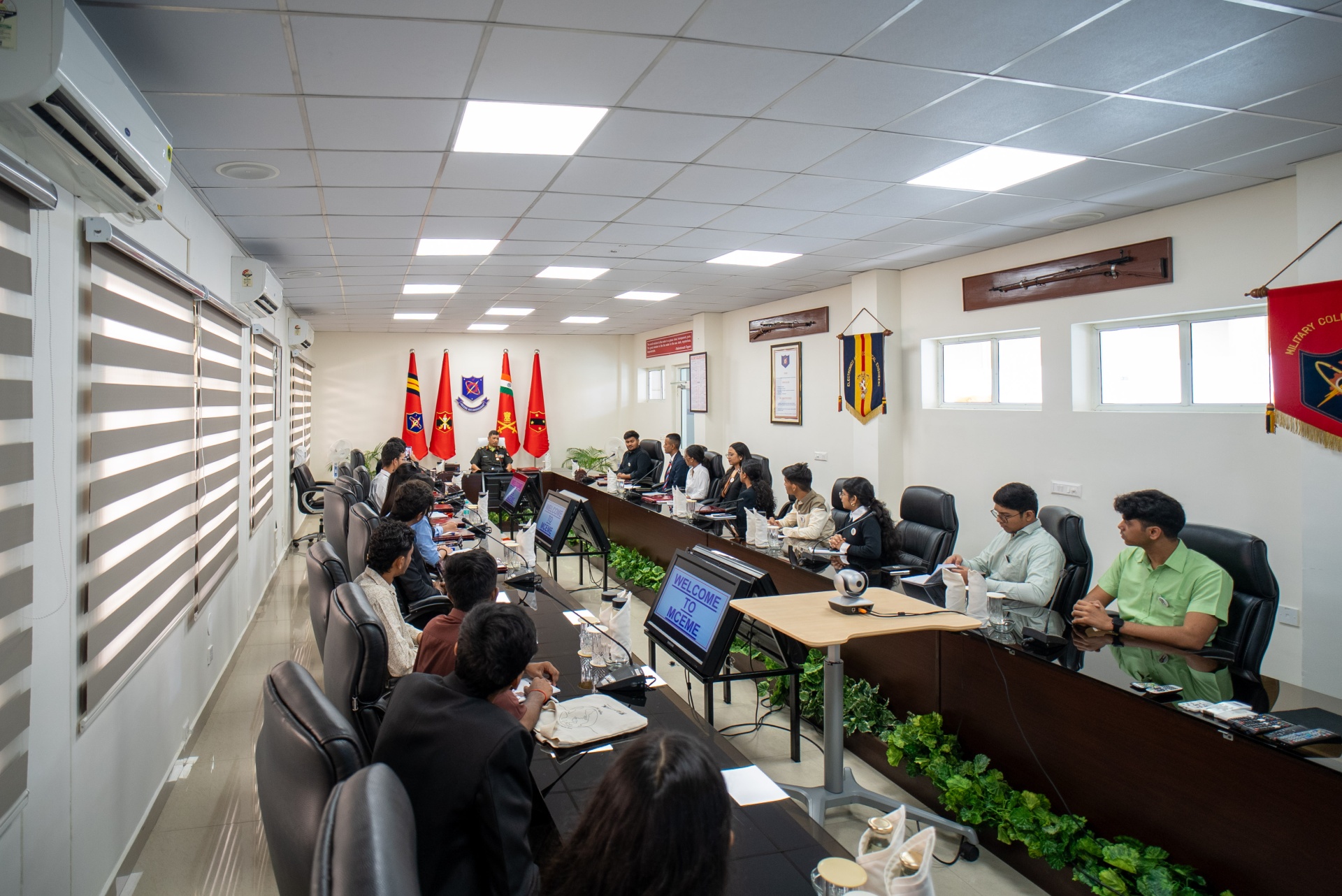
The Military College of Electronics and Mechanical Engineering is situated in Secunderabad, one of the parts of the Hyderabad metropolitan area. It is the training centre for the Indian Army’s Corps of Electronics and Mechanical Engineers, the branch responsible for keeping everything the Army uses in well maintained manner. Rifles. Radios. Tanks. Communication systems. Radars. When any of these fail in the field, an EME officer or soldier is the one who fixes them.
The Commandant of MCEME is Lieutenant General Neeraj Varshney. He also holds the title of Colonel Commandant of the Corps of EME, which makes him the lead of the corps he belongs to. He has spent decades in the Army. He holds five master’s degrees. By any measure, he is one of the more unusually qualified senior officers currently serving.
Theme One: Reduce Choices to Increase Happiness
Lt Gen Varshney‘s central principle was simple and counterintuitive. Most people assume that more choices lead to more happiness. His position, built over decades of military leadership, is the opposite. Most people spend their mental capacity on low value choices throughout the day: what to wear, what to eat, which app to open. The way to increase both happiness and effectiveness is to deliberately reduce the number of choices you face every day.
The core arguments he laid out:
- Decision fatigue drains mental capacity on low value choices, leaving almost nothing for the high value decisions that actually matter
- The army’s structural discipline removes unnecessary decisions so mental energy is reserved for the ones that cannot be outsourced
- Officers wear the same uniform, eat at the same times, and report through the same chain of command for a reason
- Structural discipline is not a restriction, it is a liberation from low value choice overhead
- Keeping all doors open forever is itself a form of indecision
“Reduce choices, control your time, free your mind for higher level thinking. Decision fatigue kills energy.”
The advice was deliberately unfashionable. Most career coaching for students focuses on maximising options and keeping all doors open. Lt Gen Varshney’s position was the reverse. At some point, you have to choose one door and close others to reach your intended destination.
Theme Two: Be Process-Oriented, Not Aspiration-Oriented
Successful people, Lt Gen Varshney argued, are slaves of routine. Routine becomes their strength. The routine doesn’t necessarily mean exercise and meditation alone. It can be as simple as waking up at 4 AM, building a reading habit, practicing scientific thinking, or doing a cross-country run at the National Defence Academy. The people who achieve outlier results all share one thing: they have built systems that work even when they do not feel motivated.
Aspiration produces good intentions. Process produces results. A student who studies for two hours daily at the same time will perform better than someone who plans to study for 10 hours only when inspiration strikes. It is about consistency. Just like athletes who train five days a week without missing sessions achieve better results than someone who trains intensely for one day and does nothing the rest of the week.
Theme Three: The Eight-Step Decision-Making Framework
This was the most practically applicable section of the session. The students had asked how he actually makes important decisions in his role as Commandant. His answer was a specific framework that the Army uses and that he has internalised over decades of practice:
- Stage 1: Define the objectives clearly, that is, “what are your goals that you want to achieve?”
- Stage 2: Set a process, what constraints apply, and what are the rules you must follow
- Stage 3: Draft a list of resources you have like time, money, people, information, and supplies
- Stage 4: Always try to have a backup, and not one but multiple, at least three or four
- Stage 5: Study the backup options and list the pros and cons of each option honestly
- Stage 6: Based on the study, choose the best course of action, not on gut feeling alone
- Stage 7: Keep track of everything, the decision, the reasons, and the potential outcomes
- Stage 8: Life is unpredictable, have a point of view based on probabilities and not certainties
The framework sounds simple when written out. In practice, most people skip at least half the steps. They jump straight to a gut-feel decision. They fail to generate real alternatives. The framework, Lt Gen Varshney said, is not complicated. What is hard is the discipline of actually using it every time.
Theme Four: Maintain a Decision Diary, Not a Journal
This was the most repeated takeaway from the session in student LinkedIn posts. A journal records what happened. A decision diary records four things: what you chose, why you chose it, what you expected to happen, and what actually happened. Over time, the decision diary becomes a tool for understanding your own biases.
The specific structure of a decision diary as Lt Gen Varshney described it:
- Entry one: the choice you made, stated clearly
- Entry two: the reasoning behind the choice at the time of making it
- Entry three: the outcome you expected, written before the outcome arrives
- Entry four: what actually happened, written after the fact
- Review cycle: look back at entries after six months or a year to see which decisions held up
Theme Five: The Three Life Biases That Distort Half of Every Decision
The final major theme was about cognitive biases. Specifically, three biases that Lt Gen Varshney argued distort roughly half of all human decisions. He did not pick these from a textbook. He picked them from decades of observing how officers under his command actually made choices in high-pressure situations:
- Confirmation bias: the tendency to seek out information that confirms what you already believe, while ignoring information that contradicts it
- Overconfidence bias: the tendency to assume you understand a situation better than you actually do, especially in areas where you have partial knowledge
- First-impression bias: the tendency to form a judgment quickly and stick to it, even when new evidence suggests otherwise
The defence against all three, he said, is awareness. You cannot eliminate bias from your mind completely. You can only become better at recognising when bias is influencing your decisions. Read widely. Engage with people who disagree with you. Force yourself to argue the opposing case. Most importantly, write your decisions down so that you can review and learn from them later.
Theme Six: Leadership and Patriotism as Culture
As the session was coming to an end, Lt. Varshney talked about leadership and the national charter. He pointed out about, how a leader’s position is equal to the lowest performing member of the team. Their aim should be to help the weakest member work on bringing the weakest member up to a level where the entire team can function.
His core principles on leadership and national responsibility:
- A leader is only as good as the lowest-performing member of the team
- Every link in the chain matters, not just the strongest ones
- Real patriotism is quieter than parades, it is daily responsibility to the people around you
- Doing your job well when nobody is watching is the test of character
- Building something in India is itself a form of national service
“Great nations are not built only by GDP. They are built by values. And values are built one decision at a time.”
How This Session Maps to Parul University Programmes
Students who attended the Lt Gen Varshney session and found themselves wondering about careers in the Indian armed forces or in defence research have specific pathways within Parul University:
- Armed Forces Motivation and Training Programme: dedicated programme that prepares students for Armed Forces careers including SSB exam preparation
- Defence Scholarship: merit based scholarship for students whose family backgrounds are in defence services
- Civil Services Coaching: structured preparation for UPSC and GPSC
- B.Tech Electronics and Communication Engineering: directly relevant to the Corps of Electronics and Mechanical Engineers that Lt Gen Varshney leads
- B.Tech Mechanical Engineering: relevant to the mechanical side of the Corps of EME’s mandate
- Career Skills Development Centre: training for soft skills assessed in the SSB and other defence selection processes
Students can explore the full Armed Forces Motivation and Training at Parul University
or read more about scholarship opportunities at Parul University for defence-track students.
How Parul University Students Documented This Session
Ms. Namita wrote a detailed LinkedIn post specifically on the Lt General Neeraj Varshney session. Her post is one of the most detailed student summaries of decision-making frameworks available publicly.
Ms. Monika Sachdeva also covered this session in her Episode 5 post, which included coverage of both the MCEME visit and the session with Ms. Manju Latha Kalanidhi at The New Indian Express.
Frequently Asked Questions
Who is the Commandant of MCEME?
He is Colonel Commandant at the Military College Of Electronics and Mechanical Engineering (MCEME) is Lt. General Neeraj Varshney. And he holds five master's degrees.
What is the Corps of Electronics and Mechanical Engineers (EME)?
The Corps of EME is the engineering backbone of the Indian Army, responsible for maintaining and repairing all of the Army's equipment: rifles, tanks, radars, communication systems, and more. Officers of the Corps are trained at MCEME in Secunderabad.
What is a decision diary and how is it different from a journal?
A decision diary records four things: what you chose, why you chose it, what you expected to happen, and what actually happened. A regular journal only records events. The decision diary forces the author to revisit their own reasoning and check whether their predictions came true.
What is the 8-step decision-making framework?
State the objective, establish terms of reference, list resources, generate multiple options, list advantages and disadvantages, choose the best course of action, write everything down, and think in probabilities rather than certainties.
What are the three life biases Lt Gen Varshney mentioned?
Confirmation bias (seeking only information that confirms what you already believe), overconfidence bias (assuming you understand something better than you actually do), and first-impression bias (locking in judgment in the first few seconds and refusing to update it).
How can Parul University students prepare for Armed Forces careers?
Through the Armed Forces Motivation and Training Programme, the Defence Scholarship for students with family backgrounds in defence services, the Civil Services Coaching for public service preparation, and B.Tech programmes in Electronics and Communication and Mechanical Engineering that map directly to the Corps of EME.