The following are the key facts shared from Dr. Varshney’s career journey:
- Position: Senior Scientist at DRDO
- Specialisation: Laser technology and Directed Energy Weapons
- Years at DRDO: 25 years, joined in 2001
- Background: Comes from a middle-class business family, born in Etah, Uttar Pradesh
- Education: Agra University topper in graduation and completed master’s in Physics from St John’s College, Agra; qualified GATE; pursued M.Tech with specialisation in lasers
- Publications: Authored books in Hindi on laser technology, published by the Defence Ministry
- Recognition: First book received the Best Publication award in its category along with a cash prize of Rs 50,000 in 2015
Why He Opened With Sanskrit Instead of Slides
The senior scientist Dr. Varshney began the session with a Sanskrit shlok from the Ramayana: Janani Janmabhoomishcha Swargadapi Gariyasi. He explained its meaning: a mother and a motherland are greater than heaven itself. After defeating evil, Lord Ram is advised by Lakshman to stay and rule Lanka, but he refuses, saying that no matter how glorious it is, one’s own motherland is always greater.
He used this verse to introduce a perspective that students did not expect from a defence scientist. His central argument was about language.
“Our thoughts live in our mother tongue. Our heart speaks in our mother tongue. And so our most original ideas can only truly be expressed in our mother tongue.”
He shared a practical example from his experience at DRDO. When colleagues were asked to draft official letters in English, many relied on copying and modifying older documents. The result often lacked originality and clarity. His point was simple: when people are disconnected from their natural language of thinking, their ability to express ideas weakens.
The core elements of his argument were:
- Foundational scientific literature in India should exist in Indian languages, not only in English.
- Original ideas emerge in the language a person grows up with; translation often reduces depth and authenticity.
- This is not about promoting one language—Hindi, Telugu, Tamil, Marathi, Bengali, or any mother tongue can serve the purpose.
- He has authored two books on laser technology entirely in Hindi, published by the Ministry of Defence.
- His first book received a government award along with a cash prize of Rs 50,000 in 2015.
The Structure of DRDO Most People Don't Know
Dr. Varshney walked the students through the structure of DRDO to help them understand where they could fit in as future researchers. DRDO operates 52 laboratories across India, organised into specialised clusters.
- Life Sciences cluster: focuses on how the human body and mind function under extreme conditions such as the cold of Leh-Ladakh and the heat of Rajasthan, and develops food, clothing, and psychological support systems for soldiers.
- Naval cluster: supports the Indian Navy with submarines, torpedoes, naval ships, and underwater warfare technologies, with key labs in Visakhapatnam, Mumbai, and Kochi.
- Missile Technology cluster: based in Hyderabad and shaped by the work of Dr A.P.J. Abdul Kalam, responsible for systems like the BrahMos cruise missile.
- Electronics and Communication cluster (where Dr Varshney works): includes radar systems, laser technology, electronic warfare, microwave technologies, and protection systems against nuclear and chemical threats.
- Armament cluster: develops ammunition, weapons systems, and battlefield equipment for the Army, primarily based in Pune.
In terms of scale, DRDO has around 5,000 scientists supported by nearly 30,000 staff. Dr Varshney also highlighted the Young Scientist Laboratory programme, an initiative with seven dedicated labs where scientists below the age of 35 work together under leadership from the same age group. One such lab operates in Hyderabad.
Laser Technology: A Lonely Choice That Became a Career
Dr. Varshney chose laser technology in the mid-1990s when it appeared exciting and full of potential. However, the path turned out to be far more uncertain than expected. When he applied to private companies for his final semester project, he faced repeated rejections. The reason was simple: there was almost no laser-related work happening in India at the time.
“I was very disappointed. I thought: what have I done? What technology have I chosen?”
At that stage, only two institutions in the country were engaged in serious laser research: the Raja Ramanna Centre for Advanced Technology in Indore and the Defence Science Centre in Delhi. Despite the limited opportunities, he continued forward. He completed his M.Tech, received offers from ISRO and the Physical Research Laboratory in Ahmedabad, and eventually joined DRDO’s laser-focused laboratory.
“When I became a Scientist at DRDO, I realised that this is the only technology that will guide us into the future. Laser is not just the present, it is what comes after the missile.”
He explained that the future of defence technology lies in Directed Energy Weapons—high-energy laser systems capable of disabling or destroying targets at the speed of light. For him, contributing to India’s leadership in this domain is not just a profession but a long-term mission. His personal goal before retirement is to develop a large-scale operational laser system.
The key facts about DRDO’s laser technology programme as described by Dr. Varshney are:
- In the mid-1990s, only two institutions in India worked seriously on lasers: Raja Ramanna Centre for Advanced Technology (Indore) and Defence Science Centre (Delhi).
- DRDO entered the laser technology space in the early 2000s and has built expertise over the past two decades.
- Directed Energy Weapons represent the next stage beyond traditional missile systems, operating at the speed of light.
- These systems can neutralise drones, missiles, and other threats without relying on physical ammunition.
- Dr. Varshney’s personal goal is to build a large-scale operational laser system for India before retirement.
Students interested in this field can explore programmes like B.Sc and M.Sc Physics at the Parul Institute of Applied Sciences, which are directly aligned with careers in laser science and directed energy research.
Career Pathways Even for Non-Engineering Students
One of the most memorable questions from the session came from a Parul University student who asked, “Many of us come from management backgrounds, not science. Can we still contribute to DRDO?” Dr. Varshney’s response was clear and grounded in reality. Direct scientific roles at DRDO require technical qualifications such as B.Tech or M.Tech. However, the larger ecosystem around DRDO is extensive and offers multiple avenues to contribute.
“The defence industry is the asset of the country. If you manage a company that works for us, you are contributing, just through a different channel.”
He explained that private companies involved in manufacturing components, supplying materials, managing logistics, or handling contracts play an equally critical role in supporting DRDO’s work. Contribution is not limited to scientists alone.
For students interested in direct technical exposure, DRDO offers a Summer Internship Programme. The key details shared were:
- Duration: four to six weeks
- Eligibility: B.Tech, M.Tech, B.Sc and M.Sc students from relevant technical fields
- Specifically encouraged: Chemical Engineering students, as laser research involves surface morphology and materials science
- Application process: through the official DRDO website based on lab-specific openings
- Direct interaction: Dr. Varshney invited students from his domain to reach out to him personally for guidance
Why Niloufer Cafe Stands As An Important Part For The Session?
Niloufer Cafe is a Hyderabad institution, open since 1978 and known for its Irani chai. It is not the place one would typically expect to find a senior scientist from the Defence Research and Development Organisation sitting with a small group of undergraduate students.
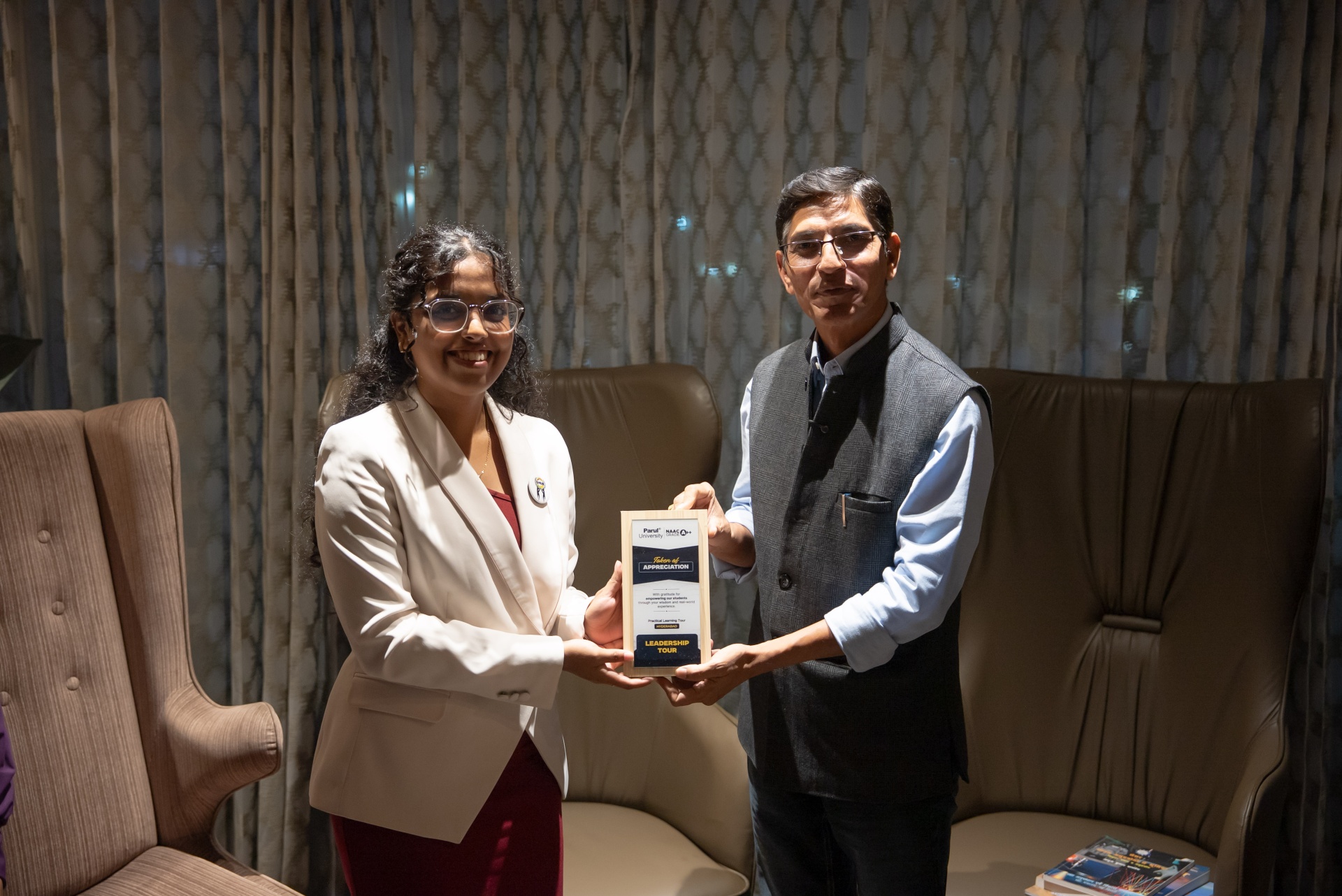
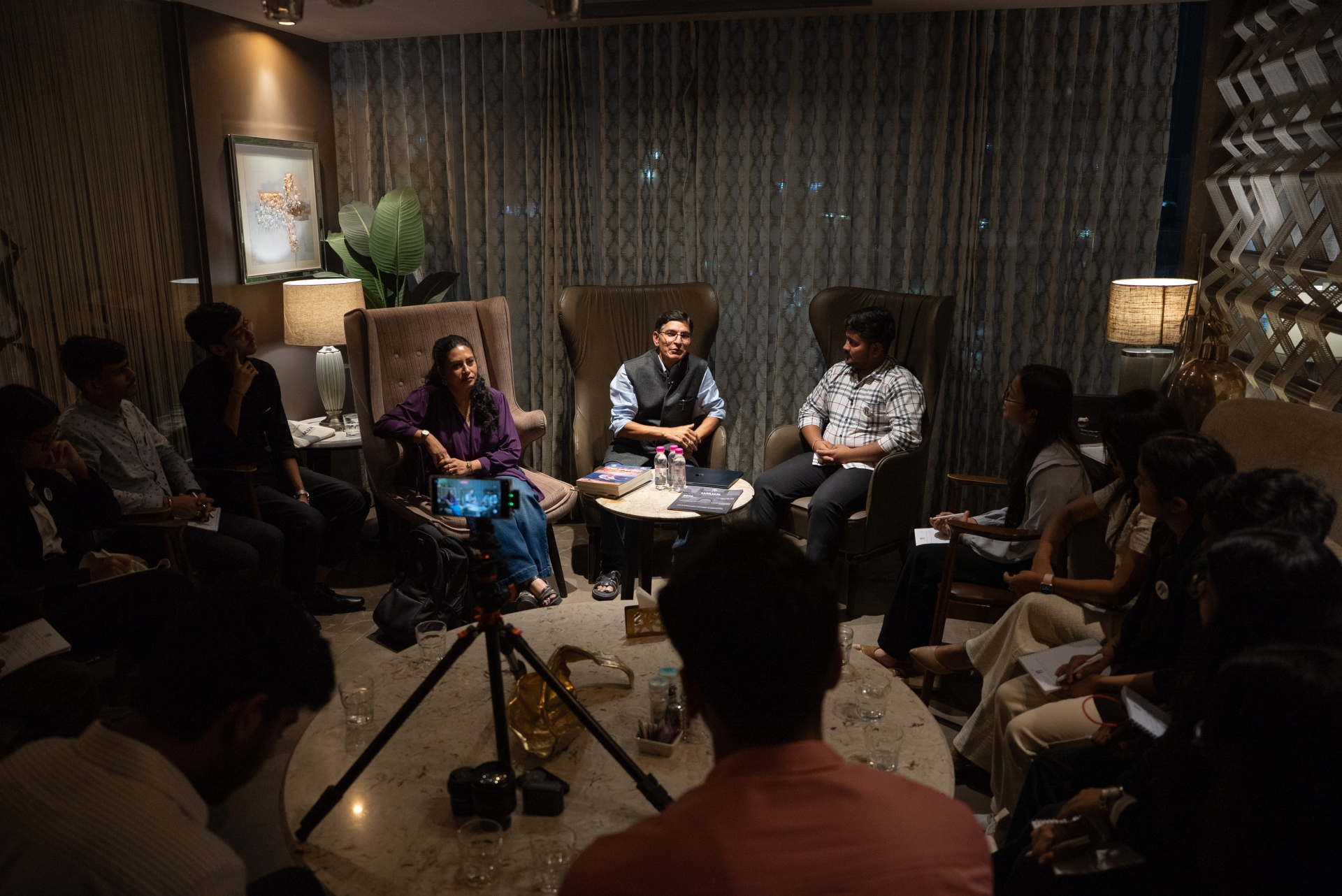
On 30 October 2025, as part of the IIMUN Leadership Tour sponsored by Parul University, ten selected students gathered here for a session that would stand out across the entire tour. Dr. Anuj Kumar Varshney arrived carrying two books, both written in Hindi, both focused on laser technology.
The session extended for nearly two hours, moving seamlessly from Sanskrit philosophy to the technical realities of building Directed Energy Weapons in India. It was not just a lecture, but a layered discussion connecting language, science, and national development.
For a deeper understanding of how this session fits into the broader programme, refer to the IIMUN Hyderabad Leadership Tour Complete Hub, which covers all 11 sessions conducted across four days.
How This Session Maps to Parul University Programmes
A student who left Dr. Varshney’s session inspired and thinking about what to study next has multiple structured pathways within Parul University that align with defence research and DRDO’s ecosystem.
- B.Tech Electronics and Communication Engineering: directly aligned with DRDO’s Electronics and Communication cluster, where Dr Varshney works.
- B.Tech Mechanical Engineering: relevant to DRDO’s Armament and Naval clusters.
- B.Tech Chemical Engineering: connected to laser surface morphology and materials science, an area specifically highlighted by Dr Varshney.
- B.Sc and M.Sc Physics: directly relevant to laser science and Directed Energy Weapons research.
- Micro Nano Research and Development Center (MNRDC): provides material characterisation infrastructure applicable to defence and advanced research.
- Armed Forces Motivation and Training Programme: for students who want to combine technical education with a pathway into defence services.
How Parul University Students Documented This Session
Ms. Monika Sachdeva of Parul University wrote a detailed LinkedIn post on this session. Her post captures a memorable moment when Dr. Varshney mentioned that quantum physics comes up at the family dinner table. Her reflection: this is the kind of home every learner dreams of, where curiosity is just part of everyday life.
For the complete tour hub and other session deep dives, see the companion articles on
Frequently Asked Questions
Who is Dr. Anuj Kumar Varshney at DRDO?
Dr. Anuj Kumar Varshney is a senior scientist at the Defense Research and Development Organisation having 25 years of experience in laser technology and Directed Energy Weapons. He has also published books on laser technology in Hindi.
How many labs does DRDO have in India?
They have 52 operational laboratories in India, mainly focusing on life sciences, naval, missile technology, electronics, communication, and armament. And the cluster of missile technologies lab in Hyderabad is closely associated with the works of APJ Abdul Kalam.
How many scientists work at DRDO?
DRDO employs approximately 5,000 scientists supported by nearly 30,000 staff members. Scientists are categorized from Scientist A through F and above, with each level carrying greater responsibility.
Can students apply for DRDO internships?
Yes. DRDO runs a Summer Internship Programme of four to six weeks for students. Dr Varshney specifically encouraged Parul University students from chemical engineering backgrounds to apply, since his laser technology work involves surface morphology and materials science.
Why did Dr. Varshney write his laser technology books in Hindi?
Because foundational scientific literature in India should exist in Indian languages. His argument: original ideas live in the language a person grew up speaking, and being forced to translate those ideas costs originality and depth. He clarified he is not advocating Hindi alone: Telugu, Tamil, Marathi, Bengali, or any regional language works just as well.
What are Directed Energy Weapons?
Directed Energy Weapons use focused electromagnetic energy, primarily laser light, to disable, destroy, or defend at the speed of light. Dr. Varshney's position is that laser is not just the present but what comes after the missile. India's research in this area is led by DRDO's Electronics and Communication cluster.
Can non-engineering students contribute to the DRDO ecosystem?
Yes. While direct scientific roles require technical qualifications, the ecosystem around DRDO includes private companies that manufacture components, supply materials, manage logistics, or handle contracts. Management, finance, and operations professionals at these companies directly support India's defense ecosystem.