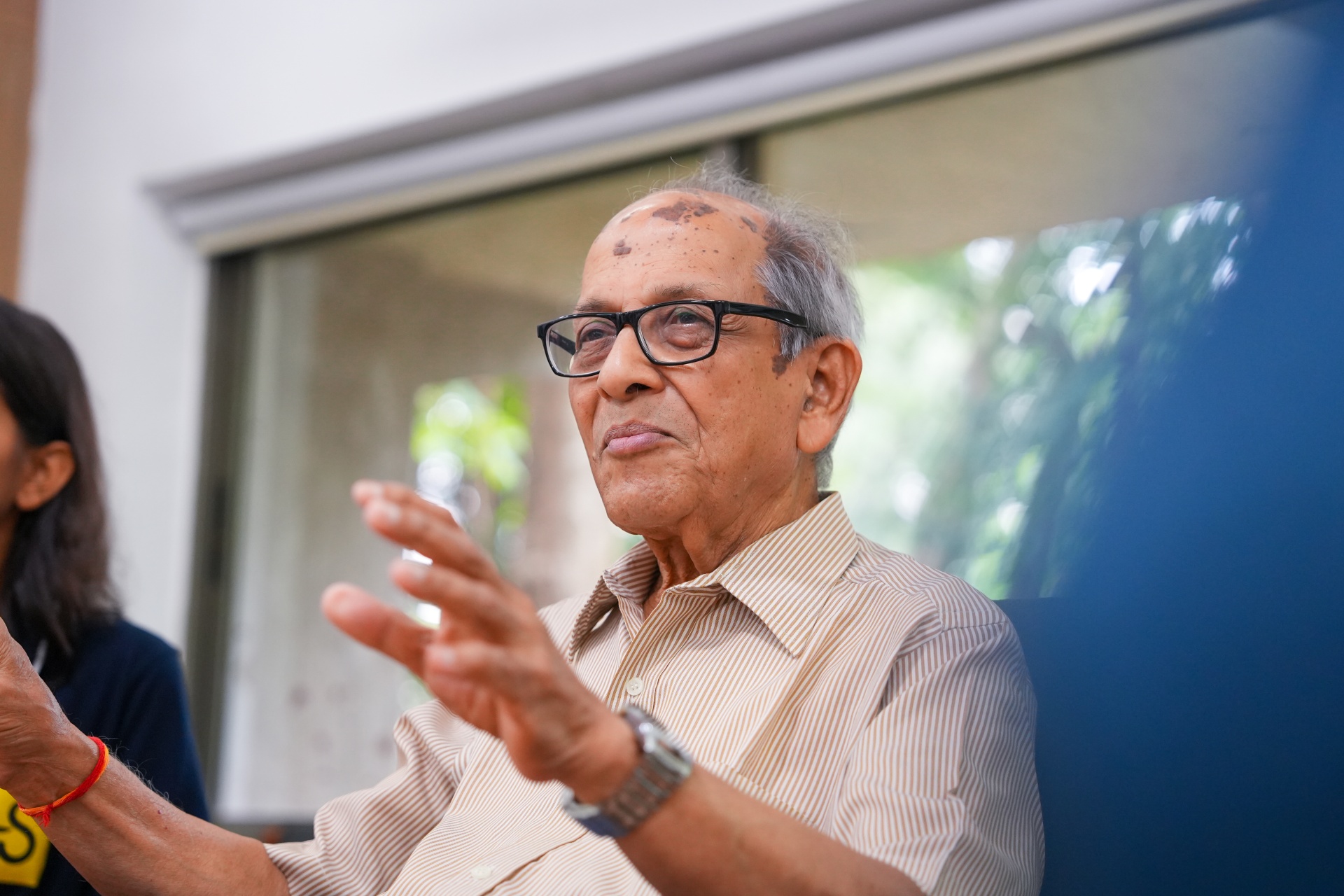
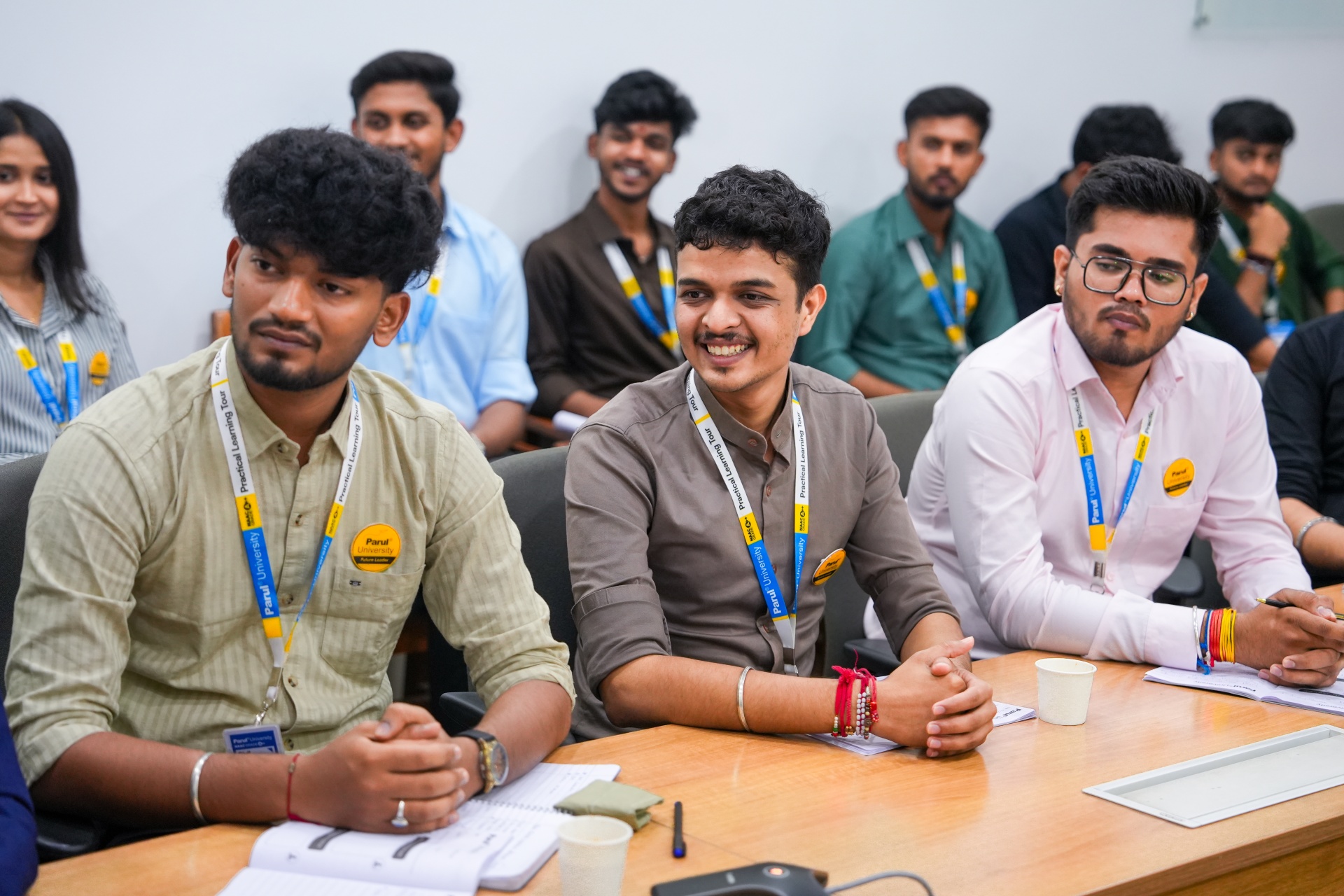
Professor Tarun Kant began his journey at IIT Bombay in the year 1963 and proudly graduated in 1967. He completed his Master’s degree at IIT Kanpur and gradually earned his PhD from IIT Bombay. As a faculty member, he joined on 20th January 1971 and since then, there has been no looking back. He has been associated with the institution for more than 50 years. He has held leadership positions including Head of the Department of Civil Engineering, Dean of Planning, and Chairman of the Joint Entrance Examination (JEE).
His stellar research has been primarily in computational mechanics and structural engineering. Besides this, he has personally guided 27 PhD scholars, 77 Master’s degree students, and 19 Bachelor’s degree projects. He has published 166 research papers and is currently the only civil engineer in India to be elected as Fellow of all four national academies:
- INAE – Indian National Academy of Engineering
- INSA – Indian National Science Academy
- IASc – Indian Academy of Sciences
- NASI – National Academy of Sciences, India
Till today, he continues to teach as a Professor Emeritus at IIT Bombay. When 28 Parul University Civil Engineering students visited his department, he delivered a career talk rooted in half a century of personal experience, which deeply inspired the students. If you too wish to meet such dignitaries and gain the best exposure, enrol into the B.Tech in Civil Engineering program at Parul University.
Civil Engineering Is the Mother of All Engineering Branches
Prof. Kant opened by tracing the origin of engineering as a profession. Before specialisations existed, there was one kind of engineering, and civil engineering was its foundation. He argued that this historical primacy is not ceremonial. It has practical career implications.
He quoted – “If you have good knowledge of structures, you can easily get into other exciting branches like automobile, design or the Indian Space Research Organization (ISRO).”
His reasoning was specific. Nuclear power plants need containment structures designed to prevent radiation leakage. A civil engineer who understands structural behaviour under extreme loads can design these. Aerospace companies need engineers who understand stress, fatigue, and material behaviour for aircraft and satellite structures. ISRO needs structural engineers for launch vehicle design. The point is not that civil engineering is better than other branches. The point is that structural knowledge is transferable to domains that students might not associate with civil engineering. With this, you can level up your career and enrol into B.Tech in Aerospace Engineering and take off with engineering excellence.
He told students they should feel proud of their branch choice. The skills they are building in structural analysis, mechanics of materials, and design are the same skills that high-technology industries need.
The Foundational Subjects Every Civil Engineer Must Master
Prof. Tarun Kant briefed the learning progression that builds a civil engineer, he has mentioned the same in phases.
Phase 1: Rigid Body Mechanics
Understand what happens to objects when forces are applied. This is the foundation of every structural calculation.
Phase 2: Mechanics of Materials
How materials bend, deform, and fail under loads. The behaviour of steel, concrete, wood, and composites under stress.
Phase 3: Structural Analysis
Calculate forces in bridges, buildings, and other structures. Determining where loads travel and where failures might occur.
Phase 4: Structural Design
Using analysis to design structures that are safe, efficient, and economical. This is where theory becomes construction.
All the above-listed phases can be mastered by pursuing the M.Tech in Construction Project Management program at Parul University. He emphasised that physics and mathematics are not just examination subjects. They are the operating system of every project an engineer will ever work on. Workshop skills like carpentry, fitting, and surveying, which students sometimes dismiss, build the hands-on understanding that distinguishes an engineer who can design from one who can also build.
The Department Video: What IIT Bombay's Civil Engineering Labs Look Like
Prof. Tarun Kant showed students a video about the department that revealed the scale of research infrastructure:
- A geotechnical centrifuge, one of the largest in Asia, capable of spinning massive weights at high gravity to simulate decades of soil behaviour in hours
- An ocean engineering laboratory with a 50-metre-long water tank for studying wave behaviour
- 20 specialised laboratories where students conduct hands-on research
- Research focus areas: structural engineering, water resources management, geotechnical engineering, transportation, remote sensing, construction management
- Annual festival Aakar with technical competitions and social impact projects
The department was founded in 1958, the same year IIT Bombay was established. The first batch graduated in 1962. The infrastructure has been built over 65+ years of continuous investment, and the research output has shaped India’s understanding of structural behaviour, water management, and earthquake engineering.
Career Paths After Graduation: Four Options He Laid Out
Prof. Tarun Kant answered the question every civil engineering student after 12th carries: what do I do after graduation? He gave four clear options without corporate jargon –
Option 1: Higher Studies Through GATE
Write the GATE exam to secure admission into M.Tech programmes at IITs, Parul University, and other premier institutions. India is one of the few countries where the government pays students to study through a fellowship stipend of Rs 14,000 per month. Prof. Kant also noted that education in countries like Germany is free for everyone, making it an attractive option for students who want international exposure without draining their parents’ savings.
He advised students to clear the GRE for international programmes but warned against wasting family money, suggesting instead that they seek paid research positions under professors.
Option 2: Government Service Through UPSC
UPSC examinations lead to central government departments such as Railways (with free travel passes and government housing), the Public Works Department, and other infrastructure agencies. Prof. Kant noted that in his era, joining Indian Railways was considered a dream posting.
Option 3: Construction and Design Companies
Engineers India Limited (a government company executing massive projects worldwide), private consulting firms, and large construction companies were among the career pathways discussed by Prof. Kant. He also shared what he called a secret about corporate careers:
“People who work at the dusty project sites get promoted much faster and become chief executive officers compared to people who just sit in the design offices.”
This observation matched exactly what Er. Mahesh Tendulkar told the same students two days earlier: spend your first five years sweating on the construction site. Two experts, separated by different career paths but united by the same conclusion.
Option 4: Teaching and Research
Prof. Kant also spoke about his own career path. He described teaching and research with the clarity of someone who chose academia over a better-paying corporate offer.
“Teaching and research is a unique place where nobody tells you what to do and you have the freedom to chart your own path.”
The Personal Journey: Rs 650, a Cup of Tea, and a Prime Minister Interview!
Prof. Kant’s personal story gave students a concrete example of how careers actually unfold, which is rarely in a straight line. In 1969, he got his first job at Tata Consulting Engineers at Rs 650 per month. In Mumbai, this barely covered a room and food. He saved what he could to send back to his parents. A friend’s referral moved him to Builders Associates at Rs 750, where he designed a 10-storey building near the Dreamland Cinema in Mumbai and visited the site to watch his design being constructed.
During a weekend visit to the IIT campus, his old professor offered him tea and a piece of advice that changed his trajectory: working in a company means doing what a boss tells you to do. Teaching and research means nobody tells you what to do. He applied for a teaching position at IIT Bombay, accepted a lower salary, and started on 20 January 1971. The university provided free housing, which offset the pay cut. His uncle was baffled that he had moved to an expensive city for a teaching job.
Later, he saw a newspaper advertisement for the Jawaharlal Nehru Memorial Trust UK Fellowship, offering 400 pounds, which was a significant sum in 1979. Eleven candidates from across India, including scientists and biologists, competed. After a morning interview, three were kept back. In the afternoon, those three were taken directly to the Prime Minister’s office. The Prime Minister of India personally interviewed Prof. Kant, who was selected for the fellowship. He told students that reaching places like the Prime Minister’s office requires no substitute for hard work. Then he smiled and added that sometimes you also need a tiny bit of luck.
The Student Interaction: A Rare Question From Nepal
The audience included students from multiple states, including Rajasthan and Haryana, and one student from Nepal. A student named Aisha, in her final year, asked how Prof. Kant achieved such distinction in his field. His answer was characteristically modest: much of it happened by chance. He never planned to become a teacher. He kept his eyes and ears open, listened to his teachers’ advice, and worked hard on every task.
The students found this reassuring. It removed the pressure of needing a perfect plan at age 21. The takeaway: do good work today, stay alert to opportunities, and the career will find its shape over time.
This is the same pattern visible in Tanish Patel‘s story at Parul University: a 7.04 CGPA student who did not plan for Microsoft, but engaged fully with the 40-day impact training, built a genuine project, and found himself with a 60 LPA offer.
Read more on Tanish Patel: 7.04 CGPA to 60 LPA at Microsoft
Frequently Asked Questions
Who is Prof. Tarun Kant?
Institute Chair Professor at IIT Bombay. B.Tech IIT Bombay (1967), M.Tech IIT Kanpur, PhD IIT Bombay. Only civil engineer in India elected Fellow of all four premier national academies (INAE, INSA, IASc, NASI). Guided 27 PhD scholars, 77 Master's students. Published 166 research papers. Former Head of Department, Dean of Planning, and Chairman of JEE. Career spanning 50+ years.
What career paths did Prof. Kant recommend for civil engineering students?
Four options: GATE for M.Tech at IITs (government pays Rs 14,000/month stipend), UPSC for Railways and PWD, construction and consulting companies (Engineers India Limited, L&T, private firms), and teaching and research (freedom to chart your own path). He emphasised that site engineers get promoted faster than design office engineers.
Did Parul University students visit IIT Bombay?
Yes. 28 B.Tech Civil Engineering students from Parul University visited the Department of Civil Engineering at IIT Bombay in September 2025. They interacted with Prof. Tarun Kant, toured the department's laboratories (including the geotechnical centrifuge and 50-metre ocean wave tank), and received guidance on GATE, ESE, and career planning.
Can civil engineers work at ISRO?
Yes, according to Prof. Tarun Kant. He stated that strong structural knowledge allows civil engineers to enter aerospace, automobile design, nuclear containment, and ISRO. Launch vehicles and satellites require structural engineering expertise for stress analysis, material behaviour under extreme conditions, and design optimisation.
Is GATE worth it for civil engineering students?
Prof. Kant recommended GATE as the primary pathway to M.Tech at IITs and premier institutions. India pays a fellowship stipend of Rs 14,000 per month to GATE-qualified M.Tech students. Parul University's Competitive Examination Cell provides structured GATE coaching. In 2026, 69 Parul University students qualified GATE with AIR 224 as the highest rank.