Every semester, a new wave of engineering students encounters the same anxiety: will Artificial Intelligence make my degree irrelevant? The question is understandable. AI tools can now generate building layouts, optimise structural calculations, produce 3D renderings from a phone photograph, and draft construction schedules in minutes. For a student halfway through a four-year B.Tech in Civil Engineering, watching AI do in five minutes what used to take a week can feel existential.
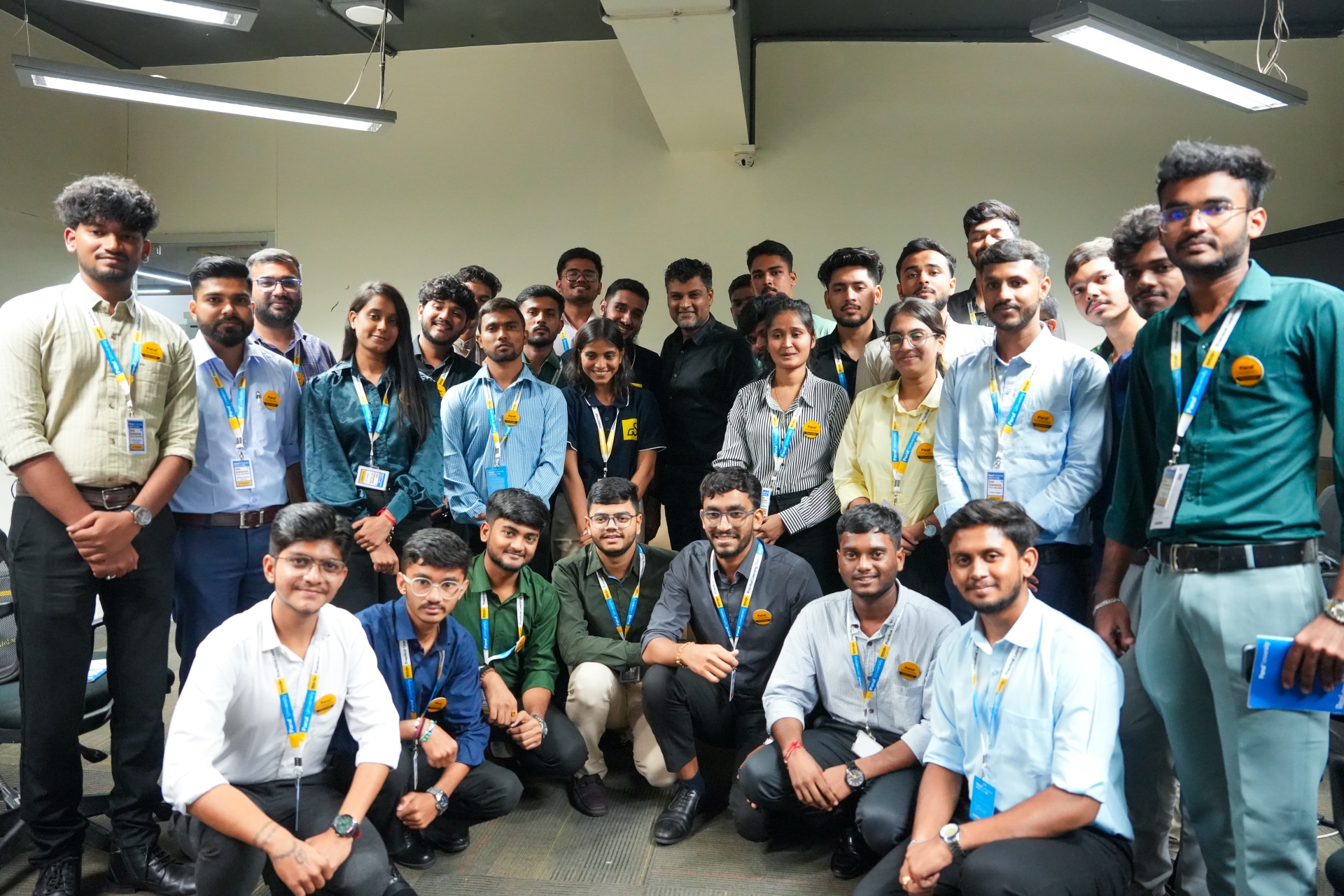
The problem with the question is not the anxiety. It is the abstraction. Most answers online are written by people who have never poured concrete, inspected a bridge underwater, or convinced a builder to change a foundation design at midnight because the drill hit unexpected rock. The four experts who addressed this question during a civil engineering tour to Mumbai in September 2025 have collectively spent over 100 years in construction. Their answers are not theoretical. They are operational.
Read more on Full Mumbai Tour Hub: 9 Sessions Complete Guide
Read the entire story of Tanish Patel: 60 LPA at Microsoft (Skills Over CGPA)
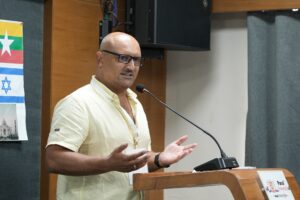
Expert 1: Er. Mahesh Tendulkar, Concrete Technologist, 33 Years
Er. Mahesh Tendulkar is the Chief General Manager and Concrete Technologist at the Saifee Burhani Upliftment Trust (SBUT), the largest cluster redevelopment project in India. He holds an M.Tech in Construction Technology and Management from IIT Bombay. His career spans Tata Power (underground hydro power, 100 metres below ground), Ambuja Cement (12 years), Mumbai Metro Lines 2A and 6, and over 1,000 bridge health inspections across Maharashtra.
His answer to the AI question was the most direct of the four:
“Artificial Intelligence can never build a bridge or pour concrete on a site. Civil engineers will always have a career with a bright future.”
The reasoning behind the statement is specific, not rhetorical. Tendulkar’s daily work involves decisions that require physical presence and real-time judgment:
- When his team drills for a Mumbai Metro foundation and hits rock 3 metres earlier than geological surveys predicted, the foundation design must change on the spot, from 4 piles to 9, at midnight, with traffic flowing above.
- When a diver 10 metres underwater in the Godavari River finds that scouring has left a bridge pillar hanging with nothing beneath it, the engineer on the boat must interpret the camera feed and make a structural call in real time.
- When 3,000 cubic metres of concrete are being poured for a mass foundation and the temperature differential threatens cracking, the team must control the exothermic reaction physically, not through a dashboard.
- When a concrete pump chokes mid-pour because the mix is wrong or the operator is exhausted, someone has to be physically present to diagnose and fix it.
AI can assist planning and optimisation, but it cannot replace site presence. Civil engineering at execution level remains a sensory, physical, and decision-intensive profession. You can strengthen these skills by enrolling in Parul University’s M.Tech in Construction Project Management program.
Expert 2: Ar. Hafeez Contractor, Padma Bhushan Architect, 600 Plus Employees
Ar. Hafeez Contractor did not address the AI question directly. His entire session was the answer. Columbia University graduate. Padma Bhushan recipient (2016). Architect of India’s three tallest buildings. Firm AHC has 600+ employees and 7.2 billion square feet of ongoing projects.
Every story he told the students illustrated something AI cannot do:
- The lady from Pune who wanted a simple house with a pitched roof, not a modern vaulted design: AI can generate both designs. It cannot read a client’s emotional attachment to a photograph she carries in her handbag. Hafeez Contractor’s cousin lost the client by imposing his own style. The lesson is about human empathy, not computational design.
- The village school built for Rs 1 lakh 10 thousand: AI can optimise costs. It cannot walk through a village, identify that local shops sell cheap wooden doors, that the land has abundant mud and stone, and that two separate toilet areas for boys and girls matter more than a concrete roof. The design solution was anthropological, not algorithmic.
- The Osho ashram decoded from a three-word note (black on black, blue tinted windows, barn house): AI would process this as keywords. Hafeez Contractor spent weeks thinking, and the breakthrough came at 3 AM when a knife scratching a black board made him connect physical texture with meaning. The insight was associative, not purely analytical.
- The slum rehabilitation where women no longer had to wait until sunset to use a toilet: AI can design bathrooms. It cannot understand the daily physical suffering of women who held their bodies in pain for hours due to lack of privacy. The architectural solution required human understanding of dignity, not just square footage optimisation.
“We as architects are supposed to provide a service to the client.”
Service requires understanding needs that clients cannot always articulate. A woman carrying a photograph of a house she loved is not providing a design brief; she is expressing a feeling. Architecture that responds to feeling requires human judgment. AI can generate options, but it cannot feel what the client feels or assign meaning to lived experience.
This approach is reflected in Parul University’s Faculty of Architecture & Planning programmes, designed to nurture creativity across architectural and planning disciplines. At the foundational and industry-ready level, B.Arch is structured for students aiming to advance careers in urban planning and sustainable construction.
Read more on Ar. Hafeez Contractor:seven stories
Expert 3: Prof. Tarun Kant, IIT Bombay, 50 Plus Years of Research
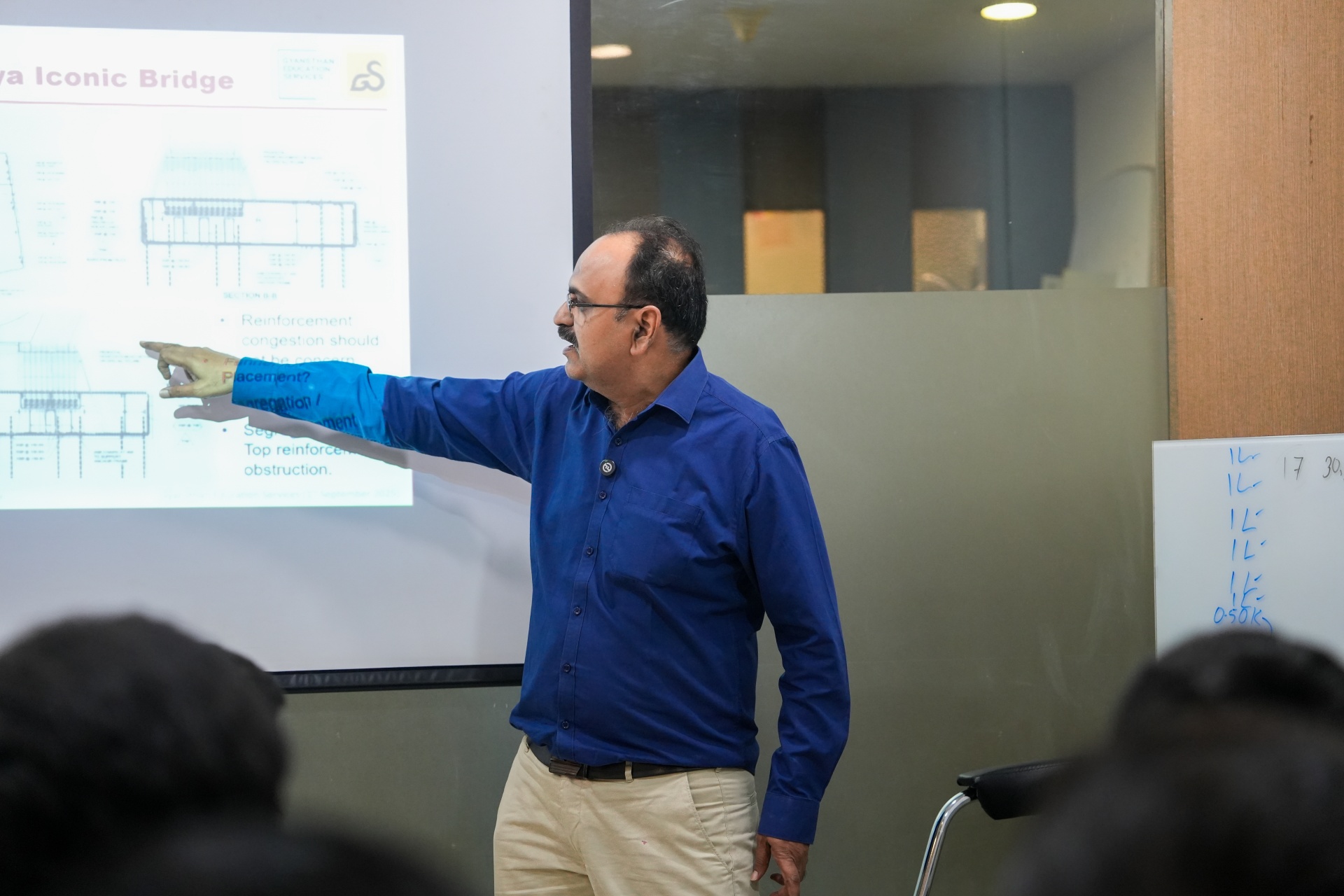
Prof. Tarun Kant is the Institute Chair Professor at IIT Bombay and the only civil engineer in India elected as Fellow of all four premier national academies. He has guided 27 PhD scholars and published 166 research papers in computational mechanics and structural engineering.
His approach to the AI question was structural. He told students that civil engineering is the mother of all engineering branches, and that strong structural knowledge opens doors far beyond traditional construction:
“If you have good knowledge of structures, you can easily get into other exciting branches like automobile design or the Indian Space Research Organization.”
His point was that AI does not threaten civil engineers who understand fundamentals deeply. Nuclear power plants require containment structures that prevent radiation leakage. Aerospace companies require engineers who understand stress, fatigue, and material behaviour under extreme conditions. ISRO needs structural engineers for satellite and launch vehicle design. These applications depend on physics-based, first-principles thinking that AI can assist with but not replace.
He also made a practical career observation: people who work at dusty project sites get promoted much faster and often become chief executive officers compared to those who remain only in design offices. This challenges the AI anxiety narrative, which assumes that purely desk-based computational roles define future engineering careers.
His 50 years of observation suggest that the field—not the screen—is where career acceleration happens, and the field is precisely where AI has no physical presence.
Read more on Prof. Tarun Kant at IIT Bombay
Expert 4: Mr. Ravi Kevalramani, Realtor with 2 Million Plus Followers!
Mr. Ravi Kevalramani is the director of RK Mumbai Realtors (established 1988) and founder of Straight Talk. He has more than 2 million followers across social media platforms. He is the only one of the four experts who actively uses AI tools daily, and his perspective was the most pragmatic.
“You must use Artificial Intelligence to make yourself better so you do not lose your job.”
He demonstrated this in real time. He took a photograph of an empty cement office space, fed it into an AI tool, and in five minutes generated a modern office rendering. Then a minimalist version. Then a luxury version styled like a Dubai palace. He asked his interior designer friend what the same work would cost. The answer: Rs 40,000 and several days. AI completed it in minutes at near-zero cost.
But he was equally clear about limits:
- AI cannot visit a building site to check if the cement is strong enough
- AI cannot verify whether electric wires are safely installed
- AI cannot feel the quality of a concrete pour
- AI cannot negotiate with a difficult pump operator at 2 AM
His advice to students was to treat AI as a speed multiplier, not a replacement for judgment. Generate multiple design options in minutes, present them to clients quickly, and then apply engineering and site knowledge to decide what is actually buildable. In his framing, the engineer who shows five viable options in one meeting will outperform the one who shows a single concept. But the engineer who relies on AI without site verification risks producing designs that fail in execution.
Ideate and validate this entire workflow by enrolling in Parul University’s B.Tech in Civil Engineering program, designed for students passionate about infrastructure, urban planning, and engineering excellence.
Final POV - AI Changes the Job Description, Not the Profession
- AI can generate designs, optimise calculations, and produce renderings. It cannot pour concrete, inspect bridges underwater, read a client’s emotional needs, or manage a construction crew at midnight.
- AI makes civil engineers faster, not redundant. The engineer who uses AI tools will outperform the one who does not. The AI tool without an engineer is useless on a construction site.
- The field, not the screen, is where career acceleration happens. Site experience produces chief executives. Design office experience produces specialists. Both are needed. AI threatens neither.
- The skills that matter are the ones AI cannot replicate: physical presence, real-time judgment, human empathy, creative problem-solving under constraints, and the ability to work with people (builders, operators, clients, government officials) who have competing interests.
For students studying B.Tech Civil Engineering, the practical implication is clear: learn AI tools (BIM, computational modelling, generative design) as part of your toolkit. But invest the majority of your time in the skills that AI cannot acquire: structural fundamentals, site experience, material intuition, and human communication. The demand for civil engineers who can do both will only increase as India builds the infrastructure required by its growing population.
Parul University’s civil engineering programme integrates both dimensions. The curriculum includes computational tools and software training, while Practical Learning Tours like the Mumbai civil engineering tour provide site exposure and industry interaction that build the human skills AI cannot replace. The combination produces engineers prepared for a profession that AI will transform, but not eliminate.
Engineering admissions are live – B.Tech Civil Engineering at Parul University
Frequently Asked Questions
Will AI replace civil engineers in India?
No. Four experts with 100+ combined years in construction, including a concrete technologist with 1,000+ bridge inspections, a Padma Bhushan architect with 600+ employees, an IIT Bombay professor with 166 research papers, and a real estate professional with 2 million+ followers, consistently state that AI changes what civil engineers do, not whether they exist. AI cannot pour concrete, inspect bridges underwater, manage construction crews, or read a client's emotional needs.
How is AI used in civil engineering right now?
AI generates design options from photographs, optimises structural calculations, produces 3D renderings, detects clashes in Building Information Modelling (BIM), and assists with scheduling. Mr. Ravi Kevalramani demonstrated converting a photograph of an empty cement space into a modern office rendering in five minutes using AI tools. However, AI cannot verify physical construction quality, manage on-site safety, or make real-time decisions when conditions deviate from plans.
Should civil engineering students learn AI tools?
Yes, as part of a broader toolkit. Learn BIM, computational modelling, and generative design tools. But prioritise structural fundamentals, site experience, and communication skills. Prof. Tarun Kant of IIT Bombay observed that engineers who work at dusty project sites get promoted faster than those who stay in design offices. AI augments desk work. Career acceleration happens in the field.
Is civil engineering a good career despite AI?
Er. Mahesh Tendulkar (33 years, IIT Bombay M.Tech) stated directly: civil engineers will always have a career with a bright future. India needs to build a city the size of Mumbai every year for twenty years to house its growing population. AI cannot build those cities. It can help design them faster, but the engineers who pour the concrete, inspect the bridges, and manage the sites are not replaceable by algorithms.
What skills should a civil engineer develop to stay relevant in the AI era?
Based on the four experts: structural fundamentals (Prof. Kant), site judgment and quality control (Er. Tendulkar), client empathy and creative problem-solving (Ar. Hafeez Contractor), and the ability to use AI as a speed multiplier for client presentations (Mr. Kevalramani). The engineer who combines AI fluency with site competence will outperform both the AI-ignorant traditionalist and the screen-only designer.