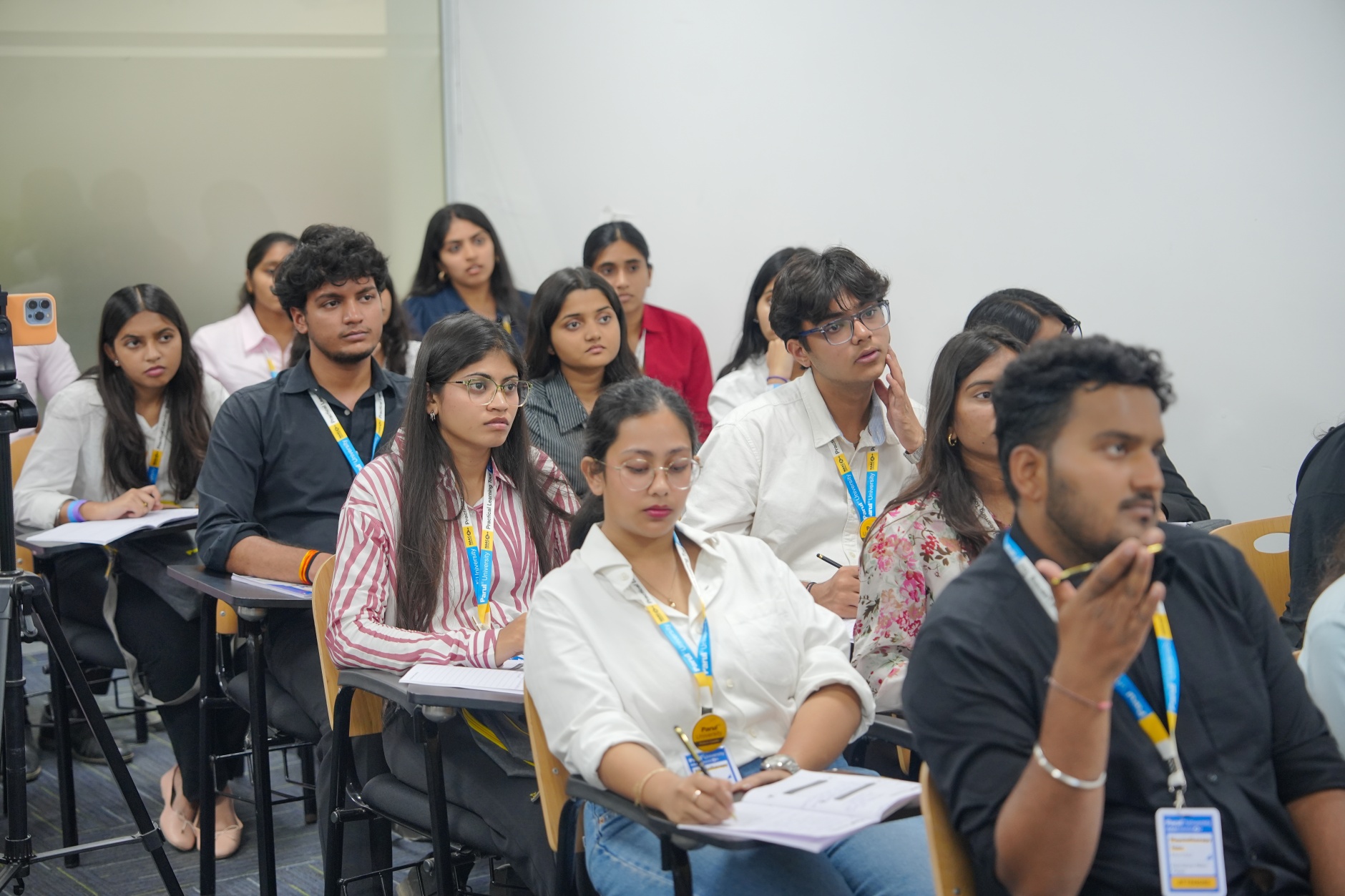
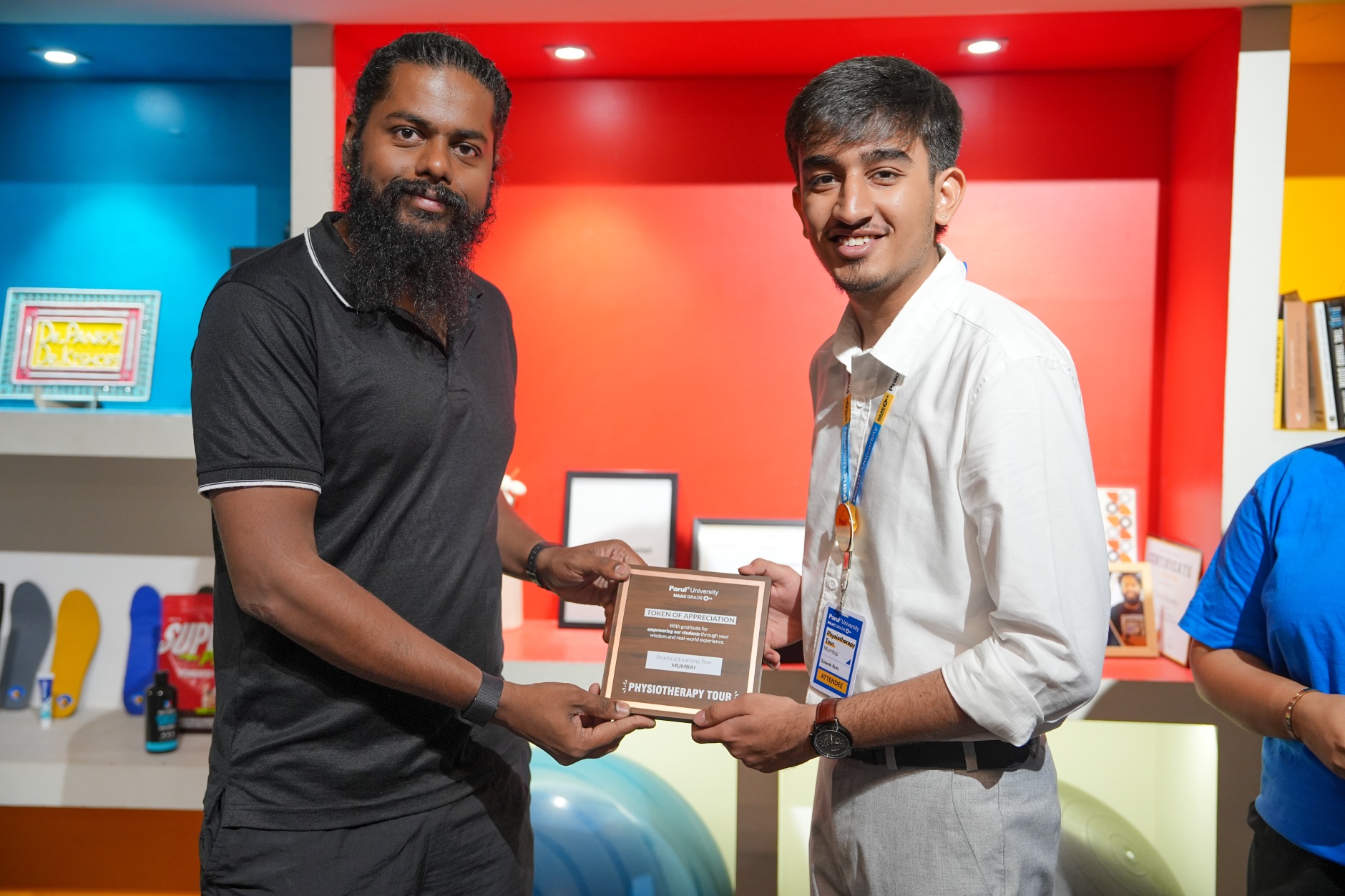
Dr. Rajashree Lad began with a question before anyone had settled: Are you here to understand how physiotherapy education actually gets translated into clinical practice? Then, how many of you want to be not just an ordinary physiotherapist? Almost all hands went up. She is a musculoskeletal physiotherapist, co-founder of Rehab Sphere with clinics across Mumbai, and author of two books (one on posture and preventive healthcare written in language she said a third-standard student could understand, one on MCQ-based learning for physiotherapy entrance exams). She introduced herself by asking questions rather than listing credentials and stayed in that mode for the entire session.
She built the session around the biopsychosocial model through a live case: a construction worker, the sole earning member of his family, with acute low back pain radiating to the right leg after lifting something heavy. The students answered the clinical question correctly: assessment, examination, problem list, goals. She pushed further. What about his financial situation? His ability to attend the clinic daily or only once a week? A father who needs to fly for his daughter’s wedding in a week? A mother whose son’s exams start in three days? The biological damage is one layer. The psychological state, including fear, anxiety, and the pressure of being the family’s only income, is the second. The social reality is the third. If you are treating the body excellently but ignoring these factors, the patient may improve temporarily but keep returning.
Then the cases that made the model unforgettable. A patient with intermittent low back pain and leg radiation who had visited multiple clinics and received multiple courses of treatment. Each time the pain improved and then returned. When she examined his working environment, the answer appeared: his computer screen was positioned at a slight angle. Every day for hours he rotated slightly toward it without awareness. Cumulative trauma disorder. The treatment worked temporarily because symptoms were being addressed. The cause sat at the workstation, and nobody had looked for it there. A second patient, same pattern: a large wallet carried in the back pocket of his trousers every day. The pressure and tilt in the pelvis misaligned the sacrum. She instructed him to remove it. That alone, alongside structural treatment, resolved the recurring cycle.
“Managing symptoms can be achieved by anyone. Finding the cause is what makes you different from just a physiotherapist.”
On communication, she gave three specific tips when a student from a business background asked directly. First: become a focused listener; you can only answer when you know what the other person wants. Second, treatment is different from person to person; hence, understand where the other person is coming from, for an elderly person with multiple issues in the body needs a different explanation that doesn’t stress them as well as prepare them, while a young athlete and another professional bring their own framework. Third: Be empathetic, because as a physiotherapist, you spend more time with patients than others in the healthcare profession.
She described government hospital settings where patients queue for hours, see a physician for two minutes, and leave with no explanation of what to do. That is where physiotherapy plays a part that a prescription cannot.
Student feedback: the discussion on root-cause treatment and posture analysis enhanced our clinical thinking. Dr. Rajashree Lad emphasised empathy and communication, which are essential for effective rehabilitation.
Read More: 12 sessions and What Students Explored During This Workshop
PEACE and LOVE: The Protocol That Replaced RICE
Dr. Pankaj Narvekar (The Sports Doc, MSc Exercise and Sports Medicine from the UK, collaborations with MCA, BCCI, Athletic Federation of India, Pro Kabaddi League, Indian Railways Weightlifting, NSCI) started his session not with slides but with a simple activity: students were asked to touch their toes. Some could. Some could not. The hamstring discussion had started before anyone consciously decided it had. He completed his bachelor’s in India and went to the UK for his master’s, where working in football and rugby helped him understand high-level injuries in contact sports with more common and challenging injury cases.
The core clinical update that surprised many students was the PEACE and LOVE protocol replacing the traditional RICE approach.
- Protection, Avoid anti-inflammatory (inflammation is an important part of healing; early anti-inflammatory medicines can slow natural recovery), Compression, Education
- Load and exercise, with progressive reintroduction based on individual assessment
- No same protocol for every patient, even with similar conditions: body, recovery speed, and pain tolerance are all different
The session also talked about sports psychology. An important field because sometimes the fear of reinjury is smaller than confidence decline it can lead to pressure from coaches and family. Basic nutrition understanding is essential, but without proper certification you should not practice as a nutritionist. The speaker also discussed shockwave therapy, laser therapy, jump mats for athletes, and dynamometers for muscle strength testing as technology tools that help in assessment and faster recovery. Two certifications were recommended for anyone serious about sports physiotherapy: ASCA (Australian Strength and Conditioning Association) and NSCA (National Strength and Conditioning Association). The difference between India and the UK, from his own experience: the UK focuses on research and evidence-based practice with very little electrotherapy, while India has more textbook dependence and less research-based learning.
Student feedback: the speaker offered a refreshing perspective on sports physiotherapy, strongly reinforcing the importance of mastering theoretical fundamentals alongside clinical application. Insights into modern injury management, prevention strategies, and individualised training broadened our clinical outlook.
30 Years at Bombay Hospital: The Patient Is Always Right
Dr. Mrinal Amogh Pandit has been at Bombay Hospital since 1998. Her teacher, Dr. Rambhai Patel, started the department 70-80 years ago and worked until he was 75 in 2010. The department handles 100-150 admitted patients and 50 OPD patients daily. She described how physiotherapy has changed: when she joined, physiotherapists had to blindly follow orthopaedic doctors without questioning. Now surgeons actively ask for a physiotherapist’s opinion, sometimes before surgery, to determine whether therapy alone can heal the patient. Doctors finish surgery and tell the patient: the rest of your healing is completely in the hands of the physiotherapist. That respect, she said, required decades of hard work to build, and she was emphatic about what kind of hard work: mechanical repetition will not produce results.
“Working hard with your brain and having true compassion for the patient is the only way to get real results.”
On patient psychology, she shared Dr. Rambhai Patel’s rule: the patient is always right, a patient can never be wrong. This does not mean patients are medically correct. It means you guide them logically so they do not even realize you are changing their mind. If you tell them directly that their ideas are wrong, they will return the next day saying the pain got worse just to prove you wrong. Building trust takes time and personal involvement. You must handle patient thinking with care, kindness, and confidence.
The session was shaped by student questions. Second-year student Manasita asked about differences between 1980s and current protocols. Dr. Pandit explained that old protocols kept patients in bed for weeks, causing joint stiffness, while modern protocols get patients moving the next day. Student Singh asked whether machines were giving better results than manual therapy; she warned that electrical machines are sometimes unnecessary and can worsen pain, and that every new patient deserves at least 20 minutes of evaluation including X-rays, MRI, diet, water intake, Vitamin D3 and B12 levels. Final-year student Vaidehi raised an issue she had observed in Vadodara: patients who only want machines and medicines and resist exercises. Dr. Pandit said this thinking is the same everywhere from Mumbai to the USA. Final-year student Niharika asked about common mistakes new graduates make: the hardest transition is from a student mindset (what can I learn from this patient?) to a result-oriented mindset (this patient is paying for results).
The department’s specialisation is brachial plexus injuries, which affect the nerves connecting the spine to the shoulder, arm, and hand. Treatment continues until bone growth stops: for girls until 13-14, for boys until 16-18. If exercises stop while bones are still growing, muscles will not develop correctly and the arm will deform. The physiotherapist’s primary job is training the parents, because families cannot visit the hospital daily for years. Recovery to 80-90% of normal function is considered a major success.
Student feedback: the speaker emphasized the evolution of physiotherapy from machine-based modalities to an assessment-driven, patient-centered approach. Effective communication, proper evaluation, and clinical reasoning are the pillars of successful rehabilitation.
Physiotherapy Begins Before Surgery: Asian Cancer Institute
Dr. Ramakant Deshpande (Chairman, Asian Cancer Institute at ACI Cumballa Hill Hospital) delivered the tour’s strongest single statement: physiotherapy is one of the most vital sciences for patient recovery. While surgeons and physicians interact with patients at specific stages, physiotherapists stay connected throughout the entire journey, from preparing the body before surgery to guiding recovery months after discharge. Dr. Sharon Kharat and Dr. Misba Thobani from the physiotherapy department contributed clinical perspectives on pre-operative and post-operative protocols.
The clinical insight that surprised students was how early physiotherapy begins. Patients with lung cancer often present with reduced lung function, low stamina, and complications from age, smoking, or pollution. Many are not immediately fit for surgery. Physiotherapists improve lung capacity, endurance, and overall fitness so surgery becomes possible. The frailty index identifies how physically weak or strong a patient is, allowing realistic targets and progress tracking. Healthcare works best as a team: recovery requires coordination between doctors, physiotherapists, and dieticians. If a patient is not eating properly, even the best physiotherapy techniques will not produce results. Post-surgery rehabilitation programs can continue for months, sometimes up to a year, including breathing exercises, gradual physical activity, step training, and endurance building.
The session addressed a persistent myth: cancer patients should avoid movement and take complete rest. Dr Deshpande clarified that this is not true. Controlled movement and guided exercises help faster recovery, particularly in improving lung function. Movement can begin within hours after surgery depending on the patient’s condition. He also explained that treatments like chemotherapy and radiation affect the body’s strength, making the physiotherapist’s role in designing suitable rehabilitation plans even more critical. If diagnosed early, cancer can be treated effectively and patients can live long, normal lives. This shift from fear to hope changes both the patient’s and the clinician’s approach.
“Have a commitment towards your purpose. Do not measure your success only in terms of money.”
TheraCure: Treating the Whole Person
Dr. Pooja Mehta (Occupational Therapy Expert, Founder of TheraCure) shared a career path that defied every expectation in the room. Daughter of a textile merchant who wanted to combine healthcare and business. Decided on OT in 11th standard after a pathologist cousin suggested physiotherapy as a field where you help patients live productive lives. Worked 6 years in the US, where she encountered patients in long-term care with 20-30 comorbidities and observed a healthcare system where OTs and PTs were restricted to treating only specific body parts. When her daughter was born, she returned to India, worked at a clinic for three months to understand the Bombay market, then opened TheraCure. Built the business by walking to nearby buildings and introducing herself to doctors. Now uses Instagram for brand-building.
The case that stayed with the room: an 18-year-old girl who had been in a coma for 6 months. Tremors in her arm and poor body balance. Dr. Mehta and the girl’s architect mother modified the bathroom: non-slip mats, a custom wooden bench, a hand shower, a velcro bathrobe, and grab bars near the toilet. The goal was not to make the girl normal. It was to make her independent within her limitations. ADL (Activities of Daily Living) is the framework: everything from waking up to sleeping is an activity, and OT helps patients perform these activities safely. On the OT versus PT distinction, she said directly she does not draw a line. The only focus is the interest of the patient. She urged every student to study psychology, take an online course or certificate program, and learn about spiritualism, meditation, and emotional quotient, because knowing body muscles is not enough.
Student feedback: Her journey as both clinician and businesswoman was highly motivating. We gained insight into how OT focuses on functional independence and meaningful participation in daily life.
Check Out: How a Master’s in Physiotherapy Prepares Students for the Real Treatments
Frequently Asked Questions
What is the biopsychosocial model in physiotherapy?
Dr. Rajashree Lad (Rehab Sphere): Treatment considers biological factors (biomechanical damage), psychological factors (fear, anxiety, financial pressure, being the family's sole earner), and social factors (family obligations, work schedule, and ability to attend the clinic regularly). A construction worker's back pain requires entirely different treatment planning than an IT professional's, even with the same diagnosis. Ignoring these factors means the patient improves temporarily but keeps returning. The computer screen angle case (cumulative trauma disorder) and the wallet case (sacrum misalignment) demonstrated that finding the actual cause is what separates effective physiotherapy from symptom management.
What is the role of physiotherapy in cancer care?
Dr. Ramakant Deshpande (Chairman, ACI): Physiotherapy begins before surgery by improving lung capacity, endurance, and fitness so patients become surgically fit. Continues through post-operative rehabilitation including breathing exercises, gradual activity, and step training. Extends up to 1 year post-treatment. Cancer patients should not avoid movement: controlled exercises improve recovery. The frailty index guides realistic target-setting. Nutrition and physiotherapy are interdependent. If diagnosed early, cancer can be treated effectively and patients can live long, normal lives.
What is the PEACE and LOVE protocol?
Updated replacement for RICE, explained by Dr. Pankaj Narvekar (The Sports Doc, BCCI, MCA, AFI, Pro Kabaddi collaborator). Protection, Avoid anti-inflammatory (inflammation is part of healing; early anti-inflammatory medicines can slow natural recovery), Compression, Education, Load, and exercise. There is no same protocol for every patient. Personalized treatment based on individual body, recovery speed, and pain tolerance. Physiotherapy practices evolve continuously with new evidence.