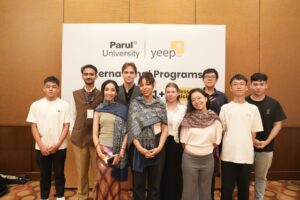
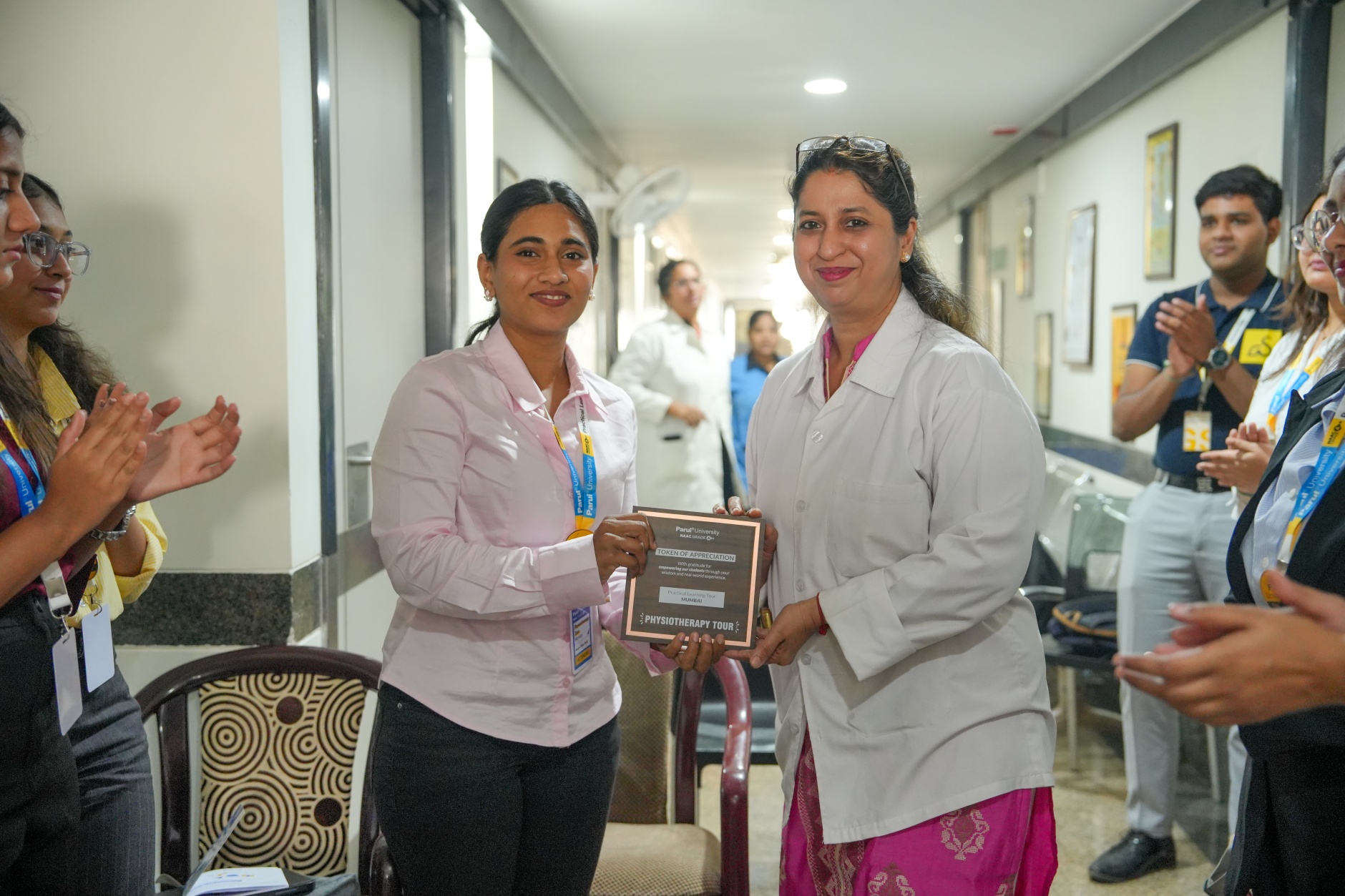
This was not a campus visit with institutional presentations attached. It was structured clinical and industry exposure across the full breadth of physiotherapy practice in Mumbai: from a sports clinic where the session started with students trying to touch their toes to an oncology institute where a cancer surgeon with decades of experience said physiotherapy is one of the most vital sciences for patient recovery to a startup at IIT Bombay that built a machine to help Parkinson‘s patients walk. The students were BPT undergraduates from first year through final year, alongside interns, covering the tour across their third day and beyond.
Each session was led by a practitioner or industry leader who had spent years, in some cases decades, in their specific domain. The range was deliberate: sports medicine, musculoskeletal practice, oncology rehabilitation, hospital-based neurological care, occupational therapy, medical device manufacturing, robotic rehabilitation, health-tech innovation, community rehabilitation, and holistic integrative practice. No two sessions covered the same ground.
Sports Medicine and Musculoskeletal Practice
Dr. Pankaj Narvekar (The Sports Doc) brought 9+ years of sports physiotherapy experience and collaborations with MCA, BCCI, the Athletic Federation of India, the Pro Kabaddi League, Indian Railways Weightlifting, and NSCI. He started by asking students to touch their toes, not with slides, and introduced the PEACE and LOVE protocol as the updated replacement for RICE. His core message: a physiotherapist’s main aim is to make the patient do their daily physical activities by themselves. There is not the same protocol for every patient. Sports psychology and nutrition are not optional extras. Certifications recommended: ASCA and NSCA. The difference between India (textbook-dependent, outdated concepts) and the UK (research-based, minimal electrotherapy) was drawn from his own experience completing his MSc in Exercise and Sports Medicine there.
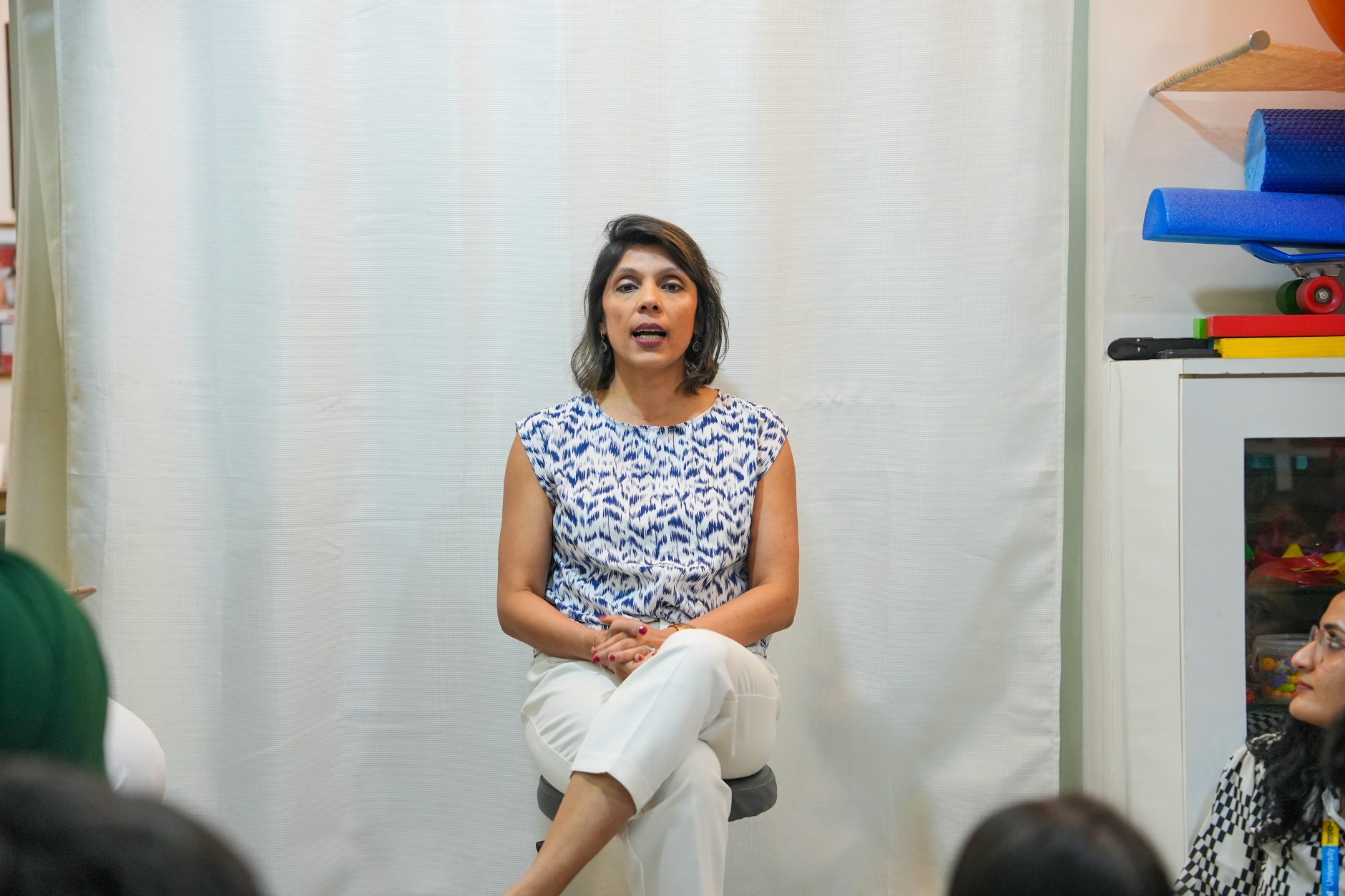
Dr. Rajashree Lad (Rehab Sphere, clinics across Mumbai, author of two books) built the entire session around the biopsychosocial model using live case discussion. She found a patient’s recurring back pain was caused by a computer screen positioned at a slight angle, creating cumulative trauma disorder over years of daily rotation. Another patient’s pain was caused by a wallet in his back pocket misaligning the sacrum. Her point was direct: managing symptoms can be achieved by anyone. Finding the cause is what makes you different from just a physiotherapist. She spent time on communication, documentation, ergonomics, and the gap between what education produces and what clinical practice requires.
Hospital-Based Practice and Oncology
Dr. Mrinal Amogh Pandit (HOD Physiotherapy, Bombay Hospital since 1998) represents three decades of institutional physiotherapy. Her teacher Dr. Rambhai Patel started the department 70-80 years ago and worked until age 75 in 2010. The department handles 100-150 admitted patients and 50 OPD patients daily. She specialises in brachial plexus injuries, where treatment continues until bone growth stops (girls 13-14, boys 16-18), and the physiotherapist’s job is to train the parents because families cannot visit daily for years. She shared Dr. Rambhai Patel’s rule, the patient is always right, and explained that you must guide patients logically so they do not even realize you are changing their minds. Student Manasita asked about 1980s vs today’s protocols. Student Singh asked about machines vs. manual therapy. Student Vaidehi raised patient psychology. Student Niharika asked about common graduate mistakes.
“Working hard with your brain and having true compassion for the patient is the only way to get real results. Mechanical work will not help.”
At the Asian Cancer Institute, Dr. Ramakant Deshpande (Chairman) delivered the tour’s strongest single statement: physiotherapy is one of the most vital sciences for patient recovery. He explained that physiotherapy begins before surgery, improving lung capacity, endurance, and fitness so patients become fit enough for surgical intervention. He introduced the frailty index for assessment, emphasised the interdependence of nutrition and physiotherapy (even the best techniques fail if nutrition is poor), and busted the myth that cancer patients should avoid movement. Post-surgery rehabilitation can continue for up to a year. His closing: Have a commitment towards your purpose; do not measure your success only in terms of money. Dr. Sharon Kharat and Dr. Misba Thobani from the physiotherapy department contributed clinical perspectives on pre-operative and post-operative protocols.
Occupational Therapy and Holistic Practice
Dr. Pooja Mehta (TheraCure, Founder) is an occupational therapy expert who worked 6 years in the US and returned to build her own clinic in Mumbai. She shared a case that stayed with the room: an 18-year-old girl who had been in a coma for 6 months, with tremors and poor balance. Dr. Mehta and the girl’s architect mother modified the entire bathroom, including non-slip mats, a custom wooden bench, a hand shower, a velcro bathrobe, and grab bars near the toilet. The goal was independence within limitations. On the OT versus PT distinction, she does not draw a line: the only focus is the patient’s interest. She urged students to study psychology, spiritualism, meditation, and emotional quotient alongside their clinical syllabus.
Industry, Technology, and Career Beyond the Clinic
Mr. Rajan Mehra (VP Marketing, vissco, 32 years in the industry) told the vissco origin story: in 1963, the founder’s wife had neck pain, nothing available in India, a product found after 6-7 months from a UK doctor, relief in 3 days, and a question that became a company. From one garage in south Bombay to 700+ products and a Gujarat manufacturing facility. He projected 340 million Indians aged 60+ by 2050, told students they are already a brand (the trust a patient places in you is brand loyalty, the referral is brand advocacy), and distinguished entrepreneurs from intrapreneurs. Systems build businesses. Individuals build clients. You need both to scale.
The technology sessions spanned three major hospitals and one IIT Bombay startup:
- Apollo Hospitals Navi Mumbai ( Nitin Jagasia, Dr. Shalushubham Keni): robotic-assisted rehabilitation, ICU physiotherapy, stroke protocols, early mobilisation. Rehabilitation is not optional, it is essential.
- Sir HN Reliance Foundation Hospital: robotic gait training, computerised therapy units, and technology-based balance systems. Modern technology enhances recovery outcomes.
- Kokilaben Dhirubhai Ambani Hospital ( Vaibhav Daga, HOD Sports Medicine): gait analysis laboratories, field-side decision-making. Bridge the gap between theory and practice. Be proud of being a movement specialist.
- Life Spark Technologies at IIT Bombay ( Amey Desai): the WALK machine for Parkinson’s patients. Need-based innovation. Affordable solutions. Simple idea, life-changing impact.
Additional sessions covered documentation as foundation (Jaslok Hospital, Dr. Shreyas Katharani: prevent more than you treat), digital record-keeping and structured rehabilitation protocols (Nanavati Max Hospital), community-based rehabilitation and gait training technology (K.J. Somaiya College of Physiotherapy), and holistic integrative practice (Dr. Masooma Ladiwala at The Classique Club: Anatomy Trains, emotions stored in muscles, and pain relief without preventing recurrence is incomplete treatment). The vissco Experience Centre provided hands-on exposure to 700+ rehabilitation and mobility products with biomechanics-based equipment design.
Also Check the course: BPT / MPT at Parul University
What Students Said
Student feedback was specific to what each session actually taught, not generic praise:
- After Dr. Narvekar (Sports Doc): the emphasis on mastering theoretical fundamentals alongside clinical application strongly reinforced that strong theory is the backbone of effective sports rehabilitation
- After Dr. Rajashree Lad (Rehab Sphere): the discussion on root-cause treatment and posture analysis enhanced our clinical thinking. The biopsychosocial model and empathy were highlighted as essential for effective rehabilitation
- After Mr. Rajan Mehra (vissco): this session taught us how to bridge the gap between clinical skills and business mindset, inspiring us to think like healthcare leaders
- After Dr. Mrinal Pandit (Bombay Hospital): the speaker emphasized the evolution from machine-based modalities to an assessment-driven, patient-centered approach. Effective communication, proper evaluation, and clinical reasoning are the pillars of successful rehabilitation
- After Dr. Pooja Mehta (TheraCure): her journey as both clinician and businesswoman highlighted the importance of confidence, continuous learning, and ethical practice
- After ACI (Dr. Deshpande): effective communication, proper assessment, and clinical reasoning are the pillars of successful rehabilitation. The session was clinically relevant and motivating.
- After Apollo: witnessing advanced robotic and high-end technological modalities firsthand highlighted how modern rehabilitation integrates innovation with strong clinical reasoning
- After Life Spark (IIT Bombay): the WALK machine for Parkinson’s patients was an inspiring example of need-based innovation. The strong vision behind the company and its focus on helping the needy was motivating.
Read More: How Will Pragya Lab and Lakshya 2047 Groom the Students?
What This Tour Says About Parul University's Physiotherapy Programme
The Physiotherapy Tour is one of 146 Practical Learning Tours across 19 cities and 280 companies that Parul University organizes as part of its academic calendar. The same institution that sends engineering students to IIT Hyderabad and DRDO, liberal arts students to Mumbai Press Club and Prithvi Theatre, BHMS students to NIH Kolkata and CCRH, and law students to Gujarat High Court sends physiotherapy students to Bombay Hospital, Apollo, Kokilaben, Asian Cancer Institute, Sir HN Reliance, Jaslok, Nanavati, and IIT Bombay startups. NAAC A++ (CGPA 3.55). 2,200+ recruiters. 7 NABH-accredited hospitals for clinical postings. The tour provides what no syllabus can: the sight of a 30-year Bombay Hospital veteran explaining why the patient is always right, a cancer surgeon saying physiotherapy begins before surgery, and a machine at IIT Bombay that helps Parkinson’s patients walk.
Read More: Parul University Practical Exposure: 19 Cities, 280 Companies
Frequently Asked Questions
Is Parul University good for physiotherapy?
The Mumbai Physiotherapy Tour visited 12 institutions including Bombay Hospital (30-year veteran HOD, 100-150 inpatients and 50 OPD daily, Brachial Plexus specialisation), Asian Cancer Institute (Chairman said physiotherapy is one of the most vital sciences), Apollo (robotic rehabilitation, ICU physiotherapy), Kokilaben (gait analysis, sports medicine), and Life Spark at IIT Bombay (WALK machine for Parkinson's). Students interacted directly with HODs, founders, and a cancer surgeon. The university provides 7 NABH-accredited hospitals, clinical postings, and Practical Learning Tours as part of the academic calendar. NAAC A++ (CGPA 3.55).
What career options exist in physiotherapy beyond clinics?
Based on the tour: sports performance teams (MCA, BCCI, Pro Kabaddi, AFI, Indian Railways Weightlifting, NSCI). Corporate ergonomics consulting. Digital rehabilitation platforms. Medical device companies (vissco: 700+ products, hires physios as clinical educators). Hospital departments across specialities (oncology, neurology, sports, ICU, orthopaedics). Occupational therapy clinics (TheraCure). Health-tech startups (Life Spark at IIT Bombay). Content creation and public health education. India is projected to have 340 million people aged 60+ by 2050, with 70% already reporting mobility-related discomfort.
What is the PEACE and LOVE protocol?
Updated replacement for the traditional RICE protocol, explained by Dr. Pankaj Narvekar (The Sports Doc, collaborator with BCCI, MCA, AFI, Pro Kabaddi). Protection, Avoid anti-inflammatory (inflammation is an important part of healing and early anti-inflammatory medicines can slow natural recovery), Compression, Education, Load and exercise. The key insight: physiotherapy practices are continuously evolving with new evidence, and staying updated is essential. Personalised treatment over copy-paste protocols for every patient.