Before submitting a sample to any testing facility, researchers and industry professionals need clarity on four questions: what will it cost, who owns the data, what happens to the intellectual property if the results lead to a patent, and whether confidentiality can be formally guaranteed. At MNRDC, each of these questions has a defined, documented answer.
Read more about – MNRDC Facilities and Services
Pricing Structure: Per Sample, Per Run
MNRDC operates as a paid facility. All users, including internal students, faculty, external researchers, and industry, pay for testing services. There is no free testing tier.
How Charges Are Calculated
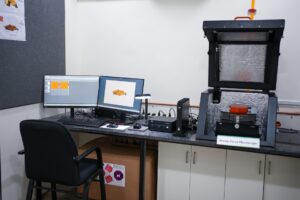
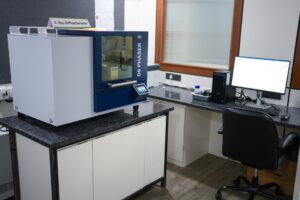
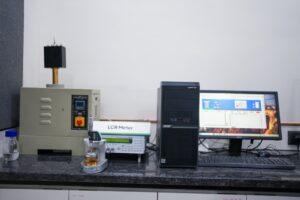
- Characterisation instruments (SEM, XRD, AFM, LCR Meter): charged per sample. One sample submitted, one fee charged, regardless of how many images or data points are generated.
- Processing/fabrication instruments (Sputtering Auto 500, Stir Casting, Compression Moulding): charged per run. One deposition or fabrication session, one fee.
- The Center does not charge per hour, per report, or per data point.
This per-sample/per-run model means costs are predictable before submission. A researcher knows exactly what the charge will be when they submit a sample, with no variable billing based on analysis duration or the number of output files generated. If you too wish to get your samples tested, head here to check out the holistic list of pricing!
Three Pricing Tiers
- Internal university users (Parul University students, faculty, researchers): lowest rates
- External academic users (students and researchers from other universities and institutions): intermediate rates
- Industry users (companies, corporate R&D, commercial entities): highest rates
Industry pricing is intentionally higher than academic pricing. The differential serves a structural purpose: higher industry charges cross-subsidise the Centre’s operational costs, including instrument maintenance, consumables, calibration, and minor upgrades. This model ensures the Center remains financially sustainable without requiring ongoing government grants for day-to-day operations. The pricing structure itself functions as an implicit subsidy for students and academic researchers.
Complete pricing for all instruments and all user categories is listed on the official MNRDC website.
Read more on – MNRDC Official Website (Pricing)
Data Ownership: Users Own Everything
All raw and processed data generated from testing at MNRDC belongs to the user. The Center does not retain ownership of test results, does not claim rights to generated data, and does not use user data for any purpose without explicit permission.
- Raw data: the unprocessed instrument output (SEM images, XRD diffractograms, AFM scan files, LCR frequency sweeps, tribometer friction logs)
- Processed data: analysed outputs (EDS spectra, Rietveld refinement results, MountainsSPIP roughness reports, wear rate calculations)
- Results are shared only with the submitting user. No results are shared with third parties, other users, or published without explicit user consent.
- Sample traceability is maintained during the testing period. After delivery of results, the Center does not maintain long-term storage of user data.
Read more about – Industry Services at MNRDC
Confidentiality and NDAs
All user data and results are treated as confidential by default. This applies equally to academic and industry submissions. For industry projects requiring formal legal guarantees beyond the Centre’s standard confidentiality practice, Non-Disclosure Agreements (NDAs) can be arranged. NDAs are particularly relevant for proprietary material compositions, pre-patent research, competitive analysis, or any testing where the results carry commercial sensitivity.
Intellectual Property and Patents
The IP framework at MNRDC is straightforward and depends on whether a formal Memorandum of Understanding (MoU) exists between the Center and the collaborating entity:
With MoU
- Patents arising from collaborative research are filed jointly between MNRDC/Parul University and the collaborating industry partner
- Joint filing terms are defined within the MoU before research begins
- Both parties share rights as per the MoU agreement
Without MoU
- The IP and any resulting patents rest entirely with the industry client
- MNRDC provides testing and technical support but does not claim IP ownership
- The Center functions as a service provider in this scenario
This dual framework means industry users can choose their level of engagement. Companies wanting a pure testing service with no IP entanglement simply submit samples without an MoU and retain full ownership of all outcomes. Companies wanting a deeper research partnership sign an MoU and share IP under defined terms.
Read more about – Green Hydrogen Research at MNRDC (Renewable Energy Q1)
Publication Policy
The Center does not publish user data without explicit permission. Any publication arising from work conducted at MNRDC using user samples requires user consent. MNRDC’s own research publications (14 papers to date, including a Q1 paper in Renewable Energy with an Impact Factor of 9.1) are based on the Center’s own research projects, not on user-submitted testing samples.
Thin Film Coating for Solar Cells & Semiconductors at MNRDC, Parul University!
FAQ
How much does SEM testing cost at MNRDC?
MNRDC charges per sample with three pricing tiers: internal (lowest), external academic (intermediate), and industry (highest). Specific rates are listed on the official MNRDC website at micronanornd.paruluniversity.ac.in. The Center does not charge per hour or per report.
Who owns the data from MNRDC testing?
The user owns all raw and processed data. MNRDC does not retain ownership, does not share results with third parties, and does not publish user data without explicit consent.
Can industry users protect their IP when using MNRDC?
Yes. Without an MoU, all IP rests entirely with the industry user. With an MoU, patents are filed jointly under agreed terms. NDAs are available for projects requiring formal confidentiality guarantees.