Master empathy because the human brain created AI. The words of NIFT Mumbai’s director were based on years of his observation. He pointed out what Indian design institutes should teach to groom students for the future.
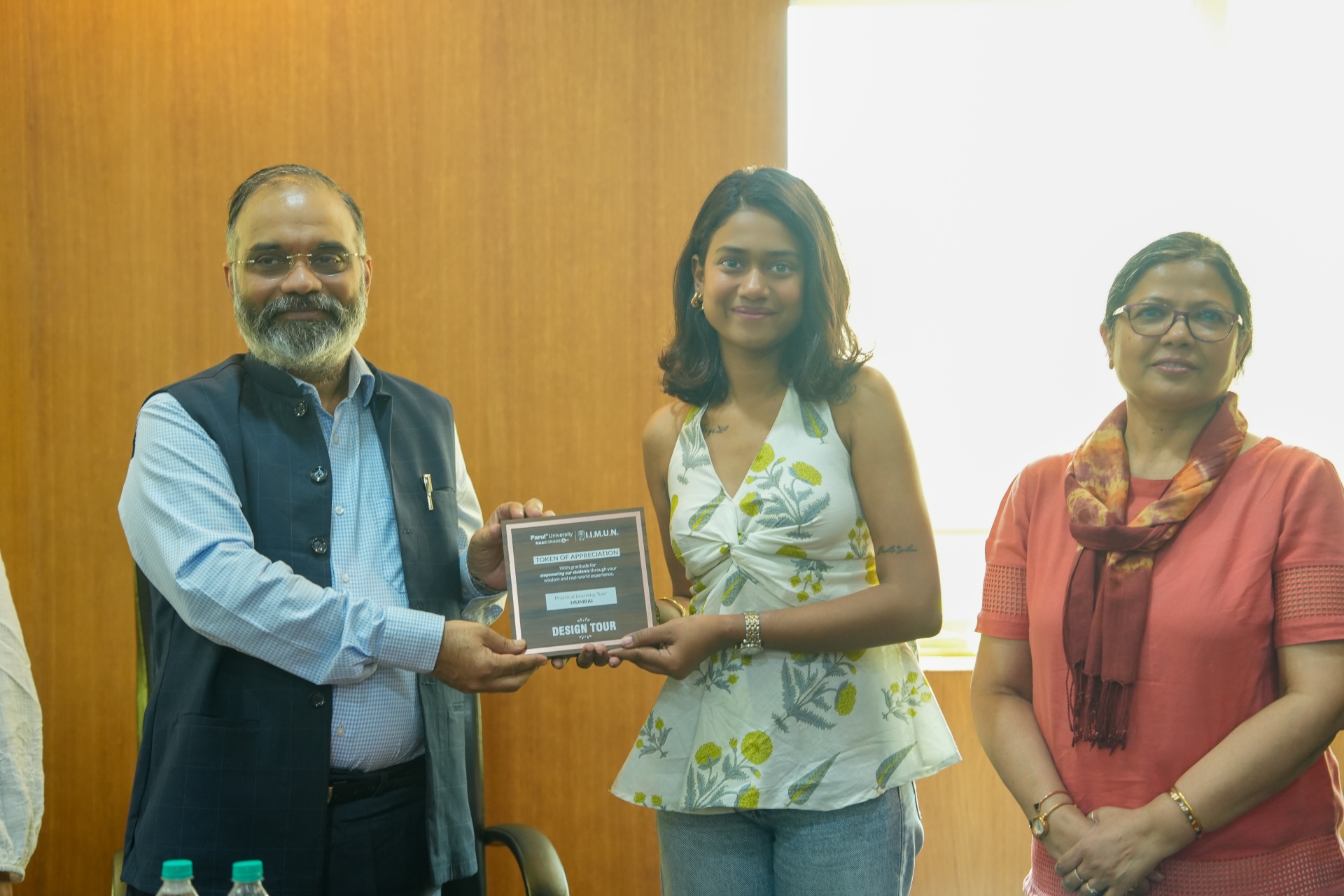
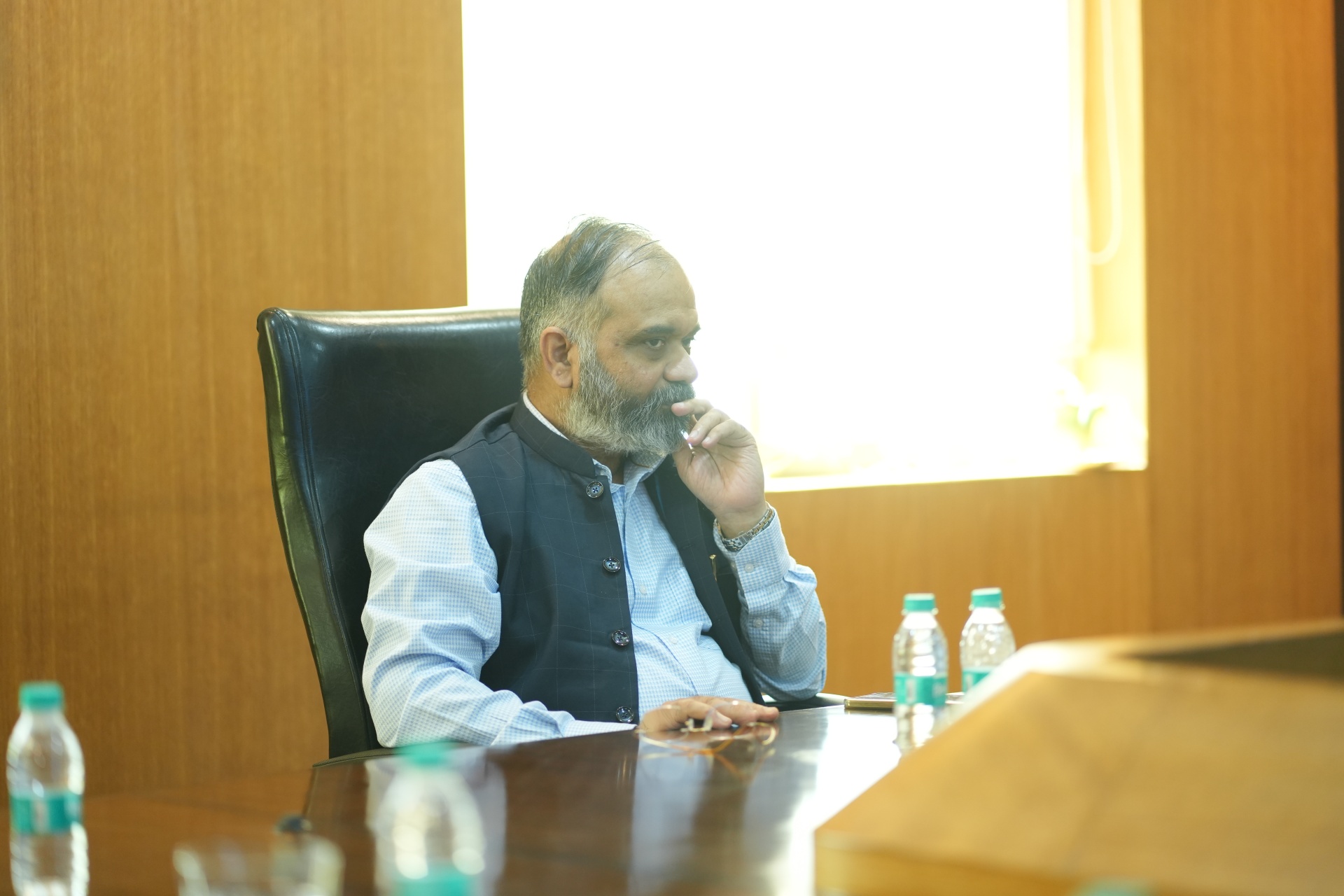
The session with Mr. Ajit Khare, Director of NIFT Mumbai, was held at the NIFT campus during the 2026 Parul Institute of Design Mumbai Industry Tour. As the head of the Mumbai campus of one of India’s most established design education institutions, Khare’s framing of where Indian design education needs to go is unusually consequential. His specific argument, captured in a single line, was that design students must master empathy precisely because the human brain created AI in the first place. The technology is a product of human thought; the discipline that designs with it must be grounded in deeper human understanding, not less.
Master empathy because the human brain created AI.
Mr. Ajit Khare, Director, NIFT Mumbai
The session covered seven dimensions of design education that the NIFT campus and similar institutions are working through.
- Industry-ready professionals: The function of design education is to produce graduates equipped to enter the working profession, not students trained only in the studio’s internal grammar.
- Overlapping Disciplines: The creative field disciplines, like fashion, communication design, product design, and other disciplines, over time, are working together in a way that they overlap. The director emphasized how the new structure should be, where these overlapping disciplines are taught rather than an artificial separation.
- Research, concept development, and process: Design is a process-driven discipline, not just final output. The work of arriving at a design is what education must train, because the destination cannot be reverse-engineered without process discipline.
- Industry-based learning: The curriculum should have direct industry exposure through internships and direct engagement with working professionals. This should be under the essential category rather than the supplementary category. Education that operates only inside the institution misses the working knowledge of the field.
- Design thinking methodology: Design thinking applies beyond fashion into real-world problem-solving across many sectors. Students should understand the method as a transferable analytical tool, not as a vocabulary specific to one discipline.
- Future of design education in India: Indian design education is evolving rapidly. The question is whether it evolves toward employability and adaptability or remains anchored to outdated curricular conventions.
- Skill development versus creativity: The balance matters. Without strong fundamentals, creativity is undirected. Without creativity, technical skill alone produces uninspired work. Both have to be developed in parallel.
Khare’s takeaway for students was clear and operational.
Design is a process-driven discipline rather than just a final output. Strong fundamentals matter more than chasing trends. Exposure and experimentation build creative confidence. Industry experience during the learning years is essential rather than optional. Design thinking applies beyond fashion into real-world problem-solving. Consistency and discipline define growth in design. Learning never stops in a creative field.
The industry critique: where colleges fall short
Khare’s view from within the design-education establishment was matched, sometimes sharply, by working designers who have come into direct contact with the gap between design education and design practice. Mr. Kiran Kapadia, Founder of Kapadia Associates, a former visiting teacher, was the most direct critic. Colleges, he said, excel at training students to draw and dream but rarely prepare them for the business reality of being a designer. Students leaving college often have no idea how to charge fees, cost projects, or run the affairs of a studio. He frames design as a service industry, exactly like law or accounting, and argues that the service-business mindset is mostly absent from undergraduate design curricula.
Robert Verrijt at Architecture BRIO raised a different objection.
Robert Verrijt’s critique was that design schools tell students to be too independent and to express themselves too early. The advice is wrong for beginners. If a student concentrates only on themselves, they miss the accumulated knowledge of the masters who came before them. A good designer fills the knowledge baggage first through studying history, exhibitions, and literature, and then develops a personal voice from that foundation. Individuality before substance is hollow. Both critiques, Kiran Kapadia’s about business and Robert Verrijt’s about historical depth, point to the same underlying problem: design education that has not yet figured out how to bridge the gap between studio-craft training and professional-practice readiness.
The colleges excel in training us in drawing and dreaming. They have very little idea of what the profession is honestly all about.
Mr. Kiran Kapadia, Founder, Kapadia Associates, on the gap in design education
What working designers say replaces classroom limits
Across the tour, the answer was consistent: practical learning, internships, and exposure to working studios.
Each of the working designers students met returned to the same theme. Ms. Gayatri Khanna at Milaaya Embroideries was explicit: embroidery design cannot be taught only in classrooms; knowledge accumulates through observation, experimentation, and direct interaction with artisans and manufacturing processes. Her recommendation was that students pursue internships and practical training actively rather than treating them as optional supplements to college work. Mr. Robert Verrijt at Architecture BRIO emphasised that he had regretted leaving his mentor’s office too early, and that mentorship is undervalued by young architects in a hurry. Ms. Rochelle Pinto at Vogue India recommended that students embrace the slow, mistake-filled process of learning rather than chase immediate answers, and pointed out that emotional immunity is built through confrontation with difficulty, not avoidance of it. Mr. Sameer Nair at Applause Entertainment advised aspiring cinematographers to swallow their ego and join a mid-level cinematographer’s crew as an assistant, learning the craft from the ground up, because professional filmmaking is a collaborative team effort that cannot be practised alone. Ms. Nidhi Yasha framed failure itself as data for learning. Ms. Shubhika Sharma‘s advice to design students was simply to do and learn through internships.
The pattern is striking. Six speakers from radically different fields converged on the same answer.
The convergence across speakers indicates that the gap between design education and design practice is not specific to one discipline. It is structural across the Indian design education landscape. The remedy that working designers consistently recommend is practical exposure: internships, apprenticeships, studio visits, mentorship, and the discipline of treating failure as input rather than verdict.
Also Read: Vogue representatives at Parul Institute of Design Tour!
Where Parul Institute of Design sits in this picture
The Mumbai Industry Tour is itself the structural response to the gap. The Parul Institute of Design curriculum is designed around the principle that classrooms can transmit technique, theory, and history but cannot transmit the working knowledge of the field. The working knowledge has to come from direct exposure to people doing the work. Across Parul University more broadly, more than 146 practical learning tours have connected students with 280 companies across 19 Indian cities, including Tata, the Parliament of India, Jio Star, Google, Larsen and Toubro, Microsoft, the National Stock Exchange, Aditya Birla Capital, the Jindal Foundation, ISRO, and Myntra. The Mumbai Design Tour applies the same principle within the design disciplines.
The choice of speakers for the Mumbai tour reveals the curricular philosophy.
The twelve speakers spanned the disciplines that Parul Institute of Design educates: Fashion Design, Interior Design, Product Design, Animation, and Visual Communication. The speakers came from both establishment institutions (Vogue India, NIFT Mumbai, Lodha) and independent practices (Architecture BRIO, Milaaya, Papa Don’t Preach, Nidhi Yasha Design, ShroffLeon, Kapadia Associates, Applause Entertainment, Abha Narain Lambah Associates). The breadth was designed to show students that design careers are plural rather than singular, and to expose them to the working philosophies that classroom education alone cannot transmit.
Also Read: 146 education tours conducted by Parul University for practical learning.
The design education conversation across India
Khare’s session at NIFT Mumbai and the critiques from working designers across the tour are not isolated. They reflect a broader conversation in Indian higher education about how design schools must evolve. India has a large and growing creative economy. The country’s design-education institutions, from NIFT and NID to private universities including Parul University, are competing and collaborating to define what an effective design education in 2026 looks like. The convergent answer across the 2026 Mumbai tour was a curriculum that builds strong fundamentals, exposes students to working practitioners and real projects, frames design as a service to specific populations rather than self-expression, and treats internships and mentorship as central rather than supplementary.
What each design discipline took from the design-education conversation
- All disciplines: Design thinking, process, and the importance of research, experimentation, and interdisciplinary learning. The emphasis on practical learning resonated across Fashion, Interior, Product, Animation, and Visual Communication students.
- Students considering postgraduate education abroad: Kiran Kapadia’s recommendation to work for at least two years before pursuing a master’s degree, so that the graduate study draws on real industry context rather than only on classroom material.
- Students concerned about AI displacement: Khare’s emphasis that mastering empathy is the answer because the human brain created AI in the first place. The discipline that designs with AI must be grounded in deeper human understanding.
FAQs
Who is the director of the NIFT Mumbai?
The director of NIFT Mumbai is Mr. Ajit Khare. National Institute of Fashion Technology (NIFT) is one of India's most established design education institutions. He spoke to Parul Institute of Design students at the NIFT Mumbai campus during the 2026 Parul Institute of Design Mumbai Industry Tour on the future of design education in India, including the role of design education in shaping industry-ready professionals, interdisciplinary learning, research and concept development, industry-academia collaboration, design thinking methodology, and the balance between skill development and creativity. His quoted advice to students: master empathy because the human brain created AI.
What did Ajit Khare say about the future of design education in India?
Ajit Khare argued that design education in India must evolve toward producing industry-ready professionals through interdisciplinary learning, research and concept development as process, structured industry-academia collaboration including internships, design thinking methodology that applies beyond fashion into real-world problem-solving, and a balance between strong skill fundamentals and creative confidence. He framed design as a process-driven discipline rather than just final output, and emphasised that the human capacity for empathy is the essential skill design students must develop precisely because AI is a product of human thought. His broader argument was that learning in a creative field never stops.
What do working designers say about the gap between design education and design practice?
Across the 2026 Parul Institute of Design Mumbai Industry Tour, working designers from multiple disciplines converged on the same diagnosis. Kiran Kapadia at Kapadia Associates, a former visiting teacher, argued that colleges excel at teaching drawing and dreaming but rarely prepare students for the business reality of design, including how to charge fees, cost projects, and run a studio. Robert Verrijt at Architecture BRIO argued that design schools over-emphasise individuality before students have studied enough history to have something distinctive to express. The convergent remedy across speakers was practical learning, internships, mentorship, and direct exposure to working studios, which is precisely the structural approach Parul Institute of Design takes through its industry tour programme.
How does Parul Institute of Design address the gap between classroom and industry?
Parul Institute of Design addresses the gap between classroom and industry through structured industry-immersion programmes including the Mumbai Industry Tour, which in 2026 brought students into direct contact with twelve design leaders across studios, offices, and institutions in Mumbai. Across Parul University more broadly, more than 146 practical learning tours have connected students with 280 companies across 19 Indian cities. The institution's curricular philosophy is that classrooms can transmit technique, theory, and history but cannot transmit the working knowledge of the field, which requires direct exposure to working professionals. The Mumbai Industry Tour is the structural response to the gap that working designers consistently identify.
Why is empathy central to design education in an age of AI?
Ajit Khare's quoted line at NIFT Mumbai was that design students must master empathy because the human brain created AI. The argument: AI is a product of human thought and the technology will continue to evolve, but the human capacity for understanding other humans and designing for their actual needs cannot be automated away. A designer who cannot understand the people they are designing for has no working advantage over an automated system. A designer who can understand people deeply remains essential regardless of how powerful the tools become. Empathy is the durable skill of design education in an AI-saturated future.
Why do designers recommend internships and apprenticeships so strongly?
Across the 2026 Mumbai Industry Tour, every speaker who addressed the question recommended internships, apprenticeships, mentorship, or direct exposure to working studios as essential to design education. Gayatri Khanna at Milaaya Embroideries was explicit that knowledge accumulates through observation, experimentation, and direct interaction with artisans and manufacturing processes that classrooms cannot replicate. Robert Verrijt at Architecture BRIO regrets leaving his mentor's office too early. Sameer Nair at Applause Entertainment advised aspiring cinematographers to swallow ego and enter through the assistant route. Shubhika Sharma at Papa Don't Preach told students to do and learn through internships. The pattern across multiple disciplines indicates that the gap between design education and design practice is bridged most reliably through structured exposure to working professionals during the formative learning years.