The advice most fashion-journalism aspirants expect is about networking, internships, and writing samples. The advice they got was: open the dictionary, develop emotional immunity, and stop measuring yourself against the West.
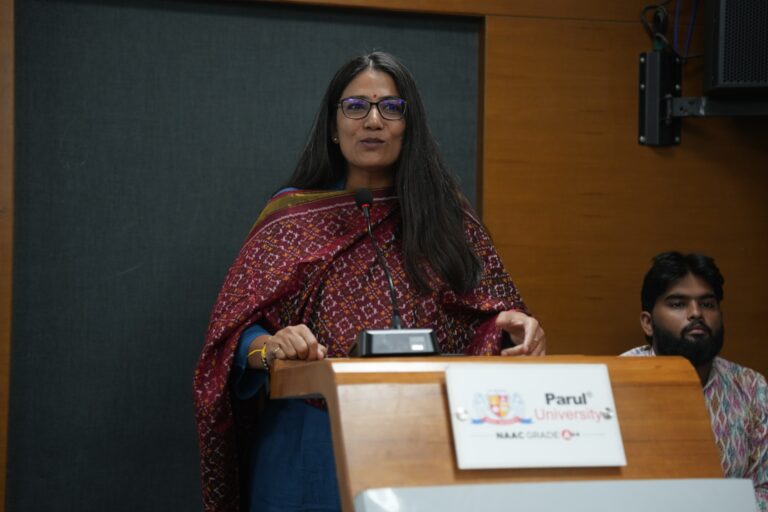
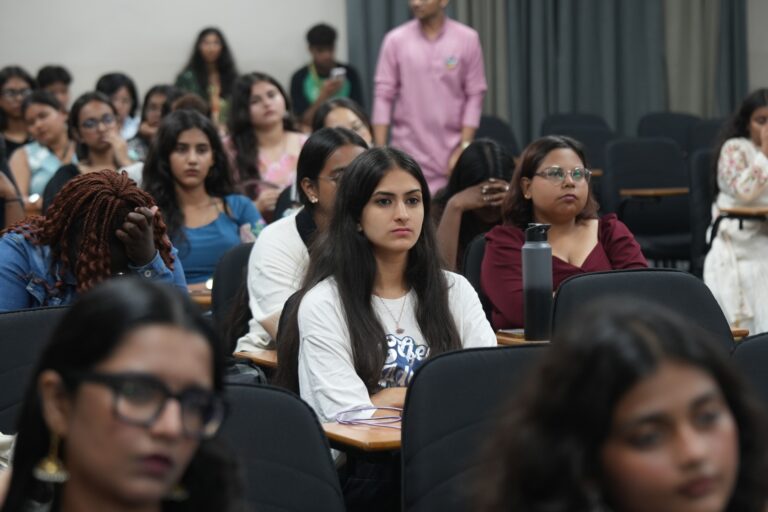
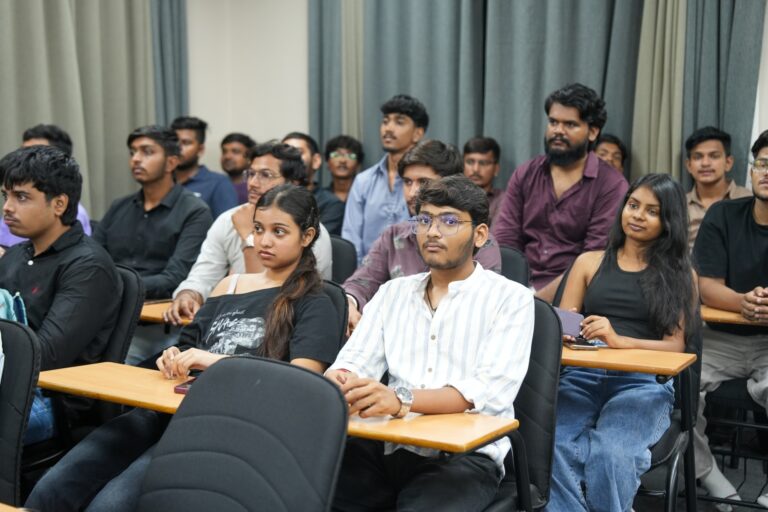
The opening session of the 2026 Parul Institute of Design’s Mumbai Industry Tour was led by Rochelle Pinto, Head of Editorial Content at Vogue India. The session was held at the IIMUN office and addressed students of Fashion Design, Visual Communication, Product Design, Interior Design, and Animation simultaneously.The breadth of the audience shaped the conversation: She did not deliver a fashion-journalism lecture. She spoke about the core working philosophy on how creative careers, identity ethics and emotional resilience are built. She went from being a young writer to leading the editorial leadership of India’s most successful platform. If you wish to master the art of content and how you can lead it, enrol on Parul University’s Bachelor of Arts in Journalism and Mass Communication program, which ensures end-to-end exposure in sync with dream placement!
Foundations: reading, vocabulary, and the parental absence of career dictation
She came back repeatedly to a single, unfashionable point: reading is the lifelong foundation of any creative career. She traced her own grounding to a childhood of reading. Books, she argued, were one of the most powerful forms of communication well before the digital era reset what communication meant.
The argument was not nostalgic; it was on an operational level. She suggested tips to PID students: read extensively, build a strong vocabulary, and the vocabulary will eventually build confidence. The pro tip is that confidence unlocks the confidence to speak on topics you’ve less knowledge about. A constant reader will always explore something new, and that will improve analytical thinking and communication skills.
Her recommendation to design students was – read outside the curriculum, read essays, newspapers, literary work, and a dictionary.
- Read a dictionary – It shall improve your vocabulary and use AI effortlessly.
- Shortcuts – She was super direct about her concern with the young generation’s dependence on shorter content & quick answers. The problem begins when people become dependent on technology to think in a particular direction.
- Influences – Her parents encouraged her to choose experimentation, resilience, and broader participation in extracurricular activities. She explained that the model was not protective; it was developmental!
The best book to read is the dictionary. Improve your vocabulary and be smart enough to use AI effortlessly.
Rochelle Pinto, Head of Editorial Content, Vogue India
Journalism, ethics, and the job of the writer
On journalism specifically, Pinto’s framing was traditional in the best sense. Journalists do not control how audiences receive or interpret stories, but they have full control over the ethics they apply to producing them. Research, balance, and integrity are non-negotiable. Good journalism presents multiple views rather than one. The journalist’s job is not to manipulate the audience but to tell them what the research supports. Where modern journalism has changed is in its acceptance of the writer’s presence in the narrative. Traditional reporting kept the writer invisible; contemporary audiences trust writers who place themselves honestly within the story. She encouraged students to embrace the slow, mistake-filled process of learning rather than to chase immediate answers.
Cancel culture, emotional resilience, and the case for emotional immunity
The most personally relevant section of the session for design students was Pinto’s analysis of cancel culture and social-media pressure. The current generation, she observed, lives under continuous pressure to appear educated, fashionable, and socially acceptable, with instant feedback rendering judgment in real time. Her position was firm: external responses, whether compliments or insults, should not affect a person’s sense of self. Both are external stimuli; neither should govern internal confidence.
Emotional immunity, she argued, is built through exposure to negative experiences, not avoidance of them. Insults, romantic failures, rejections, and losses are how emotional maturity is built. There are no shortcuts. The only path to resilience is to confront the difficulties, not to outrun them. Self-awareness is the operational core: when a person understands their own strengths and weaknesses clearly, external judgment loses its destabilising power. The advice was practical for design students because every creative career involves public feedback, public failure, and the constant possibility of being misread.
Leadership: structured but democratic
On creative-team leadership, she described a philosophy of managed openness. Everyone on the team should be free to express their views and suggestions; the final decision rests with the leader. Leadership combines power with accountability. She was clear that leadership did not mean being liked. It meant effective guidance, team development, and accountability. Years of experience had taught her to follow her gut while keeping an open mind for debate. On maturity, she said, was learning to face the consequences of one’s own decisions.
Architecture, AI & Urban Planning – Kiran Kapadia at PID’s Mumbai Tour!
India, fashion, and decolonising the design imagination
One of the most consequential sections for design students was Rochelle Pinto’s argument that India must stop measuring itself by Western validation. She rejected the assumption that legitimacy in fashion, media, or design comes from Western recognition. India has tremendous cultural depth, craftsmanship, creative potential, and intellectual diversity that exists independently of whether the West acknowledges it. The position aligned with a broader theme that ran across the entire Mumbai Industry Tour, from Gayatri Khanna at Milaaya Embroideries to Sameer Nair at Applause Entertainment.
She urged students to decolonise their minds and recognise that there is a world outside the Western frame. The rising influence of India in fashion and media, she argued, correlates directly with economic growth, the youth demographic, and the country’s cultural diversity. New voices from regional and smaller cities are increasingly central. Social media has accelerated this by giving speakers of different languages and from different cultural backgrounds the platform to present their perspectives directly. Multilingual ability, she emphasised, is a cultural resource that connects a person more deeply to society and should not be forgotten in the rush toward English-only professional life.
Sustainability: the honest economic reading
Her analysis of sustainability was unusually honest for an industry where the word has become a marketing reflex. Absolute sustainability, she argued, is almost impossible because modern life depends on resource use. Sustainability has become a buzzword used freely by marketers, while every consumer decision has an environmental impact. Crucially, sustainability has to be read alongside economics and class. Sustainable goods are usually expensive; their buyers are usually wealthy. Judging consumers who buy cheaper goods is unrealistic and morally lazy. The alternative she proposed was responsible buying: purchase less, use clothes creatively across longer periods, and extend their useful life. The frame was practical rather than performative.
From Geoffrey Bawa to Billion Bricks – Robert Verrijt’s Blueprint for Sustainable Design!
Writing across audiences and the digital-versus-print question
Pinto’s experience editing children’s literature shaped a useful working principle. The children’s writing surely differs from adult writing as the vocabulary and narratives are totally different. It’s hard for children to grasp the vocabulary. For adult writing, it’s imperative to follow a structure and narrative. Writers should be crystal clear in whatever they write; the integrity must remain true to the context. On the digital v/s print front, she said social media demands quick communication, whereas print journalism demands depth and longevity. Print stories should be able to stand the test of time. She even predicted that digital and virtual fashion will continue to grow, but slow fashion, handcrafted gems and human creativity will become more valuable in this AI-dominated world. Not everything can be automated, as Indian craftsmanship is rooted in our cultural existence. If you wish to master writing as a career and want to grow a career in digital marketing, enrol in the MBA in Digital Marketing & Sales program of Parul University – from writing to having ROI for brands, you can do it all!
Her vision for the future of Indian creative industries
She has closed by describing what she wants the future of fashion journalism and the creative sector in India to reward. Platforms, she argued, must recognise merit, talent, innovation, and intellectual excellence over social position and popularity. The generation she was speaking to has the opportunity to build creative industries that recognise the deserving rather than the connected. Students should remain curious, resilient, emotionally strong, and connected to their cultural background while participating fully in international conversations. The pairing matters: cultural rootedness plus international fluency, not one without the other.
What each design discipline took from the session
The session reached students across multiple design disciplines at once. The takeaways landed differently for each.
- Visual Communication students: Editorial voice, storytelling techniques, and the role of narrative in creating impactful visual content. Communication design is a medium for conveying emotion, ideas, and social relevance rather than aesthetics alone.
- Fashion Design students: Fashion as a visual language shaped by culture, identity, and storytelling. How editorial platforms, branding, and creative direction influence trends and audience engagement.
- Product, Interior, and Animation students: The importance of visual narratives, trend awareness, and contextual thinking in any creative process. Designs that connect meaningfully with users rather than focusing only on technical execution.
Luxury Craft in the age of AI – Gayatri Khanna’s at PID’s Mumbai Tour!