Track 1 covered research at the intersection of secure communications, cybersecurity methods, and intelligent computing systems. The track aligns with the curriculum of the B.Tech in Cyber Security at Parul University and the M.Tech in Computer Science Engineering with specialisation modules in information security, network security, and applied cryptography. Research in this track aligns directly with the themes of Prof. Ashutosh Dhar Dwivedi‘s keynote on digital security and post-quantum cryptography.
- Track 1 First Prize (₹15,000): Mohammad Atif and team, Paper ID 535.
- Track 1 Second Prize (₹10,000): Akash Patil and team, Paper ID 348.
- Track 1 Third Prize (₹5,000): Vivel Patel and team, Paper ID 439.
Track 2: Computing, Data Science, and Intelligent Systems
Track 2 covered research in data analytics, machine learning architectures, and applied intelligent systems. The research, learnings, and practices are based on the curriculum of the B.Tech in CSE, B.Tech in IT and postgraduate M.Tech in CSE. Research in this track aligns with the themes of Prof. Deepak Garg‘s keynote on AI and Mr. Aravind Voruganti’s keynote on institutional intelligence platforms.
- Track 2 First Prize (₹15,000): Prabodh Sahu and team, Paper ID 310.
- Track 2 Second Prize (₹10,000): Reshma Pais, Paper ID 715.
- Track 2 Third Prize (₹5,000): Dhawan Jorat Vyas, Paper ID 871.
Track 3: Sustainable Interdisciplinary Applications
In this track, sustainability engineering is the focus of the research across various disciplines. The track follows the interdisciplinary curriculum across the engineering faculty and includes the sustainability theme that Dr. K. N. Madhusudan and Dr. Geetika Madan Patel raised during the PiCET 2026 inauguration. The research has sustainability as the main focus area at Parul University, with an emphasis on green building, environmental science (supported by the NABL-accredited Environmental Lab), and the climate-responsive engineering work that the university’s COE (center of excellence) research supports.
- Track 3 First Prize (₹15,000): Dikshita Saxena and team, Paper ID 814.
- Track 3 Second Prize (₹10,000): Harish Daga and team, Paper ID 36.
- Track 3 Third Prize (₹5,000): Dainik Kumar Savaliya and team, Paper ID 750.
Track 4: Artificial Intelligence and Machine Learning
Track 4 covered AI architectures, supervised and unsupervised learning, and applied AI across multiple domains. The track aligns with the curriculum of the B.Tech in Artificial Intelligence and Machine Learning and the M.Tech and Ph.D. programmes for students pursuing advanced AI research. Research in this track aligns directly with the themes of Prof. Deepak Garg’s keynote on AI and the full body of PiCET 2026 technical paper presentations documented in the technical paper article.
- Track 4 First Prize (₹15,000): Nitin Pal and team, Paper ID 861.
- Track 4 Second Prize (₹10,000): Kunjal Gandhi and team, Paper ID 510.
- Track 4 Third Prize (₹5,000): Mohil Makwana, Paper ID 684.
Consolation awards
In addition to the twelve track winners, consolation prizes were awarded to recognise commendable research efforts and presentation quality across the conference. Krishna Rahul G, Vandyat Pancharia, and Kalpesh Jadhav were among the consolation award recipients.
Parul University B.Tech programmes mapped to PiCET 2026 research tracks
Each of the four PiCET 2026 research tracks corresponds to specific programmes at the Parul Institute of Engineering and Technology, Parul University. The following are the programs that prepare students for the research that track represents.
B.Tech in Computer Science Engineering
The B.Tech in Computer Science Engineering is the foundational programme that feeds students into Tracks 1, 2, and 4 across the PiCET research portfolio. The curriculum covers data structures, algorithms, operating systems, computer networks, database management systems, software engineering, machine learning, artificial intelligence, and applied programming. Students from the B.Tech CSE programme contributed across multiple papers at PiCET 2026 including image captioning research, recommender systems, and the no-code ML framework.
B.Tech in AI and Machine Learning
The B.Tech in AI and Machine Learning is the specialised programme for students focused on Track 4 research. The curriculum includes deep learning, neural network architectures, computer vision, natural language processing, reinforcement learning, MLOps, generative AI, and the ethical frameworks around AI deployment. The programme prepares students for the kind of healthcare AI, agriculture AI, education AI, and computer vision research presented across the PiCET 2026 paper sessions.
B.Tech in Cyber Security
The B.Tech in Cyber Security is the specialised programme that feeds students into Track 1 research. The curriculum covers network security, application security, threat intelligence, cryptography, security operations, governance, and compliance frameworks. The programme aligns directly with the themes Prof. Ashutosh Dhar Dwivedi raised at his PiCET 2026 keynote including symmetric and asymmetric encryption, the quantum threat to RSA, post-quantum cryptography, and password-less authentication using FIDO2 hardware keys.
B.Tech in Information Technology
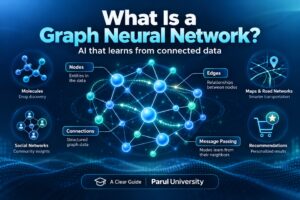
The B.Tech in Information Technology feeds students into Track 2 research and into applied software engineering across multiple domains. The curriculum covers software development across modern stacks, mobile application development, cloud computing, database systems, web technologies, and applied machine learning integration. The undergraduate student presenter at PiCET 2026 day-two morning, Mr. Mohmad Ali Unawala, came from the Parul Institute of Information Technology and presented graph neural network research for outfit recommendation.
B.Tech in Electronics and Communication Engineering
The B.Tech in Electronics and Communication Engineering feeds students into Track 3 research at the intersection of electronics and applied engineering. The curriculum covers signal processing, communication systems, digital and analog electronics, microprocessors, and sensor technology. Students from this programme study the photonics, optical communication, and fibre laser foundations Prof. Sulaiman Wadi Harun built his career on, as well as the signal processing methods underlying DC microgrid fault detection presented at the PiCET technical sessions.
M.Tech in Computer Science Engineering
The M.Tech in Computer Science Engineering is the postgraduate programme that allows specialisation into the senior practice roles across all four PiCET tracks. The curriculum includes advanced AI architectures, parallel and distributed computing, advanced cryptography, advanced software engineering, and the research methodology that anchors thesis-level work. M.Tech CSE candidates contributed papers across the PiCET 2026 sessions.
Ph.D. in Engineering and Technology
The Ph.D. in Engineering and Technology anchors doctoral-level research at Parul University. Ph.D. candidates contributed substantively to PiCET 2026 including the image captioning research by Mr. Harshil Narendrabhai Chauhan, the satellite video moving object detection by Ms. Jimbiwa Kajimalwendo, the streamflow forecasting work on the Narmada River, and the Gujarati question answering survey by Mr. Baldha Niravkumar Amrutlal.
Why the PiCET-to-programme mapping matters
Conference research is not separable from the academic programme structure that produces the researchers. The twelve PiCET 2026 award winners and the broader cohort of 406 paper authors all emerged from undergraduate, postgraduate, or doctoral programmes that specifically train students for the research domains they presented in. For prospective students choosing where to pursue engineering studies in India, the PiCET-to-programme mapping demonstrates the structural pipeline from undergraduate curriculum through doctoral research that Parul University operates.
Parul University holds NAAC A++ accreditation at a 3.55 CGPA and is a Category 1 University with Grant of Graded Autonomy. The new Lakshya 2047 Centre for Future Skills, inaugurated on 8 May 2026 (just six days after PiCET 2026 closed), is Gujarat’s first NSDC Centre for Future Skills established in partnership with the National Skill Development Corporation and Ethnotech Academy. The fifteen-laboratory infrastructure at Lakshya 2047 provides the NSDC Lab Ecosystem (NVIDIA, Cisco, ABB, ANSYS, Adobe, AWS, Apple, AR/VR, VLSI, Autodesk), the AICTE AVPL/IDEA Lab Zone, and the research-laboratory cluster (Mind Lab, Centre of Excellence in Sensor Technology, Special Integrated Facilities Idea Lab) that students entering Parul’s engineering programmes can access from their first semester.
For students pursuing entrepreneurial paths from their PiCET-aligned research, PIERC provides the institutional infrastructure for incubation, funding, and commercialisation. PIERC has incubated 254 start-ups, extended over ₹20 crore in funding, and supported over ₹40 crore in revenue generation across the portfolio. Several PiCET-presented research works in healthcare AI, agriculture AI, and computer vision have direct pathways into PIERC-supported entrepreneurial ventures.
Also Read: 22 Research Papers Across Three Sessions at PiCET
FAQs
Who won the first prizes at PiCET 2026?
Four first prizes of ₹15,000 each were awarded at PiCET 2026 across the four research tracks. Track 1 (Networking, Cybersecurity, Cognitive Intelligence) first prize went to Mr. Mohammad Atif and team for paper ID 535. Track 2 (Data science, computing, and intelligence systems) first prize was awarded to Dr. Prabodh Sahu and team, Paper ID 310. Track 3 (sustainable multidisciplinary applications) first prize was given to Ms. Dikshita Saxena and her team for Paper ID 814. In track 4 (AI and machine learning), first prize was awarded to Mr. Nitin Pal and team for Paper ID 861.
How were the PiCET 2026 awards structured?
The award ceremony was structured across four tracks that covered various disciplines like networking, cybersecurity, and cognitive intelligence, which includes computing, data science, and intelligent systems; sustainable interdisciplinary applications; and AI and ML. Each track award was divided into three levels; the first level was awarded ₹15000 in cash, a certificate, and a trophy. The second level was given ₹10,000 in cash, a certificate, and a trophy; third prize was ₹5,000 in cash, a certificate, and a trophy. Consolation awards were also given to recognize additional notable contributions, including Krishna Rahul G, Vandyat Pancharia, and Kalpesh Jadhav.
Which Parul University B.Tech programme should I choose for AI research?
For AI and machine learning at Parul University, one should choose the specialised undergraduate course program designed for students that focuses on AI research. The course structure covers deep learning, neural network architecture, computer vision, natural language processing, reinforcement learning, MLOps, generative AI, and the ethical frameworks around AI deployment. Similarly, there are other programs in B.Tech that include CSE and IT that include AI research roles. Also, the university offers postgraduate programs like M.Tech in CSE and PhD with participation in PiCET.
What program should I take for cybersecurity at Parul University?
The B.Tech in Cyber Security at Parul University is the specialised undergraduate programme for students focused on cybersecurity careers and research. The curriculum covers network security, application security, threat intelligence, cryptography, security operations, governance and compliance frameworks. The programme aligns with the themes Prof. Ashutosh Dhar Dwivedi raised at his PiCET 2026 keynote including symmetric and asymmetric encryption, the quantum threat to existing cryptographic systems, post-quantum cryptography, and password-less authentication using FIDO2 hardware keys. Track 1 of PiCET (Networking, Cybersecurity, and Cognitive Intelligence) is the conference output corresponding to this academic pathway
How does PIERC support students from research-active programmes at Parul University?
PIERC, the Parul Innovation and Entrepreneurship Research Centre, supports students who want to commercialise research output from their academic programmes at Parul University. PIERC has incubated 254 startups, extended over ₹20 crore in funding, and supported over ₹40 crore in revenue generation across the portfolio. The Idea Lab and Incubation Centre is government-recognised, with startup studios in Vadodara, Surat, Ahmedabad, and Rajkot. Students presenting research at conferences like PiCET 2026 across healthcare AI, agriculture AI, accessibility tools, and applied machine learning have direct pathways into PIERC-supported entrepreneurial ventures.