The roadmap of the startup
India is the world’s fastest-growing aviation market and its third-largest domestic market, yet almost every aircraft in Indian skies is designed and built abroad. Two Parul University alumni decided that it was a problem worth fixing. The result is Cligent Aerospace and the CL1000.
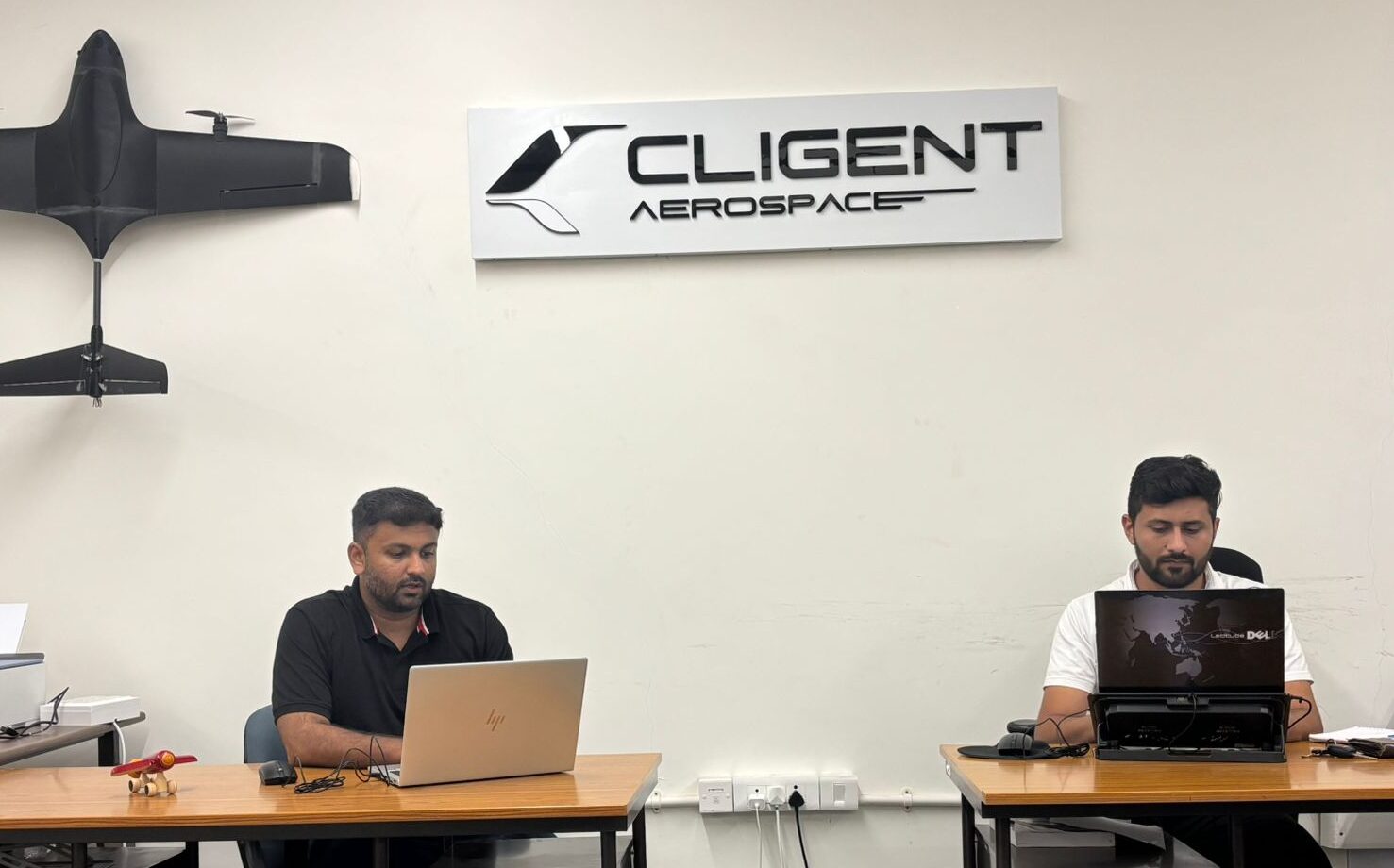
Cligent Aerospace was founded in 2024 by Parul University alumni Harsh Joshi and Vivek Dhut to design and manufacture aircraft in India for the global regional aviation market. Incubated at PIERC with substantial early-stage backing from Parul University’s infrastructure, the company has moved from idea to operational prototype, government grants, institutional investment, and signed pre-orders inside its first two years. The PIERC partnership behind the company’s early development is treated separately. This article focuses on the company itself: the problem, the product, the team, and the roadmap.
The regional aviation problem Cligent is solving
Globally, there are roughly 40,000 airports. Only about 9,000 are commercially active. The remaining 31,000 are idle or severely underutilised, not because demand does not exist, but because no aircraft can serve them economically. Large turboprops like the ATR 72 and Dash 8 need long runways and high passenger loads. Traditional 6-to-9 seat aircraft carry costs per seat that prevent low-volume regional routes from being viable. eVTOLs and air taxis operate only on short urban hops with limited payload and unresolved certification.
The result is a structural gap in the middle of the market: millions of passengers and billions of hours lost annually to mismatched aircraft. India compounds this with geography. Hill states, island territories, flood-prone districts, and remote agricultural regions often lack reliable road infrastructure. Aviation should be the answer in many of these places, but the aircraft does not yet exist. Cligent‘s CL1000 is designed specifically to fill that gap.
Meet the founders: Harsh Joshi and Vivek Dhut
Harsh Joshi and Vivek Dhut first met as college mates at Parul University. After graduation, they took entirely different paths. Harsh relocated to Bangalore and spent about five years in the aerospace startup ecosystem, developing advanced aerospace systems at companies including Azista Aerospace and GalaxEye Space. Vivek pursued an M.Tech in structural engineering followed by an MBA, building experience across engineering design and research sides of the aerospace sector.
Harsh had also considered an entirely different route. He had prepared for the UPSC examinations and was separately interested in the Indian Air Force; when neither path materialised as planned, he returned to aerospace startups. The experience of attempting something demanding, then re-routing without losing momentum, became visible later in how he handled setbacks and feedback as a founder. What ultimately brought the two back together was not nostalgia. It was a shared frustration with India’s regional aviation gap that had been building across their respective careers. Cligent Aerospace was incorporated in 2024.
Also Read: From Wind Tunnel to Pre-Seed: How PIERC Built Cligent Aerospace
The CL1000: specifications and design
The CL1000 is a hybrid-electric Short Takeoff and Landing (STOL) aircraft designed from the ground up for regional air mobility. Not a smaller version of an existing aircraft. A complete rethink of what a regional aircraft needs to be.
- Payload and capacity. Up to 1,500 kg of cargo, or up to nine passengers.
- Range. 1,000 km (621 miles).
- Runway requirement. As short as 150 metres. For context, a cricket pitch is 20 metres long; the CL1000 needs roughly the length of seven cricket pitches to become airborne.
- STOL aerodynamic systems. Blown lift technology using slipstream from wing-mounted propellers to significantly increase lift at low speeds, combined with Fowler flaps to extend effective wing area during takeoff and landing. Together, these systems allow operations from short, unprepared, or low-infrastructure airstrips that conventional aircraft cannot use.
- Modular interior. The airframe is reconfigurable between passenger, cargo, medical, or mixed-use missions within hours, allowing operators to run morning passenger services and afternoon cargo work on the same aircraft without returning to maintenance bases.
- Operating economics. Cligent estimates a hybrid-electric cost of under $0.01 per mile for the CL1000 against approximately $0.03 to $0.06 per mile for a Cessna Caravan running on a PT6A turboprop, alongside zero CO2 emissions in fuel-cell mode.
Manufacturing in Gujarat and the three-phase development plan
Cligent’s operations are based in Ahmedabad and Gandhinagar, Gujarat, with the company’s location chosen for the state government’s active support of aerospace deep-tech through policy and funding, the proximity to Parul University in Vadodara, and the broader aerospace and industrial corridor expanding across the state. Aircraft development follows a deliberate three-phase plan designed to progressively de-risk the technology before each subsequent investment tranche.
- Phase One (currently in progress). Build the EV powertrain technology demonstrator, conduct bench testing of the system, and complete a full-size airframe flight with the EV powertrain.
- Phase Two. Introduce the hybrid electric into the propulsion system, build the full nine-seater airframe, and fly the complete hybrid configuration.
- Phase Three. It is a scaling-up phase, where trucks are built with a 1.5-ton capacity of cargo and an equivalent 9-seater passenger capacity.
The phased approach reflects mature aerospace programme thinking. Each phase produces a physical artefact that validates the assumptions of the next, so by the time the company reaches Phase Three, the propulsion system will already have been independently tested, integrated into the airframe, and flown. Certification will still require its own dedicated testing, documentation, compliance demonstrations, and audits, but much of the engineering data and historical records needed will already exist.
Milestones: grants, pre-seed funding, and customer pre-orders
Since its 2024 founding, Cligent has moved through a stack of grant support, institutional investment, and signed customer commitments at a pace unusual for an aerospace hardware startup.
- Government grants. They received grants from TIDE Grant, Nidhi Prayas Grants, MSME Grants through PIERC, Startup Srujan Grant, and Startup India Seed Fund Scheme through PIERC, leading to meaningful funding.
Pre-seed round (August 2025). With an institutional pre-seed led by Riceberg Ventures joined by IIMA Ventures and Jaydeep Group Family Office, and PIERC.
The participation of two institutional names that do not invest casually in pre-seed aerospace hardware signals notable confidence in the company’s roadmap.
- Customer pre-orders. Multiple MoUs were signed and pre-orders secured for the CL1000. One confirmed early customer, Shree Maruti logistics and more, has expressed intent to take delivery of five to ten aircraft. A pre-order at the pre-certification stage is a strong market signal: the customer is betting on procurement planning on a product without yet-issued type certification.
- Government recognition. Cligent presented its vision for India’s electric aviation future directly to Union Civil Aviation Minister Ram Mohan Naidu Kinjarapu. Both the Central Government and the Gujarat Government have backed the company through key state initiatives.
The team: over a hundred years of combined aerospace experience
Cligent’s founding team is small, but the bench behind them is substantial. The core engineering team of over ten full-time engineers is supplemented by a leadership group and an advisory board collectively bringing more than a hundred years of experience in aircraft development, certification, and operations.
- Karan Mistry, VP Engineering. Over ten years of hands-on aerospace research and development with manufacturing expertise.
- Narendra Solanki, VP Engineering. Fifteen-plus years in powertrain development across hardware and software, with stints at Azista, Komoline, and Matter.
- Advisory Team. The team helped with planning, building regional hybrid aircraft, and ideation.
The organisations represented in the broader team background span Airbus, HAL, Mahindra Aerospace, Lockheed Martin, ATR, Universal Hydrogen, Azista Aerospace, GalaxEye Space, and L&T Defense. The depth signals to regulators, investors, and customers that the people making CL1000 design and certification decisions have done analogous work before in environments where mistakes carry serious consequences.
The road ahead: 2026 to 2030
- 2026. First crewed test flight, transitioning from unmanned prototype validation to human-rated flight testing. Seed Round to fund full execution of Phase One, including the completed EV-powertrain demonstrator.
- 2027. Target of 100 pre-orders for the CL1000, comparable to early order book trajectories at peer companies like Electra Aero.
- 2028. Series A funding for commercial operations readiness.
- 2029. CS23 certification and first deliveries to customers.
- 2030. Series B funding and international expansion.
The market context makes the ambition rational. McKinsey’s 2023 Regional Air Mobility report estimates the total addressable market for nine-to-nineteen-seat aircraft at $36 to $56 billion USD by 2035. India’s share, even at a conservative 2 to 3 per cent, represents 500 to 775 aircraft and a hardware market worth $1.25 to $1.93 billion USD. Cligent does not need to win the entire market. It needs to execute on the product and build the customer base. For details on how PIERC enabled the early-stage development that made these milestones possible, the companion article treats the incubation story.
FAQs
What is Cligent Aerospace and who founded it?
Cligent Aerospace is an Indian aerospace startup founded in 2024 by Parul University alumni Harsh Joshi and Vivek Dhut to design and manufacture aircraft in India for the global regional aviation market. Harsh brought approximately five years of aerospace startup experience from Bangalore including roles at Azista Aerospace and GalaxEye Space. Vivek brought an M.Tech in structural engineering followed by an MBA and additional engineering design and research experience. The company is incubated at PIERC and based in Ahmedabad and Gandhinagar, Gujarat.
What is the CL1000 and what makes it different from existing regional aircraft?
The CL1000 is a hybrid-electric Short Takeoff and Landing (STOL) aircraft designed for regional air mobility. It carries up to 1,500 kg of cargo or up to nine passengers, has a range of 1,000 km, and can operate from runways as short as 150 metres. The hybrid and battery propulsion system delivers under $0.01 per mile operating costs against approximately $0.03 to $0.06 per mile for a Cessna Caravan, alongside zero CO2 emissions in fuel-cell mode. The aircraft is designed from the ground up rather than as a derivative of an existing platform.
What funding has Cligent Aerospace secured to date?
They received funding from the government, Nidhi Prayas, the Startup India Seed Fund Scheme, Riceberg Ventures, and other angel investors. The pre-seed round took place in August 2025, and they cleared that they received the funding.