Most incubators provide office space, paperwork support, and occasional mentorship. PIERC at Parul University did something different for Cligent Aerospace: wind tunnel access, an airstrip for the first test flight, channelled grant funding at every stage, an investor platform, and eventually a position as an investor alongside IIMA Ventures and Riceberg Ventures.
This article documents the partnership between PIERC and Cligent Aerospace, the Indian hybrid-electric STOL aircraft startup founded by Parul University alumni Harsh Joshi and Vivek Dhut. The broader company story, including the CL1000 aircraft programme, is treated separately. This piece focuses on what PIERC actually did to support an aerospace hardware startup at the earliest stages, and what that contribution looked like in practical terms over the company’s first two years.
Why the founders chose PIERC
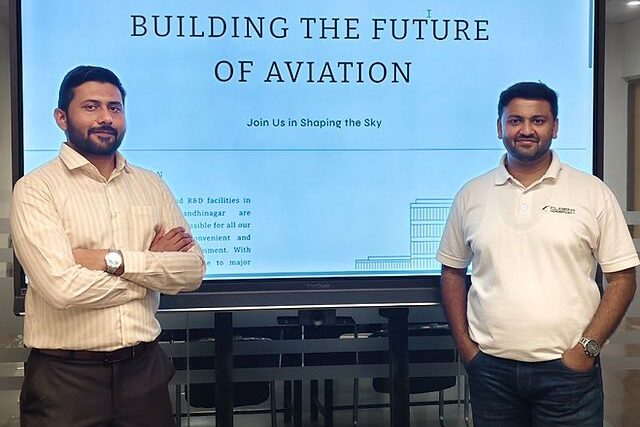
When Harsh Joshi and Vivek Dhut decided where to base Cligent Aerospace, the decision was partly practical and partly personal. Both were Parul University alumni. They knew the institution. They also knew that PIERC had been operating for years and had built real infrastructure and relationships rather than existing only as a name on letterhead. They reached out, connected with the PIERC team, and what followed became the beginning of a partnership that has shaped the company’s early trajectory in ways that extend well beyond standard incubation.
PIERC’s early evaluation looked at what most aerospace investors look for later: founders’ vision, technical and professional background, and potential to scale. According to PIERC’s own framing, what the centre normally finds in founders with genuinely large-scale ideas is humility, discipline, and open-mindedness to feedback. The founders’ pattern was clear from the early meetings: they listened actively, took notes, implemented what they heard, and returned with tangible results. In PIERC’s experience across hundreds of startups, that willingness to learn and iterate without ego is often the difference between startups that make it and those that do not.
Wind tunnel access at Parul University
The most tangible early contribution from PIERC was access to Parul University‘s wind tunnel for aerodynamic testing. At the stage when Cligent was just getting started, the team had almost no external funding. The cost of commissioning commercial wind tunnel time at an independent facility would have been prohibitive, or at minimum would have consumed a disproportionate share of whatever early capital the founders had put in themselves. PIERC facilitated access to the university’s facility at no cost.
The wind tunnel testing inside Parul University is not a minor footnote in Cligent’s history. It is part of the physical engineering record of the CL1000’s aerodynamic design. The data generated there will sit in the company’s certification documentation when the aircraft eventually pursues CS23 approval.
First test flight on a Parul University Cricket Ground
The first test flight of the Cligent prototype was also conducted at Parul University. The data from that flight, the first time the aircraft left the ground under its own power, was generated on a Parul University airstrip. Harsh has noted that the flight happened from a runway of approximately 20 metres, using a scale prototype. The fact itself matters institutionally: Parul University can legitimately claim that the first physical flight of what is positioned to become India’s first homegrown hybrid-electric STOL aircraft happened on its premises.
- Why early flight test access matters for hardware startups. Aerospace hardware startups face a chicken-and-egg problem at the earliest stage. Without prototype flight data, attracting investors is difficult. Without investors, accessing flight test facilities is expensive. Universities with their own airstrips and wind tunnels can break this cycle for incubated startups, which is precisely what PIERC did for Cligent. The same infrastructure access would have been impractical or impossible for a two-person founding team without institutional backing.
Also Read: Cligent Aerospace and the CL1000: India’s Hybrid-Electric STOL Aircraft
Financial support channelled through PIERC
Beyond infrastructure access, PIERC channelled or supported a significant portion of Cligent’s grant funding across the company’s early growth.
- MSME Grant. Channelled through PIERC, supporting the company’s early operational and prototyping costs.
- Startup India Seed Fund Scheme. Channelled through PIERC, providing the largest single grant disbursement in the company’s early-stage capital stack.
- Smaller earliest-stage grants. TIDE Grant and NIDHI PRAYAS Grant supported the company’s earliest proof-of-concept work alongside PIERC’s broader administrative and mentorship support.
Government grant access for early-stage deep-tech startups requires substantial documentation, eligibility verification, and procedural navigation. PIERC’s institutional standing both validated Cligent’s applications and provided the procedural infrastructure to make multiple grant submissions manageable for a two-person founding team focused primarily on aircraft engineering rather than grant paperwork.
Startup Nivesh 1.0: the platform that put Cligent in the room
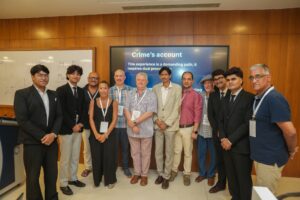
Participating in Startup Nivesh 1.0, an event facilitated by Parul University and PIERC to showcase startups to investors, improved Cligent’s investor visibility significantly. The event introduced Cligent to a variety of investors and stakeholders across industries, with structured presentations enabling networking inside a single shared location for all participants.
For Harsh and Vivek, Startup Nivesh 1.0 was exactly the kind of platform deep-tech startups need and rarely get access to at the earliest stage. Aerospace is not a sector that attracts casual investment: capital requirements are high, development timelines are long, and most generalist investors lack the technical framework to evaluate aerospace pitches. Startup Nivesh 1.0 created a room where the right kinds of conversations could happen. Harsh has described it as one of the best platforms available for raising funds and meeting investors, and the traction that followed in the months after the event bears that out.
- What does this signal about PIERC’s incubation model? PIERC’s ability to convene investors, vouch for startup credibility from an institutional standpoint, and create structured opportunities for founders to make their case in a professional environment is the kind of ecosystem-building work that does not always get credit but consistently makes the difference in whether a startup gets funded. The Startup Nivesh 1.0 platform is concrete evidence of that capability.
PIERC as an investor in the pre-seed round
In August 2025, Cligent closed the institutional pre-seed round with participants Riceberg Venture, IIMA Venture and Jaydeep Group Family & PIERC, along with other angel investors.
PIERC’s participation as a direct investor, rather than only as an incubator-of-record, signals a structural shift in the relationship: from incubator-to-startup to genuine institutional partnership with aligned financial interests.
- Why PIERC as an investor matters for the broader ecosystem. Most university-affiliated incubators are not structured to participate as direct investors in their portfolio startups. PIERC’s ability to do so signals operational maturity that some peer incubators do not have. It also means the centre is committed to Cligent’s success at the level of financial outcomes, not only at the level of administrative support.
The qualities PIERC saw in the founders
When asked what made PIERC back Cligent in the first place, the answer is not primarily about technology or market opportunity. It is about how the founders showed up.
- Humility. Harsh and Vivek arrived without inflated expectations about what their early-stage company was worth or what kind of validation it deserved. They listened to feedback rather than defending their assumptions.
- Discipline. Between PIERC sessions, the founders implemented feedback systematically and returned with tangible results. The pattern repeated across multiple sessions, building institutional confidence over time.
- Open-mindedness to learning. They actively absorbed input from mentors, advisors, and external sessions rather than treating advice as optional. The willingness to iterate without ego compounded across months.
- Clarity of vision. Despite the scale of what they were attempting (building a hybrid-electric aircraft in India for the global regional aviation market), the founders maintained a clear-eyed understanding of the problem they were trying to solve and what would be required to solve it.
In PIERC’s experience with hundreds of startups, those qualities, more than any specific technology or market positioning, are what differentiate startups that ultimately make it from those that do not. The technology can be built. The market can be developed. But the disposition of the founders, especially in the years when progress is hard and external validation is slow, is what determines whether the startup survives long enough to produce outcomes worth measuring.
Also Read: PIERC cohort at Parul University with 14 days, 50 startups, and 100 students.
What the Cligent example shows about PIERC's incubation model
Cligent Aerospace is a single example, but the texture of what PIERC actually provided is instructive for prospective founders considering the Parul University and PIERC ecosystem:
- Infrastructure access beyond office space. Wind tunnel time and airstrip access for a hardware startup, at no cost, at the earliest stage when commercial alternatives would have been prohibitive.
- Grant channelling and procedural support. Multiple government grants across the early-stage capital stack, with PIERC’s institutional standing supporting application credibility and documentation requirements.
- Investor convening and ecosystem-building. Platforms like Startup Nivesh 1.0 that bring investors and startups into the same room with structured engagement formats.
- Institutional investor participation. PIERC’s own investment in the pre-seed round, signalling alignment of financial interests beyond traditional incubation services.
- Mentorship that addresses how founders think. Evaluation and ongoing engagement focused on the qualities (humility, discipline, open-mindedness) that determine whether startups survive long enough to produce outcomes.
FAQs
What did PIERC specifically provide to Cligent Aerospace beyond standard incubation services?
PIERC provided wind tunnel access at Parul University for aerodynamic testing at no cost during the company's earliest stage when commercial alternatives would have been prohibitive; cricket ground access at Parul University for the first test flight of the CL1000 prototype; channeling of multiple government grants, including the MSME Grant and Startup India Seed Fund Scheme; the Startup Nivesh 1.0 platform for investor visibility; and direct participation as an investor in 2025. Pre-seed round alongside angel investors and Riceberg Ventures.
Why does early-stage infrastructure access matter for aerospace startups?
Aerospace hardware startups face a chicken-and-egg problem at the earliest stage. Without prototype flight data and aerodynamic validation, attracting investors is difficult. Without investors, accessing commercial flight test facilities and wind tunnels is prohibitively expensive. Universities with their own airstrips and wind tunnels can break this cycle for incubated startups, generating the engineering data needed to demonstrate technical credibility to investors. PIERC's facilitation of wind tunnel access and airstrip flight testing at Parul University did exactly this for Cligent during the company's most vulnerable early phase.
What qualities did PIERC identify in the Cligent founders that made the centre back the startup?
PIERC's evaluation of Harsh Joshi and Vivek Dhut focused on humility (the founders arrived without inflated expectations about what early-stage validation they deserved), discipline (between sessions they implemented feedback systematically and returned with tangible results), open-mindedness to learning (they actively absorbed input from mentors and external sessions rather than defending their assumptions), and clarity of vision (despite the scale of what they were attempting, they maintained clear understanding of the problem they were solving). In PIERC's experience with hundreds of startups, these qualities matter more than specific technology or market positioning in determining which startups make it.
How does PIERC differ from typical startup incubators in India?
Most university-affiliated incubators in India provide office space, mentorship, and grant administration support. PIERC has demonstrated operational depth across infrastructure access (wind tunnel, airstrip), substantial grant channelling, ecosystem-building platforms (Startup Nivesh 1.0), and direct investor participation in portfolio company funding rounds. The Cligent Aerospace example illustrates each of these dimensions concretely: from wind tunnel testing at Parul University through the Startup India Seed Fund Scheme channelled via PIERC through the centre's own investment alongside angel investors and Riceberg Ventures. IIMA Ventures and Riceberg Ventures in the August 2025 pre-seed round.