Imagine asking someone to explain the core of fashion design, and all they will picture is a “designer sketching”. But with the advent of technology and digital fluency, it has reached massive heights. Eventually, a garment doesn’t reach a customer because someone drew it; it reaches because someone planned the entire process – ideation, production, craftsmen coordination, quality checks, and ensuring everything is done under one timeline.
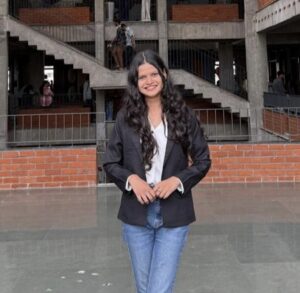
Dipali Gupta chose this part; it’s that role that elevated her skills and trajectory from a couture internship in Indore to a production role at a trending fashion brand – Zebein!
Her background goes like this: she is a student in B.Des Fashion Design & Technology, Faculty of Design, Parul Institute of Design. Her story is truly inspiring for all the design enthusiasts as she turned her career trajectory from basic conventional narratives to a technical and operational engine role wherein the industry is highly thriving.
This is one of several documented fashion outcomes from Parul Institute of Design. A companion piece covers Khushi Dehade’s placement as a Fashion Designer at Mix Bunch, and a third looks at how fashion internships at firms like Shahi Exports and Sajnaari build industry readiness. The interior design side of the faculty is covered through Priyanka Soni’s placement at Livspace, with the broader institutional record at the Parul University’s placement record.
Why production, and why it matters!
Fashion drew Dipali for its combination of creativity, craftsmanship, and business management, and it was the last of those that shaped her direction.
Usually, students are navigating towards the pure essence of design, but she was more towards how garments are scaled within a specific timeframe. Hence, she mastered how the entire merchandising process works. Her internship experience at Anusha J Couture – an Indore-based brand that’s known for bridal wear and celebrity outfits, placed her as Production Manager Intern wherein she mastered how bridal and celebrity garments carry the exact embroidery, customised fitting, luxury materials and how to grasp client expectation in sync with outcomes!
What the internship actually involved
The role was not observational. Dipali worked across the phases of the production process, and the responsibilities she carried are the substance of what a production career demands.
- Production planning and coordination. She assisted in planning production and coordinating across departments, learning how efficient planning determines whether quality garments ship on time. Coordination meant working across designers, tailors, and craftsmen to keep every task moving.
- Workflow and timeline monitoring. She monitored production stages and worked to improve workflow efficiency, managing multiple garments at once, which demanded organisation, prioritisation, and communication under real deadlines rather than academic ones.
- Quality control. Here, she had planned and executed checks of Quality Assurance wherein she checked everything – from fabric choice to finishing shapes for the final garment. In the couture domain, client expectation is an absolute thing; this discipline is non-negotiable!
- Live projects and fashion shoots. Beyond the production floor, she worked on live client projects with real deadlines and professional stakes and took part in live fashion shoots, where she saw styling, presentation, and aesthetics come together, connecting production to the marketing and branding end of the industry.
The skills that carried into a job
The internship she did made her job & industry ready even before having her final degree. Working in the fast-paced world of couture, these internships even sharpened her time management skills and communication skills. It strengthened her communication, since production management runs on constant coordination across departments and workers. And it built her organisational discipline, from recording and controlling workflow to tracking production schedules and hitting assigned deadlines.
It also taught the less teachable things: professionalism under pressure when time constraints, production difficulties, and unexpected changes demanded quick decisions, and the industry tips that only come from working alongside experienced professionals. Teamwork sat at the centre of all of it, because fashion production is a cooperative effort spanning designers, production managers, craftsmen, quality controllers, and stylists, and the efficiency of the whole depends on how well those people work together.
From internship to industry
The clearest measure of an internship’s value is whether it leads somewhere, and Dipali’s did. Currently, she is working in the Production Department of Zebein – a fashion brand based in Ahmedabad. This practical exposure from her last internship at Anusha J Couture gave her clarity about industry standards and job expectations, followed by the expertise of client-merchant relationship, client communication, production coordination, and quality assurance, and that’s what brought her into her current role.
What makes the transition instructive is the integration underneath it. The theoretical and technical knowledge from her Bachelor of Design course and the practical experience from the internship reinforce each other in the job, which is exactly the academic-plus-practical combination the programme is built to produce. Her own conviction, stated plainly, is that fashion students should take on as many internships as possible, because classroom training gives theory while internships give the practical exposure that reveals how the industry actually works.
Where this fits in the Faculty of Design
Dipali’s path highlights a dimension of fashion education that prospective students often miss: the industry needs production and management professionals as much as it needs designers, and the Fashion Design and Technology programme at Parul Institute of Design prepares students for both. The Faculty of Design operates within Parul University’s NAAC A++ accreditation at CGPA 3.55 and Category 1 status with Grant of Graded Autonomy, and its students access internships and placements supported by the university’s recruitment strength, recognised by ASSOCHAM as the Best University in Placements for three consecutive years.
For students drawn to the business and operational side of fashion, the production route Dipali took is one supported path. For those who would rather build their own label, PIERC, the Parul Innovation and Entrepreneurship Research Centre, offers an incubation route, having supported 254 startups, including consumer and lifestyle brands. The consistent thread is that a fashion education here is not narrowly a design education. It opens onto production, management, entrepreneurship, and the full width of how the industry actually operates.
FAQs
Who is Dipali Gupta and what does she do now?
Dipali Gupta is a Bachelor of Design student in Fashion Design and Technology at Parul Institute of Design, part of the Faculty of Design at Parul University. She completed a three-month internship as a Production Manager Intern at Anusha J Couture, a couture label in Indore known for bridal wear, celebrity outfits, and craftsmanship. She now works in the Production Department at Zebein, a fashion brand based in Ahmedabad. Her career focuses on the production and management side of fashion, covering production planning, cross-department coordination, workflow monitoring, and quality control, rather than pure design work.
What does a fashion production internship involve?
Based on Dipali Gupta's documented experience at Anusha J Couture, a fashion production internship involves assisting with production planning and coordinating across departments, including designers, tailors, and craftsmen. Core responsibilities include monitoring production stages to improve workflow efficiency, managing multiple garments simultaneously, and conducting quality checks at various stages of garment development, from fabric choice through stitching and finishing. In a couture setting, the work extends to elaborate bridal and celebrity garments with intricate embroidery, custom fitting, and luxury materials that carry exacting client expectations. Interns may also work on live client projects with real deadlines and participate in live fashion shoots, gaining exposure to styling, presentation, and the connection between production, marketing, and branding. The role builds time management, communication, organisational discipline, and professionalism under pressure.
Can a fashion design internship lead directly to a job?
Yes, and Dipali Gupta's path demonstrates it. Her three-month Production Manager internship at Anusha J Couture in Indore built job-ready capability in production management, organisational skills, quality control, and industry workflow that translated directly into her current role in the Production Department at Zebein, a fashion brand in Ahmedabad. The practical exposure gave her familiarity with industry demands and job expectations, while the theoretical and technical knowledge from her Bachelor of Design course reinforced her professional work. Her own advice to fashion students is to take on as many internships as possible, because classroom training provides theory while internships provide the practical exposure that reveals how the industry actually operates. Internships build confidence, communication, time management, and industry knowledge that prepare students for professional responsibility.
Does a fashion degree only lead to design jobs?
No. Fashion education opens onto multiple career paths beyond pure design. Dipali Gupta's route into fashion production and management illustrates one of the most consistent employment routes in the industry, covering production planning, coordination, quality control, and workflow management. The Fashion Design and Technology programme at Parul Institute of Design prepares students for both the creative design side and the operational production and management side. Other paths include merchandising, styling, fashion marketing, and brand management. For students who would rather build their own label or venture than join an established brand, PIERC (the Parul Innovation and Entrepreneurship Research Centre) at Parul University offers an incubation route, having supported 254 startups across sectors including consumer and lifestyle brands. This range means a fashion education at Parul Institute of Design can lead to a designer role, a production and management career, or an entrepreneurial venture, depending on the student's direction.