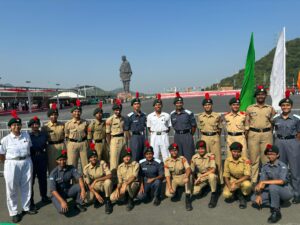
Learning how to join the Indian Navy as an officer starts with a simple realisation: there are multiple entry routes, and they suit different people at different stages. A student in class twelve, a graduate engineer, and an NCC cadet each have a best route, and choosing the right one is half the task. This is the path one Parul University engineering student took to a Permanent Commission, and it is worth mapping the options in full.
The Main Officer Entry Routes
Officer entries to the Indian Navy broadly fall into these routes:
- NDA: after class twelve with Physics and Maths, through the UPSC National Defence Academy examination, followed by training and a Permanent Commission.
- 10+2 B.Tech Cadet Entry: a fully funded four-year B.Tech at the Indian Naval Academy for science students, shortlisted on JEE Main rank, leading to a Permanent Commission in the Executive or Technical branch.
- CDS: the most popular route for graduates, through the UPSC Combined Defence Services examination, leading to training at the Indian Naval Academy.
- INET: the Indian Navy Entrance Test, conducted by the Navy itself, for Executive, Technical, and Education branch entries.
- SSC: Short Service Commission, through notification-based entries across many branches, with no written UPSC exam for most.
- NCC Special Entry: for holders of the NCC ‘C’ certificate (Naval Wing), a direct route to the SSB with no written examination.
The Best Routes for Graduates and Engineers
For an engineering graduate, the realistic routes are CDS, INET, SSC, and, for those who did NCC, the NCC Special Entry. CDS and the graduate entries typically lead to the Executive or Technical branch, and an engineering degree is directly relevant to Technical-branch roles. The Executive Branch, which handles navigation, operations, and leadership at sea, is among the most sought-after, and is the branch the Parul University cadet in the related profile joined.
If you too wish to serve your nation with the holistic knowledge of engineering, enrol on Parul University’s B.Tech CSE Course and begin your journey fearlessly!
The NCC Special Entry Advantage!
One route deserves particular attention because it is underused. Holders of the NCC Senior Division ‘C’ certificate from the Naval Wing can enter as officers through a direct SSB interview, without sitting the UPSC written examination. This does not remove the SSB, which every candidate must clear, but it removes the written hurdle that filters out many applicants. For anyone who did NCC seriously, this is one of the most efficient routes in, as set out in detail in the guide to NCC benefits and the armed forces
The Common Funnel: Written, SSB, Medical, Merit
Whichever route you choose, the flow converges. Depending on the entry, you may sit a written examination, then attend and clear the five-day Services Selection Board interview, then pass the medical examination and physical standards, and finally make the branch-specific merit list before joining training. The written stage varies by route, but the SSB is common to all, which is why clearing the SSB is the decisive skill for any aspirant.
Permanent Commission versus Short Service Commission
Entries lead to one of two commission types. A Permanent Commission is a full-length career in the Navy with long-term stability and pension benefits. A Short Service Commission is a fixed term, typically with options to extend or convert, offering a defined period of service. Which one an entry leads to depends on the route, and it is a factor worth weighing early, since it shapes the entire career horizon.
Frequently Asked Questions
How can an engineering graduate join the Indian Navy as an officer?
An engineering graduate can join through the CDS examination (UPSC), the INET (conducted by the Navy), Short Service Commission notification entries, or the NCC Special Entry if they hold an NCC ‘C’ certificate. An engineering degree is especially relevant to Technical-branch entries, though graduates also enter the Executive Branch. All routes require clearing the SSB.
What is the NCC Special Entry for the Navy?
The NCC Special Entry lets holders of the NCC Senior Division ‘C’ certificate (Naval Wing, minimum ‘B’ grade, with the required years of service) enter the Indian Navy as officers through a direct SSB interview, without the UPSC written examination. It is one of the most direct officer routes for eligible NCC cadets.
Where do Indian Navy officers train?
Most officer entries train at the Indian Naval Academy at Ezhimala in Kerala, either for their initial officer training or, in the case of the 10+2 B.Tech entry, for a full four-year degree, followed by branch-specific establishments. Training culminates in a commission as an officer in the chosen branch.
What is the difference between the Executive and Technical branches?
The Executive Branch covers operations, navigation, gunnery, and general leadership at sea, and includes specialisations such as aviation and submarines. The Technical Branch covers engineering and electrical systems that keep ships and equipment running. Engineering graduates are well suited to the Technical Branch, though many also enter the Executive Branch.