Any organisation that used to run on software, it now runs on infrastructure. And that’s a big time shift, as the workflows and pipelines can be automated easily, and it streamlines the failures without disturbing anyone. Hence, this shift has bestowed many opportunities for engineers and cloud enthusiasts. If you’ve just completed schooling and are passionate about how cloud computing functions, this detailed guide will help you navigate what degree you need and how to build from an undergraduate degree level!
Career Possibilities in Cloud Computing & DevOps
Job titles can be different, but the functionalities remain the same and consistent. Here you go with the exact details of each demanding role –
• Linux or systems administrator: Keeps servers and operating systems running, handling configuration, users, storage, networking, patching and troubleshooting. Subsequently, the main entry point into infrastructure-based work and the core role where fundamentals below everything are mastered primarily to streamline everything!
- Cloud engineer: The core role is to design and operationalise infrastructure on cloud-based platforms, manage storage and networking, manage cost and end-to-end access, followed by all of it in code instead of configuring it by hand!
- DevOps engineer: Builds and maintains the pipeline that takes code from a developer’s machine into production, covering automated build, test and deployment, and the tooling that makes releases routine rather than eventful.
- Site reliability engineer: Focuses on whether systems stay up and perform, working on monitoring, alerting, capacity and incident response, and applying engineering discipline to operational problems.
- Platform engineer: Builds the internal tooling other engineers use to deploy and run their own services, effectively treating the organisation’s developers as customers.
The distinctions blur in smaller organisations, where one person covers several of these, and sharpen in larger ones. For a student, the useful observation is that all five rest on the same foundation, so the early learning is common and specialisation comes later.
These are five different jobs, not one. But they share a foundation, so the early learning is the same whichever you end up in.
The Skills Underneath All of Them
Whatever the eventual title, the same technical base recurs, and it is worth learning in roughly this order.
- Linux: The operating system most enterprise and cloud infrastructure runs on. Comfort at the command line, and an understanding of processes, permissions, storage, networking and services, is genuinely non-negotiable rather than merely advantageous.
- Networking fundamentals: Addressing, routing, DNS, load balancing and firewalls. A great many production problems are network problems wearing a disguise.
- Containers: How applications are packaged so they run identically wherever they are deployed, which is now the default way software reaches production.
- Orchestration: How large numbers of containers are scheduled, scaled and kept running, which in practice means Kubernetes.
- Automation and configuration management: Describing infrastructure and configuration in code so it can be versioned, reviewed and reproduced, rather than being applied by hand and forgotten.
- Version control and pipelines: Git as a working tool rather than a formality, and continuous integration and delivery systems that build, test and deploy automatically.
- Scripting: Enough shell and Python to automate what would otherwise be repeated manually.
These are explained in more depth in a companion piece on containers, Kubernetes and the enterprise technology stack. The ordering matters more than it appears. Learning Kubernetes without understanding Linux produces someone who can follow tutorials and cannot diagnose failures, which is a difference employers detect quickly.
What the Work Actually Looks Like
Job descriptions describe responsibilities. They rarely describe what the days consist of, which is the thing a student most needs to know before committing to a direction.
A large share of infrastructure work is diagnostic. Something that worked yesterday does not work today, and the task is to establish why, usually from logs, metrics and inference rather than from an error message that states the problem. People who enjoy this describe it as puzzle-solving; people who do not find it draining. It is worth knowing which you are before choosing the field.
Another substantial share is building things that remove future work. Automating a deployment, writing a playbook that configures a fleet of servers, or constructing a pipeline that catches failures before production all take time now to save considerably more later. This is the part of the job that most resembles software development, and it is where the field has moved decisively in the last decade.
A smaller but unavoidable share is operational responsibility. Systems fail outside working hours, and roles that carry production responsibility usually carry some form of on-call rotation. Mature organisations manage this deliberately, with reasonable rotations and a culture of fixing root causes so the same incident does not recur.
The balance between these three shifts with seniority. Early roles are weighted toward diagnosis and routine operations; senior roles toward designing systems so that both become rarer. Are you ready to build the infrastructure behind modern technology? Delay no longer and explore Parul University’s Engineering Programmes such as Bachelor of Technology CSE in Cloud Computing, (B.Sc IT) in Cloud Computing and BCA in Cloud Computing to work for your dream cloud company!
What Employers Look For Beyond the Skill List
Two candidates can hold the same list of technologies on a resume and be assessed very differently, and the reasons are consistent enough to be worth stating.
- Demonstrable hands-on work: Having configured, broken and repaired real systems counts for more than having watched courses about them. A home laboratory built on virtual machines is legitimate experience and is treated as such.
- Troubleshooting ability: Infrastructure roles are substantially about diagnosis. Interviews frequently probe how a candidate reasons through a failure rather than what they have memorised.
- Validated credentials: Certifications matter here more than in many software roles, because they provide independent evidence of practical skill. Performance-based certifications, tested on live systems, carry more weight than multiple-choice ones.
- Understanding why, not just how: Knowing the command is table stakes. Knowing what it does to the system, and what happens when it fails, is the actual skill.
The certification point is worth pursuing separately, and is covered in a companion guide to Red Hat certifications and what they lead to.
Where These Roles Sit in an Organisation?
One thing rarely explained to students is how these roles relate to the developers writing application code, and misunderstanding it produces a distorted picture of the work.
The older arrangement separated the two sharply. Developers wrote software and handed it to an operations team who ran it, which created a predictable failure mode: developers were measured on shipping changes and operations on keeping systems stable, so the two groups had directly opposing incentives and blamed each other when something broke.
The practices grouped under DevOps exist largely to dissolve that separation, by giving the people who build software a share of the responsibility for running it and giving operations engineers the tooling to make that practical. In current organisations, this usually means infrastructure engineers build the platform and automation that development teams deploy onto, rather than deploying on their behalf. Understanding that relationship makes the roles legible: much of the work is building capability for other engineers, not gatekeeping access to production.
How to Build Toward This as a Student?
The gap most engineering graduates face is not intelligence or theory but exposure. Curricula cover programming and computer science thoroughly and enterprise infrastructure lightly, so students arrive at interviews without having touched the environment the job takes place in.
Closing that gap is largely a matter of deliberate practice, and it can be done during a degree.
- Install Linux and use it as a working environment rather than reading about it. Discomfort here is the point; it is how familiarity is built.
- Build a home laboratory using virtual machines. Set up servers, break them, and repair them. This is the closest available substitute for operational experience.
- Learn containers by containerising something you have written, rather than by studying the concept in isolation.
- Automate a task you currently do manually, then automate a second one. Automation is a habit before it is a skill.
- Pursue a recognised certification while studying, since performance-based credentials provide evidence that a resume line cannot.
- Contribute to or read open-source projects, which is how the collaborative working practices of the field are actually learned.
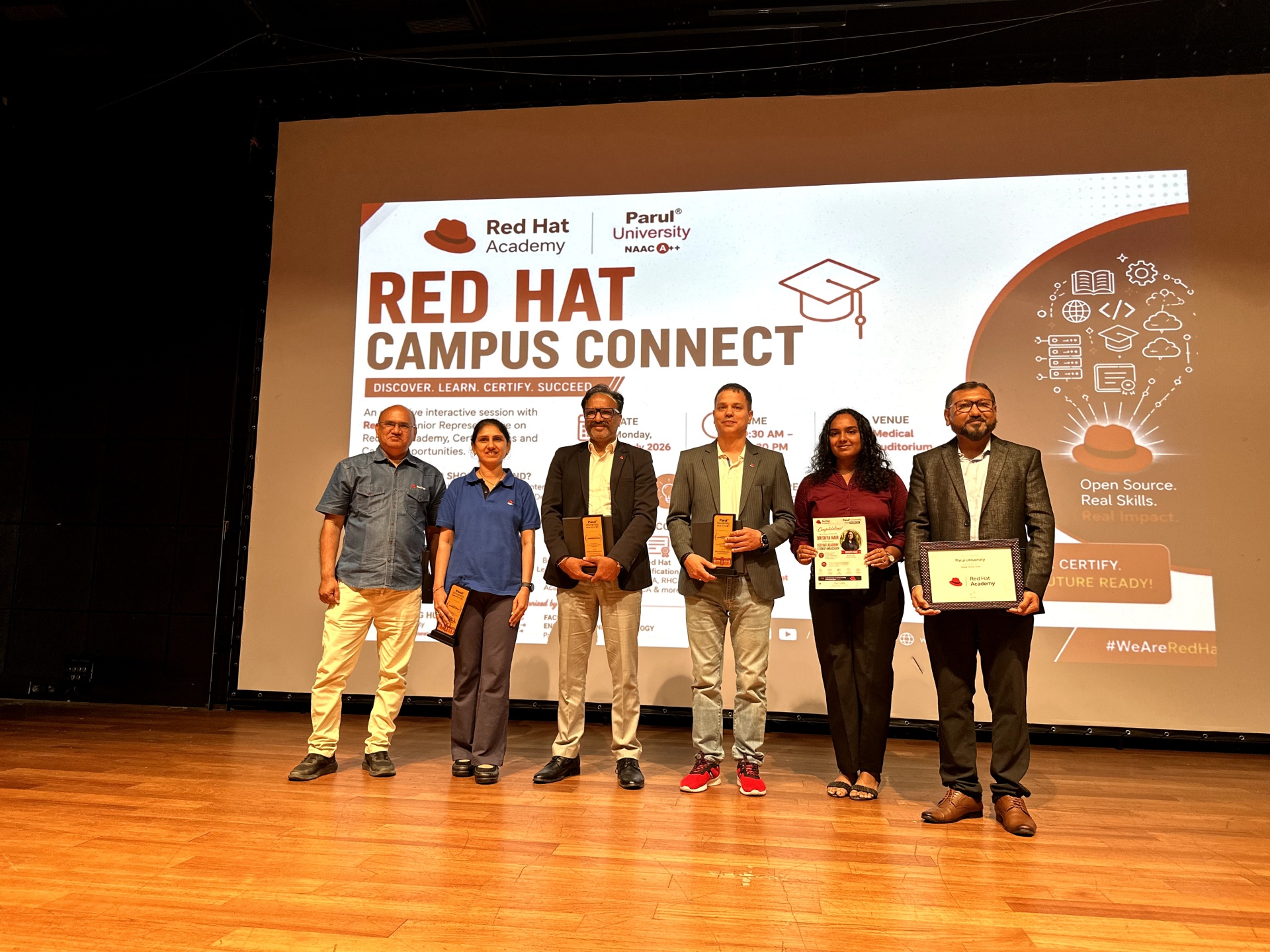
Structured access accelerates all of this considerably, which is the argument for industry-aligned academic programmes. Parul University’s Tinkering Hub operates a Red Hat Academy partnership providing students with enterprise Linux and cloud learning environments and certification pathways alongside their degree. Technology skilling of this kind sits within wider national efforts coordinated through bodies including the Ministry of Electronics and Information Technology.
FAQs
How many fields can be explored in cloud computing & DevOps?
The very core roles are Linux or systems administrator, followed by the management of servers and operational functioning. Any engineering student can become a cloud engineer, DevOps engineer, site reliability engineer, or platform engineer.
How do you become a DevOps engineer ?
By building the underlying foundation first. Before anything else, Linux comes first, followed by networking basics, containers, Kubernetes exploration, automation, configuration management, version control, and needed scripting for automating daily work. Such mastery can be acquired through practice, not via theory. Besides this, based on performance & skill-based criteria, certifications are awarded to students to validate their technical capabilities!
Is Linux for cloud or DevOps?
Indeed, most enterprise & cloud infrastructure is running on Linux itself. Plus, the comfort of the command line, process understanding, permissions, storage, networking and holistic services are surely an advantage to them. Besides this, learning next-gen tools such as Kubernetes without understanding the foundation can be easily identified by interviewers, so one should learn that first and then go ahead!
Are certifications worth it for infrastructure roles?
They carry more weight in infrastructure and operations than in many software development roles, because they provide independent, verifiable evidence of practical skill. The holistic performance-based certifications, wherein students opt for performing tasks instead of answering MCQs, are more in demand and preferable. As they’re aimed at extending a solution, that’s when they get a job where they desire to work!
Define the core difference between DevOps & Site Reliability Engineer/Engineering?
DevOps engineering majorly focuses on code to production, in sync with building, automating, testing & deploying pipelines so it becomes easy to streamline everyday. Site Reliability Engineering primarily focuses on systems only when they’re running, monitoring, alerting, and applying, followed by applying engineering expertise to operational issues.