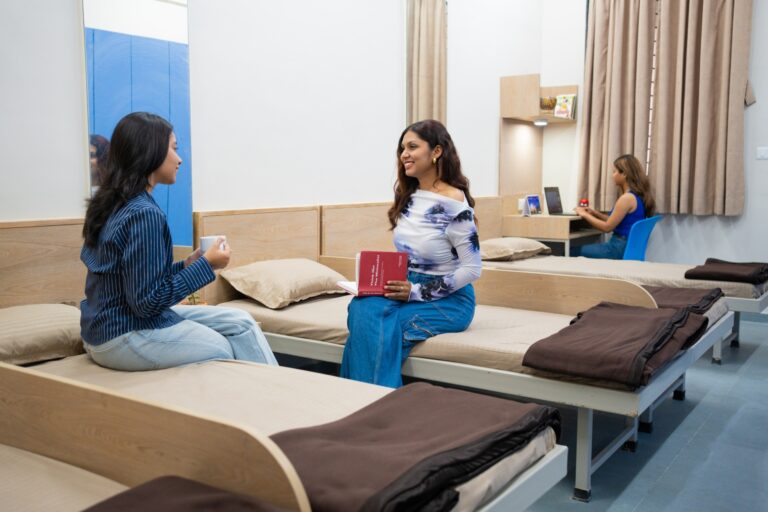
In the Union Budget 2026–27, the Government of India proposed one girls’ hostel in every district and five university townships near major industrial and logistics corridors. This shows that residential facilities are becoming an important part of access to higher education, especially when students need safe accommodation near classrooms and laboratories. (Press Information Bureau)
For many students, moving into a hostel is their first long stay away from home. The first few days may feel exciting, but they can also feel strange. There is no parent reminding them to wake up, arrange their cupboard or complete an assignment. Slowly, these small daily matters become lessons that no classroom can teach.
Why Does Hostel Life Make Students More Independent?
At home, many daily needs are handled by family members. In a hostel, students begin taking responsibility for their own routine. They must wake up on time, attend classes, manage clothes, keep their room organised and take care of personal items.
This independence develops through normal daily actions:
- Planning study, sleep, meals and recreation without regular family reminders
- Managing pocket money and avoiding unnecessary spending
- Washing or sending clothes for laundry at the correct time
- Keeping documents, keys and personal belongings safely
- Visiting a doctor, reporting a problem or asking for help when required
Mistakes also become useful lessons. A student who spends too much money in the first week learns to make a monthly budget. Someone who misses breakfast due to waking late begins setting an alarm. Such experiences make students more responsible.
However, independence does not mean handling every problem alone. A mature student also knows when to speak with a roommate, warden, faculty member, counsellor or family member.
How Does Living with New People Build Confidence?
A hostel brings together students with different languages, food habits, personalities and family backgrounds. At first, even starting a conversation may feel difficult. With time, students learn to introduce themselves, ask questions and express their needs clearly.
Shared living also teaches them how to discuss practical matters. Roommates may disagree about lights, noise, visitors, cleanliness or study timings. These situations encourage students to speak politely, listen to another view and reach a fair solution.
Confidence also grows through participation. A quiet student may join a sports match, help organise a festival or speak during a hostel meeting. Small moments of involvement can reduce hesitation.
This confidence is useful beyond the hostel. Students may become more comfortable during presentations, group projects, internships and professional conversations because they have already learned how to deal with different people.
Get Complete Details From Expert
Why Do Hostel Friendships Often Become So Strong?
Hostel friendships are not formed only in classrooms. They grow during late-night study sessions, shared meals, birthday surprises, sports matches and simple evening conversations.
Friends may help each other prepare for an examination, share notes during illness or sit together when someone feels homesick. They also see each other during ordinary and difficult days. This creates a deeper understanding than friendship based only on occasional meetings.
A student may enter the hostel without knowing anyone but gradually find a small support system. These friends often come from different courses, states or countries. Such connections expose students to new ideas, customs and career interests.
Not every roommate becomes a lifelong friend, and disagreements are normal. Still, learning to respect differences is itself an important part of hostel life.
What Challenges Can Students Face in a Hostel?
Hostel life has benefits, but adjustment takes time. Common challenges include:
- Missing family, home food and familiar routines
- Sharing space with someone having different habits
- Balancing social activities with studies
- Managing noise, sleep and personal privacy
- Handling minor illness or stress away from home
Students can manage these difficulties by keeping a regular routine, staying connected with family and speaking openly when a problem continues. They should also use official support systems instead of silently accepting bullying, unsafe behaviour or serious emotional stress.
A good hostel experience requires effort from both students and the institution. Clean facilities, clear rules, responsible wardens, healthcare access and secure movement are important for student well-being.
How Does Parul University Support a Comfortable Hostel Experience?
Parul University has more than 30 hostels with the combined capacity to accommodate over 27,000 students from different states, regions and countries. Students can select from AC and non-AC rooms, with occupancy choices ranging from two-sharing to larger shared rooms.
Rooms are designed with ventilation and include beds, individual study tables and personal closets. Students also have access to campus-wide Wi-Fi, cleaning support and laundry services.
Regional and global mess facilities serve breakfast, lunch and dinner. Multiple food outlets and eateries within the campus give students additional dining and hangout choices.
Student safety is supported through round-the-clock CCTV surveillance, security personnel and an online digital gate-pass system. Healthcare support is available through the on-campus 750-bed multispeciality hospitals.
Students can also use the fitness centre and take part in cricket, football, basketball, volleyball, tennis and badminton. Campus hangouts, games, cultural celebrations, sports competitions and alumni interactions help hostel residents connect beyond their rooms.
These facilities do more than provide accommodation. They create a setting where students can study, stay active, meet people and gradually become comfortable with living away from home.
When Does a Hostel Room Begin to Feel Like Home?
The change does not happen on the first day. It happens when a student remembers a roommate’s exam date, learns which meal feels comforting after a tiring class or finds friends waiting after a difficult day.
Over time, the same student who once called home for every small decision may begin guiding a new hostel resident. The room may remain shared, and the routine may sometimes feel tiring, but it becomes the place where independence is practised, confidence is tested, and friendships quietly become part of life.
Parul University students exploring campus living can review the available hostel options, facilities and residential support while planning their admission journey.