Single-mission alignment is the standard pattern in Indian university infrastructure. One lab, one government scheme, one credential.
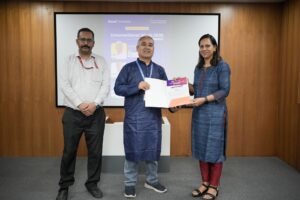
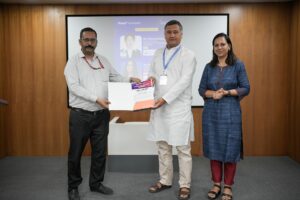
This makes administrative sense. Schemes are easier to apply for, audit, and report on when each piece of infrastructure has one clear mission home. The pattern works, but it limits what any single piece of infrastructure can contribute to the broader policy ecosystem. Lakshya 2047 at Parul University, inaugurated on 8 May 2026 by Union Minister Dr. Jitendra Singh, takes a different approach. The centre is structured as multi-mission infrastructure from the outset, engaging at least seven distinct national policy frameworks simultaneously. The breadth is not accidental. It is what allows the centre to serve students across multiple Parul University faculties and contribute to multiple government targets without fragmenting into seven separate facilities.
The single-mission problem in Indian university infrastructure
Most university lab projects in India are funded under one specific government scheme. The funding flows through one ministry, the reporting goes back to one ministry, and the lab’s outcomes are evaluated against that ministry’s targets.
This is rational for the institution because cross-scheme funding is administratively complex. It is rational for the ministry, because outcome attribution becomes cleaner when the lab serves only one mission. But it is suboptimal for the country, because the infrastructure ends up locked into single-purpose use even when its physical capability could serve multiple national priorities. A Computer Numerical Control machine purchased under one scheme could serve Make in India workforce training, Skill India credentialing, AICTE IDEA Lab prototyping, and NEP 2020 cross-disciplinary projects simultaneously. Most facilities only use it for one.
The single-mission lock-in is one reason Indian university infrastructure does not always produce the policy returns that the funded missions are designed to deliver. Each scheme’s outcomes are measured against that scheme’s targets in isolation, rather than against the cumulative national-priority outcomes that the infrastructure could contribute to. Lakshya 2047’s multi-mission design is an explicit response to this pattern. The detailed treatment of how the centre operationalises specific Viksit Bharat 2047 vision elements is in the Viksit Bharat implementation article, and the NSDC and Skill India dimensions are in the NSDC partnership article. This piece focuses on the breadth of the multi-mission engagement.
AICTE IDEA Lab: how the Prototyping Zone qualifies
The All India Council for Technical Education (AICTE) operates the IDEA (Idea Development, Evaluation and Application) Lab scheme as part of its broader strategy to embed innovation infrastructure inside technical education. The scheme provides recognition and operational frameworks for university-level prototyping facilities that meet specific cross-disciplinary, hands-on, idea-to-prototype criteria.
Lakshya 2047’s Prototyping Zone qualifies under the scheme because its physical and operational architecture matches what the IDEA Lab framework requires:
- Cross-disciplinary access. The zone is structurally accessible to students from Engineering, Design, Architecture, Applied Sciences, and beyond.
- Idea-to-prototype capability. Bambu Lab 3D Printers, PRUSA XL multi-tool printers, ELEGOO Resin Printers, CNC routers, laser cutters, the DGSHAPE SRM-20 milling machine, soldering stations, and the Major and Minor Machine Workshops collectively enable students to take an idea from sketch through CAD to physical prototype.
- Startup pipeline integration. The Prototyping Zone feeds directly into the Parul Innovation and Entrepreneurship Research Centre (PIERC) startup pipeline. Ideas that develop into commercial concepts inside the zone have a structural pathway into incubation, funding, and venture support.
- Continuous-improvement framework. The AICTE IDEA Lab scheme requires that recognised labs document outcomes and demonstrate impact over time. The Prototyping Zone’s recognition under the scheme means it operates against this continuous-improvement framework rather than as a static installation.
Make in India: industrial automation as workforce capacity
Make in India’s success depends on a manufacturing workforce trained for advanced industrial automation. The vision identifies semiconductors, electronics, automobiles, machinery, and several other strategic sectors as priority manufacturing areas. All of them require workers trained on programmable logic controllers, SCADA monitoring, industrial drives, robotics, and building automation.
Lakshya 2047 contributes to Make in India through four labs operating as an integrated industrial automation cluster:
- PLC and SCADA Lab. Schneider Electric M221 Programmable Logic Controllers, SCADA monitoring systems, Human Machine Interfaces, and Variable Frequency Drives. Students earn Siemens Certified Drives and Automation, ISA Certified Control Systems Technician (CCST), and related credentials. The lab is configured for the kind of factory-floor automation that mid-to-advanced Indian manufacturing depends on.
- Industrial Drives and Control Lab. Three full industrial control panels with Schneider hardware and imported IoT modules for 3-phase motor control. The lab serves as the bridge between control theory and factory-floor implementation.
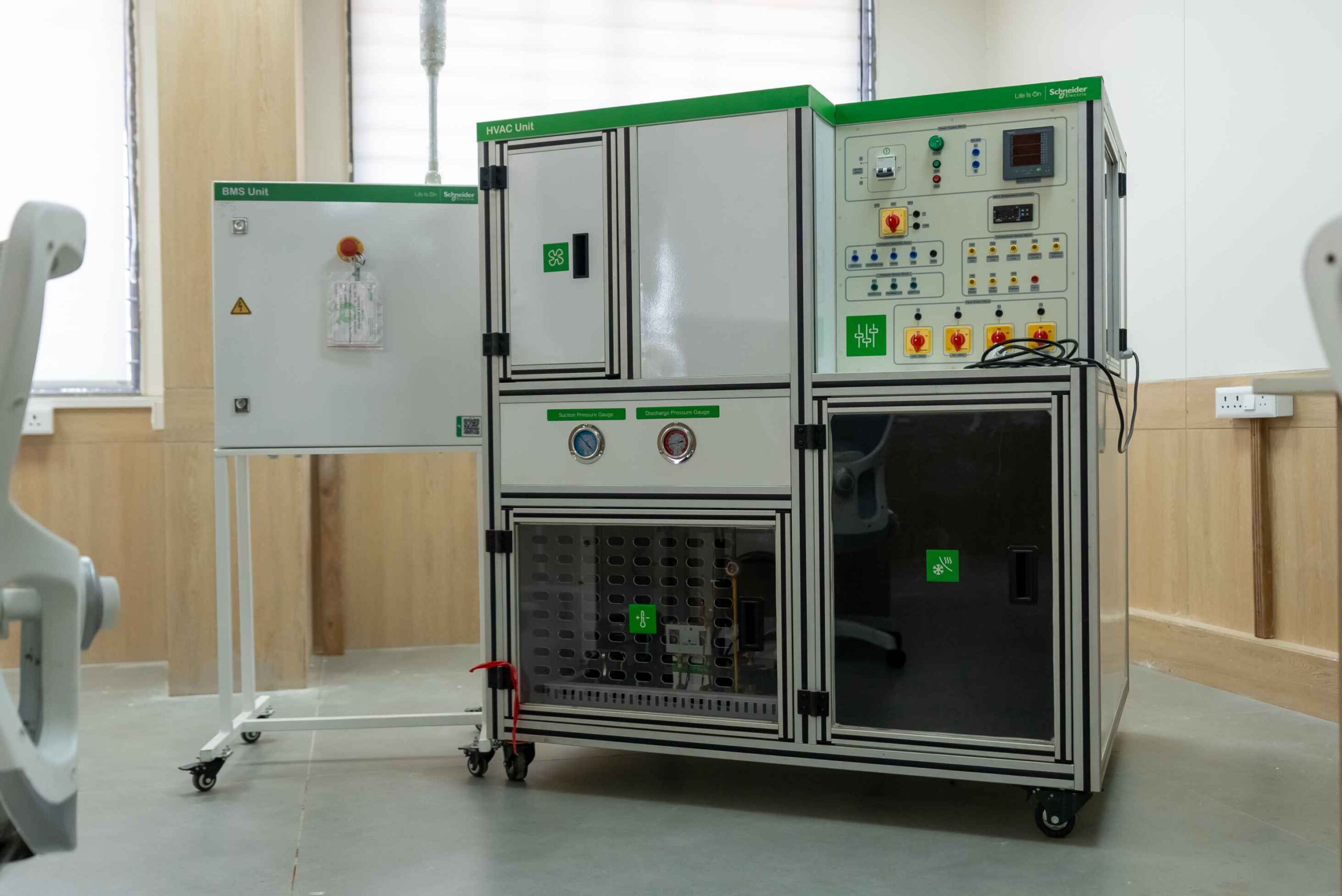
- Home Automation Lab. Schneider Electric EcoXpert Building Automation certification, with training infrastructure for Building Management Systems and HVAC simulation. Make in India increasingly intersects with smart-city infrastructure and intelligent buildings, which is the workforce capacity that this lab develops.
- ABB Lab. ABB IRB 1090 educational co-bot for industrial robotics programming in RAPID, with ABB Advanced Robotics and ISA Certified Automation Professional (CAP) credentials. The co-bot is the same family of robots that ABB deploys to industrial customers worldwide.
The four-lab cluster trains students in the full operational stack that Make in India’s manufacturing priorities require, from logic control through industrial drives through building automation through robotics. Each lab is anchored to a global brand whose name is part of the workforce credibility argument. The relevant Parul University engineering programmes connect directly to this cluster, with Mechatronics Engineering and Robotics and Automation as the closest degree pathways.
NEP 2020: the multidisciplinary mandate operationalised
The National Education Policy 2020 mandates multidisciplinary, holistic, skill-based, and industry-aligned higher education across Indian universities. Implementation has been uneven. Many institutions have introduced multidisciplinary electives without restructuring infrastructure to actually support cross-disciplinary student work. The mismatch between policy intent and operational implementation is one of the standing critiques of NEP 2020’s rollout.
Lakshya 2047 meets the NEP 2020 mandate at the infrastructure level rather than only at the curriculum level:
- Multidisciplinary by design. The labs are not departmental property. Engineering students working on a project that requires industrial automation, immersive visualisation, and computational simulation can use the relevant labs without departmental permission cycles. Design students working on AR/VR content can collaborate with Computer Science students managing the GPU compute. Medical and Applied Sciences students can use the Mind Lab for cognitive research alongside Engineering students working on Brain-Computer Interfaces.
- Skill-based outcomes. Every lab issues a credential. The credentials are vendor-issued, NSDC-aligned, and Cambridge-assessed. Students leave with skill-based credentials, not only with course-completion certificates. The skill-based outcome model the NEP 2020 framework calls for is structural to how the centre operates.
- Industry-aligned infrastructure. Each lab is partnered with a global industry brand. The infrastructure inside the labs matches what industry uses currently. This is the industry-alignment dimension the NEP 2020 framework requires from higher education infrastructure.
- Holistic education across faculties. More than ten Parul University faculty members access the centre at different levels. The cross-faculty integration is the operational form that NEP 2020’s holistic-education mandate is designed to produce.
Skill India and NSDC: operational alignment
The National Skill Development Corporation partnership inside Lakshya 2047 is the principal vehicle through which the centre engages the Skill India Mission. The detailed treatment of the NSDC partnership architecture, the Sector Skill Council coordination, and the credentialing implications is in the dedicated NSDC and Parul University article. The summary point here is that the NSDC dimension makes Lakshya 2047 an operational contributor to Skill India targets, with each credential issued representing one more credentialed worker positioned inside the national framework.
IndiaAI Mission: AI workforce capacity
The IndiaAI Mission launched in 2024 is building national ecosystem capacity around AI compute infrastructure, datasets, innovation, and future skills. The mission’s success requires a domestic AI workforce trained on production-grade compute infrastructure rather than only on toy datasets.
Lakshya 2047 contributes to the IndiaAI Mission through several lab capabilities:
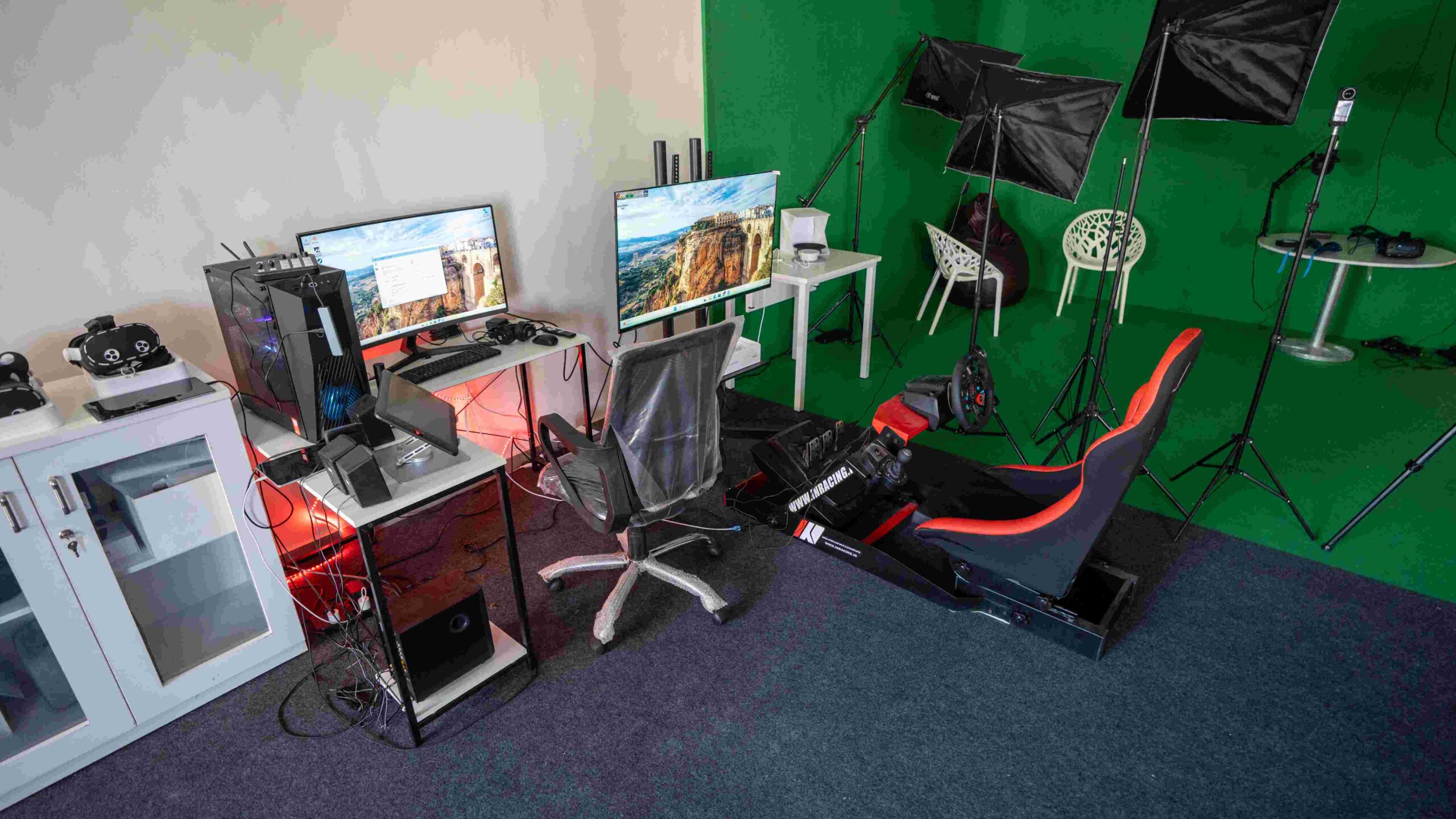
- NVIDIA Lab. Super Micro server hub running RTX GPU systems, with the capacity to control 92 to 98 monitors simultaneously through 38 student workstations. CUDA programming, Tensor RT optimisation, deep learning model training, robotics simulation through Isaac Sim, and digital-twin work through NVIDIA Omniverse. Students earn NVIDIA Deep Learning Institute Fundamentals and NVIDIA AI Developer credentials. This is production-grade AI training infrastructure inside an Indian university.
- AWS AI services. The AWS Cloud Computing Lab’s 39 stations include AWS AI service training, with practical exposure to SageMaker, Bedrock, and the broader AWS AI stack.
- Microsoft Copilot and Azure AI. The Microsoft Lab includes training on Azure AI services and Copilot integration, the AI tooling layer most enterprise workforces will encounter in the immediate future.
- Adobe Firefly. The Adobe Creative Design Studio includes Adobe Firefly generative AI training. The creative AI workforce the IndiaAI Mission’s ecosystem requires is partly developed inside this lab.
National Quantum Mission: adjacent infrastructure
The National Quantum Mission is the Government of India’s eight-year mission for quantum technology development. At the 8 May 2026 inauguration, Dr. Jitendra Singh noted that India has already completed 1,000 kilometres of secure quantum communication within three years, achieving the target in less than half the projected timeline.
Lakshya 2047 does not house a dedicated quantum computing lab, but the centre’s adjacency to the National Quantum Mission is operationally meaningful in two ways. First, the NVIDIA Lab’s GPU computing infrastructure positions Parul University to engage with quantum-adjacent computational work as the field matures. Second, the centre’s general future-technology training (linear algebra, cryptography, theoretical computer science capacity) develops the foundational skills that quantum computing applications draw on. As the mission expands, the centre’s infrastructure positions it to engage more directly with quantum skilling and research.
India Semiconductor Mission: the VLSI Lab
India’s Semiconductor Mission has flagged a national shortage of VLSI design talent as a critical bottleneck in domestic semiconductor capacity. The VLSI Lab inside Lakshya 2047 is one of the operational responses to this gap.
The lab houses 36 computer systems running Verilog HDL, VHDL, and the software-driven hardware design tools required for integrated circuit design and simulation. Students earn Synopsys Certified Professional (VLSI) and IEEE VLSI Design Certification credentials. Synopsys is one of the principal global EDA (Electronic Design Automation) vendors, and Synopsys-certified VLSI designers are in active demand inside the semiconductor design ecosystem the Mission is building. The lab’s contribution to the Mission is straightforward: trained VLSI designers entering the workforce annually, with credentials the semiconductor industry recognises.
Drone Rules 2021 and the national drone policy framework
The Drone Technique Lab, Drone Battery System Repair Lab, and Remote Pilot Training Operation (RPTO) Setup Lab align with India’s Drone Rules 2021 and the Directorate General of Civil Aviation framework that governs UAV operations in India.
The RPTO Setup Lab specifically prepares students for the certified remote-pilot credentials that the regulatory framework requires for commercial drone operations. The Drone Technique Lab covers UAV operation, including the AVPL Vraj Drone and student-built URI Bird Surveillance Drone, Mission Planner navigation software, GPS calibration setups, and the operational discipline frameworks that commercial drone work demands. The Drone Battery System Repair Lab covers the technical infrastructure that drone operations depend on, an often-overlooked dimension of the UAV workforce.
The multi-mission credibility argument
A facility that aligns with one mission is doing its job. A facility that aligns with seven is doing something structurally different.
The breadth of Lakshya 2047’s multi-mission engagement is not a marketing claim. It is a structural feature of how the centre was designed. The labs are deliberately built to serve multiple national priorities simultaneously because the equipment, the partnerships, and the cross-faculty access infrastructure can support multi-mission use when designed that way from the outset. Retrofitting single-mission infrastructure into multi-mission use after the fact is hard. Building it as multi-mission from the start is the cleaner architectural choice.
The credibility argument that flows from this design is that Lakshya 2047 is one of the broader Indian university infrastructure projects against which national policy outcomes can be measured. The centre is not just a Skill India training centre, or an AICTE IDEA Lab, or a Make in India workforce facility, or an IndiaAI Mission training site. It is all of them at once, plus Atmanirbhar Bharat domestic credentialing, plus Viksit Bharat 2047 operational implementation, plus NEP 2020 multidisciplinary infrastructure. The cumulative policy weight is meaningful. Parul University has built the centre to carry that cumulative weight rather than to optimise for any single dimension of it.
FAQs
How many national missions does Lakshya 2047 engage simultaneously?
At least seven, by direct verifiable engagement. The AICTE IDEA Lab scheme through the Prototyping Zone's official recognition. Make in India through the industrial automation cluster (PLC and SCADA, Industrial Drives, Home Automation, ABB Robotics). NEP 2020 through the multidisciplinary, skill-based, industry-aligned infrastructure design. Skill India through the NSDC partnership and 25-plus NSDC-aligned credentials. IndiaAI Mission through the NVIDIA Lab, AWS AI services, Microsoft Copilot training, and Adobe Firefly. National Quantum Mission through adjacent computational infrastructure. India Semiconductor Mission through the VLSI Lab. Drone Rules 2021 alignment through the RPTO Setup Lab. The Atmanirbhar Bharat framework operates across all of the above as the meta-framework for self-reliant credentialing.
Why does the Prototyping Zone qualify under the AICTE IDEA Lab scheme?
The zone meets the scheme's structural requirements. It is cross-disciplinary in access, with students from Engineering, Design, Architecture, Applied Sciences, and beyond using the same infrastructure. It has full idea-to-prototype capability with Bambu Lab 3D Printers, PRUSA XL multi-tool printers, ELEGOO Resin Printers, CNC routers, laser cutters, the DGSHAPE SRM-20 milling machine, soldering stations, and the Major and Minor Machine Workshops. It integrates structurally with the PIERC startup pipeline, providing a pathway from idea to incubation to commercial venture. It operates against the continuous-improvement and outcome-documentation framework the scheme requires of recognised labs.
How does Lakshya 2047 contribute to the Make in India workforce capacity?
Through a four-lab industrial automation cluster covering the full operational stack that advanced Indian manufacturing requires. The PLC and SCADA Lab trains students on Schneider Electric M221 PLCs, SCADA systems, HMIs, and VFDs with Siemens and ISA credentials. The Industrial Drives and Control Lab provides three full industrial control panels with Schneider hardware and imported IoT modules. The Home Automation Lab covers Building Management Systems and HVAC simulation with the Schneider EcoXpert credential. The ABB Lab operates an ABB IRB 1090 educational co-bot for industrial robotics with ABB Advanced Robotics and ISA Certified Automation Professional credentials. Each lab develops a specific layer of the manufacturing workforce that the Make in India priorities require.
In what specific ways does Lakshya 2047 implement NEP 2020 at the infrastructure level?
Through four structural design choices that match the policy's mandates. The very first one is multidisciplinary access, the second is skill-based outcomes, the third is industry-ready infrastructure, and the fourth one is cross faculty integration. All of these factors are in sync with NEP 2020’S education policy.
What is unique about Lakshya 2047's multi-mission alignment compared with other Indian university infrastructure?
The breadth and the structural integration. Most Indian university lab projects are funded against one specific government scheme, with outcomes measured against that scheme's targets in isolation. Lakshya 2047 was designed from the outset to serve seven distinct national missions simultaneously, with each lab capable of contributing to multiple missions depending on the student use case. The architectural choice is to build the infrastructure once and let it serve many missions rather than build separate infrastructure for each. The cumulative policy weight that flows from this design is what positions Lakshya 2047 as one of the broader university infrastructure contributions to current national priorities.