There is a mismatch between how cybersecurity is imagined and what it consists of. The popular picture involves specialist tools and dramatic intrusions. The working reality begins somewhere much less cinematic: a command line on a Linux system.
The reason is straightforward. Most servers run Linux. Most cloud infrastructure runs Linux. Most security tooling is written for Linux, and a substantial share of what a security professional examines, defends or investigates is a Linux system. A practitioner who is not comfortable there is working through a translation layer at every step.
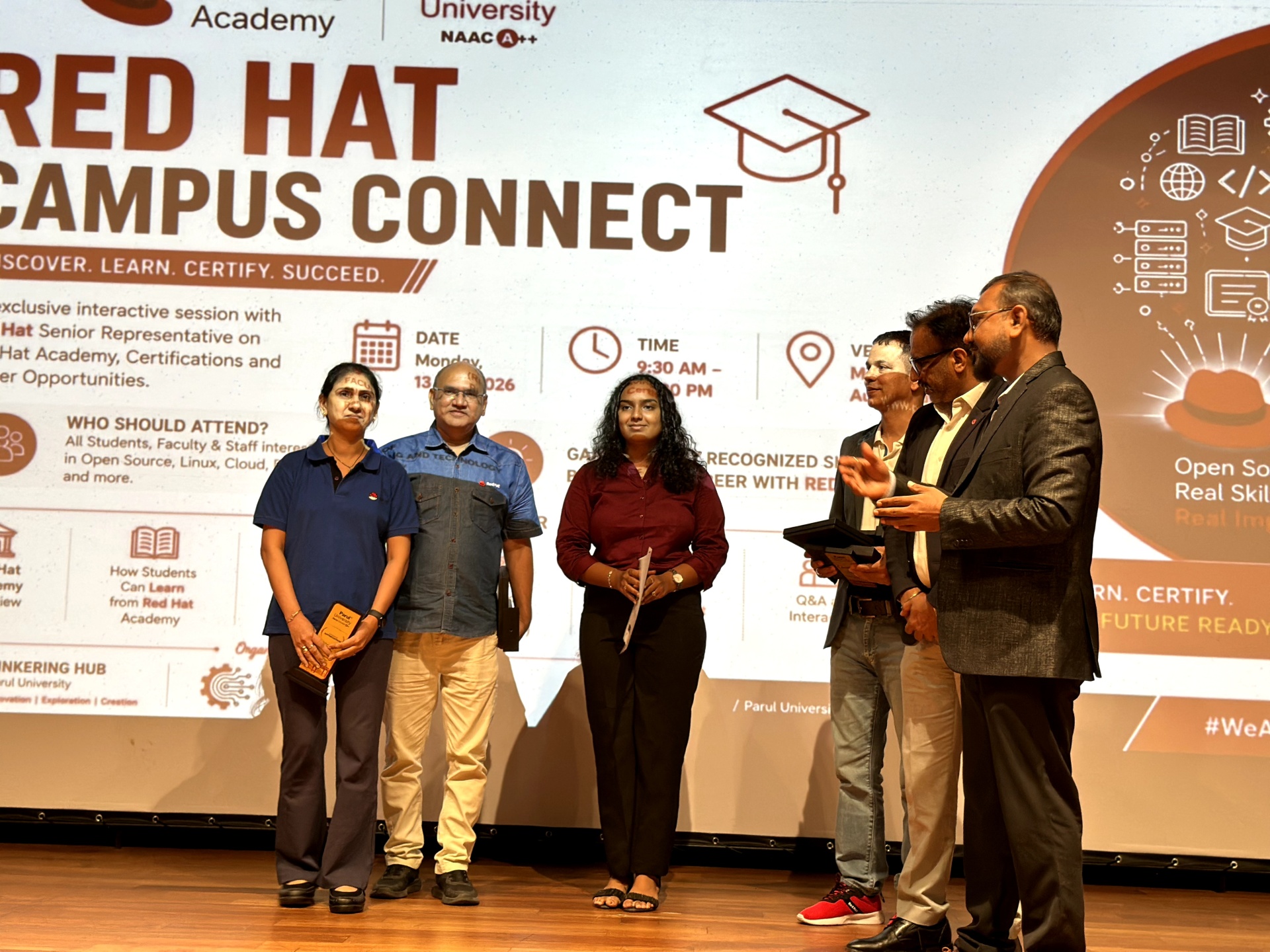
Ms. Drishya Nair, a B.Tech Computer Science and Engineering student specialising in cybersecurity at Parul University, arrived at the same conclusion through her coursework and was subsequently announced as a Red Hat Academy Student Ambassador at the university. Her route is a useful illustration of how Linux competence connects with security work, and this article uses it to set out what Linux competence actually contributes to cybersecurity. If you’re as passionate about building your career at the intersection of AI & your desired technology, enrol on Parul University’s B.Tech CSE course and get to work for globally renowned software companies!
Why Is Linux the Foundation of Cybersecurity Work?
The dependency runs in several directions at once, which is why it is difficult to work around.
- The targets run Linux: Web servers, application servers, databases and cloud instances predominantly run Linux. Understanding how an attacker might compromise one requires understanding how it works when it has not been compromised.
- The tools run on Linux: The substantial majority of security tooling, for network analysis, vulnerability assessment, forensics and monitoring, is developed for Linux first. Several security-focused distributions exist precisely to package this tooling.
- The evidence lives in Linux: Logs, file metadata, process records and system state are where an investigation actually happens. Reading them requires knowing what normal looks like on the system that produced them.
- The defences are configured in Linux: Permissions, firewall rules, service hardening, user and access management and patching are all system administration tasks. Defensive security is, to a large extent, administration performed rigorously.
That last point is the one students most often miss. A great deal of practical security work is not exotic. It is knowing which services should be running, which permissions are wrong, which accounts should not exist and which patches are missing, and none of that is legible to someone who cannot administer the system in the first place.
Defensive security is, to a large extent, system administration performed rigorously. That is why the administration comes first.
What the Foundational Training Actually Covers
The system administration courses that underpin Red Hat’s certification pathway, Red Hat System Administration I and II, cover exactly the ground a security practitioner needs, which is why they appear in cybersecurity pathways rather than only in infrastructure ones.
- The command line and file system: Navigating, inspecting and manipulating files, and understanding the structure a system organises itself around.
- Users, groups and permissions: Who can do what, and how privilege is granted, escalated and constrained. This is the core of access control and therefore of a large share of security.
- Processes and services: What is running, what started it and what it is permitted to do, which is the basis of both hardening and anomaly detection.
- Storage and file systems: How data is organised on disk, which underpins forensic work.
- Networking configuration: Addressing, routing and firewalling on the host itself.
- Logging and monitoring: Where systems record what happened, which is where investigations begin.
The formal validation of this ground is the RHCSA credential, covered in detail in the Red Hat certification guide. Its performance-based format, where a candidate configures a live system rather than answering questions about one, suits security particularly well, since the discipline is fundamentally practical.
Drishya Nair took these courses through Parul University’s Red Hat Academy programme, in a cohort selected for early access, and describes them as directly relevant rather than adjacent to her specialism. Her account of why is the same argument set out above: Linux is what cybersecurity is practised on.
One Student's Route Into the Field
Drishya Nair was born in Kerala and settled in Vadodara, and joined Parul University in 2022, initially on a diploma before moving into the cybersecurity specialisation in 2025. That route, diploma first and degree specialisation afterwards, is worth noting because it is a common path that receives far less attention than the direct one.
Her interest in the field has an unusual origin. She was drawn to forensics long before she was drawn to computing, and specifically to the investigative side of it rather than the medical. Digital forensics is where that interest and her technical study meet: the discipline of establishing what happened on a system from the traces left behind, which is investigative work conducted through technical means.
She credits two mentors at the university with supporting the direction she has taken, Dr. Vaibhav Gandhi and Poonam Songde. Her own framing of why the field matters is characteristically direct, and it is a reasonable summary of the anxiety a good many students feel about entering technology at this particular moment.
“AI is taking over so we need to get it back from AI.” – Drishya Nair, B.Tech CSE (Cybersecurity), Parul University
Automated systems increasingly conduct both attacks and defences, and the value of a human practitioner rests on understanding the systems well enough to direct, verify and override that automation rather than depending on it.
What a Student Ambassador Actually Does?
The Red Hat Academy Student Ambassador role is a bridge between a campus community and the wider ecosystem around a technology, and its substance is organisational rather than ceremonial.
In Drishya Nair’s own description of the role, it involves promoting open-source culture, organising technical events and workshops, connecting students with industry opportunities, and encouraging more students to explore Linux and Red Hat technologies. Her stated intentions include raising awareness of the certification courses available, building cybersecurity awareness specifically, and working with ambassadors at other institutions to run joint events.
The value of a role of this kind is easy to underrate. Students take technical opportunities far more readily when a peer explains them than when an institution announces them, and a student who has taken a course can describe what it is actually like in a way a prospectus cannot. She has thanked Mr. Abid Matoo, Mr. Balvinder Singh, Mr. Nilesh Vaghela, Ms. Dimple Vaghela and Dr. Vaibhav Gandhi for their support through the process.
Cybersecurity Career Routes in India
Cybersecurity has an unusually broad range of destinations, and the technical foundation is largely common across them. India’s national cybersecurity functions are coordinated through bodies including the Indian Computer Emergency Response Team and the National Critical Information Infrastructure Protection Centre, alongside state cyber cells and law enforcement units.
- Government and public sector: National and state cyber cells, law enforcement units and critical infrastructure protection, where digital forensics and incident response are central. This is the direction Drishya Nair intends to pursue.
- Security operations: Monitoring, detecting and responding to incidents within an organisation, usually the entry point in the private sector.
- Offensive security: Penetration testing and red teaming, finding weaknesses before an attacker does.
- Governance, risk and compliance: The policy and audit side, which suits people who want the field without the deep systems work.
- Application and cloud security: Securing software and cloud infrastructure, which overlaps heavily with the roles described in the cloud and DevOps careers guide.
The common requirement across all of them is the same technical base. Specialisation comes later and rests on it, which is why a cybersecurity student learning system administration is not being diverted from their field but building its foundation.
Frequently Asked Questions
Why is Linux important for cybersecurity?
Because most of what security work touches runs on it. Servers, cloud infrastructure and a large share of the systems a practitioner defends or investigates run Linux; most security tooling is developed for Linux first; forensic evidence such as logs, file metadata and process records lives on Linux systems; and defensive measures including permissions, firewall rules and service hardening are configured through Linux administration. Without that competence, a practitioner works through a translation layer at every step.
What Linux skills does a cybersecurity student need?
Command-line navigation and file handling; users, groups and permissions, which underpin access control; processes and services, which underpin hardening and anomaly detection; storage and file systems, which underpin forensics; host networking and firewalling; and logging and monitoring, which is where investigations begin. These correspond closely to the ground covered by foundational Red Hat system administration courses.
Is system administration training useful for a cybersecurity career?
Yes, and it is closer to the core of the field than students often expect. A substantial share of defensive security is system administration performed rigorously: knowing which services should be running, which permissions are incorrect, which accounts should not exist and which patches are missing. None of that is legible to someone who cannot administer the system, which is why administration training precedes security specialisation rather than competing with it.
What career options exist in cybersecurity in India?
Government and public sector roles in national and state cyber cells, law enforcement and critical infrastructure protection, coordinated through bodies including CERT-In and the National Critical Information Infrastructure Protection Centre. In the private sector, security operations, offensive security such as penetration testing, governance risk and compliance, and application and cloud security. The technical foundation is largely common, with specialisation built on top of it.
What is a Red Hat Academy Student Ambassador?
A student who acts as a link between their campus community and the wider Red Hat ecosystem. The role involves promoting open-source culture, organising technical events and workshops, connecting students with industry opportunities, and encouraging peers to explore Linux and Red Hat technologies. At Parul University, the role is held by Drishya Nair, a B.Tech Computer Science and Engineering student specialising in cybersecurity.
Can you enter a cybersecurity degree specialisation after a diploma?
Yes. Drishya Nair joined Parul University in 2022 on a diploma before moving into the B.Tech cybersecurity specialisation in 2025. Diploma-to-degree routes are common and are a legitimate path into technical specialisations, though they receive considerably less attention than direct entry. What matters for cybersecurity specifically is the technical foundation built along the way, particularly Linux and systems competence.