Before May 2026, an Indian Computer Science student wanting to learn how Microsoft’s products are actually built had two options. Move to a Microsoft office for training, or wait until employment to figure it out on the job.
That equation changed when Parul University inaugurated the Lakshya 2047 Centre for Future Skills on 8 May 2026, with the Microsoft Lab as one of the centre’s nine future-technology domains. Microsoft has granted the lab the licensing and the partnership terms that allow students to learn how Azure cloud services, Microsoft Copilot, and the broader Microsoft software ecosystem are built from the ground up. The lab issues Microsoft Azure Fundamentals (AZ-900) and Microsoft Azure Developer Associate (AZ-204) certifications, the same credentials a working Azure engineer at any IT services firm in India holds.
What is inside the Microsoft Lab
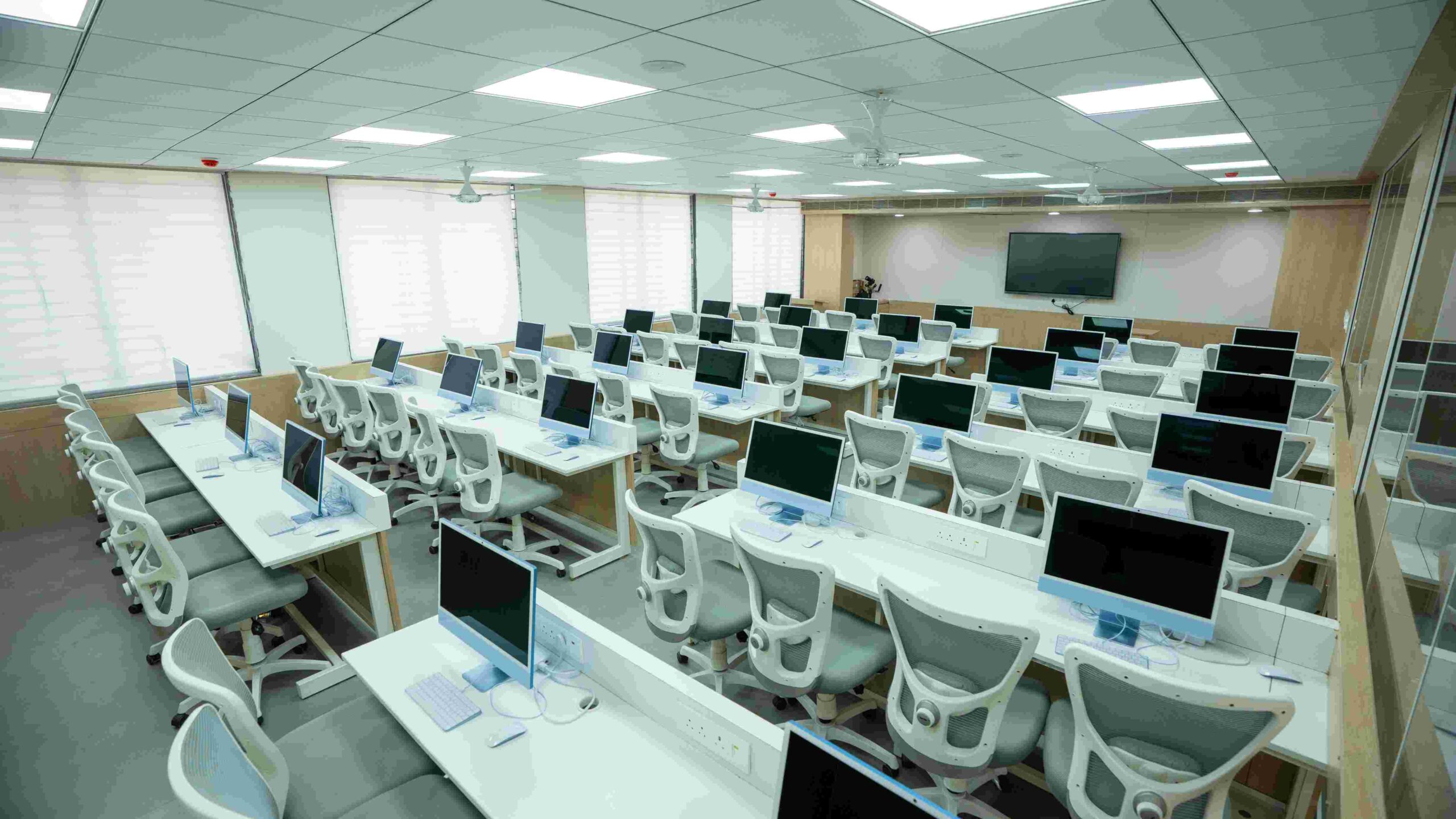
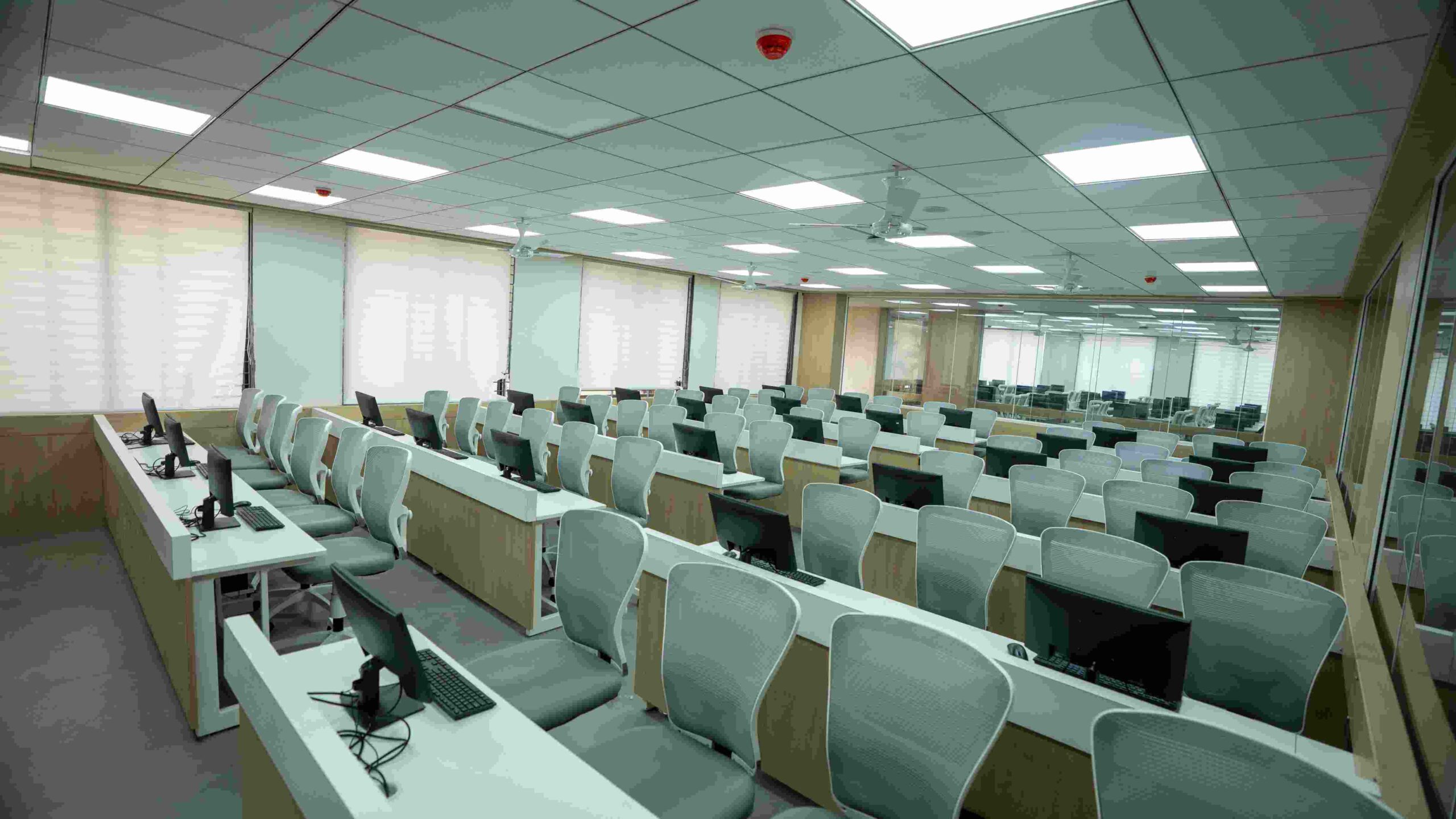
Inside the Microsoft Lab – The distinction matters because the standard expectation of a university lab is physical equipment that students can take apart and reassemble. The Microsoft Lab operates on the opposite logic: the value is in software access, cloud infrastructure access, and the licensing that allows students to work with production-grade Microsoft tools rather than student-edition simulations. What students get access to inside the lab is the same toolkit a Microsoft engineer would use in industry, with the same complexity, the same configuration challenges, and the same outcomes when they get the configuration right.
The lab is structured around three domains that map directly to where the Microsoft ecosystem creates job demand:
- Cloud Computing through Microsoft Azure. The primary resource. Cloud computing offloads heavy computation to internet-based infrastructure rather than running it on a local machine. A high-end task that would otherwise require a Rs 5 to 7 lakh workstation can run on an ordinary computer through an Azure subscription. The students get to learn the functional mechanics of how this works and on-demand resources for how to architect business applications, and how the same can take advantage of cloud-native infrastructure, which is even provided by the centre.
- Artificial Intelligence through Microsoft Copilot. The lab provides full access to Microsoft Copilot, the company’s enterprise AI product. Students learn how Copilot was built, how to prompt it effectively, and how its behaviour differs from competing AI products like ChatGPT and Claude. The exposure prepares students for the AI-tooling layer that most enterprise workforces will encounter in the immediate future.
- Software Development with Office Productivity Stack. Advanced Excel, PowerPoint, Notebook, and Outlook are taught as part of the lab’s foundational layer because workplace productivity in 2026 still runs heavily on the Microsoft Office stack. Students who can use these tools at an advanced level enter the workforce with skills employers can verify immediately.
The two certifications: AZ-900 and AZ-204
The lab’s two flagship credentials, both issued by Microsoft and verifiable through Microsoft’s official credential system, are positioned at different levels of the Azure career pathway.
- Microsoft Azure Fundamentals (AZ-900). The entry-level Azure certification. Covers cloud concepts, core Azure services, Azure pricing and support, and the security, privacy, compliance, and trust framework that governs Azure usage. The credential demonstrates that the holder understands the Azure ecosystem well enough to participate in cloud-architecture conversations and make informed decisions about cloud services.
- Microsoft Azure Developer Associate (AZ-204). The intermediate-level developer certification. Demonstrates the ability to design, build, test, and maintain cloud applications and services on Microsoft Azure. Coverage includes Azure compute solutions, Azure storage, Azure security, Azure integration and monitoring, and Azure connectivity services. This is the credential that gets a graduate hired as an Azure developer at most IT services firms.
A student who completes both credentials inside the Microsoft Lab leaves Parul University with a verifiable Azure career pathway that flows from fundamentals through developer-level competence. The credentials are vendor-issued, which means their value depends on Microsoft’s verification process rather than on Parul University’s institutional brand. An employer hiring an AZ-204 holder is hiring against Microsoft’s standards, not the issuing institution’s reputation.
How the Microsoft Lab works inside the Parul University academic structure
Students enter the lab after they have established the programming foundation. The lab is not a first-semester resource. It is what comes after the foundation is in place.
During the first two semesters of a B.Tech in Computer Science Engineering, Information Technology, or a related degree, students learn HTML, CSS, C, C++, Java, and Python. These are the building blocks the Microsoft Lab assumes students arrive with. By the second-year third semester, students have the programming foundation to start working with the Microsoft toolchain meaningfully. The lab integrates from this point onwards, with progressively more advanced work as students move through the degree.
Two specific language tracks shape what students can do inside the lab:
- Python for AI work. Students working on AI modules, including the Copilot integration work, need Python proficiency. The Microsoft Lab is heavily Python-driven for the AI dimension of its training.
- C Sharp for Windows OS work. Students who want to modify or improve any Windows OS product need C Sharp because Windows itself is built using the C Sharp language. The lab provides the tooling to do this work inside a sandboxed environment, with Microsoft’s licensing covering access to Windows development tooling.
Cross-ecosystem integration is also part of what the lab teaches. Apple’s ecosystem is famously closed: an Apple machine talks to Apple software, with limited interoperability with non-Apple products. The Microsoft Lab teaches students how to use the Microsoft Cloud to connect closed Apple ecosystems with open Microsoft systems. An Apple machine using Microsoft Word through the Azure cloud is a practical example. This kind of cross-ecosystem work is increasingly valuable in enterprise environments where neither Microsoft nor Apple has a 100 per cent market share. The detailed treatment of the AWS Cloud Computing Lab covers the parallel cloud ecosystem that students often pair with Azure training, and the NVIDIA Lab extends the AI compute infrastructure that Azure AI services connect to.
Career pathways the Microsoft Lab opens
The lab’s value is measured by the careers it opens, not just by the certifications it issues. Three career pathways flow directly from the lab’s training.
- Cloud Engineer – With 90 per cent of firms globally using cloud infrastructure for data storage and application hosting, demand for Cloud Engineers is consistently high in Indian and global IT hiring. An AZ-204 holder is positioned for entry-level Cloud Engineer roles at IT services firms, product companies, and enterprise IT departments. The Microsoft credential is recognised globally.
- Microsoft Bug Bounty Program participant – Microsoft runs a Bug Bounty programme where the company pays cash rewards for security vulnerabilities found in its software products. Students who develop the skills inside the Microsoft Lab to identify, document, and report bugs to Microsoft directly receive cash payments per verified bug. Students who consistently find high-quality bugs sometimes get hired directly by Microsoft. The lab’s training prepares students to enter this pathway.
- Software Developer in the Microsoft ecosystem – Beyond cloud-specific roles, the lab prepares students for general software development roles in the Microsoft ecosystem, including .NET development, Windows application development, Office add-in development, and Power Platform development. The Microsoft toolchain runs through 90 per cent of enterprise IT environments globally, which means the demand for developers fluent in the Microsoft ecosystem is structural rather than cyclical.
Why the Microsoft versus Apple comparison matters for career choice
The lab teaches students to understand the structural differences between the Microsoft and Apple ecosystems, which is a useful career-decision tool that most universities do not provide explicitly. The Apple ecosystem is widely respected globally but used in a relatively small share of enterprise IT environments, particularly in India, where the Apple penetration in enterprise IT is well below the global average. The Microsoft ecosystem is used in approximately 90 per cent of college and corporate IT environments worldwide. A graduate fluent in both can navigate enterprise environments regardless of which ecosystem dominates the workplace, but the base-rate hiring demand favours Microsoft fluency strongly.
Understanding this market reality is part of what makes the Microsoft Lab career-formative rather than just credential-issuing. Students leave with a clear sense of why their Microsoft credentials will be valuable to most Indian employers, and where Apple fluency adds value on top. The dedicated Apple Lab article covers the Apple ecosystem training that pairs with this comparative understanding.
Tailored learning paths based on student interest
The lab’s teaching method is non-coercive. Students with different interests get different concentration paths.
A student interested in data analysis can concentrate on Excel and AI capabilities. A student interested in networking can focus on Azure and cloud traffic management. A student interested in software development can prioritise the .NET and C Sharp work. The training starts at the basics of Microsoft Office software and extends through cloud networking. The flexibility allows students to align the lab’s training with their preferred career trajectory, which is part of why the lab generates high engagement compared with standardised computer-lab formats.
How the Microsoft Lab fits inside the broader Lakshya 2047 ecosystem
The Microsoft Lab is one of the nine future-technology domains inside the Lakshya 2047 Centre. The cloud-computing dimension pairs naturally with the AWS Cloud Computing Lab, giving students exposure to both major global cloud platforms. The AI-tooling dimension connects to the NVIDIA Lab’s GPU compute infrastructure, where the training models that Microsoft Copilot and similar tools run on are trained. The security dimension connects to the Cisco Networking and Cyber Security Lab, which covers the network-layer security that enterprise cloud deployments depend on.
The certifications carry NSDC alignment through the centre’s partnership architecture, which means each Microsoft credential earned in the lab also carries National Skills Qualifications Framework positioning. The Cambridge University Press and Assessment dimension provides international academic credentialing weight on top of the Microsoft vendor credential. The combination is the credential stack that the Atmanirbhar Bharat in higher education article covers in detail.
FAQs
What certifications does the Microsoft Lab at Parul University offer?
Two Microsoft-issued credentials are available to students. Microsoft Azure Fundamentals (AZ-900) covers cloud concepts, core Azure services, pricing, support, security, privacy, compliance, and trust. Microsoft Azure Developer Associate (AZ-204) is the intermediate-level developer certification covering Azure compute solutions, storage, security, integration, monitoring, and connectivity services. Both credentials are issued by Microsoft directly, verified through Microsoft's credential system, and recognised globally by employers who use Azure. Students who complete both leave Parul University with a verifiable Azure career pathway.
Which Parul University programmes can access the Microsoft Lab?
The lab is structurally accessible to B.Tech in Computer Science Engineering, B.Tech in Information Technology, B.Tech in Artificial Intelligence and Machine Learning, B.Tech in Cyber Security, and related Engineering programmes inside the Faculty of Engineering and Technology. Students from Diploma, undergraduate, postgraduate, and PhD levels access the lab at appropriate technical depth. Cross-faculty access from Design (for Copilot creative work) and Management (for Office productivity work) is also part of the lab's structural design.
Does Microsoft actually provide licensing for the lab's work?
Yes. Microsoft provides the licensing that allows students to practice on real Microsoft tools rather than student-edition simulations. This is part of what Microsoft contributes to the partnership with Parul University: the licensing that converts the lab from a software-installation training environment into an actual production-grade development environment. Students work with the same Azure services, the same Copilot capabilities, and the same Office tools that a working Microsoft developer or enterprise IT professional would use.
What is the Microsoft Bug Bounty program and how does the lab connect to it?
The Microsoft Bug Bounty program is a Microsoft-operated initiative that pays cash rewards to anyone who reports verified security vulnerabilities in Microsoft software. The Microsoft Lab at Parul University develops the technical skills students need to participate effectively in the program, including how to identify vulnerabilities, document them to Microsoft's standards, and submit them through the proper reporting channels. Students who develop strong bug-finding skills receive direct cash payments from Microsoft per verified bug, and consistent high-quality contributors sometimes get hired directly by Microsoft. The lab's training is one of the routes into this career pathway.
How does the Microsoft Lab compare with the AWS Cloud Computing Lab inside Lakshya 2047?
They are complementary rather than competitive. Microsoft Azure and Amazon Web Services are the two largest enterprise cloud platforms globally, and many Indian IT services firms use both depending on client requirements. Students who train on both are positioned for the widest range of Cloud Engineer roles in the Indian IT hiring market. The Microsoft Lab is heavier on the Office productivity, Copilot AI, and Windows ecosystem dimensions. The AWS Cloud Computing Lab is heavier on the EC2, S3, Lambda, and IAM dimensions, with stronger DevOps integration. The two labs pair naturally for students wanting comprehensive cloud-platform exposure.