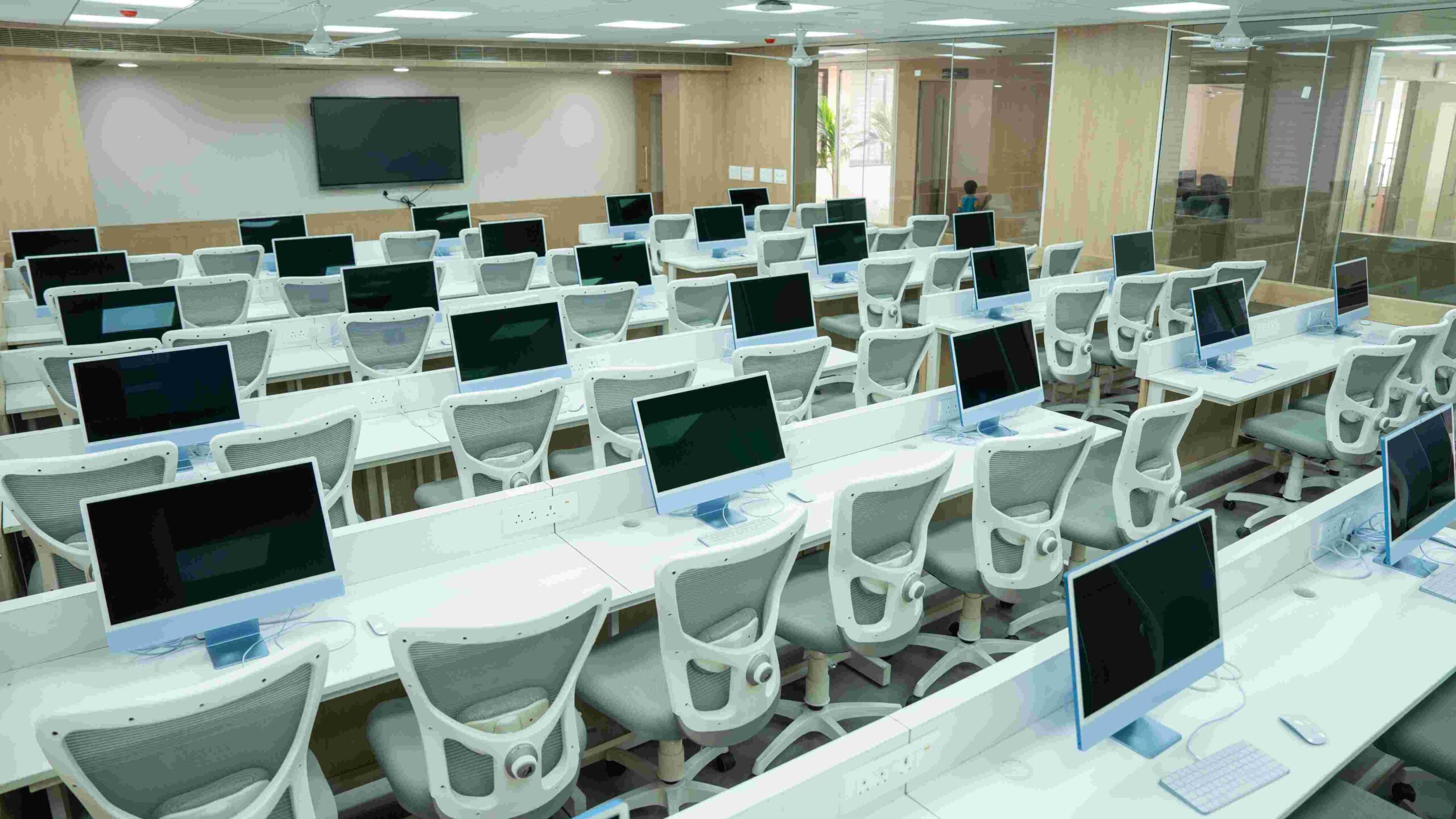
For three decades, the standard pathway for an Indian engineering student wanting industry-current certification looked like this: finish the degree at home, then leave the country to get the training that employers actually want. Indian companies are actively hiring fresh engineering and IT graduates, so what students are learning in universities and what work they’ve to master in the real world are completely different. With this Lakshya 2047 – Centre for Future Skills, we at Parul University are filling this gap by providing 18 months of add-on training, which will raise the productivity bar at all levels!
The student paid for the gap with delayed earnings. The country paid for it through the reverse flow of talent and capital toward countries whose universities had closed the gap natively.
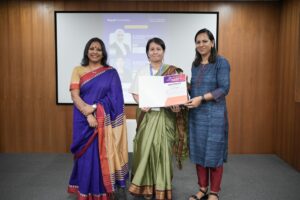
Atmanirbhar Bharat, the Government of India’s framework for national self-reliance, addresses this gap directly when applied to higher education. The framework’s logic is straightforward. If Indian students can earn global industry credentials inside India, on Indian university infrastructure, recognised by the same global employers, then the country no longer needs to export students to import training. The credential-issuing companies travel to India instead. Lakshya 2047 at Parul University, inaugurated on 8 May 2026 by Union Minister Dr. Jitendra Singh, is one of the more concrete operational implementations of this logic in current Indian higher education.
What Atmanirbhar Bharat actually means in higher education
The framework was originally articulated in the context of economic policy: domestic manufacturing, defence indigenisation, agricultural value chains, and reduced import dependence in strategic sectors. Applied to higher education, the same logic translates with a few specific requirements.
- Domestic credentialing capacity. Indian universities must be able to host the credentialing programmes (Microsoft, AWS, NVIDIA, Cisco, and so on) that employers globally use to verify skills, rather than students having to travel abroad to access them.
- Domestic infrastructure equivalent to industry standard. The equipment, the software, the cloud subscriptions, and the lab environment inside Indian universities must match what students would encounter in industry, both Indian and global. Outdated equipment defeats the purpose.
- Domestic instructor capacity. Indian faculty and trainers must be capable of delivering the training to the standard that the credential-issuing companies require. This typically requires industry partnership for instructor preparation.
- Domestic assessment infrastructure. The certification examinations themselves must be administrable inside India, with results that carry the same weight globally as if the student had taken the examination at the vendor’s overseas centre.
All four requirements have to be met simultaneously for the Atmanirbhar Bharat thesis to actually hold in higher education. If even one of them is missing, students still need to leave the country to complete the credential. Lakshya 2047’s structural innovation is that it meets all four requirements inside a single building, across multiple vendor partners, for the full range of future-technology domains the vision identifies as priorities.
The historical problem: training as a reason to leave
Walk through the alumni records of any well-regarded Indian engineering college, and the pattern is consistent. The students who wanted to specialise in cloud architecture went abroad to do AWS Solutions Architect Professional or Microsoft Azure Solutions Architect Expert. The students who wanted advanced robotics went abroad to do ABB or KUKA factory training. The students who wanted advanced VLSI design went abroad for the Synopsys and Cadence tools they could not access at home. The students who wanted advanced AI infrastructure went abroad for the NVIDIA Deep Learning Institute programmes and the GPU computing labs that Indian universities did not have.
The departure was not always permanent. Many students returned. But the period away was costly, both for the student (tuition, living expenses, opportunity cost of delayed earning) and for the country (talent outflow, capital outflow, lost domestic productive capacity). The cost was structural rather than incidental. It was the price of the credentialing gap between Indian universities and the global industry, the current standard.
Three structural factors held the gap open. First, the equipment cost was high enough that most institutions could not justify the capital expenditure on the scale required. A single set of Schneider Electric industrial automation panels, an ABB IRB 1090 educational co-bot, an NVIDIA Super Micro server with RTX GPU systems, or a fully licensed Synopsys VLSI design suite represents tens of crores in cumulative investment when stacked across the future-technology domains a comprehensive centre would need. Second, the partnership negotiation cost was high. Setting up a Microsoft-certified training programme requires institutional commitment that most universities did not see a return path for. Third, the instructor preparation cost was high. Training faculty to deliver industry-current training to the standard required for vendor certification examinations involves continuous reinvestment that institutions find difficult to sustain.
The cumulative effect was that the credentialing gap stayed open for two decades after the relevant vendor certifications became globally important. Closing the gap required an institution willing to make the capital investment, negotiate the partnerships, and sustain the instructor preparation across multiple academic cycles. Lakshya 2047 is one of the institutional responses to this gap, structured around the assumption that Indian engineering, computer science, and design students should be able to earn the same credentials at home that they previously had to leave the country to access. The full institutional history of Parul University leading up to the Lakshya 2047 inauguration is covered separately, but the strategic intent behind the centre is consistent with the Atmanirbhar Bharat framework.
How Lakshya 2047 closes the gap: certifications by industry vertical
The centre’s 25-plus globally recognised certifications are grouped by industry vertical, and seeing them grouped this way makes the Atmanirbhar Bharat closure visible.
- Cloud and platform engineering vertical. Microsoft Azure Fundamentals (AZ-900), Microsoft Azure Developer Associate (AZ-204), AWS Academy Cloud Foundations, AWS Academy Cloud Architecting, and AWS Academy higher-tier credentials. The cloud workforce that the Indian IT services sector depends on can now be trained, certified, and assessed entirely on the Parul University campus.
- AI and accelerated computing vertical. NVIDIA Deep Learning Institute Fundamentals, NVIDIA AI Developer. The training infrastructure for the IndiaAI Mission workforce is operationally present inside the centre, including the Super Micro server, the RTX GPU systems, and the CUDA programming environment that production AI development requires.
- Cybersecurity and network engineering vertical. Cisco CCNA, Cisco CCNP, CompTIA Security+. The credentials that define cybersecurity and network engineering hiring in Indian enterprise and government are issued inside India.
- Mobile and ecosystem development vertical. Apple App Development with Swift, Apple Certified Support Professional. The iOS and macOS development workforce can be trained domestically with the same credentials that Apple recognises globally.
- Industrial automation and process control vertical. Siemens Certified Drives and Automation, International Society of Automation Certified Control Systems Technician (ISA CCST), ABB Advanced Robotics Programming, ISA Certified Automation Professional (CAP), Schneider Electric EcoXpert Building Automation. The Make in India manufacturing workforce and the building automation and HVAC workforce that smart-city infrastructure depends on can be trained inside India.
- Design, simulation, and creative content vertical. Autodesk Certified Professional, Autodesk Certified Expert, Adobe Certified Professional (ACP), Adobe Certified Expert (ACE). The creative industries workforce, including engineering design, architecture, animation, video editing, and brand design, can be trained in India.
- Immersive technologies vertical. Meta AR Developer Professional. The AR/VR workforce that the next-generation immersive computing industries will require can be trained inside India.
- Semiconductor and VLSI vertical. Synopsys Certified Professional (VLSI), IEEE VLSI Design Certification. The India Semiconductor Mission talent pipeline can be developed inside India, on infrastructure that matches what the semiconductor industry actually uses.
- Materials, nanotechnology, and sensors vertical. ASM International Materials Engineering Certification, IEEE Sensors and IoT Certification. The materials science and sensor engineering workforce that advanced manufacturing depends on can be trained inside India.
The breadth across nine industry verticals matters because Atmanirbhar Bharat is a multi-sector framework. Domestic credentialing capacity in one sector alone (typically IT) is insufficient. The vision requires self-reliance across sectors, which is what the nine-vertical structure of Lakshya 2047 makes operationally possible. The course-to-lab mapping article details which specific Parul University programmes access which lab clusters.
The cost differential: overseas certification versus Lakshya 2047
Calculating the differential is a useful way to make the Atmanirbhar Bharat thesis concrete. A student who would previously have travelled abroad to earn a stack of certifications would have absorbed the cumulative cost in a way that becomes visible when the alternative is laid out side by side.
- Tuition and certification costs. An overseas pathway to earning a stack of three or four major vendor certifications (Microsoft Azure, AWS Solutions Architect, NVIDIA Deep Learning Institute, plus one industrial automation certification, say) at a US or European institution typically runs into substantial six-figure rupee cost just for the certifications themselves, plus the institution’s tuition. The Lakshya 2047 pathway folds the training and the certification preparation into the regular Parul University programme fee structure.
- Living expense cost. Overseas study involves living expenses (rent, food, transport, health insurance) that, for a typical one-year specialised programme, add up to amounts well in excess of what the same period would cost in Vadodara. The differential is several times the domestic cost over the course of a multi-year programme.
- Opportunity cost. A student who completes certifications inside India alongside their degree starts earning at the same time as their cohort. A student who leaves for overseas certification typically delays earning by one to three years. The cumulative income foregone is a meaningful component of the total cost.
- Family and personal cost. The non-financial costs (separation from family, cultural adjustment, visa stress, return-migration complexity) are harder to quantify but real, and they fall disproportionately on students from financial backgrounds for whom the overseas option is already a stretch.
The cumulative differential is what makes the Atmanirbhar Bharat thesis economically rather than only rhetorically important. Lakshya 2047 changes the calculation enough that students who would previously have viewed overseas training as the necessary path for a competitive credential can now access the same credential as part of their Parul University programme, on domestic cost economics.
Employer recognition of vendor-issued credentials
The Atmanirbhar Bharat thesis only holds if the credentials earned at home are actually recognised by the employers globally, who recognise the same credentials when issued abroad. This is the test the framework lives or dies on. A certification issued by Microsoft is a Microsoft certification regardless of where the examination was taken. The vendor’s verification process is identical. Employers verifying a Microsoft Azure AZ-204 holder do so through Microsoft’s credential verification system, not through the issuing institution’s records.
This is the structural feature that makes the Lakshya 2047 model work. The credentials are vendor-issued, not university-issued. The verification flows through Microsoft, AWS, NVIDIA, Cisco, Siemens, Schneider, ABB, Adobe, Apple, Meta, Autodesk, ANSYS, and Synopsys directly. Parul University’s role is to host the training and the examinations. The credential’s value is independent of the hosting institution’s brand, which means it travels with the student into any employer’s hiring process anywhere in the world.
This independence from institutional brand is what closes the credentialing gap that previously required overseas training. The student who clears Microsoft Azure AZ-204 inside Lakshya 2047 holds the same credential, with the same verification flow, as a student who cleared the same examination at any other Microsoft-certified training centre anywhere in the world. The credential is portable globally. The career-pathway implications of this portability are covered in detail in the career pathways article.
The broader Atmanirbhar Bharat workforce thesis
Atmanirbhar Bharat in higher education is part of a broader workforce thesis that connects directly to the Viksit Bharat 2047 vision. If India is to become a developed nation by the centenary of Independence, the country needs a workforce trained to operate the industries that drive developed economies. If that workforce has to be trained abroad, the country loses both the talent (during the training period and sometimes permanently) and the capital (paid to foreign institutions). The framework’s logic is that self-reliance in workforce training is a precondition for self-reliance in industrial capacity, which is in turn a precondition for the developed-nation outcome.
Lakshya 2047’s institutional contribution to this thesis is measurable. Each cohort of students passing through the centre with NSDC-aligned, vendor-issued, Cambridge-assessed credentials is one more cohort that did not need to leave the country to access the training. Multiply across the full cohort over the operational life of the centre, and the cumulative contribution to domestic workforce capacity is substantial. The detailed treatment of how Lakshya 2047 operationalises Viksit Bharat 2047 extends this thesis through the wider policy framework, and the multi-mission alignment article covers the other national missions the centre engages alongside Atmanirbhar Bharat.
FAQs
What does Atmanirbhar Bharat mean specifically for Indian higher education?
Atmanirbhar Bharat in higher education means Indian universities developing the capacity to deliver industry-current training and globally recognised credentials inside India, so that Indian students no longer need to travel abroad to access training that employers globally recognise. The framework requires four things to be present simultaneously: domestic credentialing capacity for global vendor certifications, domestic infrastructure equivalent to industry standard, domestic instructor capacity to deliver the training, and domestic assessment infrastructure to administer the examinations. Lakshya 2047 at Parul University meets all four requirements across nine future-technology domains.
Which industry certifications can Indian students earn at Lakshya 2047 instead of going abroad?
More than 25 globally recognised credentials, including Microsoft Azure Fundamentals (AZ-900), Microsoft Azure Developer Associate (AZ-204), AWS Academy Cloud Foundations and Architecting, NVIDIA Deep Learning Institute Fundamentals and AI Developer, Apple App Development with Swift, Apple Certified Support Professional, Cisco CCNA and CCNP, CompTIA Security+, Siemens Certified Drives and Automation, International Society of Automation Certified Control Systems Technician (ISA CCST), ABB Advanced Robotics Programming, ISA Certified Automation Professional, Schneider Electric EcoXpert Building Automation, Autodesk Certified Professional and Expert, Adobe Certified Professional and Expert, Synopsys Certified Professional VLSI, IEEE VLSI Design, Meta AR Developer Professional, ASM International Materials Engineering, and IEEE Sensors and IoT.
Are credentials earned at Lakshya 2047 recognised by global employers the same way as credentials earned abroad?
Yes. The credentials are issued by the vendor companies themselves, not by Parul University. Microsoft, AWS, NVIDIA, Cisco, Apple, Siemens, Schneider, ABB, Adobe, Meta, Autodesk, Synopsys, and the other partners verify the credentials directly through their own systems. A Microsoft Azure AZ-204 holder from Lakshya 2047 has the same credential, verified through the same Microsoft verification system, as anyone else who has cleared the AZ-204 examination anywhere in the world. The credential's value is independent of the hosting institution because the issuing body is the vendor.
What cost differential does Lakshya 2047 create for Indian students compared with overseas certification pathways?
The cost differential is substantial across four dimensions: tuition and certification cost (folded into Parul University programme fees rather than separate overseas tuition), living expense cost (Vadodara cost economics rather than overseas), opportunity cost (graduating and earning on the same timeline as the cohort, without the one to three year overseas delay), and non-financial cost (family separation, visa stress, cultural adjustment). The cumulative differential over a multi-year specialised programme is large enough to change the access calculation for many students for whom overseas certification was previously not financially viable.
How does Atmanirbhar Bharat in higher education connect to Viksit Bharat 2047?
The two frameworks are operationally linked. Atmanirbhar Bharat in higher education builds the domestic credentialing capacity that the Viksit Bharat 2047 workforce thesis depends on. Viksit Bharat 2047 sets a developed-nation target by the centenary of Independence. That target depends on a workforce trained for advanced industries. If the workforce has to be trained abroad, the country loses talent and capital. Atmanirbhar Bharat in higher education closes that loop by enabling the training to happen domestically. Lakshya 2047 is one of the operational implementations that bridges both frameworks simultaneously, with the NSDC partnership providing the national-skill-framework alignment and the Cambridge University Press and Assessment partnership providing the international-academic-credentialing layer.