Before a student from Tashkent boards a flight to India, a question gets asked at her dinner table: will she be safe? In 2026, one such student answered it after four months on the ground.
At the 2026 Farewell Ceremony for the Center for International Relations and Research (CIRR) Semester Exchange and Internship Program at Parul University, two members of the cohort spoke directly to the question. Their statements are presented here as personal testimony from their lived experience over multi-month terms, and should be read as individual student accounts rather than as institutional safety guarantees.
The Uzbekistan testimony: a female student on safety before and after
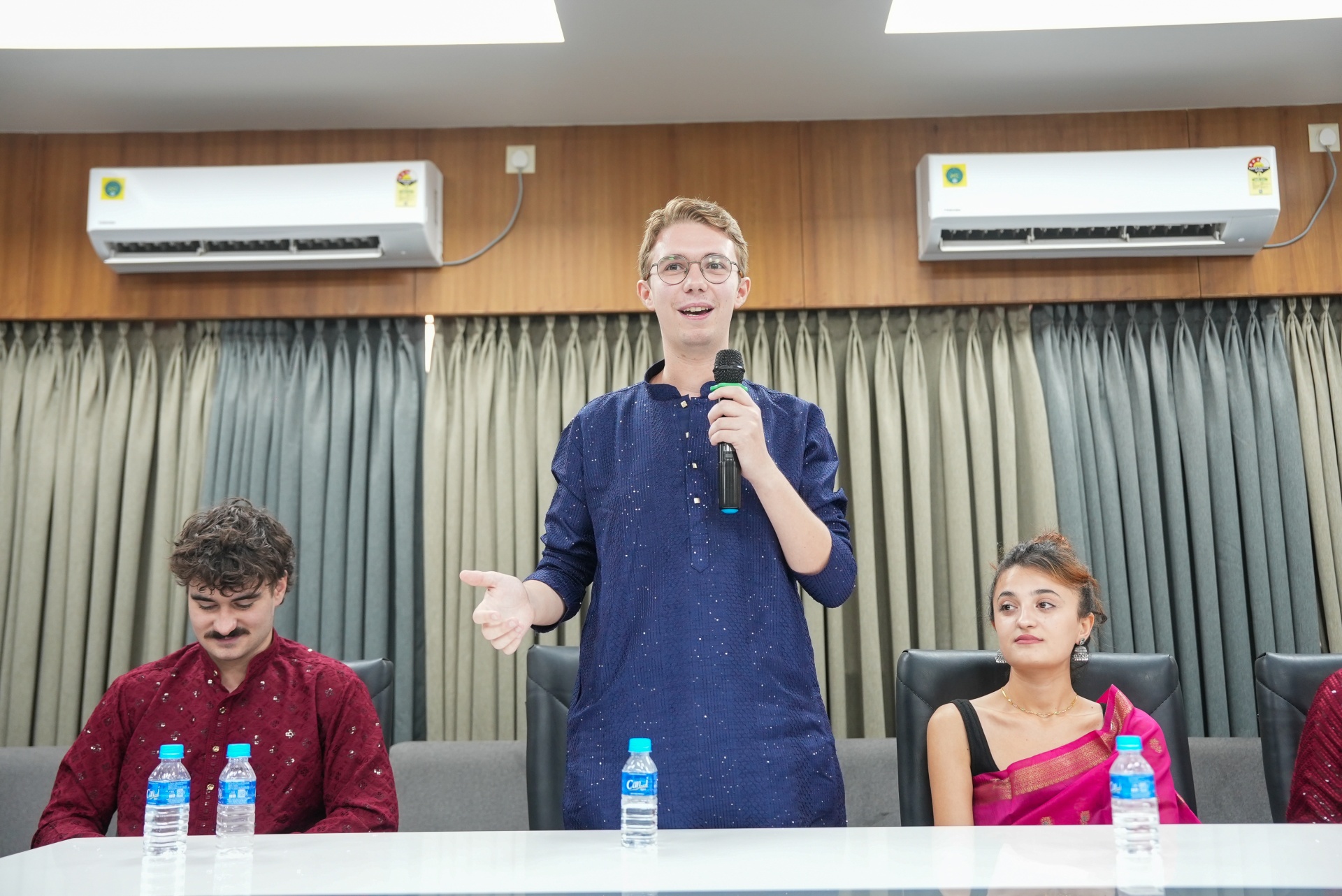
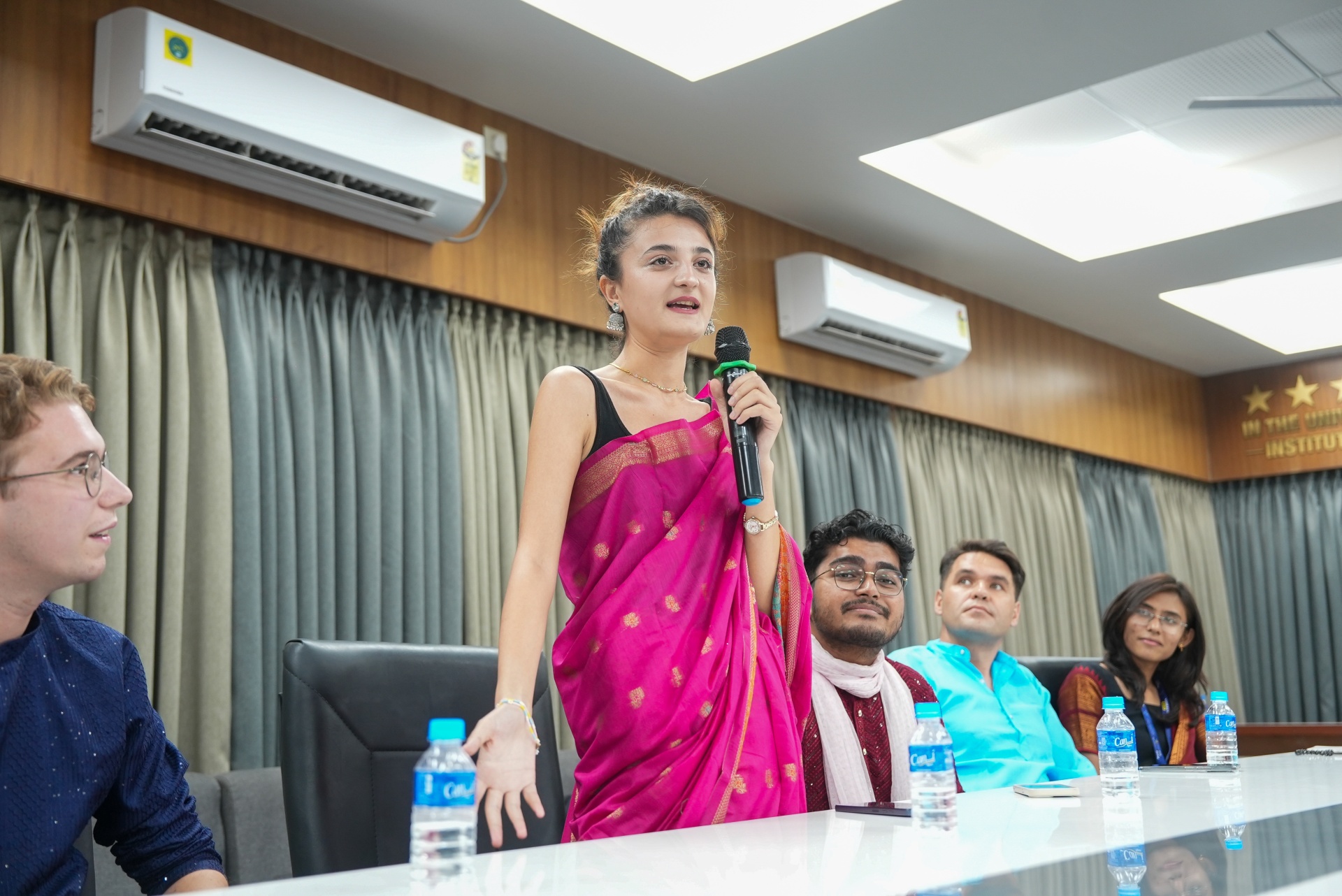
Ms. Gulli Jovliyeva Ravshan Qizi, a Liberal Arts student from Uzbekistan, arrived in India carrying the warnings she had heard at home.
As she herself shared, before travelling to India, she had heard views in Uzbekistan that India is not a safe destination for girls and that a female student should be travelling with a companion for security purposes. This is a usual warning that people travelling from abroad get, which makes people question their decision whether to pursue India for an exchange program or not.
I feel I am so safe, especially in Parul is a safe place for girls. If the girls want to live and want to explore, want to learn, then it is a good opportunity to come and learn in Parul.
Ms. Gulli Jovliyeva Ravshan Qizi, Uzbekistan, Liberal Arts exchange student, at the 2026 Farewell Ceremony
Her testimony carries particular weight for two reasons. First, she was a first-time international traveller, arriving in India without prior overseas experience, which is the exact profile of student for whom safety concerns are most acute. Second, her statement was specific. She shared a general impression. In her closing statement, she said that she had felt like half Indian by the end of her term, and this statement shows how included and integrated she felt here rather than the mere tolerance of her environment.
Also Read: 2026 Cohort of semester and internship exchange program.
The second testimony: stereotypes about India directly addressed
A second exchange student, Priyanka (Ms. Priyankka Prabhathan, a Computer Science student from INTI International University, Malaysia), who studied in the Computer Science department over a term of four and a half months, addressed the broader set of stereotypes that circulate about safety in India. Her account named the specific concerns that prospective international students hear, and stated that across her time on campus she had not encountered them.
There are many stereotypes in India which are fake. Five months here, never has experienced that.
Priyanka, Computer Science exchange student, at the 2026 Farewell Ceremony
Her testimony went further, drawing a comparison from her own travel within India. Having spent time in Chennai as well as Gujarat, she described the two as distinctly different, and stated that she had told her own family that Gujarat was among the safest places she had experienced in India. The comparison matters because it reflects a student making a relative judgment from direct multi-city experience rather than an abstract impression. The stereotypes she named, including concerns about scamming and personal safety, were exactly the concerns that deter prospective international students, and her account was that they had not materialised across her term.
Also Read: International Professor visiting program at Parul University.
Why Gujarat's context matters for the safety question
When it comes to evidence, the testimonies stand as the primary ones. Gujarat is considered one of the safest places among the Indian states. Gujarat has lowest rates of certain categories of crime in publicly reported data, and Vadodara, where the Parul University campus is located. Gujarat is consistently among the Indian states associated with lower rates of certain categories of crime in publicly reported data, and Vadodara, where the Parul University campus is located, is an established university city. The campus itself operates as a large residential environment, with substantial in-campus residency capacity, an in-campus hospital, and the structured support systems that a major university provides. For international students specifically, the CIRR support layer, faculty coordinators, and student buddy system add a continuous network of points of contact. None of these structural factors constitutes a guarantee, but together they form the context within which the 2026 cohort reported the safety experiences described above.
- University city setting: Vadodara is an established educational Center in Gujarat, with the campus operating as a large residential environment.
- In-campus residency and healthcare: Substantial residential capacity and a 24-hour in-campus hospital reduce the need for international students to navigate unfamiliar external environments for basic needs.
- CIRR support layer: Continuous coordination through the Center for International Relations and Research, with named points of contact for international students throughout their term.
- Student buddy system: Peer-level integration support, such as the buddy assigned to the Malaysian student Danish, providing a local contact for daily navigation.
- Faculty coordinator network: Department-level academic and pastoral support, with students in the 2026 cohort naming specific coordinators who supported them through health and adjustment challenges.
Honest framing: what this testimony does and does not establish
Responsible reporting requires distinguishing between what student testimony establishes and what it does not.
The accounts presented above establish that two members of the 2026 cohort, including a first-time female international traveller, reported feeling safe throughout multi-month exchange terms and specifically challenged safety stereotypes they had heard before arriving in India. These testimonies constitute genuine and valuable first-person accounts based on lived experience.
What these testimonies do not establish, and what no university can responsibly guarantee, is an absolute assurance of safety for every individual in every circumstance. Safety outcomes are influenced by individual judgment, situational awareness, personal decisions, and factors that no institution can fully control.
Prospective international students should therefore consider the experiences shared by previous participants alongside their own research, the guidance of their home institution, and conversations with programme coordinators. Students with specific questions regarding accommodation, healthcare, transportation, campus support, or personal safety should engage directly with the CIRR team to obtain the most current and relevant information before making a decision.
What prospective international students should ask before arriving
Students considering the CIRR Semester Exchange and Internship Program can address their safety questions directly through structured engagement with the programme. The 2026 cohort’s experience suggests several practical points of inquiry:
- Accommodation arrangements: Confirm on-campus or programme-arranged accommodation and the support available within it.
- Points of contact: Identify the named CIRR coordinators and faculty contacts who will be available throughout the term.
- Buddy assignment: Confirm whether a student buddy will be assigned for daily integration support.
- Health support: Understand the in-campus healthcare access, relevant for international students adapting to a new climate and food environment, several of whom in the 2026 cohort experienced initial health adjustment.
- Cultural orientation: Understand the cultural orientation and integration support, which the 2026 cohort credited with helping them move from initial uncertainty to confidence.
The integration outcome: from stranger to half Indian
The deeper measure of a safe environment is not the absence of incident but the presence of belonging. Across the 2026 cohort, the recurring theme was integration: the Malaysian student who learned that ha means yes in India and adapted his communication accordingly, the Belgian student who ended his speech with Yahan possible hai, chalo Parul, and the Uzbek student who described feeling half Indian. These are markers of an environment in which international students did not merely remain safe but actively belonged. The full range of these experiences is documented in the international student voices article, and the academic and research outcomes the cohort produced are covered in the international research and internship article.
Also Read: BFH and Parul University Partnership.
FAQs
Is Parul University safe for international students?
International students who came to Parul University under the semester exchange program in 2026 shared their views on safety and related questions. A female student of Liberal Arts shared how safe she felt during her four-month term. And another student who came here as CSE exchange student shared that Gujarat is one of the safest places in India. The campus has in-house residence facilities, with 24 hour in-campus hospital, CIRR cordination, faculty and student buddy support. Prospective students should weigh past-participant testimony alongside their own research and engage the CIRR team directly with specific safety questions.
Is Parul University safe for female international students specifically?
This question was addressed by an exchange student from Uzbekistan who was part of the 2026 cohort. She said as a first time international traveller, she got warnings that India is not safe for girls and females who travel without a companion. But she decribes that during her four months tenure at the Paul University campus she felt safe, and recommends this program to other girls who can explore,learn and grow. This testimony hold relevance for female students who wish to travel and take admission here in India.
Is Gujarat safe for international and exchange students?
A computer science exchange student who travelled in 2026 and became part of the 2026 cohort at Parul University. The student described Gujarat as one of the safest places in India. The student has travelled in Chennai and Gujarat both. She further said that she shared her experience even with her parents and that the stereotypes about scams and safety had not materialized during her time here.
What safety support does Parul University provide to international students?
Parul University provides layered safety and support infrastructure for international students through the Center for International Relations and Research (CIRR). The support includes on-campus or programme-arranged accommodation within a large residential campus environment, a 24-hour in-campus hospital, continuous coordination through named CIRR contacts throughout the term, department-level faculty coordinators who provide academic and pastoral support, and a student buddy system that pairs international students with local peers for daily integration support. The 2026 cohort named specific coordinators, faculty members, and buddies who supported them through health adjustment, subject selection, and cultural adaptation across their terms.
What should international students ask about safety before joining the programme?
Prospective international students considering the CIRR Semester Exchange and Internship Program should engage the programme directly on several practical points: the accommodation arrangements and the support available within them, the named CIRR coordinators and faculty contacts available throughout the term, whether a student buddy will be assigned for daily integration support, the in-campus healthcare access relevant for adapting to a new climate and food environment, and the cultural orientation support available. The 2026 cohort credited this support structure with helping them move from initial uncertainty to confidence over their terms. Students should weigh past-participant testimony alongside their own research and their home university's guidance before committing.
Did international students experience the safety problems they had heard about before coming to India?
According to the testimony of the 2026 Parul University exchange cohort, the safety problems they had heard about before arriving did not materialise during their terms. The Uzbek student had heard that India was not safe for girls; after four months she reported feeling safe and recommended the programme to other female students. The Computer Science exchange student had heard stereotypes about scamming and personal safety; over four and a half months she stated she had not experienced them and described Gujarat as among the safest places in India she had encountered. These accounts reflect individual lived experience over multi-month terms rather than institutional guarantees, and prospective students should combine this testimony with their own independent research.


