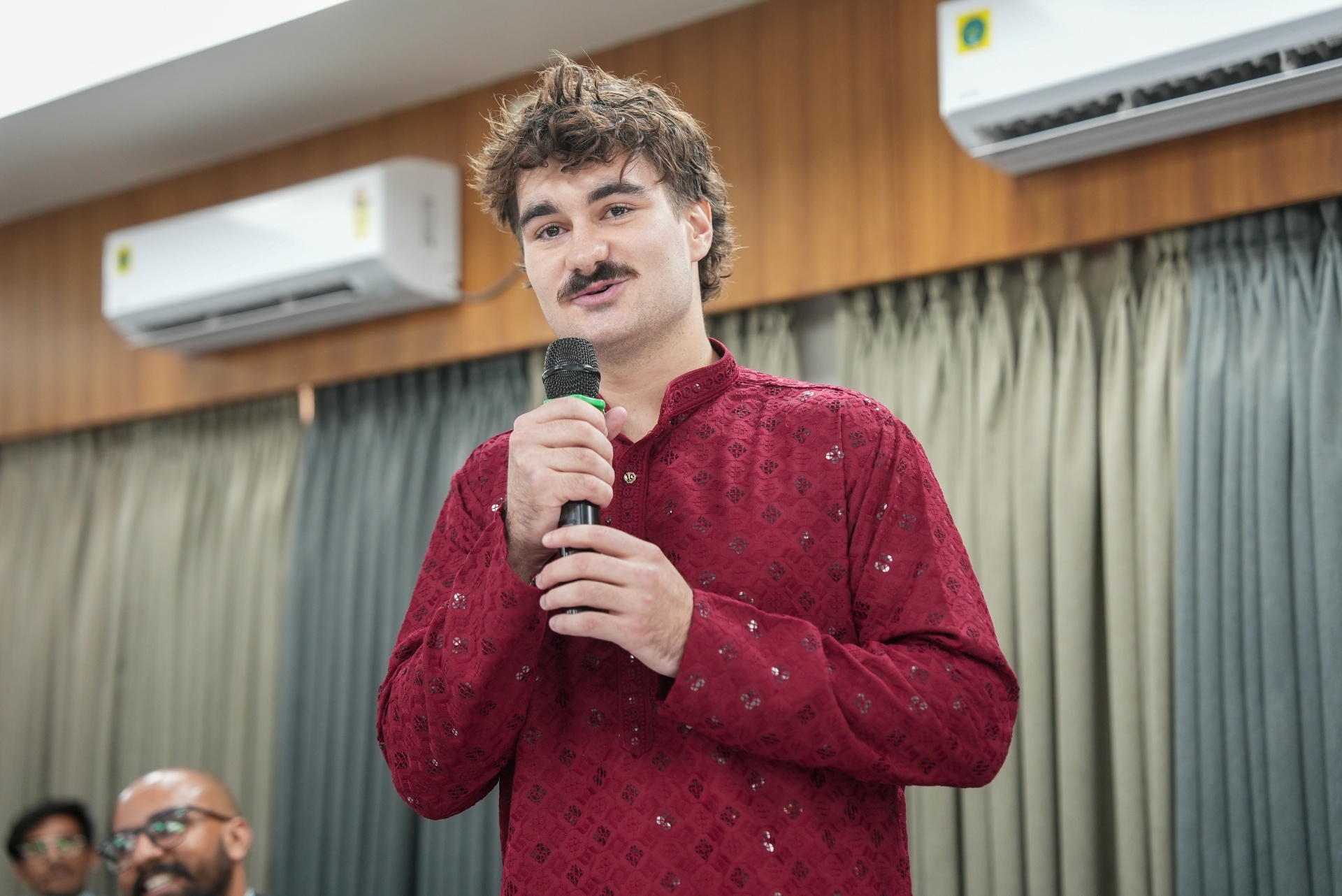
A semester exchange is measured not in credits earned but in whether a student from Belgium ends the program saying, “Yahan possible hai.” In 2026, one did.
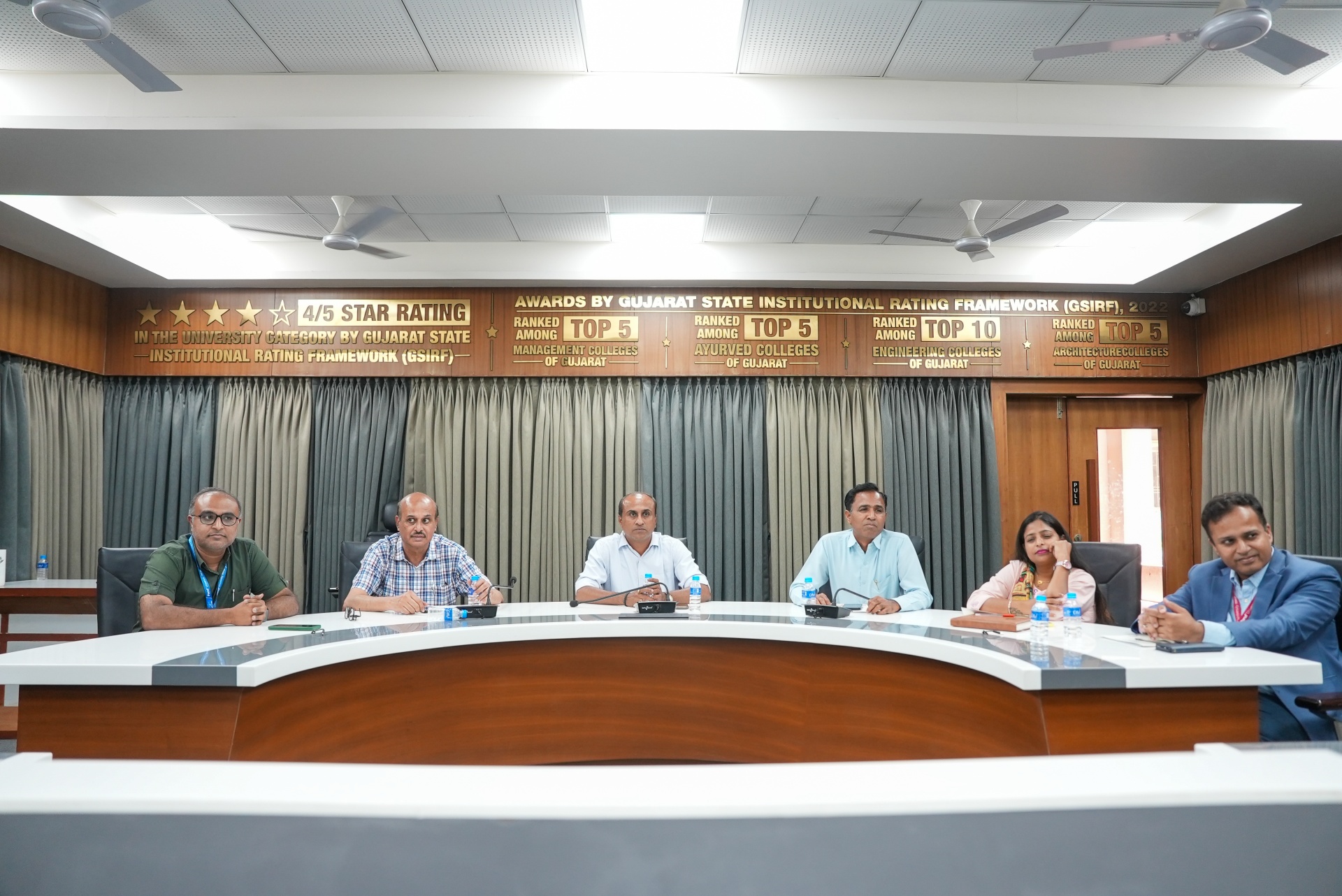
The CIRR at Parul University has run this exchange programme since 2013, which includes academic coursework, internship experience, research projects, and cultural immersion across the university. The 2026 batch was felicitated at a farewell ceremony organised on 19 May 2026 at the J.K. Patel Board Room, moderated by CIRR Director Dr. Preeti Nair, with a keynote given by Professor and Registrar Manish Pandya. The program follows and aligns with NEP 2020.
The inbound exchange program of Parul University is one of several internationalization pathways the Center runs.
This program aims to invite international students to Parul University’s Vadodara campus.
The structured program had various modes of engagement. The 2026 cohort experienced the full range:
- Coursework: Academic coursework for international students, they become part of the regular classes across faculties, with subjects given or mapped coordinating between home and host universities.
- Internships: Students participate in laboratory and field research, including environmental chemical engineering projects with publishable output.
- Professional internships: Students worked in operational roles including documentation, coordination, and social-impact project delivery.
- Cultural immersion: Students participated in campus festivals, sports, travel across India, and daily integration into Indian student life.
- Programme durations: Terms ranged from three months (Belgium, Russia) to five months (Portugal, Uzbekistan, and Malaysia).
The six countries represented in the 2026 cohort
The 2026 inbound cohort represented six countries across Asia, Europe, and the broader international community. The geographic spread is itself evidence of the breadth of Parul University’s international partnership network, which spans more than 120 partner universities across the Americas, Europe, Asia, Russia, UK, NZ and Australia. The countries represented in the 2026 Farewell Ceremony cohort were:
- Malaysia (INTI International University): Mr. Qaid Danish Bin Zamzuri (CSE with AI and Data Science) and Ms. Priyankka Prabhathan (Computer Science Engineering), both hosted at the Faculty of Engineering and Technology.
- Portugal (Instituto Superior Técnico): Mr. Tiago Joel Ferreira Marques, a Chemical Engineering student from one of Europe’s foremost technical institutions, who conducted environmental catalysis research.
- Uzbekistan (Asian Technology University): Ms. Gulli Jovliyeva Ravshan Qizi, a B.A English student hosted at the Faculty of Liberal Arts.
- Indonesia (Universitas Multimedia Nusantara): Mr. Pierre L Eau Nardo, also known as Wang Binyang, a BBA student hosted at the Faculty of Management Studies.
- Russia (ITMO University): Mr. Iaroslav Baranov, hosted jointly across the Parul Institute of Public Health and the Parul Institute of Ayurveda.
- Belgium (Artevelde University): Mr. Isaac Castro, a Business Development intern who worked on social-impact projects and world did an internship in internationalization, SRC, as a second project through CIRR and the Social Responsive Cell.
The three agendas of internationalisation: Dr. Preeti Nair's framing
Dr. Preeti Nair, Director of CIRR, framed the purpose of the programme around three agendas that govern Parul University’s international collaborations. Her articulation provides the strategic logic behind why a university invests in hosting international students at all.
- Agenda one, learning from each other: Faculty collaborations, student exchange, and internships create academic exposure that widens the horizons of both visiting and host students and faculty.
- Agenda two, intercultural understanding: Direct experience dissolves the stereotypes that nations hold about each other in the absence of contact. Dr. Nair cited India itself as a country viewed stereotypically by people who have never visited, and noted the same is true of Portugal, Malaysia, Russia, and Indonesia for Indians who have never travelled there.
- Agenda three, friendship: The agenda Dr. Nair described as most important. International students who arrive as strangers integrate into Indian culture and the university community, forming friendships that outlast the programme term.
Cross-cultural learning links hearts, cultures, and futures across borders.
Dr. Bindi Thakkar, Assistant Director, CIRR, in the welcome address at the 2026 Farewell Ceremony
Also Read: New Zealand and India Relations becoming stronger with INSPIRE NZ initiative.
Alignment with NEP 2020 internationalisation and Study in India
The CIRR Semester Exchange and Internship Program operationalises a specific national priority. The National Education Policy 2020 explicitly mandates the internationalisation of Indian higher education, both through bringing international students to India and through enabling Indian institutions to operate as global study destinations. The Government of India’s Study in India initiative is the central programme through which this vision is pursued, aiming to position India as a preferred destination for international students. Parul University’s inbound exchange programme is a direct contribution to this national objective. The programme also advances two United Nations Sustainable Development Goals on which Parul University holds top-tier positions in the THE Impact Rankings: SDG 4 on Quality Education and SDG 17 on Partnerships for the Goals.
What students do during the programme: academics, research, and internships
The programme is not a study-abroad holiday. The 2026 cohort produced measurable academic and research output.
The Portuguese Chemical Engineering student Tiago presented two research papers during his term, with one research article completed for submission and an experimental research project successfully concluded, working under faculty coordinator Alok Tiwari and Department Head Dr. Hariharan T. The Belgian Business Development student Isaac worked daily on social-impact documentation with the Social Responsive Cell under Dr. Vinod Parmar, visiting street schools under the Apni Pathshala initiative. The full breadth of what the 2026 cohort accomplished is documented in the international research and internship outcomes article, and the individual country-by-country experiences are captured in the international student voices article.
Also Read: Is Parul University Safe for students? Understand from the testimonials.
Faculty and coordinator support: the institutional backbone
The programme’s success rested on a dense support layer of faculty coordinators, department heads, and the CIRR team.
Across the 2026 cohort, named faculty and coordinators who supported international students included Dr. Parth Sarthi Ganguly (Dean, Parul Institute of Public Health), Dr. Sanjay Agal (Head of Department, Faculty of Engineering and Technology), Dr. Hariharan T (Professor and Head, Chemical Engineering), Alok Tiwari (Assistant Professor and Chemical Engineering Faculty Coordinator), Dr. Ashish Patel (Assistant Professor, Computer Science and Engineering), Dr. Shweta Shah (Academic Head, Parul Institute of Business Administration), and Dr. Vinod Parmar (Director, Social Responsive Cell), Dr. Preeti Nair (CIRR and Professor of HRM), Dr. Swapnil M Parikh (PIT Principal), Dr. Vipul Vekariya (Engineering Dean), and Prof. Jitendra Sharma (FMS Dean). The CIRR team itself, anchored by Director Dr. Preeti Nair, Assistant Director Dr. Bindi Thakkar, and team members Anuja Tidke, Monty DeSouza, and Aditya, provided the continuous coordination that the programme required. Student buddies, including Kaushal who was assigned to the Malaysian student Danish, provided the peer-level integration support that helped international students settle into campus life.
From the very first day, we started with the tagline Yahan Sab Possible Hai. Whenever students come to Parul University, we always try our best to make them feel comfortable, welcomed, and supported.
Anuja Tidke, CIRR team, at the 2026 Farewell Ceremony
The broader internationalisation ecosystem at Parul University
The inbound semester exchange and internship program is one component of a larger internationalization infrastructure that CIRR has built since 2013. The broader ecosystem includes semester exchange programs, faculty exchange programs, pathway programs, dual degree initiatives, summer school programs, and global internship programs. Parul University’s international footprint includes more than 120 partner universities, over 6,000 international students, and recognition through frameworks including the establishment of a Center of Excellence with New Zealand universities. The internationalization work connects to the university’s broader innovation and engagement ecosystem, including the PIERC innovation and entrepreneurship infrastructure and national programmes such as the PM SHRI Regional Mentoring Session that Parul University has hosted as an AICTE Nodal Center.
How the programme works for incoming students
The program has a structure laid out covering coordination from pre-arrival till the closing farewell ceremony. For the year 2026 the cohort’s journey started with online meetings and course mapping, which was structured before their arrival in coordination with home and host universities. Each student was given a department coordinator and in some cases a student buddy for daily incorporation support. The term ended with a farewell ceremony on 19th May 2026, with each student felicitated with a certificate, thought sharing by students, and a keynote address by Professor Registrar Manish Pandya. Below is the pathway that describes their engagement:
- Home-university nomination: Students apply or are nominated through their home institution’s partnership with Parul University, such as INTI International University, Instituto Superior Técnico, or ITMO University.
- Course mapping: CIRR and the host department coordinate subject mapping before arrival, often beginning with online meetings months ahead.
- Placement: International students who come to the university get a faculty assigned from the faculty that the host university has (Engineering and Technology, Liberal Arts, Management Studies, Public Health, Ayurveda, and others), with a department coordinator.
- Support during the tenure: There is constant support from the CIRR team, mentorship from faculty, and a student buddy assigned for daily support.
- Recognition at completion: Certificate distribution and felicitation at the Farewell Ceremony, with academic and research output documented for transfer to the home university.
Prospective international students should contact the Center for International Relations and Research directly for current details on eligibility, application timelines, programme fees, visa support, and credit-transfer arrangements, which are coordinated individually with each partner university.
FAQs
What is the CIRR Semester Exchange and Internship Program at Parul University?
The semester exchange and internship program is incorporated by CIRR for international students who are hosted by Parul University. International students visit the Vadodara campus of Parul University, where they become part of the academic coursework, internships, research projects, and cultural events. Their tenure is usually three months to six months. In 2026 students from Malaysia, Portugal, Belgium, Uzbekistan, Indonesia, and Russia were hosted.
Which countries did the 2026 international exchange cohort come from?
In 2026, the cohort comprised of students from Malaysia (Mr. Qaid Danish Bin Zamzuri and Ms. Priyankka Prabhathan), Indonesia (Mr. Pierre L Eau Nardo), Russia (Mr. Iaroslav Baranov), Belgium (Mr. Isaac Castro), Uzbekistan (Gulli Jovliyeva Ravshan qizi), and Portugal Mr. Tiago Joel Ferreira Marques). This shows how Parul University's network goes beyond Aisa partnering with 120 Universities.
How long are the CIRR exchange and internship programs?
The CIRR's exchange and internship program has a different timeline for different students and home university arrangements. In the 2026 cohort, students from Russia and Belgium had three-month tenure, five months for students from Portugal, Uzbekistan, Malaysia, and Indonesia. The program includes internships, academic coursework, research projects, and cultural event participation. The program structure accommodates both semester-length academic exchanges and internship-focused terms, with subject mapping coordinated between the home and host universities before the student arrives, often beginning with online meetings and course mapping in the months prior to arrival.
How does the CIRR programme align with NEP 2020 and Study in India?
The CIRR program follows the NEP 2020, which mandates the internationalization of higher studies that lays out inviting the international students and sending the domestic students to gain global exposure. The program contributes to the Government of India's Study in India initiative. The initiative aims to position India as a preferred destination for international students. The program also aims to follow the United Nations Development Goals, which are Goal 4 and Goal 17, for which Parul University holds a top position in the Impact Ranking.
Who leads the CIRR international programme at Parul University?
The Center for International Relations and Research at Parul University is led by Director Dr. Preeti Nair and Assistant Director Dr. Bindi Thakkar. The CIRR team includes members Anuja Tidke, Monty DeSouza, and Aditya, who provide continuous coordination for international students throughout their exchange and internship terms. The programme also draws on a wide network of faculty coordinators and department heads across the university's faculties, including the Faculty of Engineering and Technology, Parul Institute of Public Health, Parul Institute of Business Administration.
What support do international students receive during the CIRR programme?
International students in the CIRR programme receive layered support across multiple levels. The CIRR team provides continuous coordination on subject mapping, scheduling, documentation, and day-to-day queries. Faculty coordinators and department heads provide academic and research mentorship within each student's discipline. Student buddies provide peer-level integration support to help international students settle into campus life and Indian culture. The 2026 cohort documented strong support experiences, with students naming specific coordinators, faculty members, and buddies who guided them through subject selection, research work, health challenges, and cultural adaptation across their terms.


