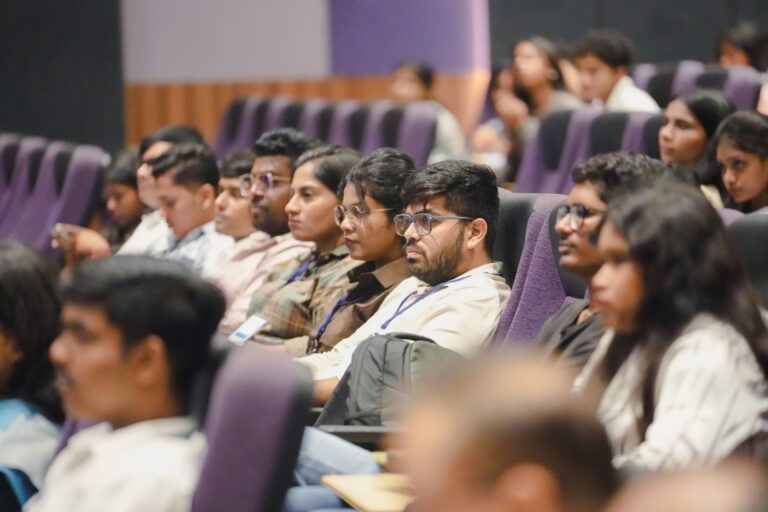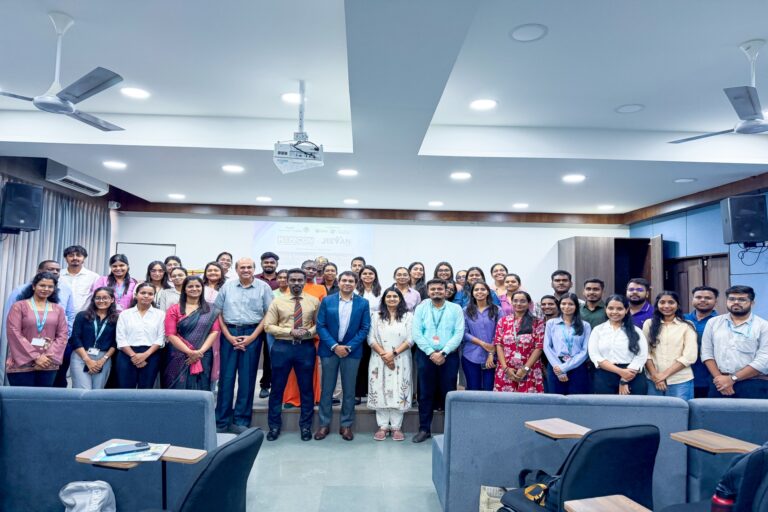
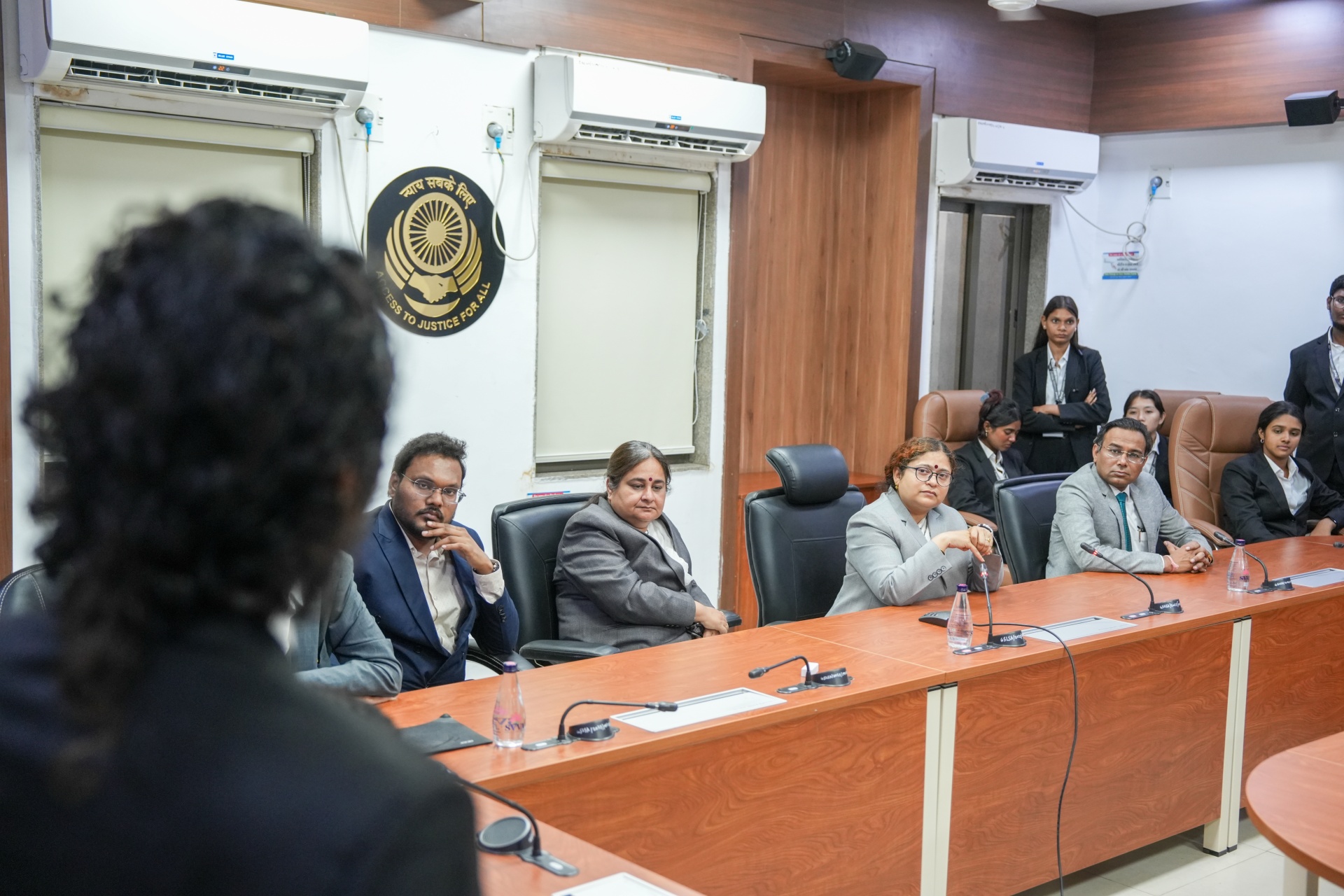
120 students from the first year of the Law Faculty of Parul University (Parul Institute of Law) visited the Gujarat State Legal Services Authority. And a student expressed a desire to provide free legal services. The Secretary’s response changed the room:
“Everybody is saying we are giving free services to the poor people, but it is not free. Somebody is paying always. If poor people do not have to pay anything, the government will pay for it.”
This reframed legal aid from charity to constitutional mandate. Article 39A of the Constitution of India directs the state to ensure equal access to justice and provide free legal aid. The Legal Services Authorities Act 1987 established the institutional framework: NALSA nationally, State Legal Services Authorities in each state, and District Legal Services Authorities at the district level. These are statutory bodies with government funding. Services include free legal advice, court representation, document drafting, and Lok Adalat dispute resolution (no court fees, accessible for civil disputes and motor accident claims). Eligible groups include persons with limited economic means, women and children, SC/ST communities, trafficking victims, disabled persons, and undertrial prisoners.
From GSLSA Classroom to DLSA Ranchi Field
First-year BBA LLB (Hons.) student Abhinav Sharad from Parul University visited GSLSA and also completed an internship of research at the District Legal Services Authority in Ranchi, assisted and arranged by the Placement Cell with student location preferences. There he engaged in legal research, drafting, policy analysis, and social work initiatives.
His work was documented in Azaad Sipahi, a Ranchi newspaper, on 22 February 2026. The article covered a legal awareness campaign under the Rescue and Rehabilitation Mission focused on child labour protection for children under 14. Abhinav Sharad is named alongside legal officials and NGO representatives. A first-year law student, working alongside legal officials, contributing to a campaign protecting children from labour exploitation.
The T&P Cell’s process: students submit preference forms indicating desired internship locations. The institution facilitates placements accordingly with continuous supervising team contact. Abhinav Sharad chose Ranchi because it was near his hometown. Other documented PIL student internships include Rajasthan High Court, District Legal Services Authority Vadodara, District Legal Services Authority Chittoor (Andhra Pradesh), U.P. State Law Commission, and law firms. The pipeline is structured, not ad hoc.
The Jail Visit: What Happens When Law Students Meet Murder Convicts Face to Face
Separate from the state visit, Parul Institute of Law organised a jail visit in Semester 1. This is not a tourist experience. It is direct exposure to the criminal justice system from the other side: the correctional institution where legal consequences become physical reality.
Abhinav Sharad personally spoke with four to five incarcerated individuals: four convicted of murder, one for drug dealing, and one a former boxer. He asked about the nature of their crimes, their reasons, and the length of their sentences. His observations were acute:
“First of all, when I visited, I did not talk with anyone. First I observed. They are too much confident. If you see them, they will just make eye contact. Like they are not feeling guilty about what they have done.”
The confidence without visible guilt. The direct eye contact. The absence of remorse that textbooks describe as a possibility but that students rarely witness firsthand. For law students who will one day defend or prosecute individuals like these, understanding the psychology of conviction, not just the legal procedure around it, is essential professional preparation.
Abhinav Sharad also raised a professional concern about student behaviour during the visit. Some students were shaking hands with inmates and showing excitement he considered inappropriate:
“This is not the way, shaking hands with them. It should be a little strict in this way, because if we are showing our presence like this, then they will think that students are coming to see us in jail. Their mindset will be like that.”
This observation reflects an awareness that many practising lawyers take years to develop: how professional conduct in legal settings shapes not only the observer’s credibility but also the perceptions of those within the system. For a first-year student, this level of ethical awareness about professional boundaries is notable. It demonstrates exactly what experiential legal education is designed to produce: not just knowledge of the law, but judgement about how to carry oneself within the institutions the law operates through.
The Career Infrastructure: PIMC, Samvidhaan Pe Charcha, IIMUN Law Tour, and Why They Matter
Parul Institute of Law’s career development infrastructure operates through four channels. PIMC (Parul International Mediation Competition): the 2026 edition brought 44 teams, was judged by Supreme Court and High Court justices (Justice Pankaj Mithal, Justice Indira Banerjee, Justice Hemant Gupta, Justice Girish Kathpalia), and the final involved a USD 420 million dispute. Students who participate in mediation competitions judged by sitting Supreme Court justices develop negotiation, argumentation, and composure skills that direct classroom instruction cannot replicate.
Samvidhaan Pe Charcha (500+ participants, 30+ law schools, Rs 3.6 lakh prize pool) and the annual National Moot Court Competition (running since 2019, judged by former Gujarat High Court justices) provide competitive platforms that simulate the pressure of actual legal proceedings.
The IIMUN Law Tour to Mumbai gave PIL students sessions with Justice B.N. Srikrishna (former Supreme Court Judge), Bahram N. Vakil (Co-Founder and Senior Partner, AZB and Partners, one of India’s most prominent law firms), Sakshee Kumar (Senior Manager FDI and Antitrust, Flipkart), and General Counsels of Piramal, Sony Pictures, and JSW Steel. When students interact with the co-founder of AZB and Partners and a former Supreme Court judge in the same tour, their exposure to legal scenarios widens.
For comparison: GNLU (NIRF Law Rank 5) produces graduates who get to work as clerk at the Supreme Court and join Tier-1 firms. Parul Institute of Law has one documented Supreme Court clerk (Jaydeep Findoria) and a mediation competition judged by sitting Supreme Court justices. The scale is different. The direction is the same. For a non-CLAT law programme charging Rs 1.65 lakh per year, this infrastructure is distinctive in Gujarat.