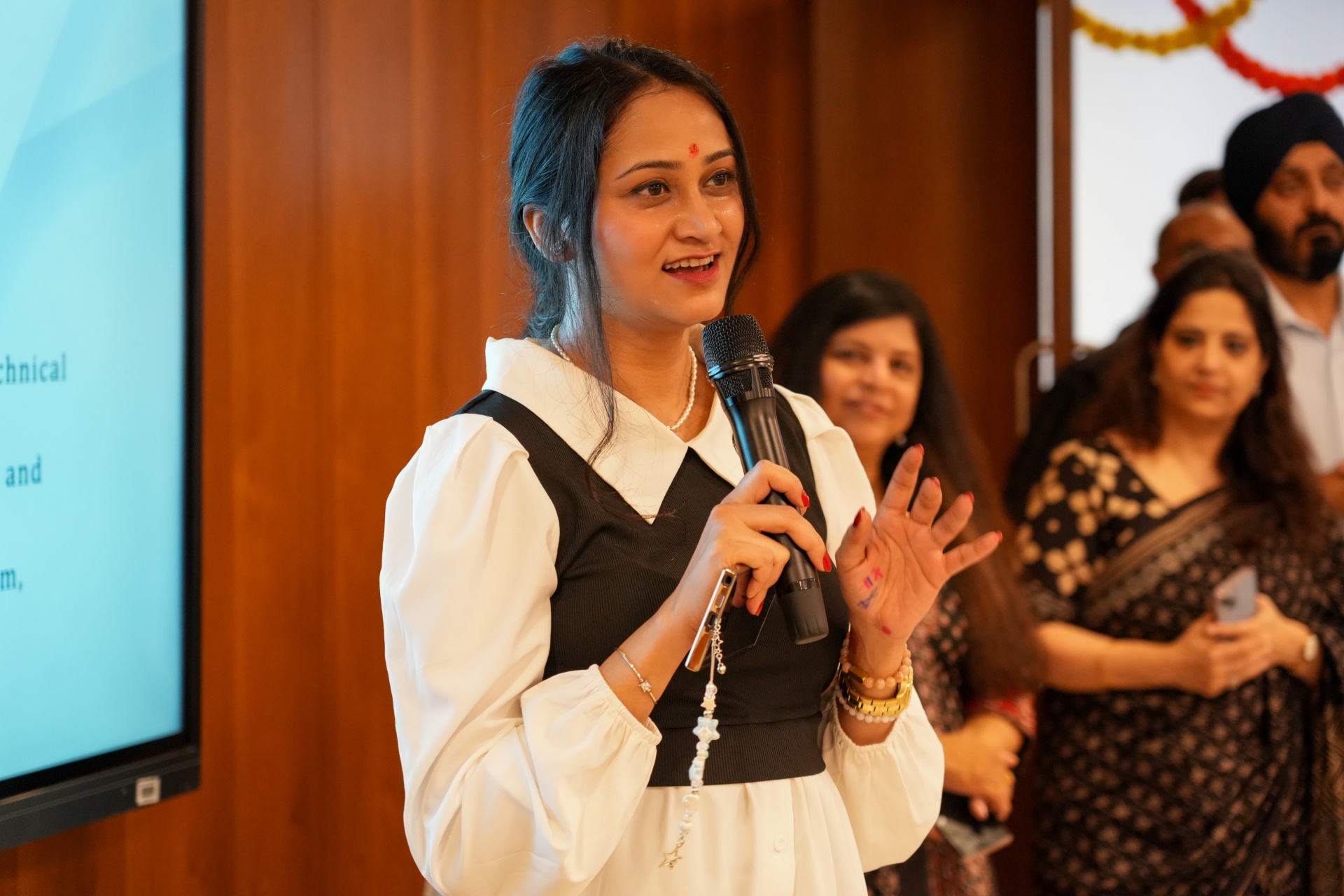
Most club launches receive ceremonial attention. Few represent structural institutional responses to an industry-wide hiring gap. The club for Women in Tech (WIT) was inaugurated at Parul University on 6th June 2026. It is a platform made to fill the gap between corporate diversity hiring intent and female candidates ready on campus. Ms. Sanjana Sipani, University Recruitment and Experience Leader for the Asia-Pacific Region at PayPal, is serving as the chief guest. The event witnessed the formal start of a platform built for women and to support them by Parul University’s Placement Cell, with almost 800 founding women members.
This article documents the inauguration itself: ceremony, leadership, club structure, and institutional significance. The substantive keynote content delivered by Ms. Sipani is treated separately.
Background: why the WIT Club, and why now
The Women in Tech Club was conceived as a direct institutional response to a measurable industry gap. Across India and globally, technology employers are placing growing emphasis on gender diversity in hiring strategy. Yet the gap between corporate diversity intent and the availability of confident, well-prepared women candidates from technical disciplines persists structurally. Parul University’s Training and Placement Cell identified this gap and chose to address it through sustained, structured intervention rather than ad-hoc campaigns or one-time events.
- The industry-side reality. Multinational corporations and government-backed initiatives have increased emphasis on women hiring in technology roles. The supply of campus-ready women candidates with portfolios, technical depth, and interview-ready confidence has not kept pace with demand.
- The campus-side gap. Women students across Computer Science, Information Technology, Artificial Intelligence, Cyber Security, Robotics, and allied streams often lack dedicated preparation infrastructure for the marquee women-in-technology programmes that anchor diversity hiring pipelines globally.
- The structural response. The WIT Club is positioned as Parul University’s institutional answer: targeted preparation for programmes like the Google Girl Hackathon, Amazon WOW, and Goldman Sachs Women’s Code Sprint, combined with sustained training in coding, problem-solving, portfolio development, and interview strategy.
Chief guest: Ms. Sanjana Sipani
The choice of inaugural guest reflected the WIT Club’s underlying philosophy. Ms. Sanjana Sipani currently serves as the University Recruitment and Experience Leader for the Asia-Pacific Region at PayPal, where she leads early talent strategy, campus hiring, and employer experience across one of the world’s most respected fintech organisations. Prior to PayPal, she held a significant role at Samsung, giving her a rare dual perspective on talent acquisition across consumer electronics and financial technology, two of the most competitive hiring verticals in the global industry.
With over 22,000 LinkedIn followers and a reputation as a thought leader on inclusive hiring, talent development, and workplace belonging, Ms. Sipani is widely regarded as one of India’s most influential voices on early talent strategy. Her professional ethos, rooted in the intersection of strategic hiring, human intuition, and data-driven decision-making, resonates directly with the WIT Club’s founding philosophy. Her presence at the inauguration was active, generous, and curious throughout, from the welcome ceremony at the entrance through the final one-to-one mentoring session.
Arrival and welcome ceremony
Ms. Sipani was greeted on arrival by Dr. Parul Patel, who presented her with a bouquet of flowers to begin the day. The formal welcome at the entrance of the Lakshya Building set the tone for what followed. Ten women students, five on each side, formed a ceremonial V-shaped formation at the entrance. Each held a placard bearing her personal aspiration in technology, written in her own words. All wore matching black t-shirts with ‘Women in Tech’ across them, establishing a group identity and shared purpose from the first visible moment of the event.
Ms. Sipani paused at the entrance to read each placard individually, speak with the students who had written them, and take photographs. She engaged through questions and active listening rather than ceremonial acknowledgment. A short cultural performance enhanced the welcome, creating an atmosphere that was simultaneously celebratory and personally connected. The students who participated in the ceremonial welcome reported that the engagement felt substantive rather than performative, which set expectations for the rest of the day.
Also Read: Lakshya 2047 inaugurated at Parul University.
Ribbon cutting and formal inauguration
Following the welcome ceremony, the formal inauguration of the Women in Tech Club took place at the Lakshya Building, with Ms. Sipani conducting the ribbon-cutting ceremony. The cutting of the ribbon marked the official launch of the WIT Club as a recognised institutional body within Parul University. The inauguration area was designed to reflect the spirit of the occasion: purposeful, modern, celebratory. University branding was displayed prominently alongside the WIT Club identity, signalling that the initiative carried the full institutional weight and backing of Parul University’s leadership rather than operating as an isolated student initiative.
Address by Pro Vice Chancellor Dr. Kunjal Shah
The programme then moved to the university auditorium, where Dr. Kunjal Shah, Pro Vice Chancellor of Parul University, delivered an address that was widely regarded as motivating and institutionally significant. Dr. Shah brought the perspective of an academic leader and a woman who has navigated the highest levels of university administration, providing a living example of the kind of professional trajectory the WIT Club seeks to inspire in its members.
Her address covered the university’s commitment to gender equity in education and employment, the structural support being extended to the WIT Club, and her own perspective on what it means to be a woman in a field that demands both intellectual rigour and personal resilience. The remarks were notable as much for their authenticity as for their content. The address landed as a message from lived experience rather than from policy.
Also Read: Sanjana Sipani’s WIT Club Keynote: Four Mantras for Women in Tech
The Lakshya 2047 lab tour
As part of the visit, Ms. Sipani toured the Lakshya 2047 Centre for Future Skills, covering the labs that anchor Parul University’s industry-credentialing architecture. Her tour included the AR/VR, AI/ML, robotics, iOS app development, and computer science labs.
In her subsequent LinkedIn reflection on the day, Ms. Sipani highlighted the impression created by students who were learning through building rather than purely through instruction. The observation matters institutionally: the Lakshya 2047 labs operate on supervised hands-on training rather than purely theoretical curriculum, which is the kind of learning model that produces graduates with portfolios rather than just transcripts. The lab tour gave the chief guest concrete operational evidence of how Parul University’s technical infrastructure supports the kind of preparation the WIT Club aims to formalise for women students specifically.
The WIT Club: structure, scope, and member trajectory
The Women in Tech Club is not an extracurricular addition. It is a structured, mission-driven platform with clear objectives and a defined developmental pathway.
- Founding membership. Over 800 women students enrolled at inception, representing one of the larger women-in-technology communities within any single Indian university.
- Disciplinary scope. Members span Computer Science, Information Technology, Artificial Intelligence, Cyber Security, Robotics, and allied streams. The cross-disciplinary breadth supports diverse career trajectories rather than single-track placement preparation.
- Women mentors and trainers. All mentors and trainers associated with the club will be women industry professionals with direct experience from the sectors where members aspire to work. The deliberate choice reinforces the club’s core philosophy that representation matters not only at the level of aspiration but at the level of instruction.
- Competition preparation pipeline. The club prepares members specifically for the most prestigious women-in-technology competitions and hiring programmes in India, including the Google Girl Hackathon, Amazon WOW, and Goldman Sachs Women’s Code Sprint. These are pipelines into diverse hiring funnels at major technology employers.
- Training intensity. Members receive intensive, sustained preparation including daily focused engagement on coding, problem-solving, and technical skill-building, alongside professional readiness training covering communication, portfolio development, LinkedIn presence, and interview strategy.
Institutional significance: closing the diversity-supply gap
The inauguration of the WIT Club reflects sustained effort by the Training and Placement Cell to understand industry trends and respond with structural initiatives rather than ad-hoc interventions. The creation of the club emerged from watching shifts in the diversity hiring marketplace and recognising that intent on the corporate side requires matching infrastructure on the campus side.
Through establishing a platform that is industry-aligned, dedicated, and systematic, the Training and Placement Cell has built a mutual benefit between hiring companies and students: students gain access to community, training, and preparation; companies gain access to a dependable pool of qualified women candidates with the confidence and portfolio depth to succeed. The diversity-supply gap that has constrained corporate hiring strategies is being addressed by Parul University’s proactive institutional design.
There is a message that gets conveyed through this initiative. A dedicated, supportive community sends a clear institutional message that women in technology are valued, their goals, ideas, and plans are meaningful, and the university promises to resource their success. The community that gets built becomes part of the preparation, which translates into results.
Post-event reflection: public endorsement at scale
The impact of the inauguration extended well beyond the campus boundaries. Following her visit, Ms. Sipani published a detailed personal reflection on LinkedIn that drew significant engagement: 247 reactions, 13 comments, and 2 reposts at the time of documentation. Her account of the day was candid and generous.
She wrote of arriving on campus feeling exhausted and leaving with substantially more energy than she had brought, attributing the shift to the atmosphere that students, faculty, and organisers had collectively created. She highlighted the curiosity in the room, the thoughtful questions, the willingness to challenge ideas, and what she described as a genuine desire to learn and grow. Her post explicitly credited the faculty and the WIT Group, acknowledging the collective effort that made the day possible. The post was tagged with #PayPal, #WomenInTech, and #UniversityRelations, providing a public endorsement from one of the Asia-Pacific region’s most respected hiring leaders, permanently associated with Parul University’s name in a professional network of over 22,000 followers.
FAQs/Quick Answers
Why did the Women in Tech (WIT) Club launch at Parul University?
The Women in Tech (WIT) Club was launched at Parul University on 6th June 2026. The purpose of the club is to provide training and skills to the women in computer science, AI, IT, cybersecurity, robotics, and many other related subjects. So that they become placement-ready and the gender gap is reduced. The club has over 800 founding members and works under the training and placement cell of Parul University.
Who inaugurated the WIT Club and what is their background?
Ms. Sanjana Sipani, University Recruitment and Experience Leader for the Asia-Pacific Region at PayPal, inaugurated the WIT Club as chief guest. Prior to PayPal, she held a significant role at Samsung, providing dual perspective across consumer electronics and financial technology hiring. With over 22,000 LinkedIn followers, she is widely regarded as one of India's most influential voices on early talent strategy and inclusive hiring. Dr. Kunjal Shah, Pro Vice Chancellor of Parul University, also delivered an address at the inauguration.
Which women-in-technology programmes will WIT Club members be prepared for?
The club prepares members specifically for the most prestigious women-in-technology competitions and hiring programmes in India, including the Google Girl Hackathon, Amazon WOW, and Goldman Sachs Women's Code Sprint. These programmes function as pipelines into diverse hiring funnels at major technology employers. Members receive intensive sustained preparation in coding, problem-solving, technical skill-building, communication, portfolio development, LinkedIn presence, and interview strategy, with all mentors and trainers being women industry professionals.
How does the WIT Club fit Parul University's broader institutional commitment to gender equity?
The WIT Club operates as a structural response to the gap between corporate diversity hiring intent and the availability of campus-ready women candidates from technical disciplines. The Training and Placement Cell identified this gap and built the club as a sustained intervention rather than an ad-hoc initiative. The club operates with full institutional backing including resources, faculty engagement, infrastructure access at the Lakshya Building, and integration with the broader Parul University ecosystem covering programme delivery, career preparation, and industry partnerships.