Sustainability commitments from universities are easy to declare and difficult to operationalise. The substantive question is whether the campus is structured so that waste does not leave it, water does not leave untreated, and energy is generated within the boundary at a scale sufficient to reduce external dependency. Parul University’s Sustainable Campus 2047 framework belongs to a small group of Indian institutional programmes meeting this threshold.
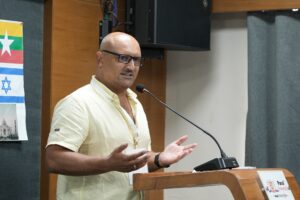
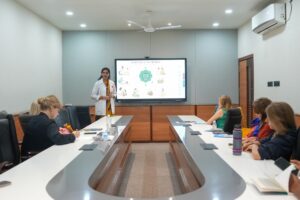
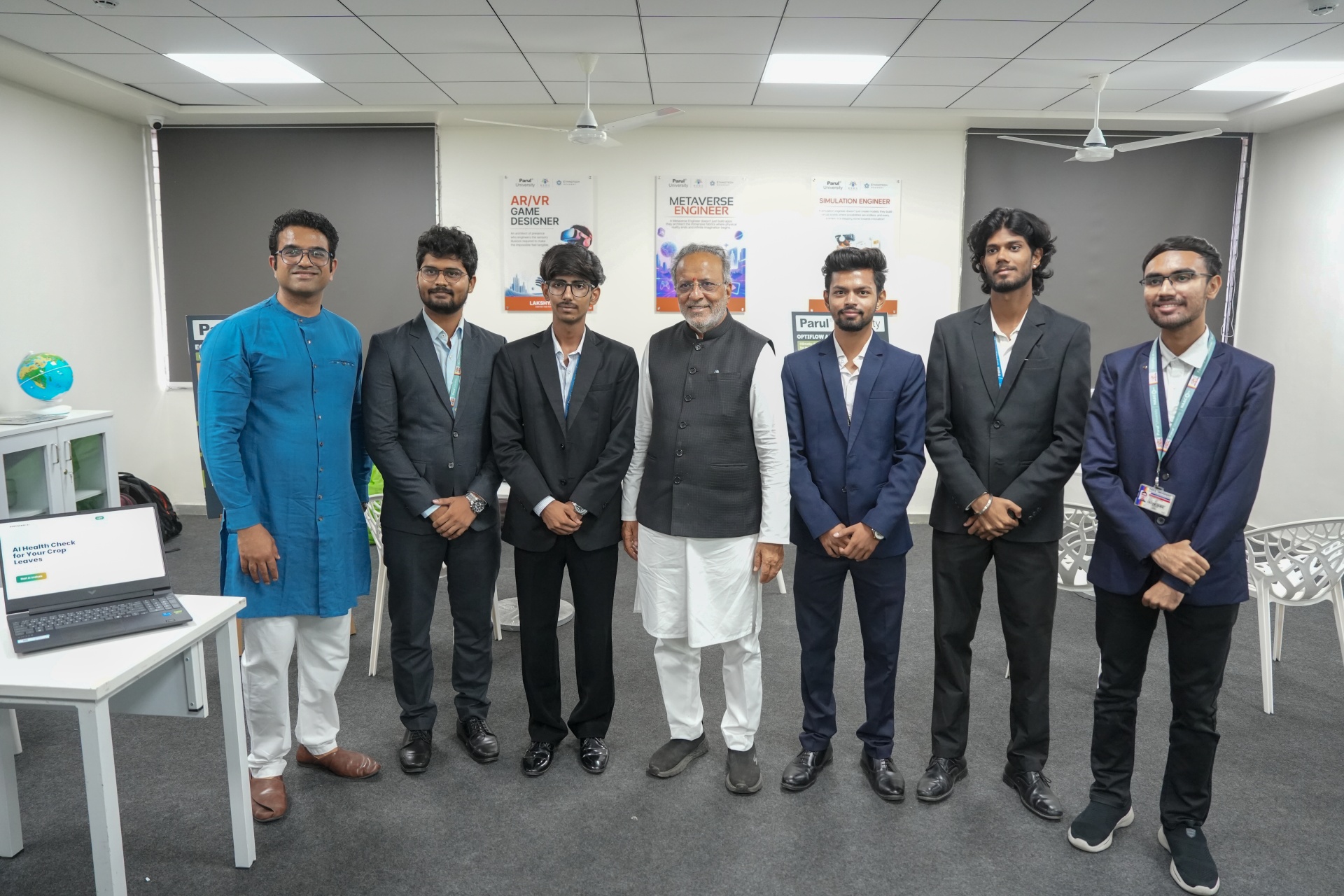
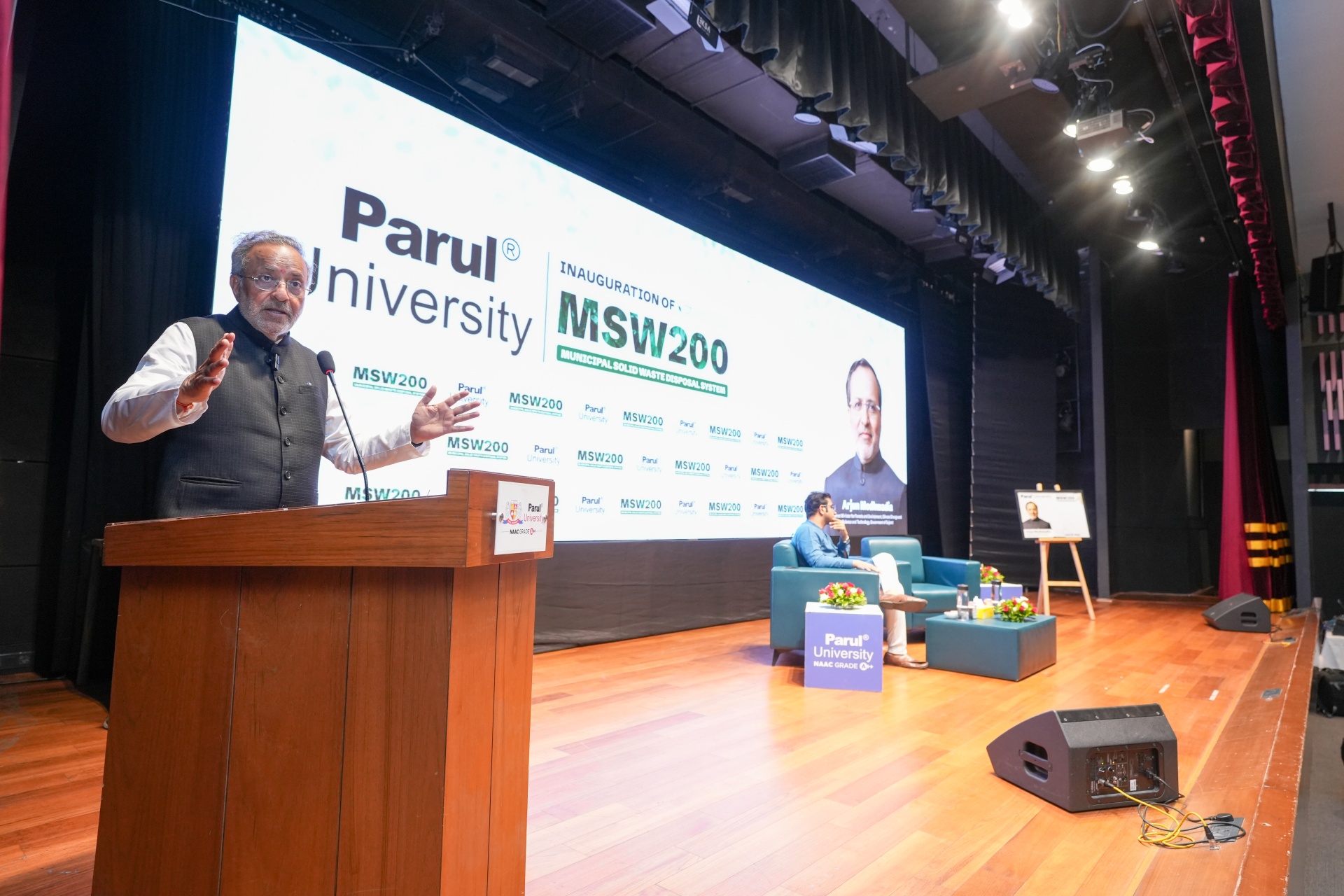
This exclusive vision & framework was executed on 19th June 2026, amidst the visit of Honourable Shri Arjun Modhwadia Ji – Cabinet Minister of Forest & Environment, Climate Change & Science and Technology. He inaugurated the MSW 200 Municipal Solid Waste Disposal System , validated the framework and spoke to students regarding sustainability AI projects from the Environment Hackathon 2026 , designed to surround the real-world infrastructure.
The Sustainable Campus 2047 framework: what it means in practice
Long-horizon sustainability frameworks vary in how operationally they are conceived. The weakest version is a target year attached to ambition statements without specific intermediate infrastructure. The strongest version connects a target year to physical infrastructure already operational today, with the framework articulating how the existing pieces add up to the long-horizon vision. Parul University’s Sustainable Campus 2047 belongs to the second category.
The framework is structured around six interconnected pillars that together define what a fully circular campus operationally looks like: biodiversity that flourishes through active conservation work, water treated as a precious resource subject to continuous recycling and reuse, waste reframed as a resource to be transformed into energy and materials, energy generated from renewable sources at meaningful campus-scale, mobility shifted toward low-carbon options, and education designed to produce graduates capable of carrying these commitments into their professional lives.
The structural insight underlying the framework is that none of these pillars works without the others. A solar power plant without complementary low-carbon mobility infrastructure leaves transportation emissions unaddressed. Sewage treatment without reuse mechanisms leaves treated water flowing back into rivers rather than supporting on-site irrigation. Waste-to-energy infrastructure without curriculum integration produces graduates who do not understand how to build similar systems elsewhere. The Centre for Sustainability connects the physical infrastructure to the academic and research work that makes the connections explicit.
Waste as resource: MSW200 and the circular waste system
The MSW200 Municipal Solid Waste Disposal System inaugurated by the Cabinet Minister on 19 June 2026 is the most recent addition to Parul University’s waste infrastructure but should be understood as part of a broader circular waste system rather than as a standalone facility. The plant operates on a gasifier mechanism that converts solid waste into usable energy, with scientific segregation at source feeding the conversion process and reducing the volume of material that would otherwise require landfill disposal.
- Solid waste processing. The MSW200 plant converts segregated waste into usable energy and produces material that the University uses for road construction within the campus, ensuring that solid waste does not leave the campus unaccounted for.
- Organic waste conversion. A separate biogas plant on the campus converts food and organic waste from daily meals at hostels and cafeterias into biogas, providing direct energy generation from material that would otherwise enter the conventional waste stream. The MSW200 plant contributes to this biogas infrastructure as well.
- Wastewater treatment and reuse. Water from washrooms and bathrooms across the campus is treated within the campus’s own sewage treatment plant and reused for purposes such as garden irrigation, rather than being allowed to leave the campus untreated. The Cabinet Minister referenced European practice where treated sewage water is reused even for drinking after processing to zero-bacteria standards, observing that India has not yet reached cultural acceptance of that level of reuse but that the underlying technical capability is well within reach.
- Source-segregation discipline. All of the above processing depends on consistent segregation at source. The University maintains source-segregation infrastructure across the campus to ensure that waste streams arrive at processing facilities in the form required for productive conversion rather than as mixed streams that require expensive sorting before any useful processing can begin.
He even contrasted this self-contained model with conventional household practice, where garbage is handed to municipal collection, and households bear no further responsibility for what happens to it. The substantive position underlying the campus design is that responsibility for waste does not end at the boundary of the entity that generated it, and that institutional infrastructure can be built around this position rather than around the conventional handover model.
Water stewardship: rainwater harvesting and treated reuse
Water stewardship at the campus combines source-side capture with end-side reuse, producing a closed-loop water system whose operational characteristics distinguish it from conventional university water management. The campus operates rainwater harvesting systems that capture rainfall during the monsoon season for subsequent use, reducing dependency on external water supply sources. The sewage treatment plant referenced in the previous section completes the loop by converting wastewater into reusable water for landscaping and adjacent non-potable applications.
Parul University participates in the Universal Water Registry as part of its commitment to responsible water stewardship. The Registry serves as a verification framework documenting water commitments by institutions, providing an external benchmark against which claims can be measured. The water work sits alongside the Sustainable Development Goals, the framework aligns with, particularly Clean Water and Sanitation.
Energy infrastructure: solar power and low-carbon mobility
Energy is the pillar of the Sustainable Campus 2047 framework, most exposed to the broader national policy environment. India’s stated targets are concrete and ambitious: 500 GW of renewable energy capacity by 2030 (with 260 GW already constructed and 100 GW allocated to Gujarat), renewable majority energy by 2050, and zero carbon footprint by 2070 as part of the global timeline. Universities have specific roles within this framework that go beyond institutional consumption.
- On-campus solar generation. Parul University operates a Solar Power Plant contributing to direct energy generation within the campus boundary. The economics of campus-scale solar have reversed in two decades: solar electricity once cost Rs. 16-17 per unit against grid power at roughly Rs. 2 per unit, but today grid power is Rs. 7-8 per unit while solar is approximately Rs. 2.85 per unit, making campus-scale solar economically straightforward rather than requiring sustainability-premium justification.
- Low-carbon mobility. The campus promotes electric vehicles and bicycles as everyday transportation options, alongside other sustainable mobility infrastructure designed to lower campus-internal emissions. The mobility pillar complements the energy generation pillar because shifting transportation to electric platforms only meaningfully reduces emissions when the underlying electricity is itself renewable.
- Integration with the International Solar Alliance. India co-founded the International Solar Alliance with France in 2015, with the Alliance now headquartered in Delhi and including more than sixteen member nations. Campus-scale solar deployments are the operational expression of the international framework the Alliance organises, with Indian universities increasingly serving as visible exemplars of what the framework looks like in practice.
Biodiversity: the 200+ acre ecosystem and conservation programmes
Biodiversity is the pillar where land area matters most, and Parul University’s Vadodara campus spans more than 200 acres. The scale supports biodiversity work in ways that would not be possible on smaller campuses. The University is being developed into a thriving green ecosystem through extensive plantation drives, biodiversity conservation efforts, and the active development of a forest within the campus boundary.
Every tree planted today is an investment for tomorrow. Tree maturation timelines mean that planting decisions made in the 2020s will compound across the 2030s and 2040s, with full ecosystem maturity arriving around the framework’s 2047 horizon. The biodiversity work sits within Gujarat’s broader conservation context: mangrove plantation across one lakh hectares of coastline and programmes targeting the restoration of tiger and cheetah populations in the Kutch region. Of seven large cat species globally, four are native to India; Gujarat’s aim is to return all four. The Ministry of Environment, Forest and Climate Change provides the national policy framework that institutional biodiversity work operates within.
Education: the Centre for Sustainability and curriculum integration
Physical infrastructure without academic integration produces buildings that exist on a campus rather than knowledge that students carry away from it. The Centre for Sustainability at Parul University addresses this integration directly, connecting the operational infrastructure described above to the curriculum, research, and innovation work that surrounds it.
The Centre’s function spans interdisciplinary research projects, sustainability coursework integrated across faculties, innovation infrastructure supporting student-built sustainability projects, and the institutional framing positioning sustainability as an academic priority rather than only operational. Students encounter sustainability as both physical environment and an intellectual discipline.
The Environment Hackathon 2026, which produced AgroSense, EcoSathi, and Optiflow AI as winning projects, is the most visible recent illustration of the Centre’s connection to student capability. The hackathon format directly tests the proposition that students passing through the campus can build sustainability work that meets external technical scrutiny. The Cabinet Minister’s substantive engagement with the three winning teams during his 19 June 2026 visit, including pointed questions on datasets, methodology, and deployment, suggests the proposition holds.
FAQs
Define the framework of Sustainable Campus 2047 at Parul University?
This framework is an institutional vision, structured around 6 core pillars. Biodiversity, water, recycling and reuse water for energy and material, low carbon options, and a holistic course are designed to produce commitments into real-world impact. This framework is designed based on operational infrastructure rather than just basic statements as MSW200 waste to energy plant, solar power generation, sewage treatment with reuse, biogas conversion of food and waste, and infinite biodiversity work across a 200+ acre campus. It’s the perfect combination of academic research meeting real-time impact!
How does Parul University's circular waste system work?
Parul University operates a circular waste system in which no waste leaves the campus unaccounted for. Solid waste is converted into usable energy by the MSW200 Municipal Solid Waste Disposal System, which was inaugurated on 19 June 2026 by Cabinet Minister Hon'ble Shri Arjun Modhwadia. The plant operates on a gasifier mechanism with scientific segregation of waste at source, feeding the conversion process. Material residues from solid waste processing are converted into material used for road construction within the campus. Food and organic waste from daily meals at hostels and cafeterias is processed through a separate biogas plant that generates energy from material that would otherwise enter the conventional waste stream. The MSW200 plant also contributes to this biogas infrastructure. The system reduces the University's dependency on landfill disposal and operationalises the institutional position that responsibility for waste does not end at the boundary of the entity that generated it.
What energy and mobility infrastructure does Parul University maintain?
Parul University maintains on-campus solar power generation through a Solar Power Plant that contributes to direct energy generation within the campus boundary. The economics of campus-scale solar have shifted substantially over the past two decades, with solar power now available at approximately Rs. 2.85 per unit versus conventional grid power at 7 to 8 rupees per unit, making campus-scale solar deployment economically straightforward rather than requiring sustainability-premium justification. The University promotes electric vehicles and bicycles as everyday transportation options alongside other sustainable mobility infrastructure designed to lower campus-internal emissions. The integration of low-carbon mobility with renewable electricity generation completes the loop: shifting transportation to electric platforms only meaningfully reduces emissions when the underlying electricity is renewable. The infrastructure operates within India's broader policy framework targeting 500 GW renewable energy capacity by 2030 and a zero-carbon footprint by 2070.
What role does the Centre for Sustainability play at Parul University?
The Centre for Sustainability at Parul University connects the campus's operational sustainability infrastructure to the curriculum, research, and innovation work that surrounds it. Its function spans interdisciplinary research projects, sustainability-themed coursework integrated into degree programmes across faculties, innovation infrastructure that supports student-built sustainability projects, and the broader institutional framing that positions sustainability as an academic and research priority rather than only an operational one. The Environment Hackathon 2026, which produced AgroSense, EcoSathi, and Optiflow AI as winning student-built AI sustainability projects, illustrates the Centre's connection to student capability. The hackathon format directly tested whether students passing through the campus could build sustainability work meeting external technical scrutiny, and the Cabinet Minister's substantive engagement with the three winning teams during his June 2026 visit suggested the proposition held.