

The two worlds social work engages: child rights and tribal rights
Social work in India spans many populations, but two of the most significant are children and tribal communities, and the Samarpan guests represented one each.
Child rights and rights-based development
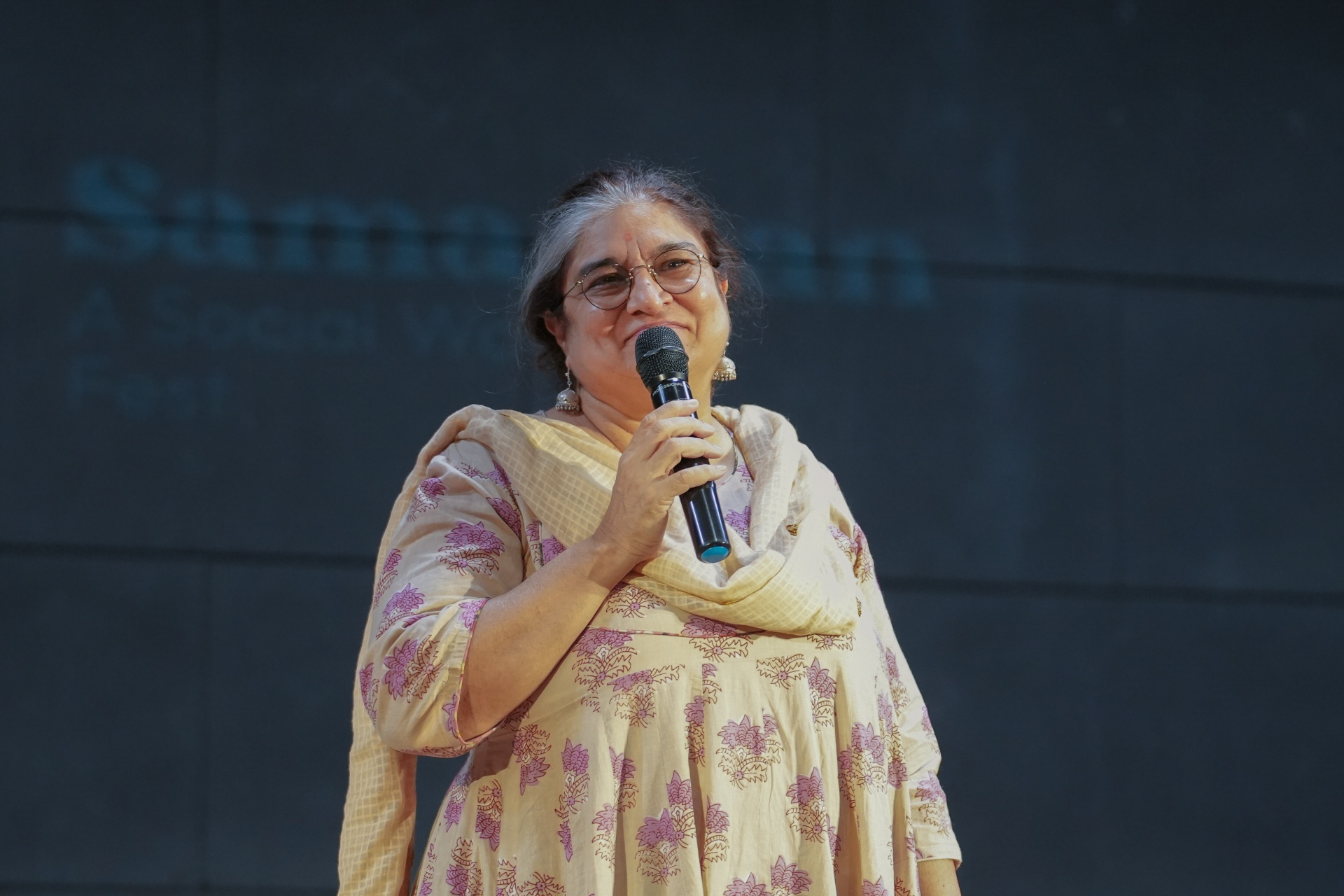
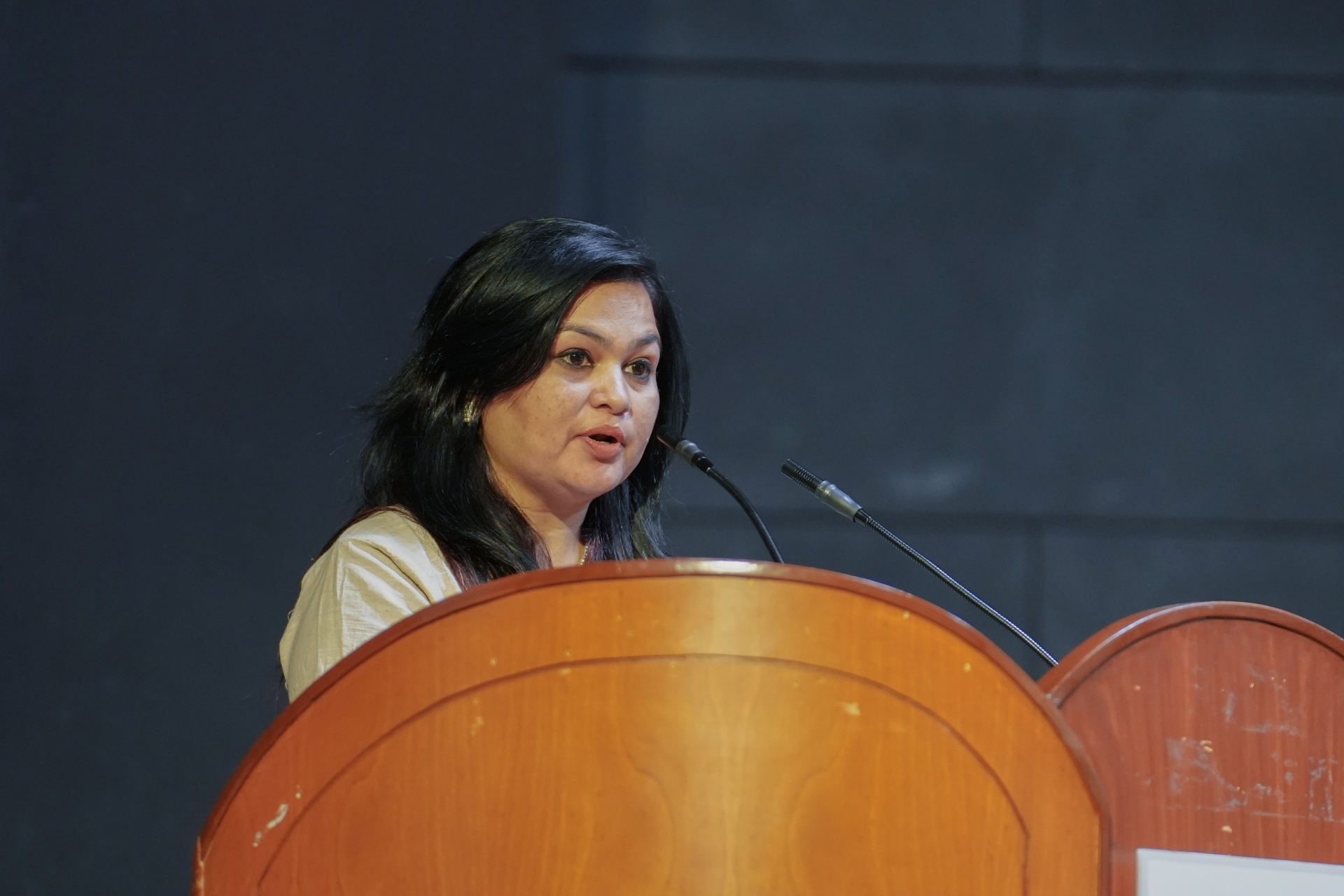
The Chief Guest was Puja Marwaha, Chief Executive Officer of CRY (Child Rights and You), one of India’s most established child-rights organisations and the recipient of the 2018 Olga Alexeeva Memorial Prize for Social Innovation. Her career illustrates the rights-based approach: interventions for children should begin with an understanding of what they are entitled to, rather than treating their welfare as a matter of discretionary charity. This shift may sound subtle, but it has significant implications. It changes who is accountable, how a programme is designed, and how success is measured. A charity provides a child with a meal; a rights-based organisation asks why the child was hungry, who was responsible, and which entitlement failed, then works to address the underlying system. For students considering social work as a career, understanding this distinction is the first real test of the field.
Tribal rights, public health and community development
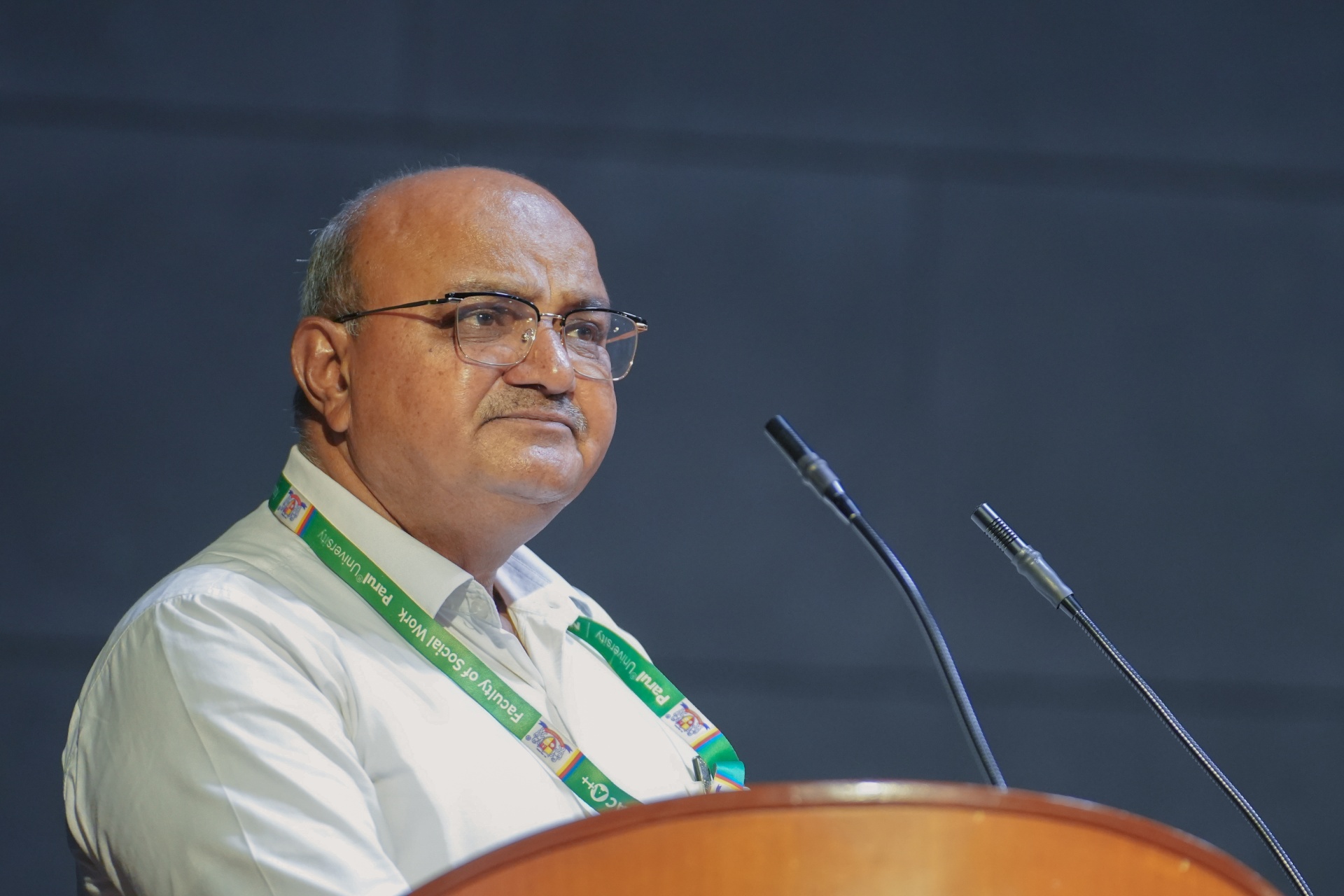
The Honorary Guest was Padma Shri Dr. Sudarshan Hanumappa, also known as Dr. H. Sudarshan, a veteran social worker and tribal-rights activist. He served as Joint Secretary and Vice President of the Voluntary Health Association of India and received the Right Livelihood Award, also known as the Alternative Nobel Prize, in 1994 for developing practical and replicable solutions to pressing problems.
His career represents another branch of social work: decades of community development and public health initiatives for tribal populations, among the most under-represented groups in Indian policy. His work promotes health as a right rather than a service delivered to passive recipients, placing it within a broader rights-based agenda for communities often overlooked by mainstream development. While much child-rights work takes place in urban and organisational settings, tribal-rights work is often remote, long-term, and deeply rooted in fieldwork. The social work profession needs both.
The field matters more than the syllabus
Social work has a recurring training problem, namely, a department may teach theory, values and methods, but the field is where they are tested, and students often meet that gap only after they graduate. The Samarpan event organised by the Social Work Faculty. The practitioners visit the campus where they interact with the students. They addressed the students, answered their queries and guided them. They could witness the interaction between two laureates and FSW students. They also interacted with the faculty. The discussion focused on social justice, child rights, tribal rights and community development.
The event was not driven by any particular agenda, and the stated outcomes, more grounded understanding of the profession, awareness of real-world social issues, and professional ethics, were goals in and of themselves rather than means to some further ends. That very honesty is a valuable lesson as it reflects a certain social work ethos that avoids overstating the case, as communities served by social workers cannot be let down, as they often have little resources to deal with issues or even to take advantage of promises made to them by others.
Studying social work at Parul University
Studying at Parul University is altogether a new and learning-filled experience. The faculty are experienced who have worked in the subject matter. With their on-the-ground experience, they teach students. Students get practical exposure too through internships at NGOs, hospitals, CSR offices, etc. The university is NAAC A++ accredited with 3.55 CGPA. It offers BSW (Bachelor of Social Work) and MSW (Master of Social Work). These programmes offer classroom training with practical learning through coursework. They get to participate in events like Samarpan. Samarpan helps students to connect with practitioners working on child rights, tribal rights and community health. The institute also organises programmes on gender equality. It focuses on inclusion, its impact on society, and other social issues. Social work is a profession that works for the people. It focuses on human dignity, justice and sustained work with non-deserving communities. The qualities both Samarpan guests built their careers on.
Frequently asked questions
What happens in the work of a social worker?
Social work is a profession about protecting and promoting the rights, dignity and wellbeing of children and people who are excluded or marginalized including women and people living in poverty. Through advocacy, community development, programme design and direct intervention, modern social work is rights-based not charity-based, that is, about what people are entitled to and the systems that are failing them. It is a mix of classroom work and lots of on-the-job experience and it covers organisations from a grassroots community level up to national rights groups such as CRY and the Voluntary Health Association of India.
What is the difference between rights based approach and charity approach?
Charity approach is discretionary, it's based on the giver, people choose to help, sometimes at intervals. A rights-based approach begins with the entitlements already laid out in laws and policies and holds those that fall short of those entitlements accountable and corrects the situation. For instance, in child rights, a charity provides a child with a meal, a rights-based organisation asks why the child was hungry (what rights were not met), and who's responsibly (who was at fault) for that, and then tries to address the system at fault. Rights-based practice is the core of social work practice.
What are the requirements to become a social worker in India?
Typically earned first is a Bachelor of Social Work (BSW) with supervised fieldwork, and then a Master of Social Work (MSW) with supervised fieldwork. The programmes run by institutions like Parul University's Faculty of Social Work equip students for positions in NGOs, community development, child and women's rights, public health and policy and advocacy organisations. The social work degree is a hands-on program and field placements are an integral and essential component of the degree program.
What is Social Innovation in Social Work?
Social innovation involves a socially competent solution to a social problem that is actually successful and can be transferred to other communities to modify a system and not just a symptom of it. International awards like the Olga Alexeeva Memorial Prize for Social Innovation and the Right Livelihood Award are awarded for such solutions that are practicable and replicable. It's measured by durability and reach, it's not novelty, which is what sets it apart from a one-off campaign or product.





Ask most people what a social worker does, and the response often centres on charity, helping the poor, or doing good. That response is not wrong, but it is outdated. Modern social work is a rights-based profession: it begins with what people are entitled to rather than what someone chooses to give them. Anyone planning to build a career in social work should understand that it involves promoting dignity, justice, equality, and empowerment for groups that are marginalised, excluded, or denied their rights. The profession sits at the intersection of classroom theory and real-world situations that do not always unfold as textbooks suggest.
This guide explains what a career in social work actually involves, drawing on the experiences of two individuals who visited the Faculty of Social Work at Parul University.
In March 2024, the Faculty of Social Work (FSW) at Parul University organised a two-day fest, Samarpan, a Hindi word meaning commitment or dedication. The event celebrated social work, social justice, and the spirit of social change. It was designed to bring students together with two practitioners who had spent their careers in the field, offering an experience beyond traditional lectures. The pairing also provided a useful perspective on the profession itself, as the two guests worked at opposite ends of it.