Marma therapy is an Ayurvedic practice that works with the body’s vital points, known as marma, through precise, usually gentle, touch. The Sanskrit word marma means “vital” or “hidden” point. It is among the therapies international practitioners study at Parul University’s Ayurveda programs, and one of the tradition’s most distinctive. Here is a clear, educational guide to what it is and where it comes from.
What Are Marma Points?
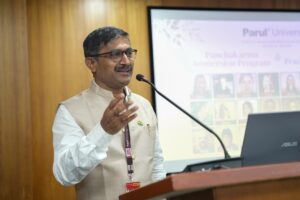
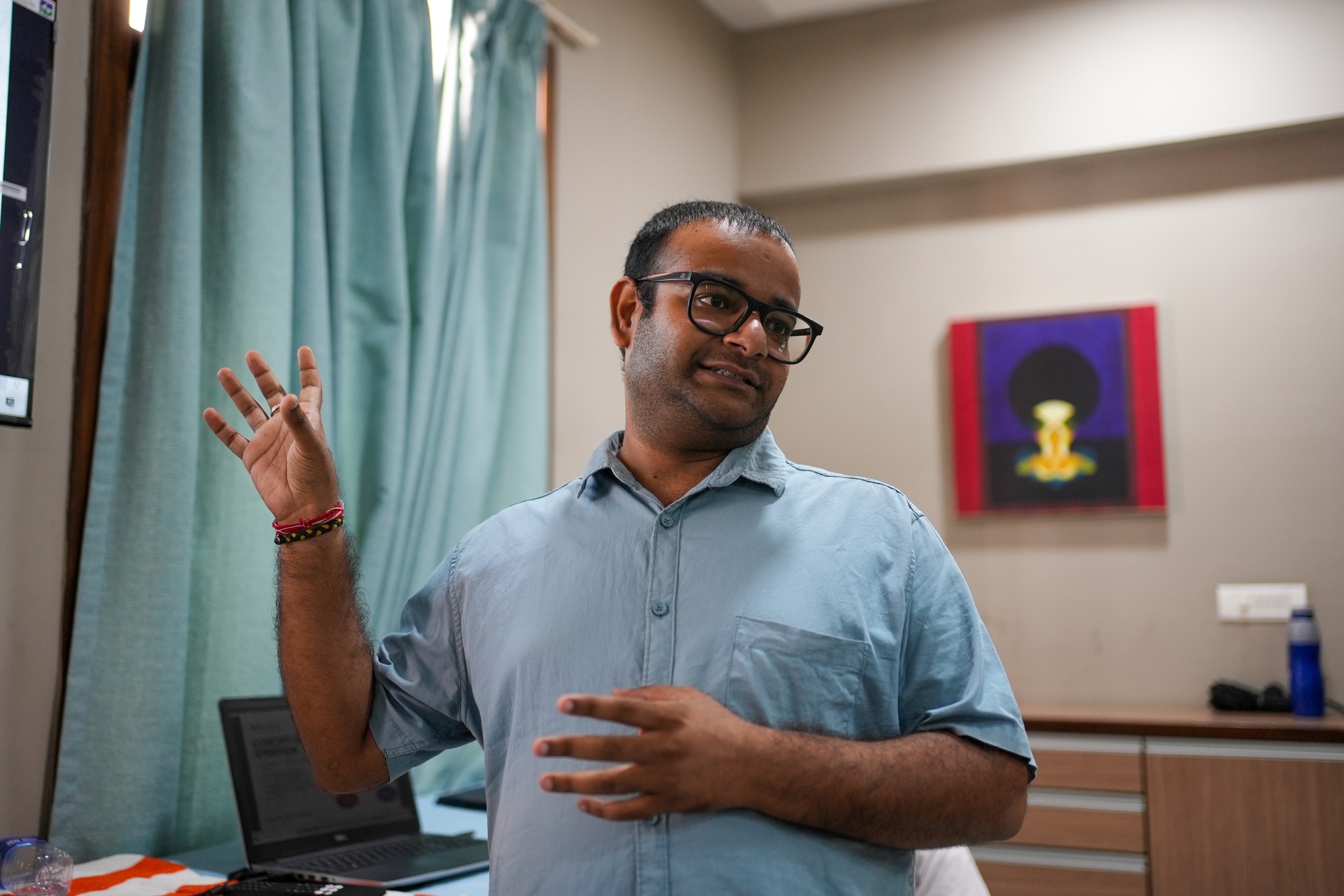
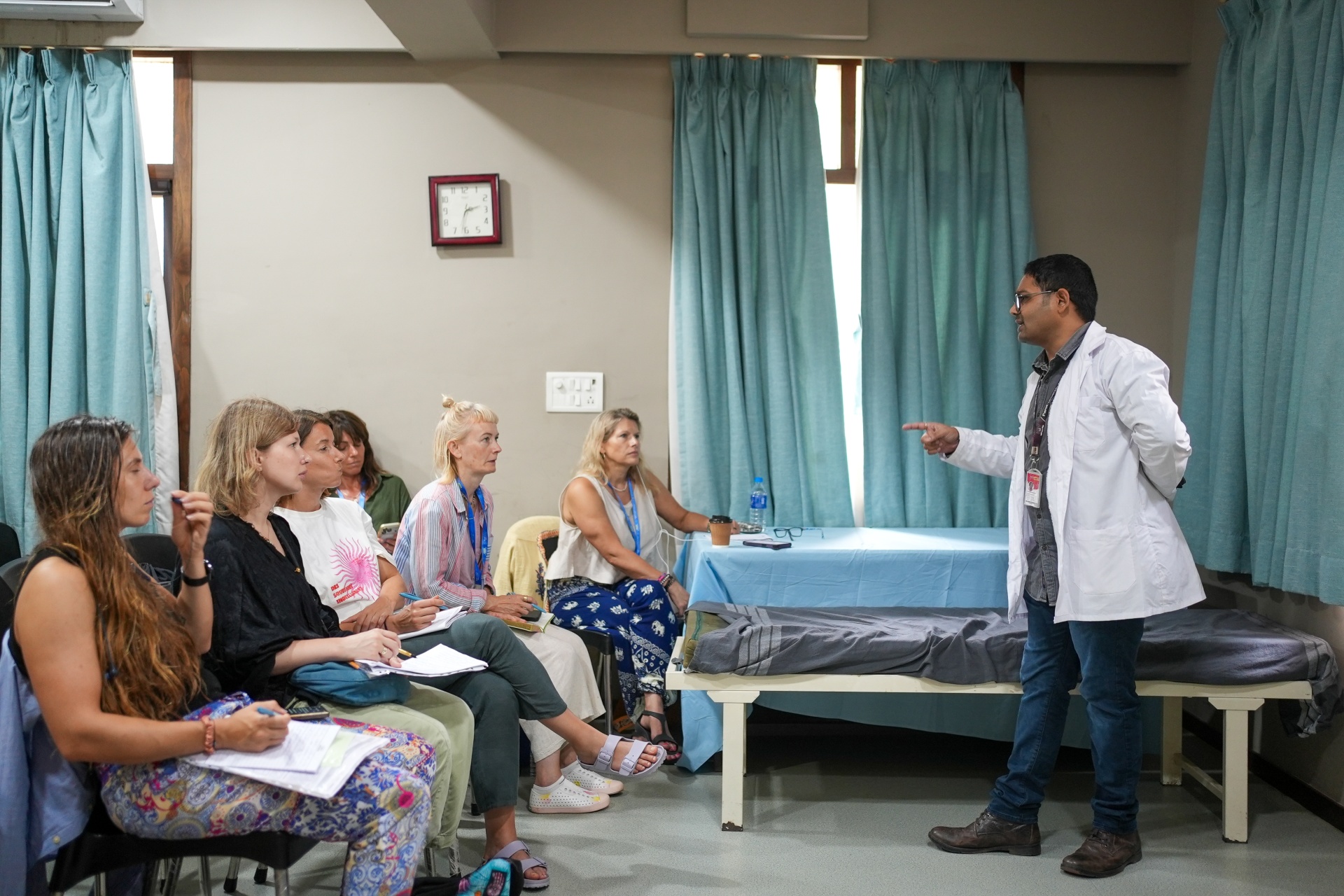
Marma therapy means finding particular points on the body and stimulating them to help a person heal. Dr. Daga made it clear that this is careful, controlled clinical work, not the harmful use of the same body knowledge.
He mostly uses it on patients with serious deformities or movement problems, like people who can’t walk or find walking hard. Picking the right point matters most, and he said you only get good at it after years of practice.
He showed this on a volunteer with a mild headache. The neck was bent forward and a point was pressed. The volunteer first felt pain and throbbing, then got relief soon after.
Dr. Daga said it goes well beyond headaches. It can affect digestion through the gastric and vagus nerves, speeding up or slowing down stomach emptying as needed. He also uses it for eating problems, for ovulation in infertility cases, and for gallbladder and kidney trouble, where the side opposite the affected organ is stimulated. For back pain and sciatica, it’s ten to sixteen seconds at a time, twice a day, for three to four days.
To find the points, his clinic uses a small low-current device along with hand palpation, since landmarks differ a little from person to person. Once a point is found, it’s stimulated with the tongue, medicated oil, or the thumb. Thumb pressure is used when a stronger effect is needed.
An Ancient Origin
Marma knowledge is genuinely old. The earliest detailed description comes from the Sushruta Samhita, the classical Ayurvedic compendium associated with surgery, in which the sage-physician Sushruta mapped the marma points. Tellingly, his original concern was partly surgical caution: he stressed that a surgeon must know these points precisely in order to avoid them, since injuring a vital point could be dangerous. The tradition also has roots in Kalaripayattu, the ancient South Indian martial art, where knowledge of vital points served both combat and healing. This dual heritage is captured in a classical principle of the practice: where a forceful blow can harm, a careful touch can help.
How Is Marma Therapy Understood to Work?
Within the Ayurvedic framework, marma therapy involves stimulating chosen points, typically through gentle pressure, massage, or touch, to support the free flow of prana through the body’s energy channels (nadis). The guiding idea is that when this flow is balanced, the body is better able to maintain its own equilibrium. It is important to be clear about the nature of these descriptions: they reflect how the practice is understood within the Ayurvedic tradition, and are offered here for education, not as medical claims. Marma is frequently combined with other Ayurvedic therapies such as oil massage and Shirodhara, as part of a broader, holistic plan.
Why It Must Be Done by a Trained Practitioner
This is the most important practical point: marma therapy is not something to attempt on yourself from a video. The name itself signals why. Because marma are, by definition, vital points, the classical texts treat them with great care, the same knowledge that guides healing touch also warns of harm from incorrect pressure. A qualified Ayurvedic practitioner is trained in the precise location of the points (traditionally measured in finger-widths relative to each person’s own body), the appropriate technique, and how to match the therapy to the individual. Marma therapy should always be approached through a properly trained, registered practitioner, never improvised.
Marma’s Place in Ayurveda Today
Marma therapy reflects a defining idea of Ayurveda: that a person is a connected whole, body, mind, and energy together, rather than a set of isolated parts. It sits alongside therapies like Panchakarma and Shirodhara within Ayurveda’s holistic approach, and interest in it is growing internationally as more people explore traditional wellness systems. For students of Ayurveda, it is a rich area of study, blending anatomy, classical text, and hands-on skill, which is why it features in both degree programs and the international immersions where practitioners from around the world come to learn.
Frequently Asked Questions
What is Marma therapy?
Marma therapy is an ancient Ayurvedic practice that works with the body’s vital points, called marma, through precise, usually gentle, touch. In Ayurvedic thought, marma points are where the physical body, subtle energy (prana), and mind meet. The practice aims, within the Ayurvedic framework, to support the balanced flow of energy, and is always performed by a trained practitioner.
How many marma points are there?
Ayurvedic tradition describes 107 marma points on the body, with the mind sometimes counted as a 108th. They were first mapped in detail in the classical Sushruta Samhita. Each is understood as a junction where muscles, vessels, bones, and joints meet and where vital energy is said to concentrate, and their locations are traditionally measured in finger-widths relative to the individual.
Is Marma therapy the same as acupressure?
They are similar but not the same. Marma therapy (from Ayurveda) and acupressure/acupuncture (from Traditional Chinese Medicine) both work with points on the body linked to vital energy, but they are understood to have developed independently, each within its own cultural and philosophical tradition, with different maps of points and different underlying concepts.