
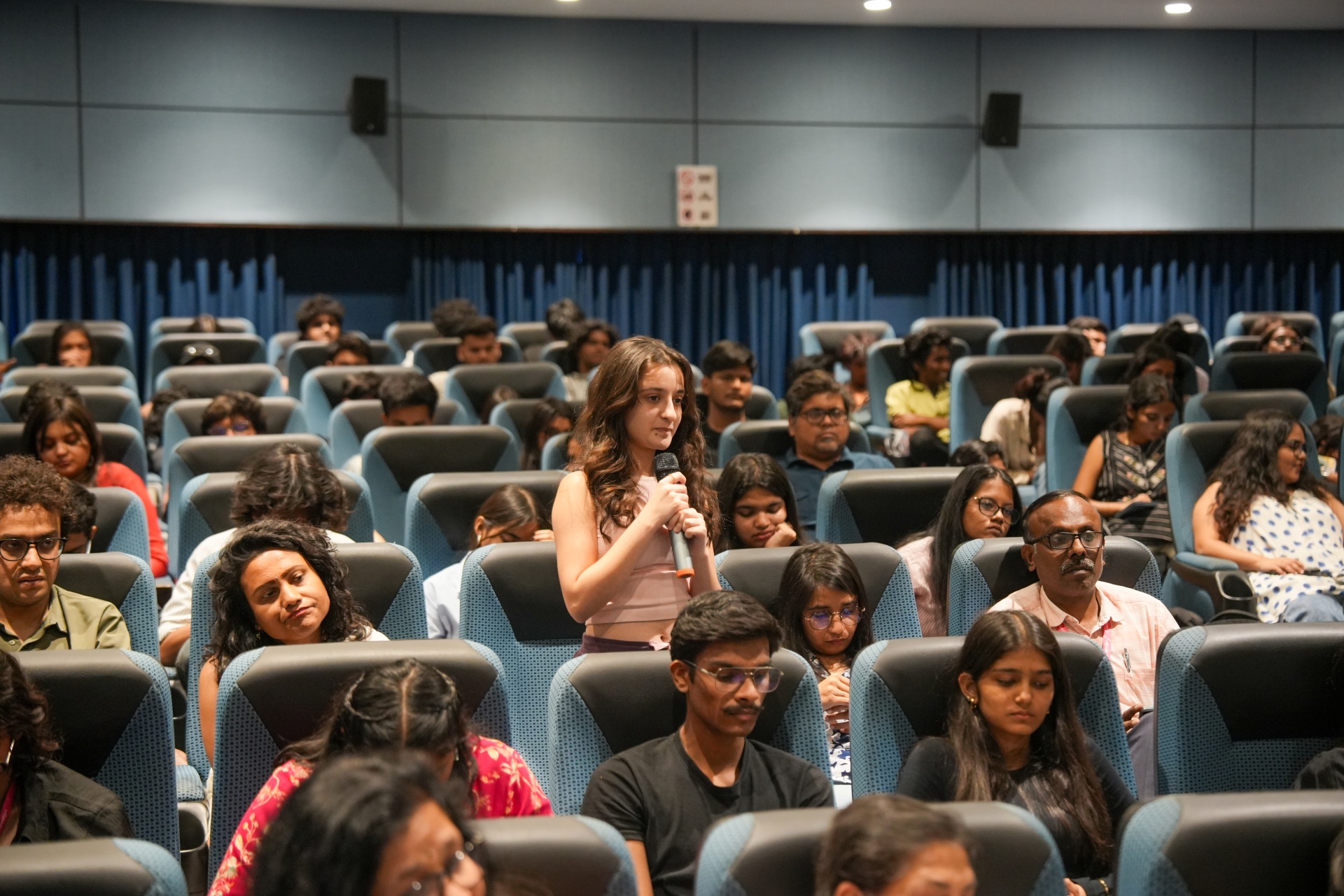
Most career-advice articles on the Indian fashion industry read like recruitment content for the fashion industry itself. But this one won’t because we have covered up the major takes by 4 Fashion Stalwarts as they spoke at VFDF 4.0. It’s an compilation of entry points into Indian Fashion – independent design by Suket Dhir, fashion production and retail by Vidyun Singh, fashion journalism and editorial by Shefalee Vasudev and fashion editing at magazine level by Shaeroy Chinoy. Their advices has surely inspired students at many levels. What follows is what they actually told the room, organised by entry path.
Path 1: Independent Fashion Design - Suket Dhir on Why a Broken Red Button Wins Woolmark
Suket Dhir is a menswear designer who won the International Woolmark Prize in 2015-16. It’s the highest global recognition for emerging designers. He has completed his education from NIFT and started building his startup gradually. His collection on Woolmark runway at a moment when the prize committe was looking for designers whose work carried cultural specificity instead of generic international polish.
The story he told PID students that as a child, his mother sewed a button back onto his heart as white thread wasn’t available, she used red colour’s thread and that’s why the off-palette button sat on the white shirt and drew everyone’s attention in the room.
“You don’t need to change the entire system. You need to change one detail.”
That observation became the framework for his design practice. He does not build collections around spectacle. He builds collections around specific, often tiny, deviations from expectation that create memorable garments. A red button on a white shirt. An unexpected cut. An unpredictable pairing of textiles.
His practical advice to students considering independent design:
- Start with the material, not the silhouette. He started with cotton because cotton in India is accessible, culturally loaded, and open to experimentation. Textile choice is strategic, not aesthetic
- Find a specific detail that only you would insert. Mass-market design has no specific details. Independent design is defined by them. The Woolmark jury is looking for the specific detail, not the generic trend
- Be patient with runway exposure. Most Indian fashion graduates rush to show at fashion week. Dhir built the label for years before showing. The slow build produced editorial consistency. The rushed version produces visibility without substance
Inside the PID exhibition: 6 departments and 300+ student projects
Path 2: Fashion Production and Retail - Vidyun Singh on Why Runway Is a Distraction
Vidyun Singh is a fashion choreographer, curator, and founder of Future Collective India. She has run a retail residency called Noun in Goa. Her core argument to PID students on 11 April was that the Indian fashion industry is over-indexed on runway moments and under-indexed on retail and production infrastructure.
Her specific case: a runway show generates social media and editorial coverage for 48 hours and then disappears. A retail residency puts a designer’s work in the hands of actual customers who wear it, provide feedback, and return for follow-up purchases. The retail residency builds a customer base. The runway show does not.
Her advice to students on career planning:
- If you want to start a label, plan the retail before planning the collection. Most Indian fashion graduates do the opposite. They produce a collection and then try to find customers. The better order is to find the customer segment first and build the collection to fit
- Fashion choreography and production are under-taught in Indian design schools. A designer who can produce a show, manage backstage logistics, and coordinate models, lighting, and music is employable immediately. A designer who only knows how to draw clothes is not
- Goa is not an exile from the Indian fashion industry. Her residency model worked because it was rooted in a specific place. A designer who tries to be everywhere ends up being nowhere.
Path 3: Fashion Journalism - Shefalee Vasudev on Why Fashion Writing Needs Socio-Political Literacy
Shefalee Vasudev is the editor-in-chief of The Voice of Fashion and the author of Stories We Wear, a book that treats Indian fashion as a lens for understanding Indian society. Her two sessions at VFDF 4.0 (on 11 April with Harsh Purohit of Cognito, and at the festival closing) made one argument repeatedly: fashion journalism in India is currently hollowed out because it has lost its socio-political framing.
Her framework: when a model walks a runway, a journalist can write about the aesthetic of the garment, or the journalist can write about the cotton supply chain that produced the textile, the labour conditions in the mill, the designer’s caste and class positioning relative to the weavers, and the political economy of Indian fashion’s international exposure. The first kind of writing is decoration. The second kind of writing is journalism.
Her practical advice to students considering fashion journalism:
- Read outside fashion. The fashion journalists whose work survives are those who read political theory, economic history, and cultural studies. Fashion is not a self-contained subject. It is a social subject
- Report on the production side, not just the runway side. Most Indian fashion writers write about shows. Very few write about the weavers, the tailors, the mills. The production-side reporting is where the meaningful journalism lives
- Accept that the revenue model for serious fashion journalism is under pressure. Brand-funded publications cannot critique the brands funding them. Independent publications like The Voice of Fashion are rare and financially precarious. Students who want to do this work must plan for the economic reality
Path 4: Fashion Editing at a Magazine - Shaeroy Chinoy on 60 Emails Over a Year
Shaeroy A. Chinoy is the Fashion Editor at ELLE India. He is an MSU Baroda alumnus who started as a bag designer in Mumbai before pivoting to fashion editing. His closing session on 11 April was the most practical career-path talk of the entire festival.
The story he told: after completing his MSU degree and moving to Mumbai, he wanted a Vogue internship. He emailed the Vogue editorial team. No response. He emailed again. No response. He emailed about every two weeks, for over a year, with no replies. Eventually, the Vogue team hired him as an intern at a stipend of Rs 3,000 a month. He lived in Mumbai on that stipend for the duration of the internship.
“60 emails over a year. That’s what got me in.”
From Vogue, he moved to other editorial roles before landing the ELLE India fashion editor position. The pattern: every role was unlocked by persistence against silence. No single email ever worked. The 30th or 50th email worked because the recipient eventually had an opening and remembered the name. If you’re an fashion enthusiast, then delay no more and enrol in PU’s Masters of Design in Fashion Merchandising and say yes to your fashion dreams with your manifested package!
His practical advice to students considering fashion editing:
- Apply before you are ready. The magazines are looking for candidates with a specific voice, not a specific resume. Students who wait until their portfolio is perfect wait forever
- Plan financially for the internship years. Rs 3,000 a month is not livable without support. Students who enter fashion editing need a financial buffer (family support, savings, or a secondary income) for the first 18 to 24 months
- Learn the production side of editorial. A fashion editor is not just someone who writes about clothes. A fashion editor coordinates shoots, styles models, manages stylists and photographers, and delivers editorial packages. The coordination skill is what separates employable fashion editors from unemployable fashion writers.
The Common Thread - Key Takeaways for Students!
The four speakers did not agree on strategy. They agreed on temperament. Each of them succeeded because of a specific, concrete choice that other candidates did not make. Suket Dhir chose the red button when other designers chose generic embellishment. Singh chose retail residency when other choreographers chose runway. Vasudev chose production-side reporting when other journalists chose celebrity coverage. Chinoy chose 60 emails over a year when other candidates chose one email.
None of these choices is romantic. Each is narrow, tactical, and possibly uncomfortable. But the Indian fashion industry in 2026 has too many generically ambitious candidates and not enough specifically ambitious ones. The specifically ambitious candidates are the ones who break in.
What This Means for Students Evaluating Fashion Design Programmes
A fashion design programme in India in 2026 is worth choosing if it meets three tests. First, does it bring working practitioners into classroom time so students learn from people currently employed in the industry? Second, does it teach production-side skills (choreography, retail planning, materials sourcing, supply chain) alongside design? Third, does it treat textile craft traditions as contemporary design material rather than historical footnote?
The Bachelor of Design in Fashion Design and Technology at PID meets these tests. Students learn directly from working practitioners through PU Talks sessions across the academic year. Production workshops are part of the regular curriculum.
Visiting artisan Manaben teaches traditional stitching and eco-printing as part of the programme structure. Student garments at the VFDF 4.0 exhibition included zero-waste Button Masala construction (student Saloni), Pattachitra-inspired textile products, and sugarcane-based fabric experiments (student Iti Patel built a complete denim outfit from a single material).
PID Fashion students run their own product businesses during their academic years. At VFDF 4.0, over fifteen student stalls operated as live businesses for four days, including Fashion-led stalls like Dhaga and Drip (run by Aashika Jain with Interior Design collaborators) and Fashion-contributed stalls like Maker’s Hub. Several of these stalls continued operating online after VFDF ended. This is the retail-residency thinking Vidyun Singh described, built into the academic calendar.
Frequently Asked Questions
How do I enter the Indian fashion industry?
The four main entry paths are independent design, fashion production and retail, fashion journalism, and fashion editing at a magazine. Each requires a different combination of skills and temperament. At VFDF 4.0 at Parul Institute of Design, working professionals representing all four paths (Suket Dhir, Vidyun Singh, Shefalee Vasudev, Shaeroy Chinoy) advised students to prioritise specificity over generic ambition, plan financially for the first 18 to 24 months of low-paid work, and persist against silence when applying for roles.
Which is the best fashion design college in India?
Serious Indian fashion design colleges to evaluate include the National Institute of Fashion Technology (NIFT) campuses, Pearl Academy, Symbiosis Institute of Design, Parul Institute of Design (PID at Parul University), NID Ahmedabad, and MSU Baroda's Faculty of Fine Arts. The selection test should be: which college brings working fashion professionals into classroom hours, teaches production-side skills (choreography, retail, supply chain) alongside design, and treats textile craft traditions as active contemporary material.
Does Parul Institute of Design offer a fashion design programme?
Yes. Parul Institute of Design offers a Bachelor of Design in Fashion Design and Technology at Parul University, Vadodara. The programme covers fashion design, textile design, production, and retail planning. Visiting artisan Manaben teaches traditional Indian stitching and eco-printing as part of the curriculum. Student garments at VFDF 4.0 included zero-waste Button Masala construction, Pattachitra-inspired textile products, and sugarcane-based fabric experiments. Admission is through PU-DAT, the Parul University Design Aptitude Test.
Who is Suket Dhir?
Suket Dhir is an Indian menswear designer who won the International Woolmark Prize in 2015-16. He is a NIFT graduate. His design philosophy is built around small, memorable deviations from expectation rather than spectacle. At VFDF 4.0, he told Parul Institute of Design students that his Woolmark-winning approach traces to a childhood moment: his mother sewing a broken button onto his white shirt with red thread because white thread was unavailable.
Who is Shefalee Vasudev?
Shefalee Vasudev is the editor-in-chief of The Voice of Fashion and the author of Stories We Wear, a book that treats Indian fashion as a lens for understanding Indian society. She is one of the most-cited writers on Indian fashion journalism. At VFDF 4.0, she argued that fashion journalism in India has lost its socio-political framing and that students entering the field should read widely outside fashion and report on production-side subjects like weavers, mills, and supply chains.
What was Shaeroy Chinoy's path into fashion editing?
Shaeroy A. Chinoy is the Fashion Editor at ELLE India. He graduated from MSU Baroda and started as a bag designer in Mumbai. To get a Vogue internship, he emailed the editorial team every two weeks for over a year with no replies before finally being hired at a stipend of Rs 3,000 a month. He later moved to ELLE India. At his VFDF 4.0 session, he told Parul Institute of Design students that the 60-email persistence is what separates candidates who break in from those who do not.


