


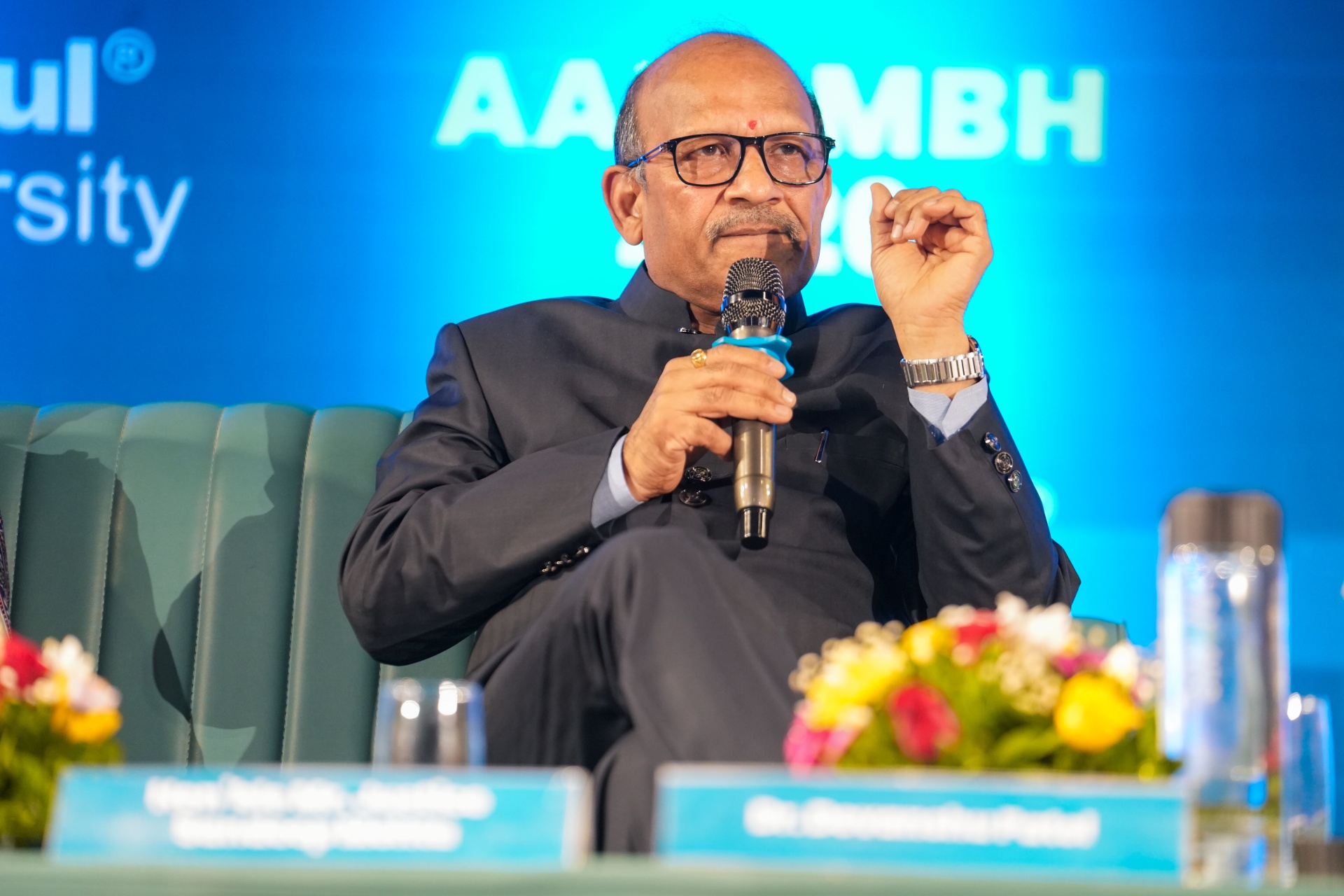
At Aarambh 2026, as hosted by the Faculty of Law at Parul University, Justice Sandeep Mehta of the Supreme Court of India and Justice Vaibhavi D. Nanavati of the Gujarat High Court spoke on one ideology—technology has made “seen to be done.” Today, the public can watch any historic hearings live.
What Is Open Justice?
Open justice means the courts should conduct their hearings in public so that justice is visible and holds accountability. This core idea has deeper roots, as the philosopher Jeremy Bentham wrote that publicity is the soul of justice, and the maxim that justice must not only be done but must manifestly be seen to be done is one of the most popular and quoted in law. It acknowledges that open hearings stop arbitrariness, add confidence to public opinion, and allow for how decisions are made. Live streaming is a modern extension of a courtroom that has always been open to the public!
The Constitutional Foundation
Open court has constitutional and statutory roots. Article 145(4) of the Constitution requires judgments of the Supreme Court to be pronounced in open court. The right of access to justice has been mentioned in Article 21 and the public’s right to know in Article 19. Interestingly, long ago, a 9-judge bench in Naresh Shridhar Mirajkar v. State of Maharashtra affirmed the rule of open trials. Hence, it showcases that transparency is not a favour but a feature of the system!
The Landmark: Swapnil Tripathi v. Supreme Court of India (2018)
The case that formally opened India’s courts to live-streaming began with a law student. Swapnil Tripathi, a law intern who had been unable to attend certain hearings, was among the petitioners who sought live-streaming of proceedings of national and constitutional importance. On 26 September 2018, a three-judge bench of the Supreme Court held that live-streaming is a natural extension of the open-court principle and part of the right of access to justice, directing that rules be framed to implement it with appropriate safeguards. It is a powerful example for students: a petition initiated by a law student reshaped how the entire country can witness its highest court.
Publicity is the very soul of justice. Live-streaming is its natural, modern extension.
– As discussed at Aarambh 2026
The Gujarat High Court Led the Way
Justice Vaibhavi D. Nanavati highlighted her own court’s pioneering role. The Gujarat High Court became the very first court in India to livestream the proceedings. As beginning with the Chief Justice’s court on YouTube in October 2020. As followed by a large public following on social media; in July 2021, the High Court officially launched live streaming of all willing benches under the High Court of Gujarat Rules, 2021. All the major hearings have been streamed to the public, allowing millions of people to follow proceedings!
Openness, With Safeguards
Open justice is not unlimited. Live-streaming and open reporting come with careful safeguards: certain categories of cases, such as matters involving sexual offences, matrimonial disputes, and cases heard in-camera (in the judge’s private chambers, with press and public excluded), are protected from broadcast to preserve privacy and dignity. Rules also restrict the unauthorised commercial use or manipulation of official recordings. This balances the interests of parties and elevates integrity in the process; hence, this was the central theme of Aarambh 2026. Wondering how the justice system is evolving? At Parul University, aspiring legal professionals can explore B.B.A. LL.B., integrating business management and commercial law, or B.Com. LL.B., blending commerce, taxation, and finance with legal studies. The 3-year LL.B. is exclusively designed for graduates from any field, and postgraduate options even cover LL.M. in Business & Corporate Law and LL.M. in Criminal & Security Laws!
FAQs
Define the meaning of open justice?
It means it’s a principle that court proceedings should be streamed publicly so justice remains transparent & accountable. It elevates public confidence, and it is often summed up as justice must not only be done but must be seen to be done. Hence, live streaming is the execution!
Are Indian court proceedings live-streamed?
Yes. Following the Supreme Court’s decision in Swapnil Tripathi (2018), important proceedings of the Supreme Court and several High Courts are live-streamed to the public, often on YouTube. Live-streaming applies especially to cases of constitutional and national importance, subject to safeguards excluding sensitive categories of cases.
What was the Swapnil Tripathi case?
It’s one of the landmark judgments in which the Supreme Court held live-streaming of court proceedings. As a part of open justice and the right of access to justice under Article 21, Article 145(4), and Article 19(1)(a).
Which was the first high court in India to livestream proceedings?
The Gujarat High Court was the very first court in India to hold a live stream. In October 2020, they experimented with the chief justice's court on YouTube and, after that, officially launched livestreaming of all the benches under its Live Streaming Rules 2021.


