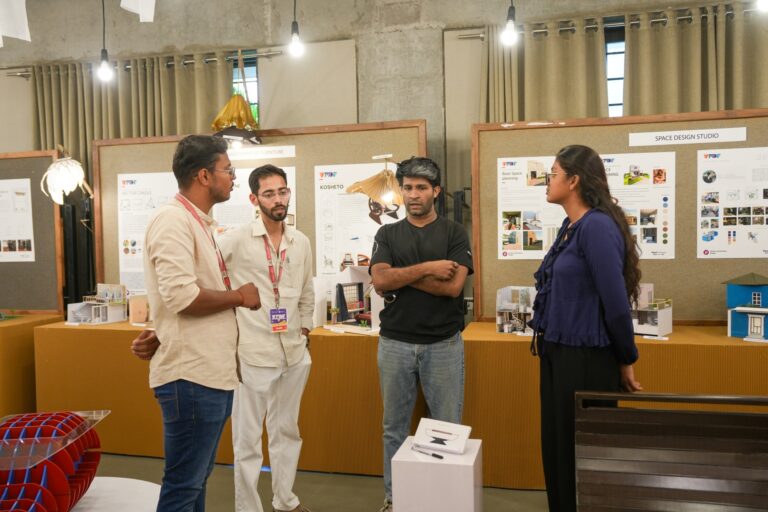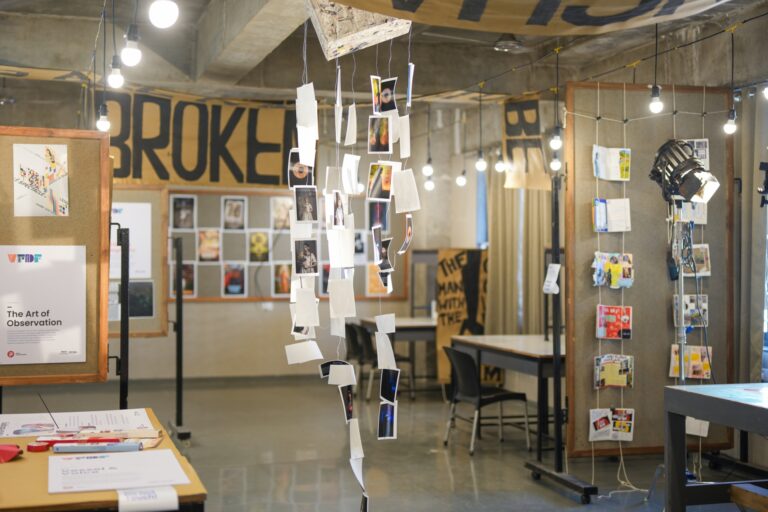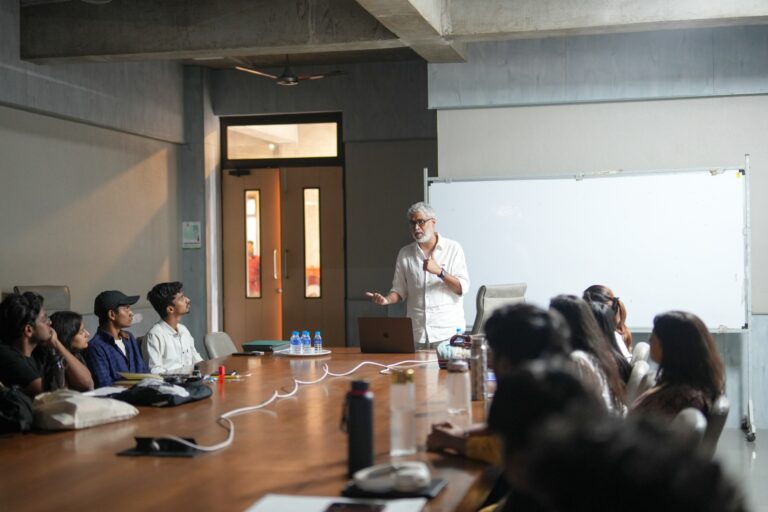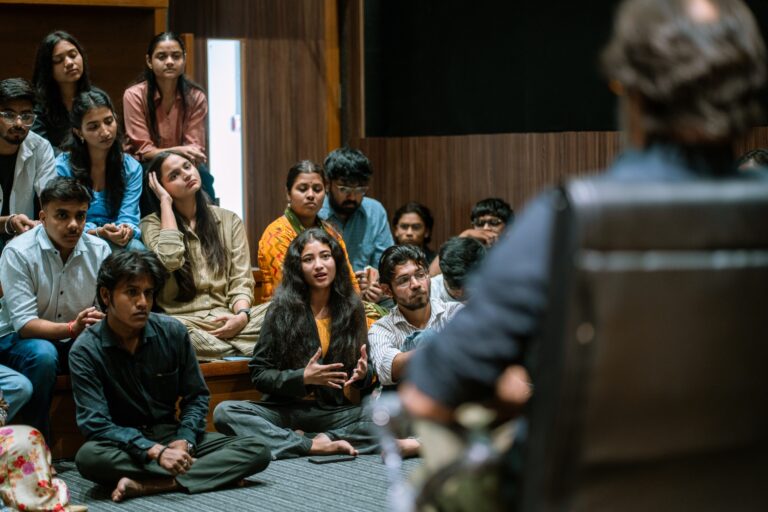
On the closing day of the Vadodara Film and Design Festival at Parul Institute of Design, a designer asked the audience to stand up, shift seats, and relax before he began speaking.
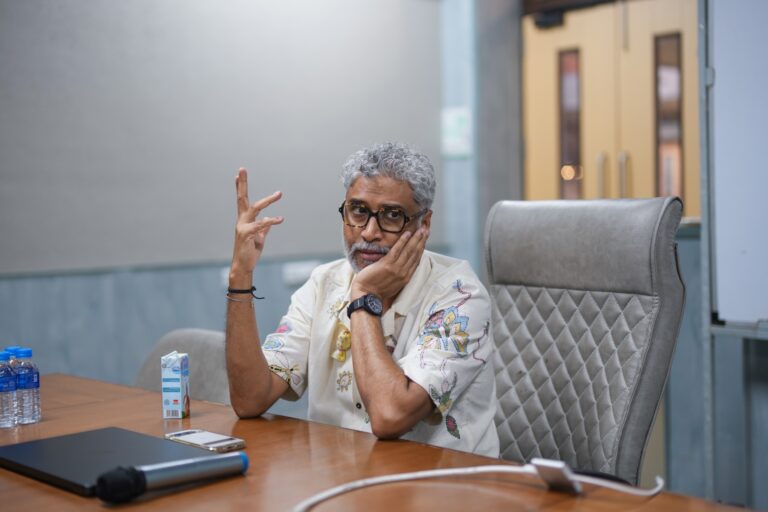
Neeraj Shah is Co-founder of I Do Design and Chief Design Officer at Belure Innovations. His session, titled Design as a Way of Thinking, reframed design as a directional force rather than a visual output. The opening exercise was deliberate. If students were still seated in the same formation they walked in with, they would receive his lecture the way they receive every other lecture. He wanted them to notice that even a 30-second shift in seating changed the session’s register.
“Design is not just what you see. It is what you feel, use, and remember.”
The Same-Brain Problem: Why 2 Designers Given the Same Brief Produce Different Work
Neeraj Shah’s first substantive argument addressed a question students often ask: if design is teachable, why does every designer produce different work from the same brief?
His answer was biological and experiential. Every human brain shares a similar physical structure. What differentiates designers is not neurology. It is lived history. Family, environment, culture, education, relationships, and emotions shape how a given brain processes a brief.
“Same brain hone ke baad bhi thinking aur output completely different hota hai, because experiences alag hote hain.”
The implication for students was specific. Individuality is not something to invent. It is already present in every student’s life experience. The job of design education is not to teach students to find their voice. The job is to help students stop suppressing the voice already there in pursuit of a generic professional style. If you’re passionate about design, AI and technology, enrol into Parul University’s Bachelor of Design (B.Des) in Communication Design!
Design in the Age of AI: four practitioners on homogeneity and specificity
POV - Design Thinking Is Actually a Tool for Non-Designers!
He made a distinction that most design curricula do not make explicitly.
Design thinking as a named framework (inspiration, ideation, implementation) was developed as a tool for non-designers. Engineers, executives, and product managers who needed to approach problems creatively without having trained as designers. The framework is useful for those audiences because it gives them a repeatable structure.
For students actually training to be designers, Shah argued, the framework is insufficient. Designers need thinking like a designer, which is not a discrete phase you move through during a project. It is a continuous mode of attention. Observing, questioning, refining, connecting ideas across unrelated fields. That mode of attention has to be developed daily, not activated during a design-thinking workshop. You can master an design mindset by enrolling in PID’s B.Design in User Experience & Interaction Design (with AI)!
“Design thinking se zyada important hai thinking like a designer.”
The Brain as a Small-World Network: Why Creativity Is Connection, Not Generation
His second major argument drew on how neural networks actually function.
The brain contains billions of neurons and many more connections, forming what neuroscientists call a small-world network. In such a network, any neuron is only a few connections away from any other neuron. This is similar to the six-degrees-of-separation concept in social networks.
The implication for creative work: creativity is not about generating ideas from nothing. It is about connecting existing ideas in unexpected ways. Different parts of the brain handle imagination, logic, detailing, and communication. Creative output comes from those systems working together, not from one system producing a finished idea in isolation.
The practical application Neeraj Shah made: when a designer feels stuck, the problem is rarely a lack of ideas. The problem is usually that ideas are fragmented and have not yet connected. The work is to hold all of them simultaneously until the connection surfaces.
Why Design Styles Work Like Music Genres
He played short clips from different genres of music and asked the audience to notice how each made them feel. Some created energy. Some created calm. Some created tension.
He then drew the parallel to design movements: modernism, classicism, baroque. Just as musical genres emerge when groups of people converge on certain aesthetic principles, design styles emerge through collective conviction. A single designer cannot create a movement. A movement is what happens when enough designers believe in similar approaches long enough to make the approach visible.
For PID students, the takeaway was not to try to start a movement. The takeaway was to understand that the style a student is drawn to is already embedded in a larger cultural and historical context. In real, context helps the student position their own work via exploring design courses after 12th from PID!
Why Confusion During the Design Process Is a Sign of Growth
As asked by students how to deal with confusion during the creative process, Shah said confusion is not a problem to be solved. It is a signal.
“Agar aap confused ho, toh iska matlab aap explore kar rahe ho.”
If a designer feels completely clear throughout a project, Neeraj Shah argued, they are probably not pushing the work beyond their comfort zone. Confusion means the work is reaching past what the designer already knows how to do. That reach is where growth happens.
The practical instruction was to sit with the confusion rather than rush to resolve it. Designers who force premature clarity often produce predictable outputs because they abandon the exploratory phase too early. Designers who tolerate extended confusion eventually produce work with genuine editorial distinction.
Designers as Makers, Not Consultants
Neeraj Shah described designers as makers, individuals who derive satisfaction from creating something tangible. This framing matters because it distinguishes design from adjacent professions like consulting or strategy.
A consultant produces recommendations. A strategist produces plans. A designer produces objects, spaces, images, systems, or experiences. The output is not a document. The output is the thing itself.
Shah’s mindset instructions for designers:
- Optimistic: operate from a belief that better solutions are possible, even when current ones seem adequate
- Restless: keep questioning. Resist closure. A designer who is too comfortable is probably not pushing the work hard enough
- Rigorous: refine. A first draft is not a final draft. A hundred iterations is the path to one good output
This mindset is the core of what Bachelor of Design in Product Design, Bachelor of Design in Interior and Furniture Design, and the other PID design programmes try to build into students through curriculum structure and studio culture. His session distilled the behavioural outcome of that training into a set of testable habits.
Nitesh Mohanty on curating the Blue Project Exhibition and for ul and donot change content