Every solar installation in India faces the same physical challenge. The conventional solution is manual cleaning with water and labour. The solar industry needs technologies that reduce the need for cleaning in the first place and automate the cleaning that remains necessary.
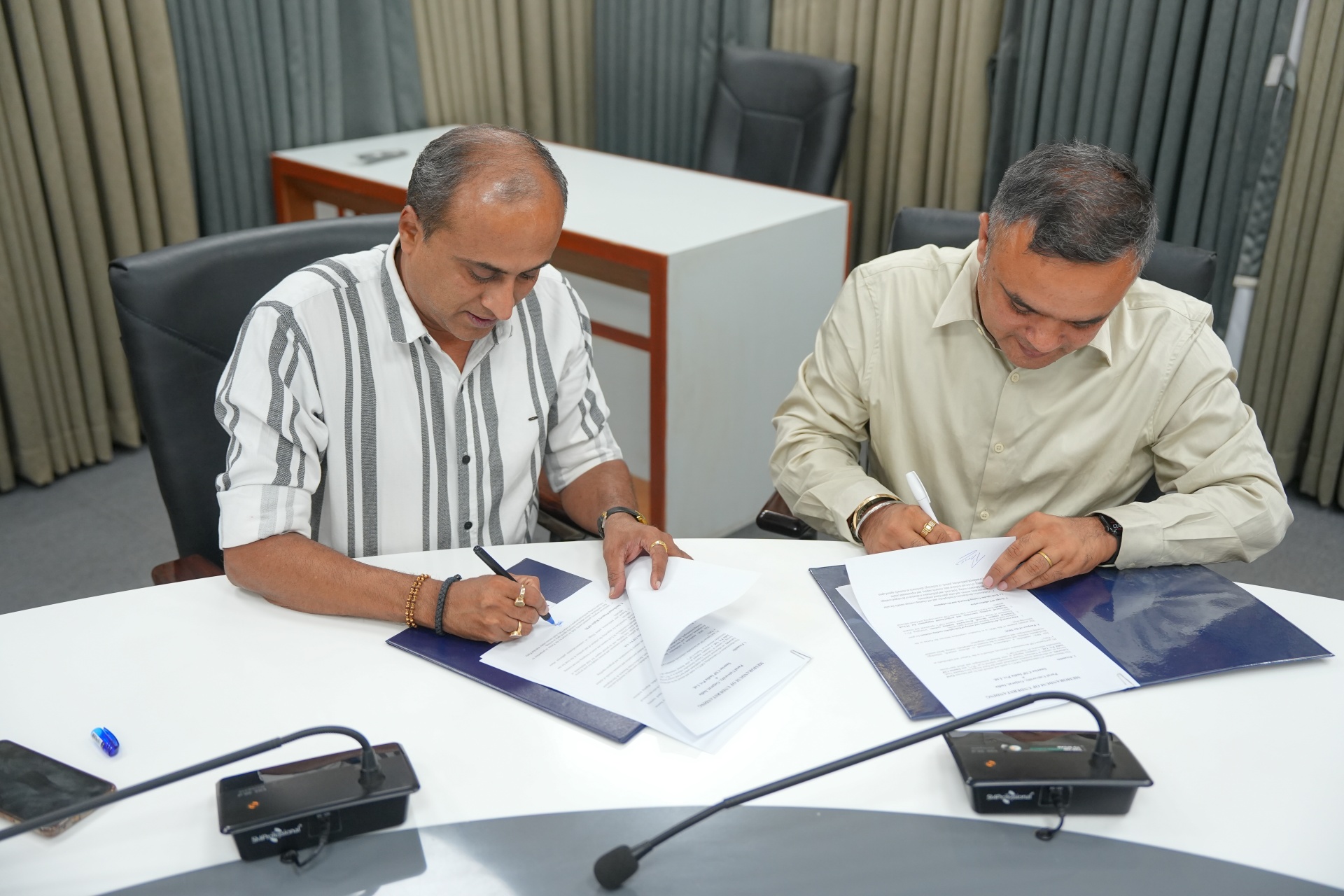
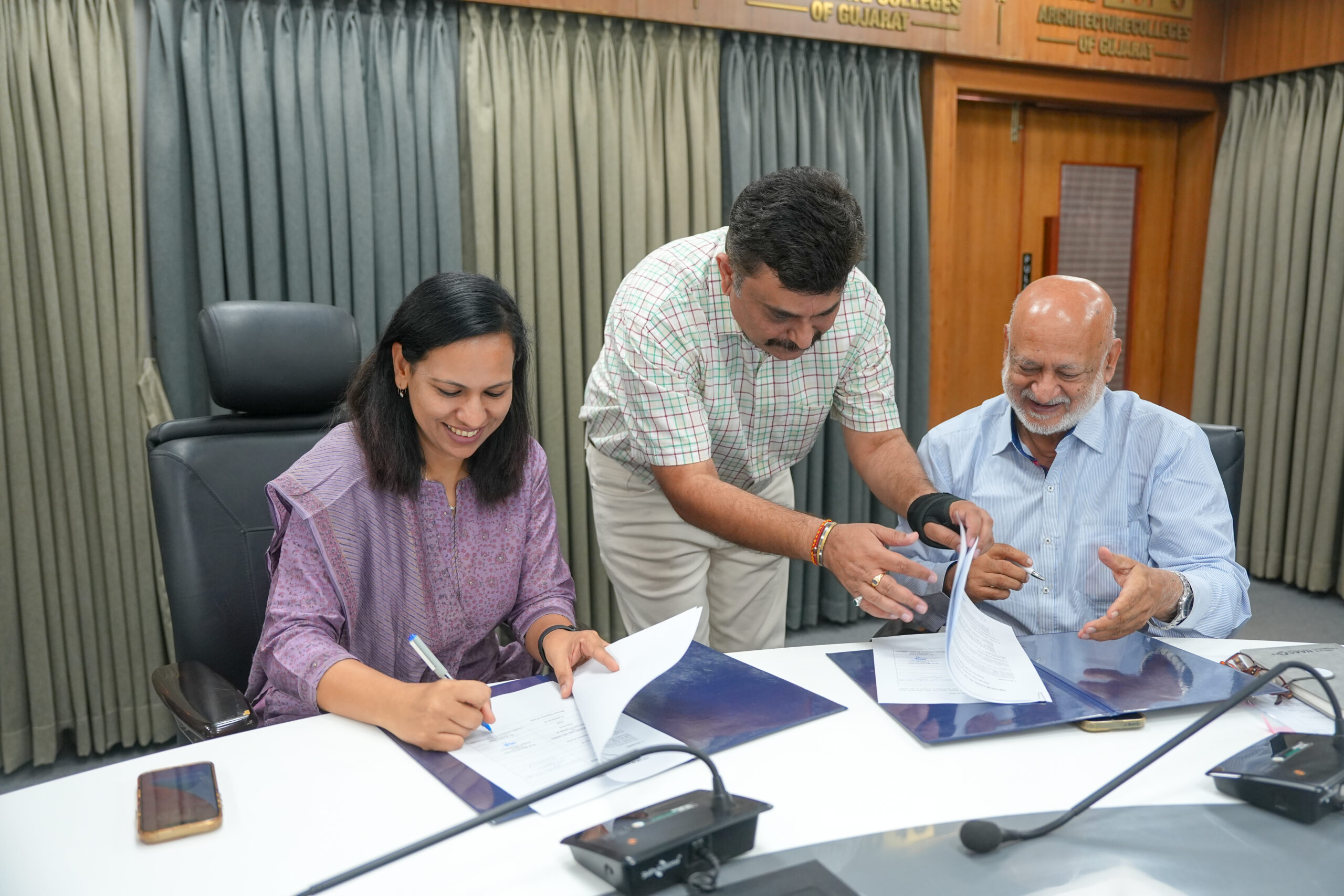
This is the exact problem that the partnership between Parul University and Sunrise CSP India is designed to solve. Not in theory. In practice, with prototypes, field trials, and joint patent filings where the research produces deployable innovation. For anyone searching for examples of nanotechnology research at Indian universities solving real industrial problems, this is it. If you too are looking to expand your career in the same domain, enrol into the Mechanical Engineering Program of Parul University!
How Hydrophobic Nano-Coatings Work: The Lotus Effect on Solar Glass
The challenge is developing coatings that work reliably under Indian field conditions. The joint research between the Micro-Nano Research and Development Center at Parul University and Sunrise CSP is specifically designed to bridge that gap between laboratory synthesis and real-world durability.
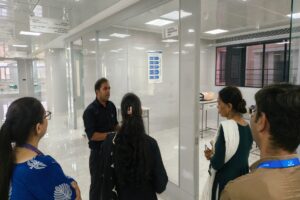
Inside the Micro-Nano Research and Development Center
Scanning Electron Microscopy (SEM) provides high-resolution imaging of coating surfaces at the nanometre level, revealing surface structure, uniformity, and defects that affect performance. Atomic Force Microscopy (AFM) measures surface roughness and topography at atomic resolution, critical for understanding how water and dust interact with the coating. X-ray Diffractometry (XRD) identifies the crystalline structure and composition of coating materials, ensuring the right molecular architecture is being built. Sputtering systems allow thin film fabrication with precise control over coating thickness and composition, enabling reproducible manufacturing of coatings at the nanoscale. Step into the world of scientific exploration with B.Sc. Physics at Parul University.
This equipment positions the Micro-Nano Research and Development Center to develop coatings from first principles, characterise their properties at the nanoscale, and then test them under field conditions at Sunrise CSP’s solar installations.
Autonomous Drone Cleaning
The partnership with Sunrise CSP provides what university-only research typically lacks: real operational sites for field trials, domain expertise on what actually works in commercial solar environments, and the commercial feedback loop that turns a laboratory prototype into a deployable product.
Turn data into decisions and ideas into innovation with B.Tech CSE in AI and Data Science. Join Parul University and prepare for careers in AI, analytics, and emerging technologies.
Gujarat, Solar Expansion, and Why University Research Matters for India's Clean Energy Goals
The Micro-Nano Research and Development Center, purpose-built for nanomaterials research, gives this specific partnership a technical capability that is difficult to replicate without significant capital investment.
For students considering, B.Tech Mechanical Engineering, Mechatronics Engineering, Aeronautical Engineering, M.Tech specialisations, B.Sc. Physics, M.Sc. Physics, or the B.Tech CSE in AI and Data Science programme at Parul University, this partnership demonstrates what applied research looks like in practice. M.Tech students work on live industry problems. The Micro-Nano Research and Development Center develops coatings that could reduce maintenance costs across thousands of acres of solar installations. Drone prototypes are tested at real commercial sites. The technology being built here speaks directly to the cost and efficiency pressures that will define India’s solar sector for the next decade.
FAQ: Hydrophobic Coatings, Drone Cleaning, and Nanotechnology Research at Parul University
What are hydrophobic coatings for solar panels?
Thin nano-coatings applied to glass surfaces that repel water and resist dust adhesion through the lotus effect. Water forms droplets that roll off, carrying dust with them. This reduces cleaning frequency, lowers maintenance costs, and maintains higher energy output. The Micro-Nano Research and Development Center (MNRDC) at Parul University is developing these coatings for Indian field conditions through its partnership with Sunrise CSP India.
Can students study renewable energy and nanotechnology at Parul University?
Yes. B.Tech Mechanical Engineering covers the same. The Micro-Nano Research and Development Center (MNRDC) offers a postgraduate programme in Material Engineering (Nanotechnology). B.Tech CSE in AI and Data Science supports drone technology and autonomous systems. Under the Sunrise CSP MoU, M.Tech students are placed on live solar energy industry projects.