A summer abroad can be a holiday with a certificate attached, or it can be a genuine educational experience. The difference lies in whether students are exposed to meaningful learning through skills and theory rather than only exploration. In the newly launched Global Discovery Program 2026, the two-week experience was designed around one demanding subject instead of local attractions. Through this programme, 13 international students from Vietnam, Russia, the UK, and Morocco arrived to study sustainable development at different levels.
As a joint initiative of CIRR and the Centre of Sustainability and ESG at Parul University, the aim is to deepen understanding and guide students towards an outcome: working together on global sustainability challenges.
Sustainability at Parul University – Solar Energy, ESG Centre & Green Campus
What a Sustainability Summer School in India Is Built to Do
The structure is the argument. Across two weeks, the Global Discovery Program pairs academic sessions with experiential learning, cultural engagement, and collaborative project work, and it draws on several parts of the University rather than one department. Contributions come from the Centre for Sustainability and ESG, the Institute of Fine Arts, and the Institute of Performing Arts and Hospitality, giving visiting students an interdisciplinary experience rather than a single-subject course.
That breadth matters because sustainability is not a single discipline. It touches policy, design, food systems, energy, and daily behaviour, and a programme that teaches it through only one lens teaches it poorly. By ending the first academic session with participants sorted into mixed project groups under faculty mentors, the programme treats the two weeks as a working commitment with a deliverable, not a lecture series to sit through.
Parul University’s Sustainability Goals – From Solar Energy to ESG-Driven Education!
One of Several International Programs, With a Distinct Focus
This sustainability programme is not Parul University’s only inbound summer offering, and understanding where it sits makes its focus clearer. A parallel cohort, with fourteen students from seven countries in the same month, was run in partnership with Nottingham Trent University and is documented in the university’s account of what two weeks on the Indian Summer School Program actually look like and what a classroom of seven countries is really like.
Those pieces capture the broader study-abroad experience. The Global Discovery Program is the sustainability-focused counterpart within the same international programmes ecosystem, which is why its curriculum, rather than its itinerary, is the central focus.
Education Beyond Borders, Demonstrated Rather Than Claimed
The premise underneath the programme is that education has already moved past geographical limits. Dr. Preeti Nair, Director of CIRR, opened her address not with statements but with questions to the room: how many participants spoke more than four languages, had lived abroad for more than six months, or had built international friendships online? The point she drew from the answers is that physical borders exist, while learning across them does not require permission, only openness and the willingness to engage with an unfamiliar culture rather than observe it from a distance.
This is where a claim that could sound like marketing is instead backed by scale. Parul University hosts one of the more multicultural academic communities in India, with more than 6,000 international students from over 75 nationalities on campus. A sustainability summer school is a natural extension of an environment where cross-cultural study is already the daily norm.
Dr. Preeti Nair framed the Global Discovery Program as resting on three ideas: innovative pedagogy, cross-cultural learning, and friendships that outlast the programme itself, each of which strengthens the university’s partnerships abroad.
Sustainability as the Spine, Not a Session
Sustainability is not a new concept. It is an old practice that modern comfort has taught us to forget.
Dr. Niketha Konikkara, Director of the Centre for Sustainability and ESG, opened the programme’s substantive teaching by reframing sustainability as a traditional practice rather than a modern invention. She traced the idea through Indian tradition, pointing to the understanding of the Earth as mother and the individual as her child, and argued that it became a global movement only because contemporary lifestyles drifted towards convenience and away from restraint. Her instruction to participants was to treat the two weeks as practical exposure rather than theory.
That framing sets up the single most useful distinction the programme teaches: the difference between ESG and sustainability, which most people misunderstand. It also connects directly to Parul University’s own sustainability initiatives, where the same principles are visible in how the campus itself operates.
What does the curriculum cover? ESG, the SDGs, and India’s Climate Commitments!
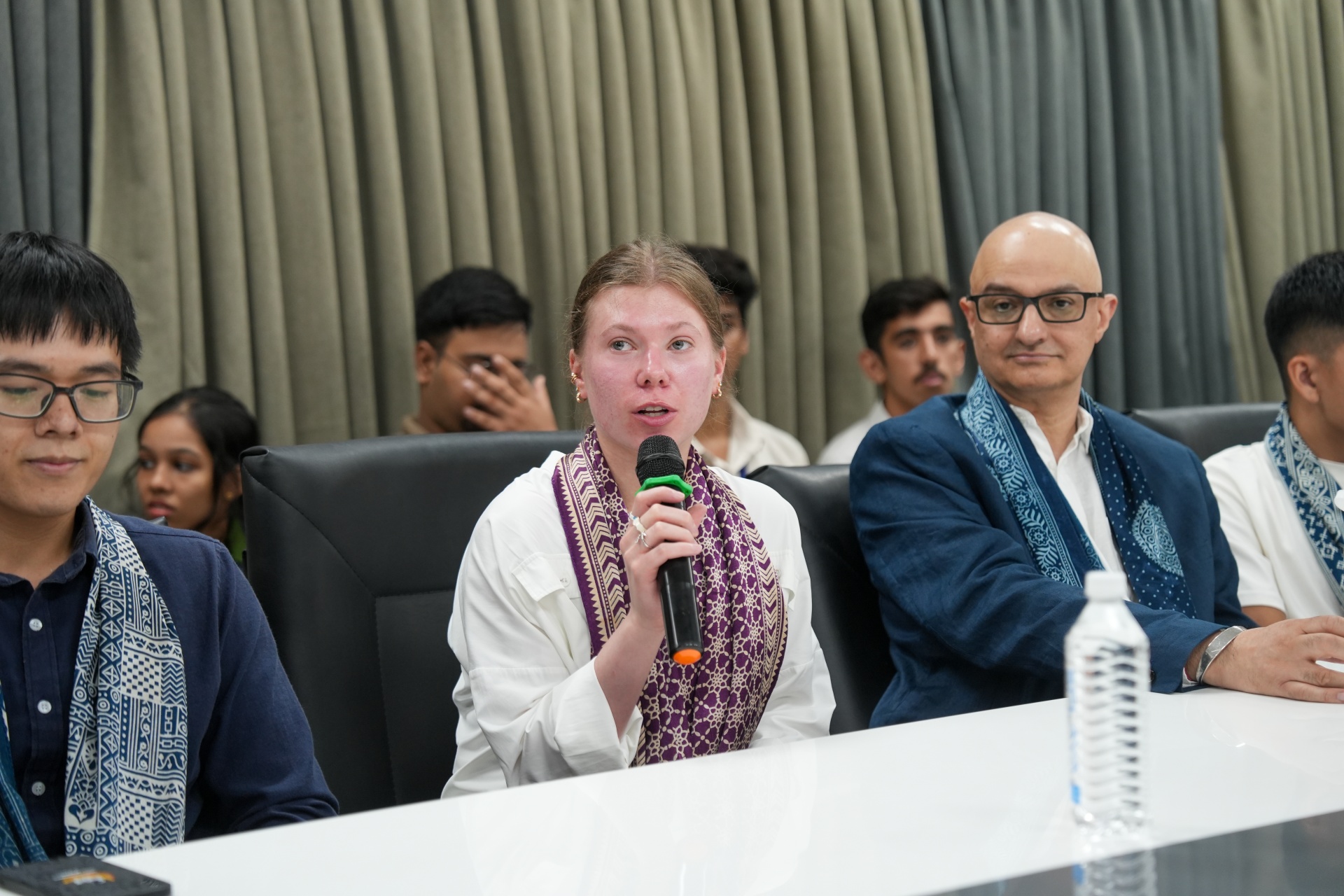
The academic teaching worked through the United Nations Sustainable Development Goals as a shared framework, with participants themselves presenting goals they cared about, from Zero Hunger and food security to affordable and clean energy, responsible consumption, partnerships for the goals, and life on land. The interactive format, where participants explained goals to each other across nationalities, was itself the pedagogy: a Vietnamese, Russian, British, or Moroccan student framing an SDG through their own country’s experience is worth more than a slide defining it.
The session then grounded the global framework in national policy. India has committed to reaching net zero emissions by 2070, a later date than many economies, precisely because of its development stage, population, and the cost of clean technology, and the session contrasted this with other timelines raised in discussion, including 2060 for Russia and 2050 targets elsewhere.
Two Government of India initiatives were set out as the route: the Panchamrit goals announced at COP26 and the Lifestyle for Environment (LiFE) Mission. The teaching then translated policy into behaviour a student can act on immediately and offered the university’s own practice as evidence rather than exhortation.
From Global Policy to Daily Choices!
The keynote by Dr. Geetika Madan Patel, Vice President for Quality, Research and Health Sciences and Medical Director at Parul University, made the same move from the top down. She argued that the responsibility for sustainable development does not sit only with governments and institutions but with every individual, and she invoked the well-known proverb that the planet is not inherited from ancestors but borrowed from the next generation to frame that responsibility as an obligation rather than a preference.
Her substantive point was that policy and frameworks are the apex of a system that only works if it is built from the ground up, through daily choices that favour the environment over convenience. She set out three pillars she sees sustainable development resting on: environmental sustainability, economic sustainability, and social equity, and stressed that none functions alone; growth is balanced only when the three move together.
Looking at the range of nationalities in the room, she made the case for the program’s method directly: every country has progressed somewhere and fallen short somewhere else, so the fastest way to close those gaps is to exchange approaches across cultures.
How Does This Fit Parul University’s Global Engagement?
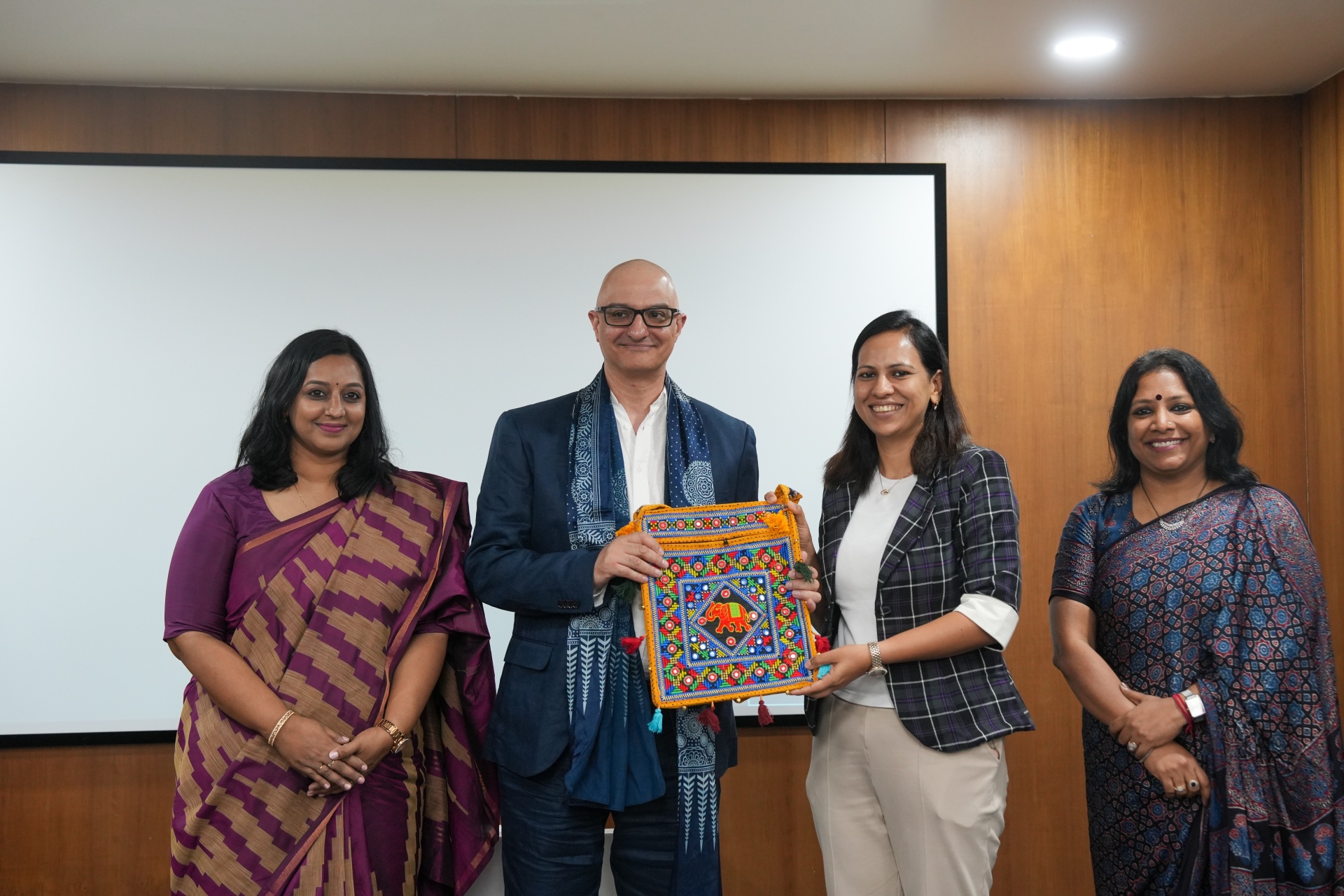
The programme is explicit about wanting to outlast itself. Both directors urged participants to become ambassadors who help build institutional ties over time and draw more students from their home universities into future editions, and the Centre for Sustainability and ESG opened the door to research collaboration and academic partnerships beyond the two weeks.
Short-term inbound programmes of this kind also align with a national priority: the National Education Policy 2020, published by the Ministry of Education, calls for the internationalisation of Indian higher education, which the Government pursues through its Study in India initiative.
For a prospective international student weighing where to spend a formative few weeks, the relevant signal is not the itinerary but the seriousness. A programme jointly run by a university’s international-relations and sustainability centres, taught by directors who teach ESG and national climate policy rather than tourism, is a sustainability summer school in India that returns a skill. If you’re excited about sustainability and how it works at all levels, explore international admissions and study-abroad opportunities at Parul University and get to learn the best of both worlds!
FAQs
What is Parul University’s Global Discovery Program?
This exclusive programme is a 2-week sustainability summer school, run jointly by Parul University’s Centre for International Relations & Research and Centre for Sustainability and ESG. As inaugurated on 22nd July 2026, it has brought students from Vietnam, Russia, the U.K., and Morocco alongside domestic students for academic sessions and holistic experiential learning.
How is it different from the Indian summer school programme?
Both of them are proper summer programmes at Parul University, but they are different in focus and cohort. The Indian Summer School Program is curated on a broad study-abroad experience and has a July cohort of 14 students from seven countries in a core partnership with Nottingham Trent University.
Can global/international students study India’s sustainability front?
Indeed, programs such as the Global Discovery Program are exclusively designed for extending exposure to international participants. The curriculum includes sustainability, ESG and UN SDGs, followed by global frameworks & India’s national climate policies!