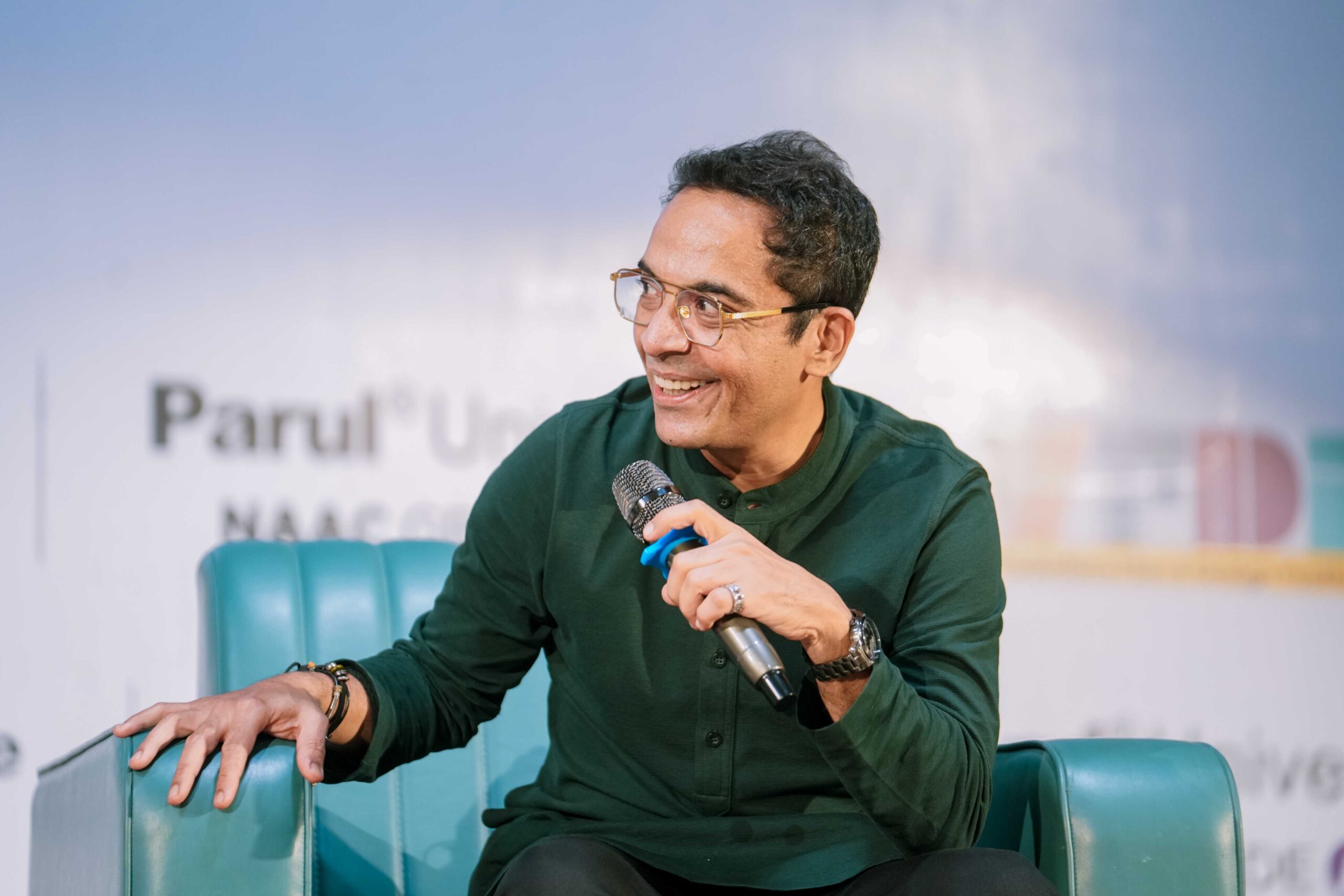
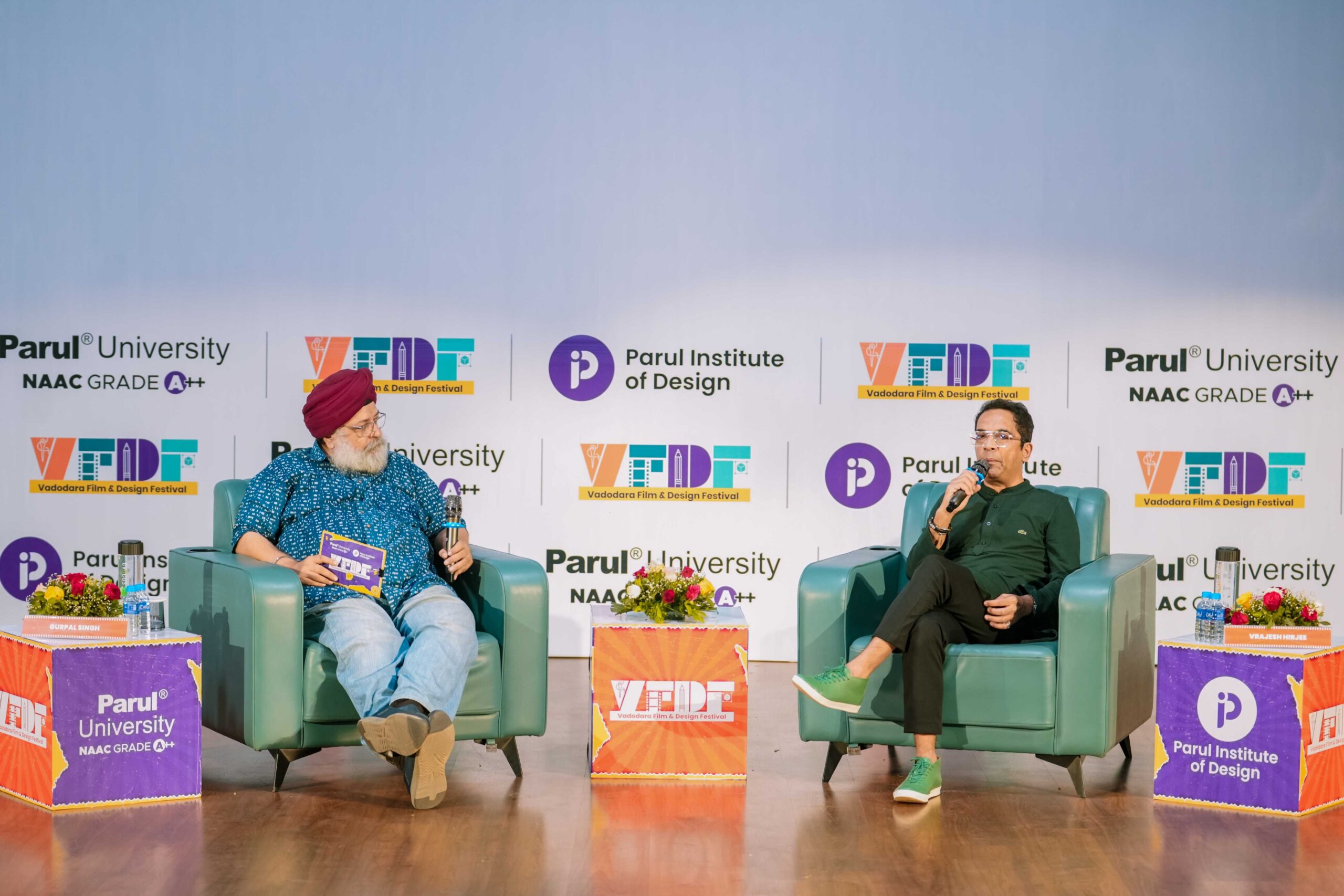
Hirjee‘s first professional job was not in acting.
It was advertising sales at the Indian Express newspaper. He described walking into client offices, pitching newspaper advertising rates, and closing deals across Mumbai through the late 1990s. The job taught him skills he still uses in acting.
- How to read a room within the first thirty seconds of entering it.
- How to hold a conversation with someone who has decided in advance that they do not want to talk to you.
- How to handle rejection without internalising it as personal failure.
- How to close, ask for what you want, and walk away if the answer is no.
Every one of these skills transfers to acting. The audition room is a sales pitch. The director who has already decided they do not want you can be persuaded in the first sixty seconds. Rejection is the job, not an interruption of it. These are the lessons that drama school curricula rarely deliver because they are not flattering to the romantic image of an actor.
Royal Hunt of the Sun: The Stage Breakthrough
Hirjee’s stage breakthrough came in Royal Hunt of the Sun, an English-language production directed by Feroz Khan.
The play, written by Peter Shaffer in 1964, covers the Spanish conquest of the Inca Empire and the encounter between Francisco Pizarro and the Inca emperor Atahualpa. Khan’s production staged it with Hirjee in a supporting role. The show ran to critical acclaim across Mumbai and toured.
“Theatre teaches you the thing that film cannot. How to stay present for two hours without cutting. How to hold the attention of a live audience that can leave at any moment.”
The stage training is what made his later screen work possible. A screen actor without stage experience often rushes, because the camera can always take another cut. A stage-trained screen actor holds the moment. The audience
Big FM 2008: The Radio Launch
In 2008, Hirjee was the inaugural voice of Big FM‘s Mumbai launch.
Radio at that moment in India was entering a new era. FM licences had been liberalised. Private players were entering the market. The voice that launched a station carried the station’s identity into the first six months of public exposure.
Hirjee‘s selection for the launch reflected what makes him specifically useful as a performer. His voice carries warmth without being saccharine. His humour lands without being aggressive. His pacing is disciplined enough that listeners stay engaged across a two-hour morning slot. These are the rare combination of qualities that radio breakfast shows require.
He described the experience of broadcasting live in the early days before social media feedback loops were fully developed.
- Listener calls were the only feedback mechanism during the show itself.
- Audience share was measured weekly, not in real time.
- Mistakes aired live and could not be edited. The only option was to keep going.
- Personal connection with listeners, built up over six months, was what kept ratings stable.
The discipline of live broadcast made his later improvisation work on screen and stage much sharper. A comedian who has been live on radio for a two-hour morning slot does not freeze in a live audience performance.
Kitchen Chalao: The Survival Philosophy
The most quoted line of the session was Hirjee’s survival advice for student actors moving to Bombay.
“Kitchen chalao. Learn to cook.”
The line was not metaphorical. It was literal. A student actor arriving in Mumbai at twenty-two will face ten years of uncertainty before meaningful work arrives, if it arrives at all. The difference between continuing and quitting during those ten years often comes down to whether the actor can feed themselves for less than two hundred rupees a day.
Hirjee walked through the specifics. A rented kitchen in a shared flat in Malad or Goregaon. Rice, dal, vegetables, and a gas cylinder. The ability to cook three simple meals a day for yourself. Not depending on expensive restaurants or food delivery. Not eating into your savings through survival costs. Not being forced to take roles you despise because you need the rent money next week.
The philosophy extends beyond food. A self-sufficient actor has negotiating power. An actor who cannot afford to say no to a role has no power. The cooking skill is the first brick in a wall of self-sufficiency that protects the actor’s ability to make artistic choices.
Read More: The Close Door Discussion at VFDF
The 2:30am Sardar Brothers
Hirjee was asked for his favourite fan memory.
His answer was not from a red carpet or a film premiere. It was from a hotel corridor at 2:30 in the morning in a Tier 2 Indian city. Two Sardar brothers, middle-aged businessmen, were doing what he called a hotel crawl, walking from one hotel bar to the next, drinking modestly, catching up with each other.
They recognised Hirjee as he was walking to his own room after a late shoot. One of the brothers clapped him on the shoulder.
“Golmaal dekha hai. Bahut maza aaya. Aap bahut achha kaam karte ho.”
The brothers invited him for a drink. Hirjee, tired from the shoot, almost declined. He did not. The three of them sat in the hotel bar for an hour. The brothers talked about their business, their families, the movies they had grown up watching. They did not ask him for selfies. They did not ask him for autographs. They treated him as a fellow traveller who had happened to do some work they had enjoyed.
The memory stayed with him because it captured what public recognition can be at its best. Not a performance for the audience. A shared moment between humans who happen to know each other’s work.
Read more: Golmaal (2006): film reference
99 Percent Patience, 1 Percent Performance
The closing framing of the session was a number.
“An actor is paid 99 percent for patience and 1 percent for the performance.”
Hirjee explained the arithmetic. A three-day shoot involves roughly twenty-four hours of waiting, for every two hours of actual performance. A two-month stage production involves roughly six weeks of rehearsal for every one week of performance. A film career of thirty years involves countless hours of auditions, rejections, rewrites, delays, and set-level waiting for every hour of screen time.
The students who find acting most frustrating are usually the ones who have not absorbed this ratio.
- They expected the performance to be the job.
- They discovered that the performance is the reward.
- The job is the waiting.
- Patience is not a soft skill. It is the entire career.
Hirjee’s framing is one of the most honest things a working actor can tell a room full of student performers. Most students leave sessions like this one feeling inspired. The students who leave this one feeling both inspired and soberly informed are the ones most likely to still be acting in fifteen years.
Read more: B.Sc Film and TV Production at Parul Institute of Design
Frequently Asked Questions
Who is Vrajesh Hirjee?
Vrajesh Hirjee is an Indian actor known for Golmaal (2006), Kaho Naa Pyaar Hai, and multiple stage productions including Feroz Khan's Royal Hunt of the Sun. He was the inaugural voice of Big FM Mumbai in 2008. He began his career in advertising sales at the Indian Express newspaper. He spoke at a closed-door adda during VFDF 4.0 at Parul Institute of Design in April 2026.
What is Vrajesh Hirjee's career advice for aspiring actors?
Kitchen chalao, meaning learn to cook. The practical survival skill of feeding yourself cheaply in Bombay is what gives a young actor the negotiating power to refuse roles they despise. Financial self-sufficiency is the foundation on which artistic choice is built. He also framed the career as 99 percent patience and 1 percent performance, arguing that actors who understand this ratio survive the industry's structural waiting periods.
Why does Vrajesh Hirjee recommend cooking as a survival skill?
Because most young actors leaving drama school do not have ten years of saved money. They have to survive on unpredictable income during years of auditions, small roles, and long gaps. A cooking skill reduces daily food costs to under two hundred rupees. The accumulated savings over a year let an actor refuse a role that would compromise their long-term work.
What career paths exist for acting students beyond cinema?
Theatre, radio and podcasting, voice-over work, commercial modelling, hosting and presenting, teaching, writing, and crossover into production or direction. Vrajesh Hirjee's own career spans advertising sales, stage acting, radio, cinema, and television hosting, which is closer to the realistic working-actor pattern than the single-career image that drama school often conveys.
What are the offerings given by the B.Sc Film and TV Production program at PID teach?
The course offers screenwriting, direction, cinematography, editing, sound design, production management, and practical skills. The program also conducts workshops where they can meet the real-life established personalities of the related fields. Guests such as Vrajesh Hirjee, Leena Yadav, Sudhir Mishra, Rajat Kapoor, Amit Masurkar, and Aparna Sud are on campus for sessions that give students exposure to real industry practice.


