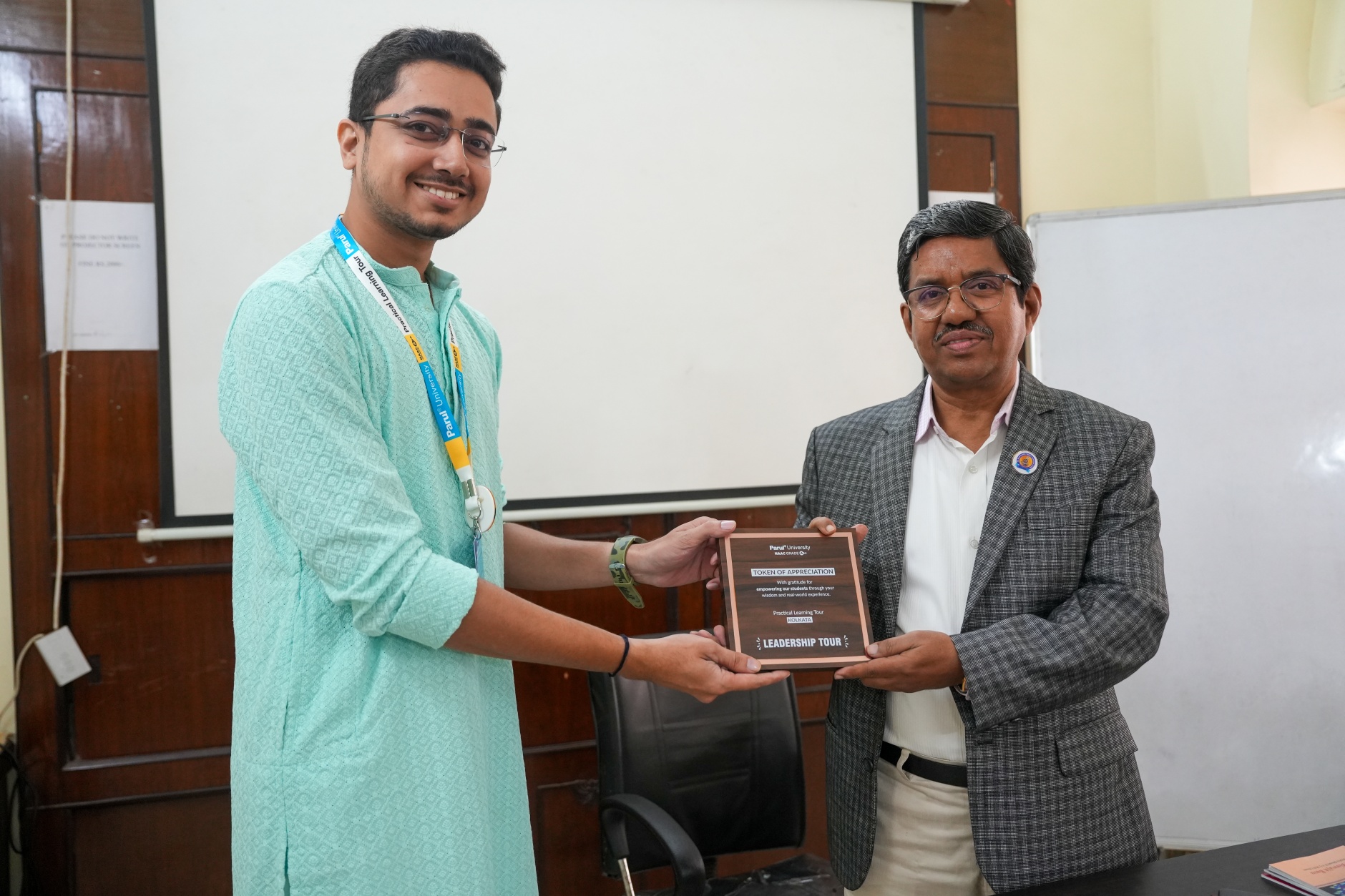
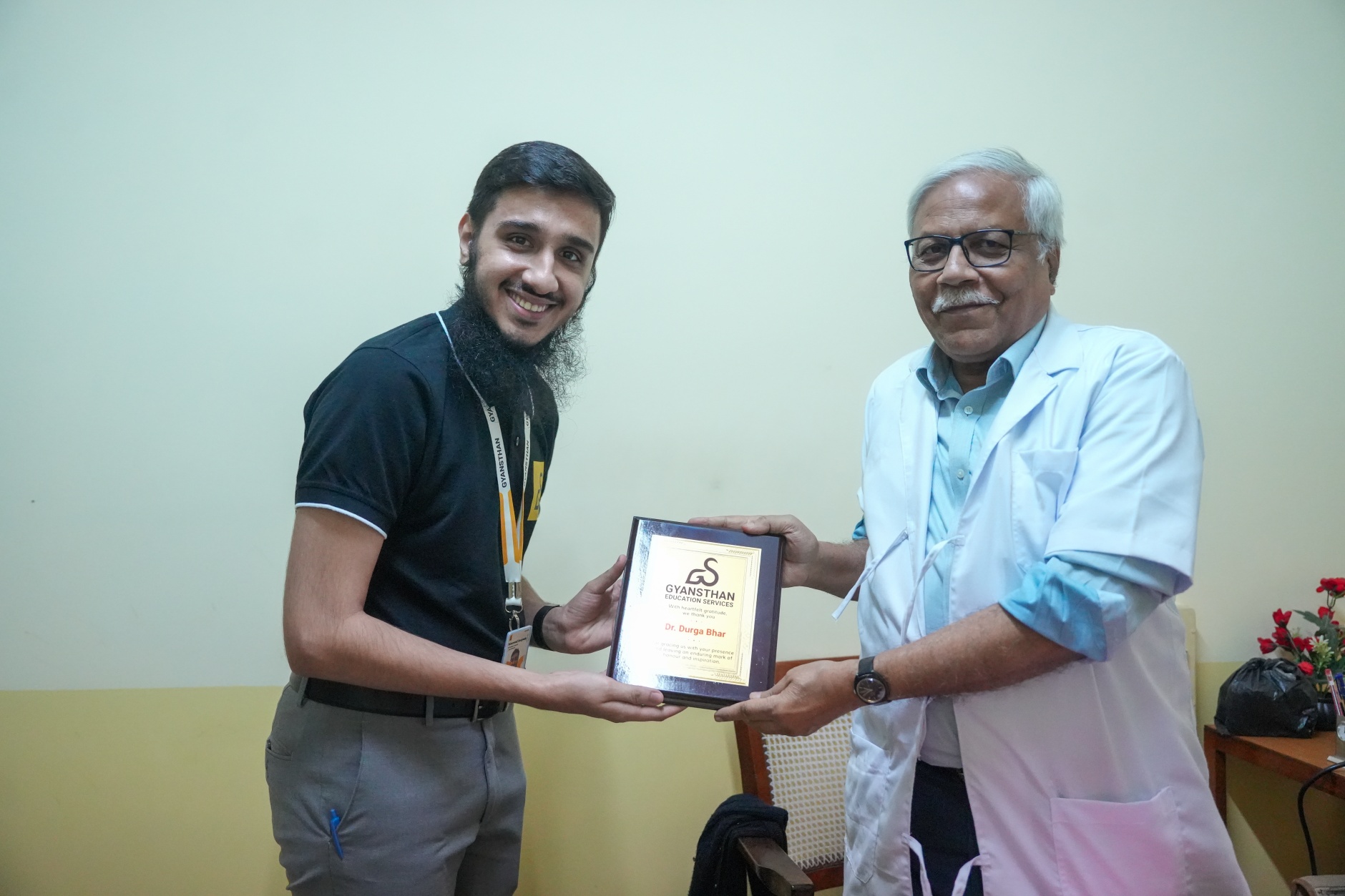
This was not a sightseeing trip with institutional visits attached. It was structured clinical and research exposure across the full spectrum of homoeopathic practice: from a library of texts that predate modern medicine to a virology lab where homoeopathic preparations are tested on cell lines and mice. From a factory floor where mother tinctures are prepared to a clinic where protocols developed over generations have caught the attention of America’s National Cancer Institute.
The students were BHMS undergraduates (2nd, 3rd, 4th year) and interns, alongside PG students and faculty from four colleges. The tour was organised under the leadership of Dean Dr Purab Desai and HOD Dr Falguni Patel.
Session 1: Calcutta Homoeopathic Medical College and Hospital (CHMCH)
CHMCH aka Calcutta Homeopathic Medical College & Hospital is one of India’s earliest homoeopathic institutions. Led by Principal Prof. Dr. Rajat Chattopadhyay. Heritage library of rare original homoeopathic texts, some predating modern medicine. CHMCH was selected during World War II to treat air-raid victims with dedicated beds, evidence that the medical establishment trusted homoeopathy in crisis response. QCI-NABET A+ ranking and OPD observation with Dr Rajat Sir narrating clinical reasoning in real time: pathognomonic symptoms first (mapping the disease picture), then characteristic symptoms (differentiating the individual patient). His instruction: never get deviated from the principles of Homoeopathy.
Session 2: Hahnemann Academy of Homoeopathy
Director Prof. Dr. Asok Kumar Das from Hahnemann Academy of Homeopathy drew the distinction between fundamental research and clinical research that most students had not thought about carefully. Clinical research takes priority because its outcomes shape prescribing decisions. Medicine is learned at the bedside, not in the lecture hall. Scientific validation through the Bernstein experiment and Rustum Roy‘s work on molecular rearrangement. For chronic diseases: one well-chosen individualised remedy aimed at removing the maintaining cause.
His statement: love homoeopathy first to become a successful homoeopathic practitioner.
Session 3: International Homoeo Research Pvt Ltd
The managing Director Mr. Sanjay Kar of the International Homeo Research Pvt Ltd spoke on the business reality of homoeopathy: manufacturing, distribution, market positioning. Factory visit: raw material handling, formulation, filling, sealing, labelling, quality control and GMP compliance.
Biocombinations explained with clinical rationale, patented products for animal wellness (improving milk quality) and entrepreneurship encouragement at all the levels. He quoted – you need to survive in the competition to be the best. If you’re passionate about natural healing, minimal intervention and holistic understanding of the human body and mind, delay not and enrol into PU’s BHMS programme!
BHMS Kolkata Tour – POV on Research, Manufacturing & Protocols
Session 4: Bengal Academy of Applied Homoeopathy
Chairman Dr. Biswajeet Das of Bengal Academy of Applied Homeopathy spoke on – treat your questions as idols, approach knowledge as a devotee approaches aarti. Chronic disease through the miasmatic lens. Case discussions: chronic diarrhoea, endocrine conditions, and ADHD (neurodevelopmental condition reframed miasmatically). Family history, gestational factors, and end to end analysis of vaccination history as evidence trails. Beside this, the dynamisation principles are connected to clinical reasoning.
He told students – Put your questions as idol, assume the aarti as knowledge.
Session 5: HAPCO (Hahnemann Publishing Company Pvt Ltd)
The Managing Director Mr. Durga Sankar Bhar and Whole-Time Director Mr. Kaushik Bhar from HAPCO spoke on medicinal plant sourcing, flowers collected at full bloom, early morning, active constituents at peak. He explained the ethical standards: will not manufacture from sources that are not naturally or ethically obtainable. He explained mother tincture’s preparation and trituration, converting insoluble substances into colloidal forms using lactose, increasing bioavailability. Globule preparation (consistency, absorption, impregnation) and quality control: HPLC and TLC technology.
He quoted – studying nature is very crucial for studying homoeopathic medicine.
Session 6: National Institute of Homoeopathy (NIH), Kolkata
The Director Dr. Pralay Sharma and PG Coordinator Dr. Swapan Paul from NIH, Kolkata handles thousands of patients daily through a department-wise cubicle system, and specialty in OPDs with referral mechanisms. His uniform case-taking protocols that serve dual purpose are: better patient care and research-quality data, integrated IPD and academic buildings and building public health institution at scale.
He quoted: your patient is the top-most priority, rest come afterwards.
Session 7: Dr. Anjali Chatterjee, Regional Research Institute for Homoeopathy (RRIH) - CCRH, Ministry of AYUSH
The Officer-in-Charge Dr. Arti Soren and Research Officer Dr. Chittaranjan Kundu from Regional Research Institute for Homoeopathy (RRIH) – CCRH, Ministry of AYUSH spoke on active research portfolios. They explained epidemiological surveys, drug proving programmes, clinical verification, and clinical trials. They even spoke on how drug proving methodology such as testing on healthy individuals to develop materia medica, virology laboratory and small animal culture facility (albino Wistar rats) and gene regulation analysis, molecular mechanisms of drug action. They even mentioned how clinical trials on hypothyroidism, diabetes, diarrhoea, COVID-19, and hypertension functions. Their publication in peer-reviewed journals with the scientists are Dr. Suraiya Parveen, Dr. Partho Pratim Pal, Dr. B. Biswas, Dr. G.V. Narasimha Kumar, Dr. Abhip Shah Sarkar.
Research is the key to unlock the best evidences of homoeopathy in the modern era.
Session 8: Mahesh Bhattacharya Homoeopathic Medical College and Hospital
Dr. Alok Misra and HOD Organon Dr. Rudranil Chatterjee from Mahesh Bhattacharya Homeopathic Medical College & Hospital spoke on disciplined academic atmosphere, departmental museums with end to end specimen-based learning. His detailed lecture on backache therapeutics covered causative factors, modalities, constitutional factors, miasmatic background over pathological diagnosis alone. The emergency department demonstrating acute prescribing and referral protocols. Organon aphorisms as living, guiding principles.
He quoted – aphorisms should be the guiding principles of every homoeopathic practitioner.
Session 9: Interactive Session with Dr. Samit Ghosh - Progressive Hall, Kolkata
Dr Samit Ghosh is an renowned classical homoeopathy practitioner at Hall, Kolkata. Dynamic concept of disease: disease primarily affects the vital force, physical symptoms are outward manifestations. He even explained drug proving on healthy individuals as the basis of materia medica. They’ve introduced HomeoGPT: an AI-assisted repertory tool he uses in his own practice. AI helps with computational complexity of repertory analysis but does not replace clinical judgement. The practitioner still frames the case, decides which symptoms to repertorise, evaluates output, and makes the final prescription. His statement: your knowledge and understanding with experience will boost your confidence.
Session 10: Dr. Prasanta Banerji Homoeopathic Research Clinic (PBHRC)
The revered director Dr. Isha Banerji from PBHRC spoke about The Banerji Protocols – standardised medicines, fixed potencies, predetermined dosage schedules tied to confirmed clinical diagnosis. Reproducibility across practitioners. Decades of case records, radiological evidence, and long-term follow-up. Research collaborations with NCI, MD Anderson, and NASA. Applications to chronic, degenerative, and life-threatening conditions including cancers and neurological disorders. She briefly explained – free consultation model, rural outreach, and emergency protocol kit. Doctor of Medicine Homoeopathy (MD) from Parul University is designed for the students who are interested in cutting-edge laboratories, holistic healing and who are eager to make a real difference in healthcare!
Charity and science can go hand in hand when you truly commit to the cause of homoeopathy.
Student Experiences - LinkedIn and Quora
Student responses appeared on LinkedIn (Dr Parth Vedpal Sharma, Ishan Thummar, Satakshi Shrikant Kumar, Bansari Sathwara, Dhruvi Panchal, Mohd Huzefa Delani, Patel Shivam Jitendrabhai, Samiya Makrani, Shrusti Barot) and Quora.
“We visited reputed homeopathic colleges, research centers, hospitals, and even pharmaceutical companies. Visiting different setups, different patient volumes, and different teaching methodologies away from our own college helped a lot to get a proper insight into the way things work in the fields of medicine and homeopathy in India.”
“Our homoeopathy tour in Kolkata was not just about wandering around. We went to colleges, hospitals, research institutes, and the manufacturing units of homoeopathic products. Hearing the doctors talk, observing the operation departments, the research laboratories, and the manufacturing units helped us realize many things in a way that would have been difficult to understand in textbooks.”
“We visited institutions like established colleges of homoeopathy, NIH, CCRH research institutes, clinics, and even pharmaceutical units. A classical practice, research work, treatment based on protocols, and big OPDs all at one place made me realize that India has many serious spaces for homoeopathy. You just have to step out of your bubble and observe them yourself.”
“Whenever selecting a BHMS college, do not only go by ranking or advertisement. What matters most is clinical exposure. Whether the attached hospital has a regular OPD with real patient flow and whether students actually get involved in case taking and learning.”
What This Tour Says About Parul University's BHMS Programme
Parul University’s homoeopathy programme operates within a NAAC A++ (CGPA 3.55) ecosystem with 7 NABH-accredited hospitals (1 Allopathy and Super-speciality, 2 Ayurved, 4 Homoeopathic). The Kolkata tour is one of 146 Practical Learning Tours across 19 cities and 280 companies that Parul University organises as part of its academic calendar.
The same institution that sends engineering students to IIT Hyderabad and DRDO, law students to Gujarat High Court and GNLU, and liberal arts students to Mumbai Press Club and Prithvi Theatre sends BHMS students to CHMCH, NIH Kolkata, CCRH research institutes, HAPCO manufacturing, and the Banerji Protocols clinic. The Practical Learning Tour system does not distinguish between faculties. Every programme gets industry-specific exposure at national-level institutions.
Parul University Practical Exposure: 19 Cities, 280 Companies
Frequently Asked Questions
Is Parul University good for BHMS?
Parul University's BHMS programme includes 7 NABH-accredited hospitals (including 4 homoeopathic), regular OPD exposure with real patient flow, and Practical Learning Tours to national-level institutions. The Kolkata tour visited 10 institutions including CHMCH (QCI-NABET A+, WWII air-raid treatment history), NIH Kolkata (thousands of patients daily), RRIH under CCRH Ministry of AYUSH (virology lab, drug proving), HAPCO (pharmaceutical manufacturing), and the Banerji Protocols clinic (NCI, MD Anderson, NASA collaboration). As one student noted on Quora: what matters most is clinical exposure, whether the attached hospital has real patient flow and whether students actually get involved in case taking.
What practical exposure do BHMS students get at Parul University?
Regular hospital OPD postings and clinical discussions at PU's own NABH-accredited homoeopathic hospitals. Beyond campus: Practical Learning Tours to institutions like CHMCH, NIH Kolkata, CCRH research institutes, HAPCO manufacturing, Bengal Academy, Hahnemann Academy, Mahesh Bhattacharya Hospital, and PBHRC. Students observe live OPD case-taking, watch homoeopathic medicine manufacturing, visit virology and pharmacology labs, and interact with directors and researchers at national-level institutions.
Does homoeopathy have research backing?
The RRIH under CCRH Ministry of AYUSH conducts epidemiological surveys, drug proving programmes, clinical verification, and clinical trials (hypothyroidism, diabetes, diarrhoea, COVID-19, hypertension). It operates a virology laboratory and animal research facility. The Banerji Protocols have been studied in collaboration with NCI (National Cancer Institute), MD Anderson, and NASA. Scientific validation of homoeopathy through the Bernstein experiment and Rustum Roy's work on molecular rearrangement was discussed at the Hahnemann Academy session. Publication in peer-reviewed journals is an institutional commitment at RRIH.