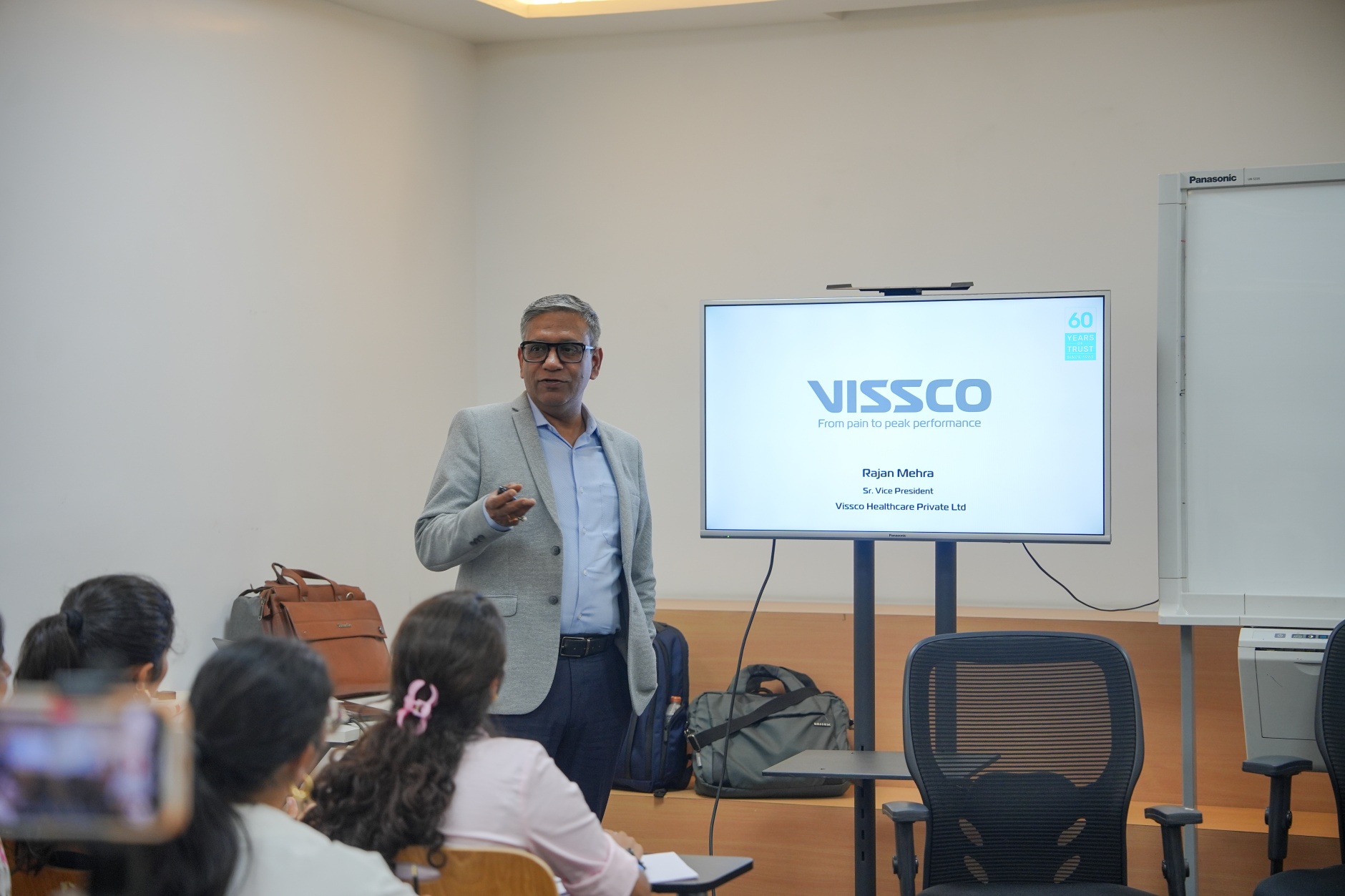
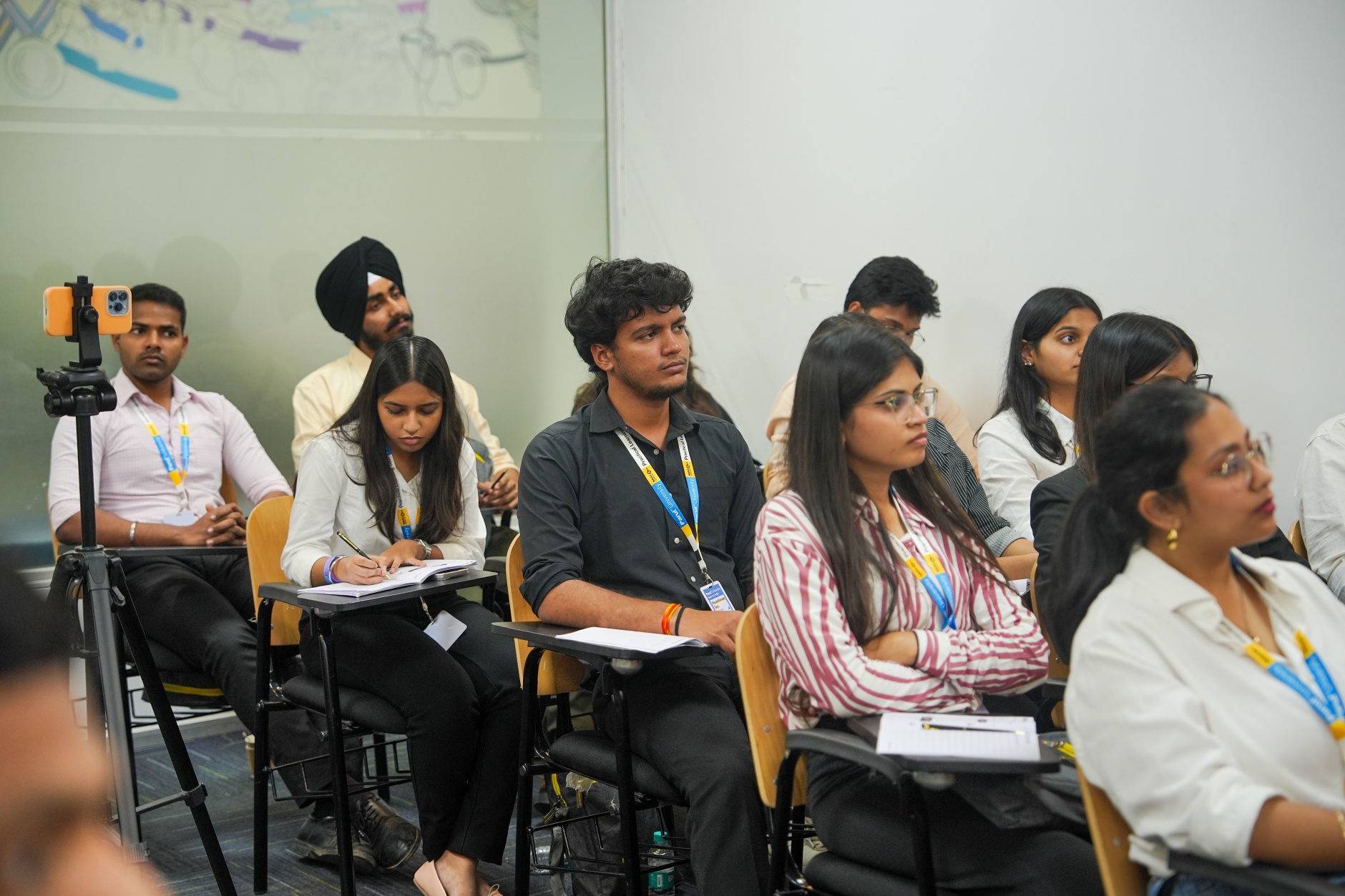
Mr. Rajan Mehra, VP Marketing and Strategic Initiatives at vissco, entered with 32 years of industry experience: Sanofi founding team when it first launched in India, Stryker for devices and implants, his own venture representing a US-based advanced braces company, and then vissco. He did not plan to end up in rehabilitation. He ended up where he found meaning, because rehabilitation, he said, is where you get to actually touch lives. Where you see someone move from pain to peak performance within a short span, and you are part of that journey.
The vissco origin story is worth knowing because it tells you what the company is actually trying to be. In 1963, the founder’s wife was suffering from neck pain. Nothing available in India could help. Her husband met a UK doctor at a social gathering, described the problem, and spent the next 6-7 months chasing a product that existed somewhere in the world but had not found its way to India. When she finally used it, the pain began to ease within 3 days. That relief became a question the founder could not put down: why is something this effective not available to every person in India who needs it? From one garage in south Bombay, the company began. A decade to build the brand. Then the factory. Hospital furniture. Sports medicine ranges. Advanced orthopedic bracing. Post-2018: fully latex-free digital platforms and a manufacturing facility in Gujarat. Over 700 products maintained, inventoried, and updated continuously with a team that includes physiotherapists, orthotists and prosthetists, textile engineers, and design engineers.
Then he said something that changed the room.
“You are a brand. Not vissco. Not the clinic you work in. You. The trust a patient places in a specific physiotherapist is brand loyalty. The referral they give to their friend is brand advocacy. The reputation you build over five years in a community is brand recall.”
According to the demographic stats, the numbers tell a story about the age. In 2020, nearly 140 million Indians were aged 60+ and expected to reach 340 million by 2050. 70% percent of this population reported mobility-related discomfort.
Arthritis presenting in people as young as 38 and 40. Post-COVID avascular necrosis is creating a new wave of patients. Posture decline and a sedentary lifestyle are creating problems that will not go away. The students in this room were entering at precisely the moment when demand was becoming acute.
On careers beyond the clinic, he listed what most graduates had not considered:
- Sports performance teams at professional clubs (MCA, BCCI, Pro Kabaddi, AFI, NSCI)
- Corporate ergonomics consultants working with IT companies
- Digital rehabilitation platforms providing online consultations
- Product and device companies hiring physios as clinical educators
- Full patient care teams inside pharmaceutical companies
On entrepreneurship, the clinic dream is worth having, but it is a marathon, not a sprint. Cash flow, difficult patients, team management, and referral escalation are never taught. His primary advice: specialize. Spine rehabilitation creates a different profile than a general clinic. That reputation can be systematized into protocols. Those protocols can be taught to a team. That team can eventually expand. Systems build businesses. Individuals build clients. You need both to scale. And he was careful to distinguish: do not confuse entrepreneurship with selling. An entrepreneur identifies a problem at scale and builds something to solve it. The selling follows naturally from the solution.
He asked the room whether they knew the word “intrapreneur.” A student reached for his phone to look it up. The speaker let him read the definition aloud and then used the distinction to make a point: not all of them would start clinics immediately. Some would work inside larger organizations first. Both paths have value. What matters is knowing which one you are on.
Student feedback: this session taught us how to bridge the gap between clinical skills and business mindset, inspiring us to think like healthcare leaders. The emphasis on transparency, communication, and patient education was highly motivating and practically relevant.
Read More: How A Recurring Pain Was Cured By Phyisotherapy Techniques?
Robotic Rehabilitation: What Three Hospitals and One Startup Showed
The technology dimension of the tour spanned three major hospitals and one IIT Bombay startup, and together they painted a picture of where physiotherapy is heading that most curricula have not yet caught up with.
At Apollo Hospitals Navi Mumbai, Dr. Nitin Jagasia (Regional Director, Emergency Western Region) and Dr. Shalushubham Keni (In Charge of Physiotherapy and Rehabilitation) demonstrated robotic-assisted rehabilitation in ICU and post-stroke recovery. The emphasis was direct: rehabilitation is not optional; it is essential. Early mobilisation once vitals are stable. Stroke recognition and rapid response protocols. Students witnessed advanced robotic and high-end modalities firsthand, and the integration of innovation with clinical reasoning was the point, not the technology alone.
At Sir HN Reliance Foundation Hospital, the focus was robotic gait training, computerized therapy units, and technology-based balance systems. Modern diagnostics integrated into treatment planning. The message: robotics improves rehabilitation precision and supports faster and safer recovery but does not replace clinical reasoning and manual skills. At Kokilaben Dhirubhai Ambani Hospital, Dr. Vaibhav Daga (HOD Sports Medicine) showed gait analysis laboratories, diverse therapeutic modalities, and the reality of field-side decision-making in sports rehabilitation. His emphasis: strong theoretical basics, clear communication, and professional conduct define credibility. Bridge the gap between theory and practice. Be proud of being a movement specialist.
At Life Spark Technologies at IIT Bombay, Mr Amey Desai presented the WALK machine for Parkinson’s patients. The concept is simple. The impact is life-changing. Technology driven by real clinical need, not by market gap analysis. Students described it as extremely clear, crisp, and highly informative, and called it an inspiring example of need-based innovation with a strong vision focused on helping the needy.
The Other Sessions: Documentation, Community, and Holistic Practice
Three additional sessions covered dimensions of physiotherapy that are essential to professional practice but rarely taught with the weight they deserve.
At Jaslok Hospital, Dr. Shreyas Katharani (HOD, Physiotherapy) addressed the leadership role of physiotherapists in healthcare teams, emphasising that prevention is the future and that paperwork and documentation form the foundation of credible practice. At Nanavati Max Hospital, students saw advanced digital documentation systems, structured rehabilitation protocols, and the multidisciplinary approach in patient management. The internship program structure motivated students to aim for strong clinical training foundations. At K.J. Somaiya College of Physiotherapy, the advanced gait training machine and community-based rehabilitation services demonstrated that technology improves functional rehabilitation and community care expands physiotherapy’s impact. The peaceful campus and supportive faculty made the experience memorable.
Dr. Masooma Ladiwala (The Classique Club) closed the tour’s clinical arc with a session on foundations. Always clear your basics before advanced techniques. She recommended Anatomy Trains as essential reading. Muscles are interconnected: dysfunction in one area affects the whole body. Her most distinctive contribution was the idea that emotions can be stored in muscles and influence pain, meaning the mind-body connection is not metaphorical but clinically observable. Pain relief without preventing recurrence is incomplete treatment. Setbacks lead to comebacks.
The vissco Experience Centre provided hands-on exposure to the full range of 700+ rehabilitation and mobility products. Equipment design based on biomechanics. Proper fitting improves recovery. Students understood clinical applications better after seeing, touching, and testing the devices rather than reading about them in catalogues.
FAQs
What career options exist in physiotherapy beyond clinics?
Based on the tour: sports performance teams (MCA, BCCI, Pro Kabaddi, AFI, Indian Railways Weightlifting, NSCI). Corporate ergonomics consulting. Digital rehabilitation platforms. Medical device companies (vissco: 700+ products, hires physios as clinical educators, maintains a team of physiotherapists, orthotists, textile engineers, and design engineers). Hospital departments across specialities (oncology at ACI, neurology at Apollo, sports medicine at Kokilaben, critical care at Reliance). Occupational therapy clinics (TheraCure). Health-tech startups (Life Spark at IIT Bombay). Content creation and public health education. India projected 340 million aged 60+ by 2050, with 70% already reporting mobility discomfort.
How is robotic rehabilitation changing physiotherapy?
Apollo Hospitals: robotic-assisted rehabilitation in ICU and post-stroke recovery, early mobilisation with advanced technology. Sir HN Reliance: computerised therapy units, robotic gait training, balance systems. Life Spark at IIT Bombay: the WALK machine for Parkinson's patients, affordable need-based innovation. Kokilaben: gait analysis laboratories and data-driven sports rehabilitation. Technology enhances precision, supports faster recovery, and enables assessment-driven planning, but does not replace clinical reasoning and manual skills.
How do I start a physiotherapy clinic in India?
Rajan Mehra (vissco, 32 years): specialise first, because spine rehabilitation creates a different profile than general practice. Build systems and protocols that can be taught to a team. The clinic is a marathon, not a sprint. Prepare for cash flow management, difficult patients, and team challenges. Dr Pooja Mehta (TheraCure): started by walking to nearby buildings and introducing herself to doctors, grew through word of mouth, now uses Instagram for brand-building. Dr Rajashree Lad (Rehab Sphere): wrote a posture book during the pandemic when patients arrived with conditions created by 12-13 hour work-from-home days. All three: trust is built through results, transparency, and consistent communication over time.