Aditya Birla Memorial: Robotic Surgery, Nuclear Medicine, and Why AI Cannot Replace Judgement
Parul University Practical Exposure: 19 Cities, 280 Companies
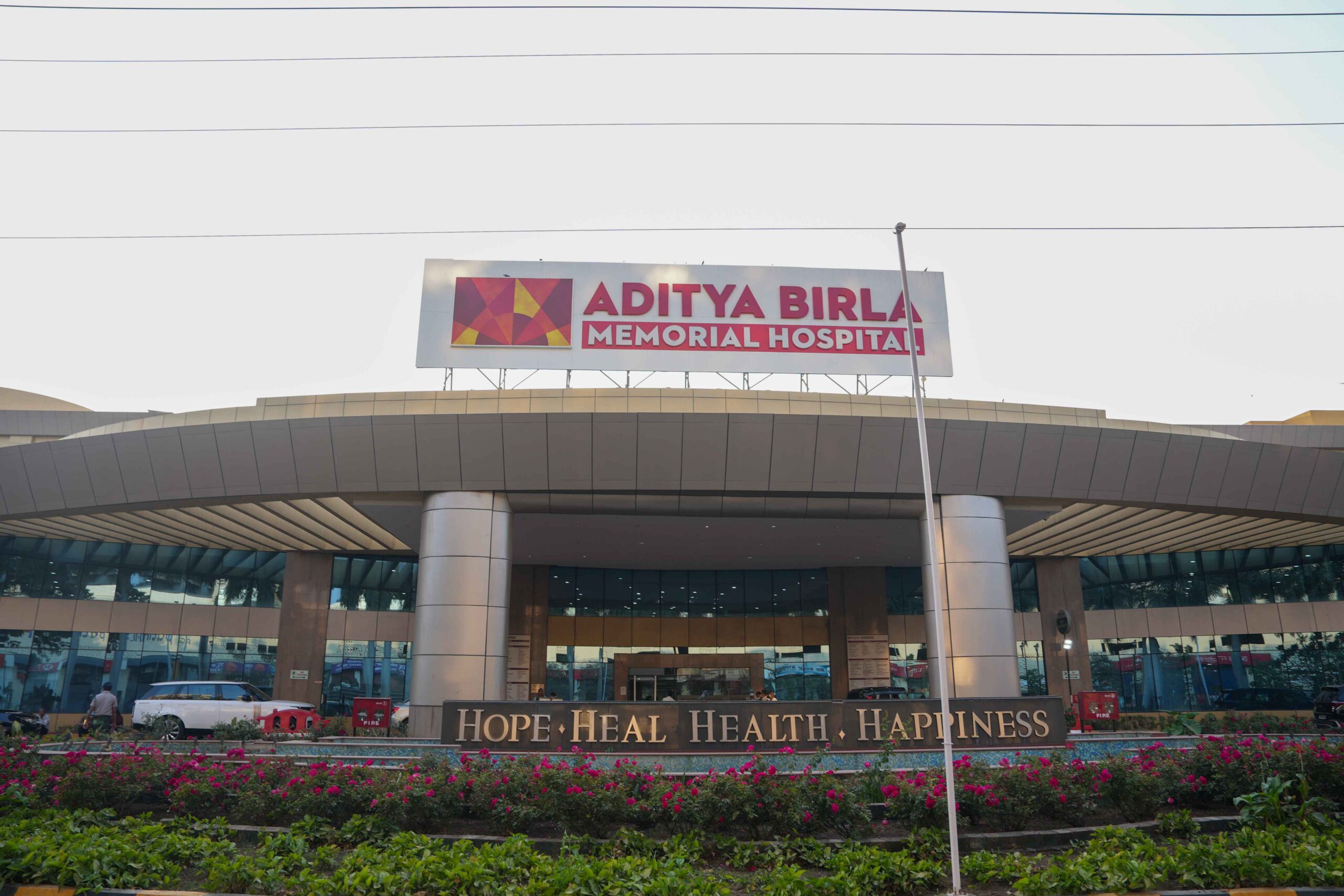
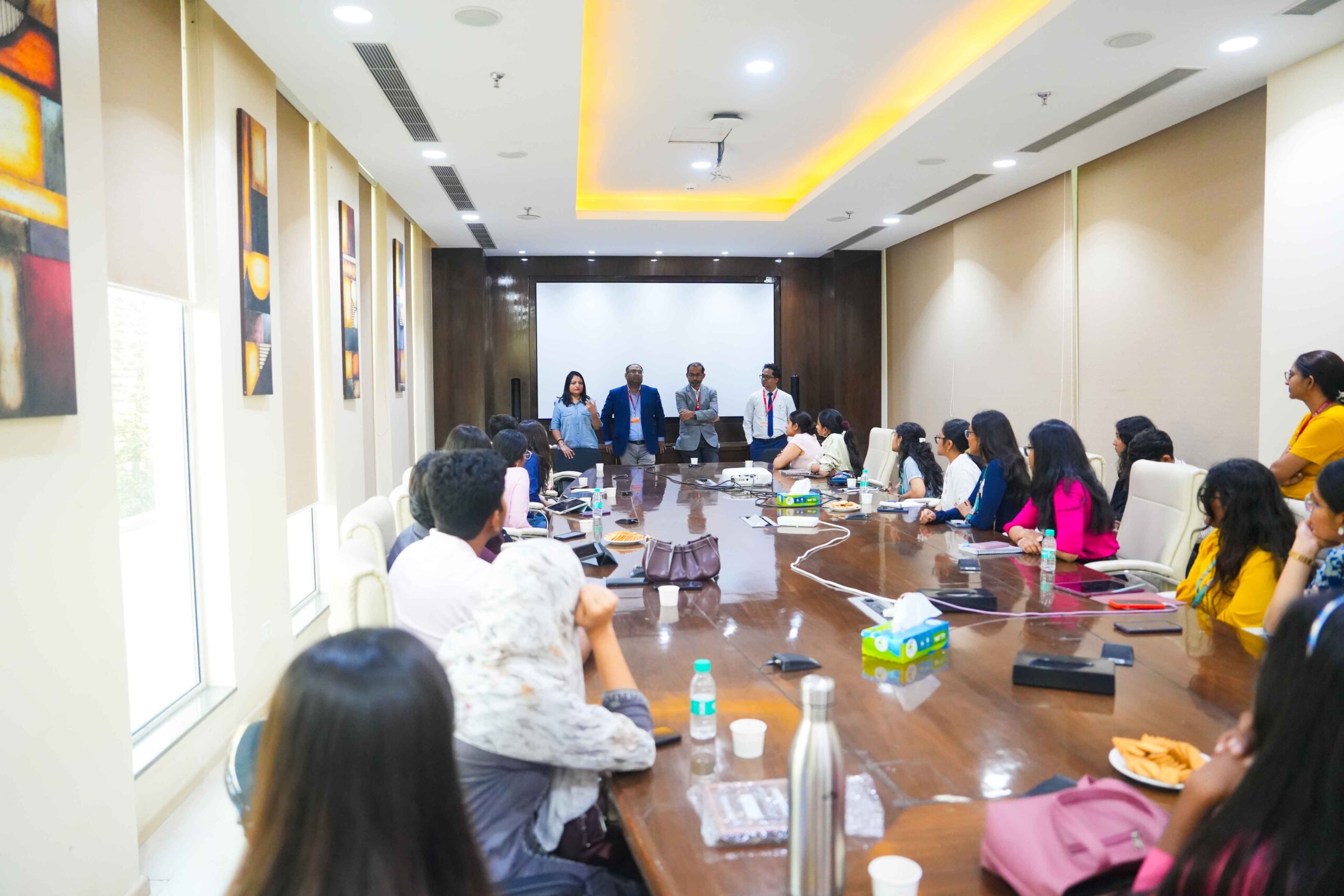
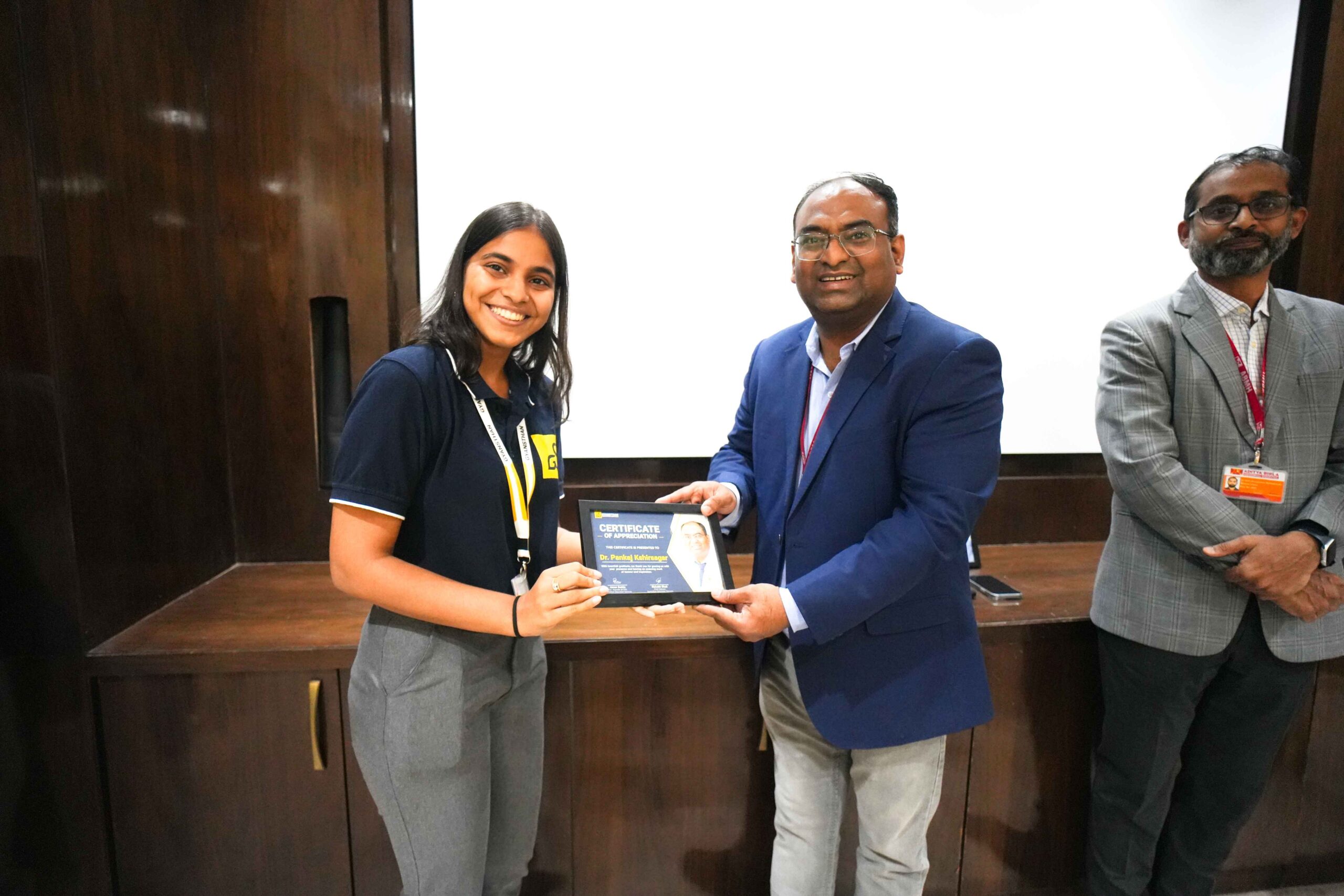
Four speakers addressed the students at Aditya Birla Memorial Hospital: Dr Sandip Bartakke (Senior Consultant, Gynaecological Oncologist), Dr Nikhil Parwate (Associate Director, Surgical Oncology), Dr Madhuri Shimpi (HOD Nuclear Medicine), and Dr Pankaj Kshirsagar (Consultant, Surgical Oncology). Dr Bartakke opened with something direct: robotic surgery is not the future, it is the present. By the time these students take their exams, it will probably be part of what they need to study. He pointed to the Da Vinci system (first made 1994) now being used for all surgeries inside the abdomen and pelvis. The outcomes are difficult to argue with:
- Bloodless surgery – Patients lose 40-50 cc of blood.
- Discharge within 23 hours without any catheters
- Working patients return to jobs within 72 hours
- 360-degree instrument rotation that a human wrist cannot achieve, reaching areas impossible with conventional surgery
- Surgeon operates alone from a console with sterilised tools, reducing infection risk
When a student initially asked how to learn robotic surgery as a medical student, Dr Bartakke said – do not rush. Master the absolute basics of open surgery first, then understand the foundation of laparoscopy, and then move to robotics. Follow operating room’s hierarchy levels – second assistant first, then first assistant, then operating under direct supervision. On cost, he acknowledged robotic surgery is expensive now but said the government’s Make in India initiative is working subsequently to make robots cheaper, and Ayushman Bharat may soon cover robotic procedures as standard treatment. He even advised medical students who are actively looking to think about organ-specific specialization early in their career trajectory – As and when the field evolves, there will be surgeons who specialize in specific organs and oncologists who specialize in specific organs, and the earlier you position yourself, the more faster you grow at all the levels. Subsequently, by pursuing MBBS from Parul University, it shall shape and grow you at all the levels.
Dr Madhuri Shimpi, the HOD of Nuclear Medicine, introduced a dimension of medicine most students had never encountered in their career stories. Nuclear Medicine pro-dominantly uses special injections to show how organs are operating at all the levels, unlike CT or MRI which only show what organs look like. FDG PET CT uses a sugar with radiation, because cancer cells grows fast and need more energy, they consume more sugar and show up clearly on the scan. Bone scans detect problems when bones are only slightly damaged, finding stress fractures long before X-rays can. Stress thallium scans check the heart for blockages even before they cause problems, when the scan shows no issues, the patient is very unlikely to have a heart attack in the following year. Theranostics combines diagnosis and end to end treatment, PSMA therapy for prostate cancer, DOTA therapy for tumours, using nuclear medicine to both find and treat cancer inside the body. She even described nuclear medicine as a field that gives doctors a qulitative life, when she goes home, she doesn’t worry that a patient will ever call about any treatment complication, a rare win though. You too can contribute at the intersection of public welfare and healthcare by enrolling in PU’s Bachelor of Medicine & Bachelor of Surgery (MBBS) program!
On AI front, the expert was direct. AI can find many problem in scans, but it’s surely not good at determining which problems are for real. She described a case where AI flagged metastatic cancer that turned out to be a false finding and doctors nearly administered aggressive treatment based on AI’s mistake and predictions. It’s imperative to know that AI cannot replace human touch and critical judgement of a real doctor. She even acknowledged that hospital administrators may try to use AI to replace doctors to save costs, making it a real-time concern for the profession.
Dr Sagar (senior surgeon, 5,000+ surgeries) closed the session with a perspective that shifted the room from technology to values. Do not choose a branch because of money, try to be the best version in your interests’ field. He even shared why he has stopped doing neurosurgery, he said, seeing accident victims became too emotional to navigate, teaching students that self-awareness and emotional resilience are important for surgical career. His cancer statistics were sobering as by 2027, two people in each family may have cancer, as requiring multidisciplinary teams of surgeons, dieticians, and pain specialists.
The Tumour Board concept addresses disagreements between specialists: different doctors meet, discuss, and follow NCCN guidelines with the patient’s best interest as the only criterion. For a 95-year-old thyroid cancer patient, the standard surgical approach was replaced by a specialised plan because the patient’s age demanded it.
His practical advice for surviving the profession: have a hobby outside medicine (learn an instrument, try stand-up comedy, stay physically fit), agree with a boss when you disagree then do what is right and inform the boss afterwards, count to 10 before reacting, and write down goals clearly with dates because an aim without a date is just a wish. Do not leave India: the way health infrastructure is growing, everyone will be coming to India.
“Make your vision clear and write down your goals to make them reality.”
Medicine Tour to Pune – 9 Medical Sessions across Pune’s Healthcare Ecosystem!
Sancheti: The Difference Between Treatment and Healing
Lt Col (Dr) Lavneesh Tyagi, Head of Sancheti Advanced Orthocare Hospital, brought a career path that few medical students consider. After MBBS, he worked in surgery and neurology, then joined the armed forces (Indian Navy and Army), gaining clinical experience across diverse conditions and locations. He then pursued MD in Hospital Administration, shifting from purely clinical work to managing hospital systems and operations.
His session introduced two frameworks that students could immediately apply. The Triple I technique: Imbibe (absorb knowledge from every source around you), Improvise (modify and adapt that knowledge to the specific situation in front of you), Implement (apply it in real practice, not just theory). The DIKW Pyramid Raw data becomes Information when processed. Information becomes Knowledge when analysed for patterns. Knowledge becomes Wisdom when applied effectively in decision making. Both frameworks are relevant for clinical reasoning and hospital administration.
The philosophical heart of the session was the distinction he made between treatment and healing. treat a disease or condition: prescribe medicines, perform surgery, apply protocols. Healing is more than that – it includes the patient’s physical, mental and emotional health.” Modern healthcare should focus on healing, not just treating. The patient needs to feel comfortable, supported and satisfied throughout the entire process. He showed ethical practice with a real example, a doctor supporting the treatment given by another hospital in an honest manner rather than unnecessarily criticising it. That kind of integrity builds trust across the entire profession, not just for one practitioner.
“Rather be a demo, before people make a sample out of you.”
Col Dr Surekha Kashyap: The Third Pillar of Indian Healthcare
Col (Dr) Surekha Kashyap, Board Member at the Academy of Hospital Administration and retired Army doctor, showed the students a career path that most of them had never considered. She described healthcare in India as having three pillars: government hospitals and local clinics, private hospitals, and the Armed Forces Medical Services.
Most students only think about the first two. The AFMC system is a nationwide network with small clinics, larger hospitals, and very large care centres, designed to prevent overcrowding by filtering cases through levels of care. Her journey began in Saharanpur, UP, with no family in the army or medicine. Her mother never listened to those who said she could not join AFMC. A teacher named Omar Menan told her to try the army, and that single piece of advice changed her life. At AFMC: 125 students (25 girls, 105 boys), students from Nepal and Bhutan, everyone the best from their own city. Military training in Lucknow was transformative: stretcher carrying, parade drills (she led the parade because of her strong debate-trained voice), weapons training, formal etiquette. She was posted to a Delhi army hospital where she delivered babies without ultrasound, using clinical skills to feel the baby and listen to the heartbeat with simple tools. Then, she chose Hospital Administration over clinical specialisation to balance career and family, and was direct with female students: without a support system (someone at home, family members), managing studies, a demanding job, and family simultaneously is impossible.
She started telemedicine in the army so village clinic doctors could consult specialists through computers. She designed floor plans for new hospitals. But her defining story was Misamari, a small hospital in Assam that she transformed completely. She got the carpenter and painter to create artwork on the walls. The gardener won prizes for flowers. A visiting colonel was so impressed he joked that patients would never want to leave. She proved that a great hospital does not require a great budget, just a heart and hard work. Two doctors at that same hospital illustrated her philosophy: one bravely performed a neck surgery without a blood bank by planning well, while another refused to deliver babies because a specific machine was missing. The first found solutions. The second found excuses.
At 50, she was commanding officer in a Rajasthan desert at 50 degrees Celsius, living in a tent without water or electricity, the only woman among hundreds of men. When men teased her about her height: my mother told me it is only how tall you are above the shoulder which counts. She organised free health camps in villages, women-only clinics for free checkups that would cost thousands in cities, school visits for disabled children, and got specialist doctors to treat people who could not afford care. Students who are actively searching for master programmes in medical can level up their skills with Parul University as they’ve R&D lab, advance facilities and live exposure to healthcare industry!
“If the body is weak it can toughen up. If the mind is weak then nothing can be done.”
Only 40% Diseases are Curable – Future Doctors Explored Beyond Myths in Pune’s Medicine Tour!
Pune Municipal Corporation: Public Health at the Scale of 50 Lakh People
Dr Khedkar and Dr Gunesh, Medical Officers at Pune Municipal Corporation, showed students what medicine looks like when the patient is an entire city. Every birth and death must be recorded within 7 days. The Insect Control Department works to prevent malaria and mosquito-borne diseases. The Contributory Health Scheme covers 20,000 PMC workers: a small monthly salary deduction gives access to 150+ hospitals with 90% of expenses paid by PMC. The Poor Urban Poor Health Scheme: Rs 10 registration for 1 year of insurance, Rs 2 lakh coverage for cardiac problems or dialysis, Rs 1 lakh for other conditions, and 50 free clinics across the city. Forty percent of Pune’s population (approximately 20 lakh people) lives in slums.
PC-PNDT Act enforcement is a core responsibility. The Pre-Conception and Pre-Natal Diagnostic Techniques Act (1994) was created to stop sex-selective abortions. The team checks approximately 950 ultrasound centres every 3 months. Every centre needs Form F signed by both doctor and patient confirming no sex determination was performed. Three registrations are required: the place, the doctor (with proper training), and the machine itself. Unregistered machines cannot be used. Violations result in permanent licence revocation. The speaker was emphatic: when you become doctors, you must always follow this law.
The operational challenges were honest: population doubled from 25 lakh to 50 lakh but Medical Officer count remained the same. Health budget inadequate. 32 new towns added to the city, adding 5 lakh+ people requiring new hospitals and facilities. The health sector runs 24 hours, 7 days a week: a doctor cannot say their duty is over and leave. PMC hospitals have been ranked in the top 5 nationally for 3 consecutive years under the Kayakalp programme (government quality and cleanliness assessment), following the National Quality Assurance Scheme. The difference between a regular doctor and a Medical Officer: a doctor treats patients, a Medical Officer represents the government. If they make a mistake, the government answers for it. You can become a medical officer by pursuing MBBS from Faculty of Medicine, Parul University!
“Talking nicely solves ninety percent of all problems.”
CDAC and Ruby Hall: Technology and Leadership Sustaining Healthcare
CDAC (Centre for Advanced Development and Computing) represented the technological backbone supporting modern medicine. Mercury Nimbus Neo, a high-performance computing system, processes large volumes of medical and biological data for research, simulations, and analysis. The NRC for Electronic Health Record Standards of India works toward standardised health records for interoperability across hospitals, so patient information can be accessed and utilised efficiently anywhere. The Akansha Radiation Treatment Planning System is an indigenous solution for planning radiation therapy, demonstrating India’s growing capability to create advanced medical technologies rather than depending on imported systems. Speakers: Bhumika Khawshi (HPC of Medical and Bioinformatics Applications Group) and Jaya Sonavane (Project Engineer, NRC for EHR Standards).
Ruby Hall Clinic (Mr Behram Khodaiji, CEO; Col Denu Thomas, Head of HR) focused on radiation oncology advancements alongside the principle that sustains any healthcare institution: technology may advance healthcare, but it is leadership and teamwork that sustain it. Modern infrastructure and advanced equipment transform cancer treatment, but even the most advanced systems require strong management, clear communication, and coordinated effort to reach their potential.
Read more on MBBS at Parul University, Vadodara: Fees, Seats, Clinical Training & Campus Overview
Frequently Asked Questions
What is Da Vinci robotic surgery and how does it work?
Da Vinci (first made 1994) is a robotic surgical system used for abdomen and pelvis surgeries. The surgeon operates from a console with sterilised tools. 360-degree instrument rotation (impossible for human wrists) reaches areas conventional surgery cannot. Patients lose only 40-50 cc of blood, are discharged within 23 hours without drains or catheters, and working patients return to jobs within 72 hours. Currently expensive, but Make in India and Ayushman Bharat may make it more accessible. The learning path: master open surgery first, then laparoscopy, then robotics.
How do you become an army doctor in India?
Col Dr Surekha Kashyap's path: qualify for AFMC (Armed Forces Medical College), complete MBBS, undergo military training (stretcher carrying, parade, weapons, formal etiquette), serve in army hospitals across the country. Career includes clinical practice in diverse conditions (Delhi, Srinagar, Rajasthan desert, Assam), hospital administration (designing hospitals, starting telemedicine), community outreach (free health camps, women-only clinics). The AFMC system is the third pillar of Indian healthcare alongside government and private hospitals.
What career options exist in medicine beyond clinical practice?
Based on the tour: hospital administration (Sancheti: Triple I, DIKW; Deenanath Mangeshkar: ethical management), healthcare entrepreneurship (Onco Life Care: single speciality, healthcare management skills), armed forces medical services (Col Kashyap: AFMC, telemedicine, hospital design, community outreach), public health administration (PMC: PC-PNDT enforcement, health schemes, quality assurance), nuclear medicine (Aditya Birla: FDG PET CT, theranostics, bone scans, stress thallium), healthcare computing (CDAC: Mercury Nimbus Neo, EHR standards, Akansha radiation planning), robotic surgery specialisation, and institutional leadership.
What is nuclear medicine used for?
Dr Madhuri Shimpi (HOD Nuclear Medicine, Aditya Birla Memorial): FDG PET CT uses radioactive sugar to detect cancer (cancer cells consume more sugar and show up clearly). Bone scans find stress fractures before X-rays can detect them. Stress thallium scans check the heart for blockages and predict heart attack risk for the following year. Theranostics combines diagnosis and treatment: PSMA therapy for prostate cancer, DOTA therapy for tumours. Unlike CT or MRI which show what organs look like, nuclear medicine shows how organs are functioning right now.