Cipla Palliative Care: When Cure Is Not the Point, Care Becomes Everything
Medicine Tour to Pune – 9 Medical Sessions across Pune’s Healthcare Ecosystem!
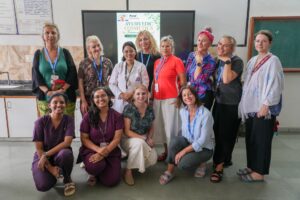
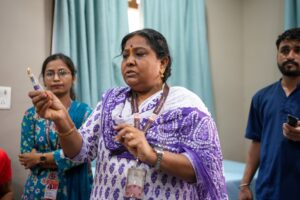
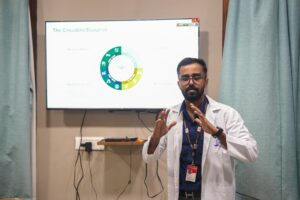
The very first session at Cipla Palliative Care & Training Centre reframed how the students understood their future professions at all the levels. Dr Jay Rajan (Medical Director), Dr Vivek Nirbhawane (Head of Clinical Services & Consultant) and Dr Tulsi Kadam (HOD & Senior Physician) spoke about a statistic that recalibrated the room – Only 40% of diseases are completely curbale, rest 60% are chronic.
The remaining 60% are chronic. For most patients a doctor will encounter in their career, cure is not the outcome. Care, comfort, and dignity are. Palliative care begins at diagnosis, not at end of life, and runs alongside curative treatment from the very first day.
The concept of total pain, introduced during the session, expanded what pain means beyond the physical into four interconnected dimensions. Physical pain is what most students already understand: headaches, nociceptive pain from tissue damage, neuropathic pain from nervous system damage. But three other dimensions operate simultaneously.
Social Pain’s story goes like – A 62 year old whose grandfather’s birthday is happening but he cannot attend because of his treatment schedule. Pyschological Pain – A 64 year old sarpanch with a wound on her knee who cannot work, losing her identity alongside her mobility. Spiritual pain – A 32 year old college student with cancer, watching his friends live normally, and asking why this has only happened to him and not anyone else. Treating everyone via the physical dimension whole ignoring the other three means the patient can may improve temporarily but their suffering continues untouched.
Dr Tulsi Kadam introduced the PQRST pain assessment framework that gives clinicians a systematic tool for evaluating all dimensions:
- P (Provocation/Palliation): what makes the illness worse? What makes it better?
- Q (Quality): what does the pain feel like? Sharp, dull, burning, radiating?
- R (Region/Radiation): where is the pain? Does it spread?
- S (Severity) – O-10 Scale, wherein 0 is no pain and 10 is the worst
- T (Timing) – how and when does it start? How does it change over time? What are the prime triggers?
The stellar team of multidisciplinary was presented as the only effective delivery model including doctors, nurses and psychologists, social workers, physiotherapists, dieticians, and volunteers, each with specific roles, and each are equally premium and important. The key idea is to 1+1 – becomes more than 2 when the team functions together with same energy and enthusiasm. No single member is more important than the whole, when asked, who’s the most important member of MDT, the answer was direct – not one person, the entire team functions together.
A real patient case made the concept truly unforgettable, a man suffering from severe illness experienced pain, depression, social isolation, financial stress about his daughter’s future. Through the palliative care, his pain was healed, managed, emotional support was provided and asistance was arranged for his daughter’s throughout education and marriage. Subsequently, palliative care did not cure his disease as it addressed the total pain that was consuming his remaining life and ensured that what he cared about most, his daughters’ futures, wasn’t abandoned when his health was. That’s the discipline’s purpose – Not extending life at any cost, but making the time that remains true & meaningful!
“Add life to their days, not days to their life.”
The most ethical considerations included patient autonomy, beneficence, non maleficence, and justice. The challenges were very honest – hierarchical structures in healthcare where doctors dominate decisions, limited resources and role confusion within teams. The answer to every challenge was the same – better collaboration, better communication and mutual respect at all the levels. Palliative care should ideally begin at diagnosis, not at the end of the life, early involvement helps with better symptom control, holistic emotional support and improved understanding for patient & families.
Medical Courses After 12th – Technology, Leadership & Future of Healthcare!
Deenanath Mangeshkar Hospital - What Happens When Ethics is the Foundation, Not the Decoration!
Dr Dhananjay Kelkar is the Medical Director of Deenanath Mangeshkar Hospital and Research Centre, narrated a story that most students had never heard from a hospital leader. It wasn’t about technology or expansion plans, it was about dissatisfaction with routine practice and what happens when a group of doctors decides to do something about it for real. That’s when growth happens and by choosing medical courses after 12th is a primitive decision for medical students. Why settle for less when you can avail your degree from Parul University’s Faculty of Medicine wherein exposure + excellence thrives at all the levels!
Moving on to the story, 8 to 8 doctors were feeling a lack in work even after having successful careers, they were given a condition that most established doctors would surely reject – stay and travel together for an entire year before starting anything. For doctors with busy schedules, families and reputations, it wasn’t easy at all. During that very year, they visited urban hospital, rural based clinics and tribal areas where healthcare was next to zero. They met efficient doctors working selflessly on infant mortality, public welfare and affordable treatment. The entire experience changed for them and that’s when they realized how trust and patient cares come first, before everything!
In 1992 they started a medical foundation. Instead of investing their own funds, they approached society with honesty and a clear purpose. Within two months they raised Rs 15-20 lakhs. Their first patient was treated on 1 December 1993. The hospital started with hardly any patients, minimal facilities, and an environment that was not well maintained. Instead of getting discouraged, the team focused on quality of care. Within two years the hospital was completely full. Within a few more years, a waiting list. Lata Mangeshkar supported the initiative by providing land for a larger hospital. The institution grew into a well-known healthcare centre with multiple departments, advanced facilities, and a large daily patient volume.
The principle that made it work was simple to state and difficult to maintain: not to charge more than required and not to provide less than necessary. The rules were strict and enforced without exception:
- No commission-based practices of any kind
- No unnecessary investigations (MRI, CT scans only when genuinely needed for the patient’s benefit)
- No pharmaceutical company influence on prescribing decisions
- All financial transactions transparent and properly recorded
- Any doctor found violating these ethics terminated immediately, without exception
In one case they sold an expensive machine because it was not being used in a way that aligned with their ethical values. This is not a detail about equipment management. It is a statement about institutional character. Most hospitals add machines to attract patients. This hospital removed one because keeping it would have compromised what they stood for.
“Teamwork, rationality and ethics are pillars of leadership in medicine.”
The session reminded students that success in healthcare is not measured by the number of machines in a hospital or the size of its building. It is measured by the trust patients place in the institution. That trust, at Deenanath Mangeshkar Hospital, was built over decades through a commitment to rational practice (every decision based on logic, diagnosis, and evidence), ethical practice (every decision in the patient’s best interest, never influenced by money or external pressure), and transparent operations. Future plans include a model rural hospital, a large medical institute, and a dedicated paediatric hospital, all built on the same ethical foundation.
Sahyadri: Oncology Is Evolving Faster Than Any Curriculum Can Follow
Dr Shona Milon Nag, Director of Oncology at Sahyadri Hospitals shared her personal evolution in a way that made the students see their own future learning curve. She started with basic knowledge about chemotherapy and oncology. During her fellowship abroad she realised that treating patients is far more complex than following standard protocols. Every patient is different. A diabetic patient cannot receive the same treatment as a non-diabetic. Factors like existing diseases, age, and overall health condition change everything about the treatment plan. And she learned something that most training programmes do not teach explicitly: it is completely acceptable to say I do not know. In fact, that mindset opens the door to continuous learning. Pretending to know everything closes it.
Cancer treatment is never handled by a single doctor. It is always a team effort: surgeons, oncologists, radiologists, pathologists, nutritionists, physiotherapists, and pain specialists. Each contributes to what is called multimodal treatment, ensuring all aspects of the patient’s condition are addressed. The advances she described show where the field is heading: immunotherapy (using the body’s own immune system to fight cancer cells instead of attacking the tumour directly), targeted therapy (focusing only on cancer cells and reducing damage to healthy tissue), modern drug delivery techniques (medicines acting directly on tumour cells for more precise and efficient treatment), and daycare chemotherapy (patients receive treatment and return home the same day, reducing emotional stress and helping them feel more normal during their treatment journey).
Hospitals are also transforming the patient environment. Music therapy, yoga, and counseling are integrated to help patients stay mentally strong. Reducing stress improves emotional well-being and also helps in better treatment response. The challenges she raised were direct and honest: many Indian patients are diagnosed at later stages because of lack of awareness and fear of medical tests. There is a significant affordability gap. Doctors must balance treatment quality with what patients can actually pay. Early detection through better screening, awareness at the grassroots level, and removing fear and stigma around medical consultation were presented as the most impactful interventions possible.
“If you do not document it, it did not happen.”
Onco Life Care: Healthcare Entrepreneurship Requires Patience, Not Just Capital
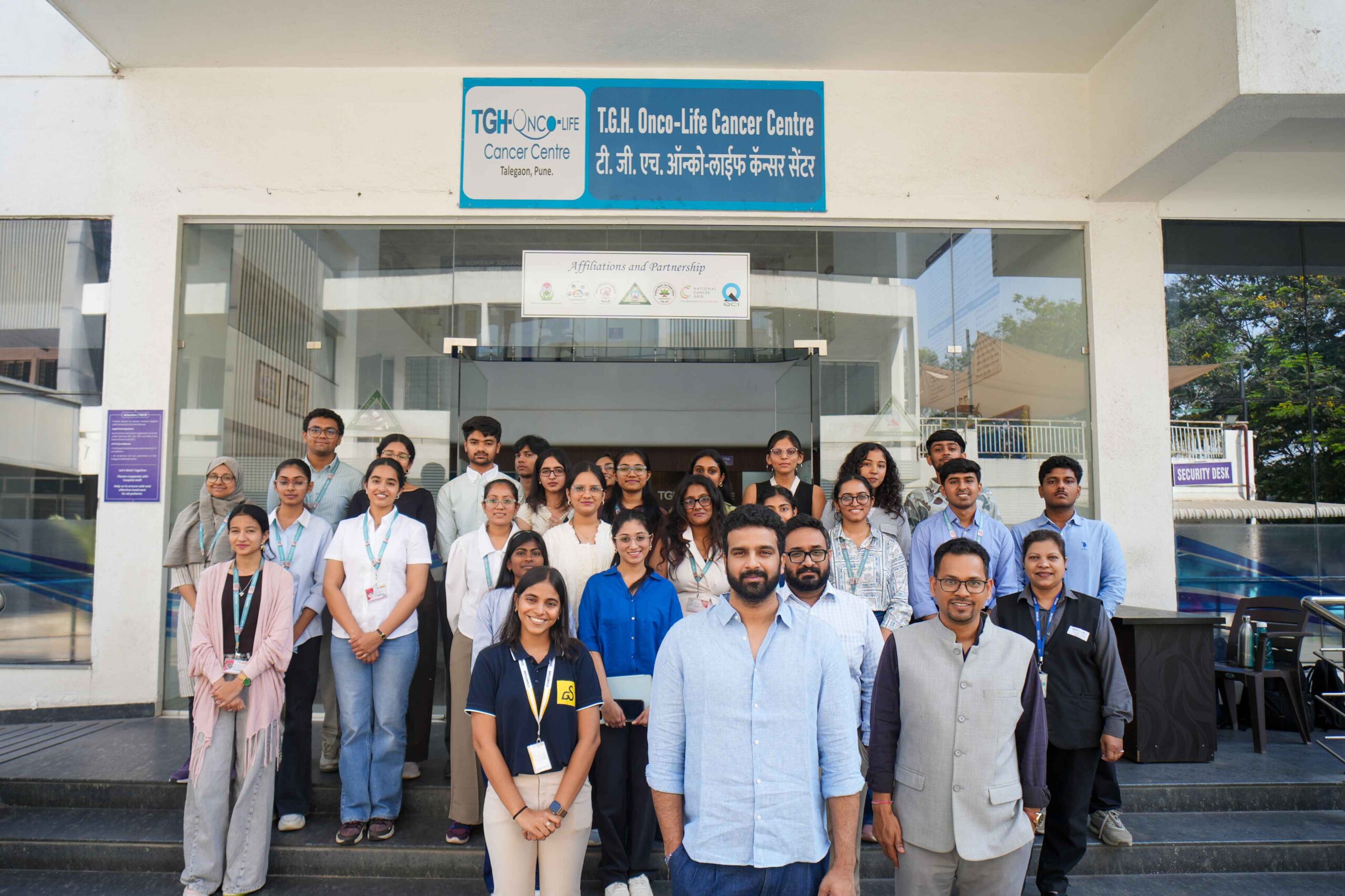
Mr Sachin Deshmukh, Managing Director of Onco Life Care Centre in Talegaon, told a story that began not with him but with his father. His father was the Asia head for a multinational medical systems company. Despite opportunities abroad with a good salary, he decided to leave his job. His motivation was not money or prestige. It was the fact that people in Satara, his hometown, had to travel to bigger cities like Mumbai for treatment. He wanted to build something so that people could access healthcare locally. Many discouraged him, saying it would not work in a smaller place. Medical equipment is expensive. Hiring specialised doctors adds to the cost. Hospitals do not generate profit immediately. It took five years to reach break-even.
His advice for anyone considering healthcare entrepreneurship was specific and honest. Start with single speciality rather than multi-speciality, because multi-speciality requires significantly more investment and operational complexity. The traditional nursing home concept may slowly decline as patients prefer larger hospitals that offer government schemes and better facilities. Getting a business loan is difficult. Arranging funds and maintaining operations in the initial years requires patience and financial understanding that most clinical training does not provide.
The broader message: the healthcare field is evolving. The number of doctors is increasing, leading to higher competition. Being clinically skilled alone will not be enough to succeed. Every medical student should consider learning healthcare management, even a short course. Healthcare management covers financial planning, staff management, and operational efficiency, skills that are essential for running a successful practice or healthcare facility. Students who are actively searching for medical colleges in India or who are looking to serve in healthcare industry, must level up their careers with Master Programms in medical domain from Parul University and should say yes to the best placements in sync with placement support. The centre itself integrates Radixact radiotherapy alongside chemotherapy for precise, targeted cancer treatment, combining advanced technology with compassionate leadership.
Read more on MBBS at Parul University, Vadodara: Fees, Seats, Clinical Training & Campus Overview
Frequently Asked Questions
What is total pain in palliative care?
Total pain extends beyond physical symptoms to include four interconnected dimensions: physical (nociceptive and neuropathic pain), emotional (anxiety, depression, fear of death), social (isolation from family events, inability to work, financial stress), and spiritual (questioning why illness happened, searching for meaning). At Cipla Palliative Care, the PQRST framework was taught for systematic assessment across all dimensions. A case study showed a patient whose total pain included worry about his daughters' education and marriage. Palliative care addressed all four dimensions, not just the physical, and arranged assistance for his daughters' futures.
How was Deenanath Mangeshkar Hospital built?
Eight to nine doctors spent one year travelling together, visiting hospitals, rural clinics, and tribal areas. In 1992 they started a foundation. Within 2 months they raised Rs 15-20 lakhs through honest appeal. First patient: 1 December 1993. Hospital was struggling initially, full within 2 years, waiting list within a few more. Lata Mangeshkar provided land. Ethics enforced without exception: no commission, no unnecessary tests, no pharma influence, transparent finances, immediate termination for violations. They even sold an expensive machine that did not align with ethical values. Future plans include a model rural hospital and a paediatric hospital.
What are the latest advances in cancer treatment?
Based on the tour: immunotherapy (body's immune system fights cancer), targeted therapy (focuses on cancer cells only), modern drug delivery (medicines act directly on tumour cells), daycare chemotherapy (patients return home same day), Radixact radiotherapy (precise targeting), Da Vinci robotic surgery (40-50 cc blood loss, 23-hour discharge, 360-degree instrument rotation), nuclear medicine (FDG PET CT, bone scans, stress thallium, theranostics including PSMA and DOTA therapy). Music therapy, yoga, and counselling integrated for mental health. Early detection through better screening remains the most impactful intervention.
Should medical students learn healthcare management?
Mr Sachin Deshmukh (Onco Life Care): every medical student should learn healthcare management, even a short course. Many doctors excel clinically but fail to manage their practice because they lack knowledge of finance, HR, and operations. Competition is increasing as the number of doctors grows. Clinical excellence alone will not be enough. Healthcare management covers financial planning, staff management, and operational efficiency. Starting a hospital requires understanding that it takes 3-5 years or more to become profitable, and that single speciality is more practical initially than multi-speciality.