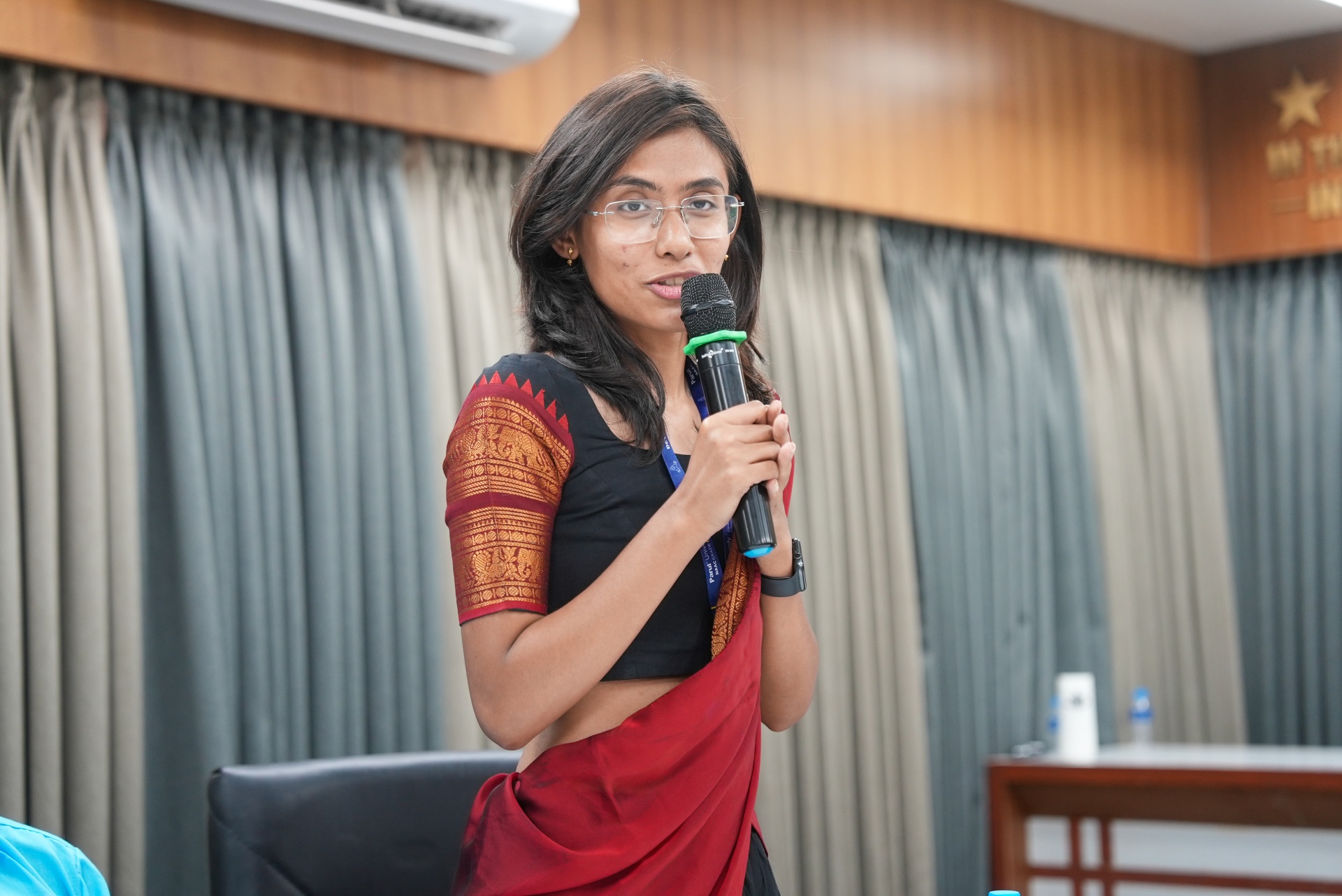
Isaac Castro, a Business Development student from Artevelde University in Belgium, spent three months at Parul University. His account captured both the cultural surprises and the sense of belonging that defined his term. He spoke about the contrast between Belgian and Indian traffic, the daily discovery of new food at the office, and the soccer games that he credited with helping him feel at home. He worked on social-impact projects through the Social Responsive Cell, visiting street schools under the Apni Pathshala initiative with the Saksham Tattvam Foundation, work detailed in the international research and internship article. His closing line drew on the university’s own tagline.
I love Gujarat, I love Parul University, and I want to end my speech by saying Yahan possible hai, chalo Parul.
Mr. Isaac Castro, Belgium, Business Development exchange student
The detail that recurred in his account was food. He shared how he enjoyed eating new food every day at the office, adding that he will remember this experience his whole life. The daily life became part of his routine, which he will miss. The heat, by his own admission, was the one thing he would not miss, a candour that made the warmth of the rest of his account more credible.
The most reliable account of a semester abroad does not come from a brochure. It comes from the students who lived it, in the words they chose at the end of it.
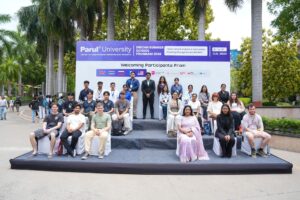
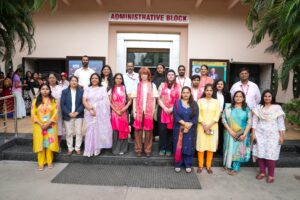
The most reliable account of a semester abroad does not come from a brochure. It comes from the students who lived it, in the words they chose at the end of it. After the term gets over, the students are given a farewell organised by the university by CIRR where they share their experiences.
Portugal: Tiago Marques on research, friendships, and feeling at home
Tiago Joel Ferreira Marques, a Chemical Engineering student coming from Instituto Superior Técnico in Portugal, spent four months at the university.
His account combined the academic and the personal. Academically, he conducted environmental catalysis research and presented two research papers during his term, working with faculty coordinator Alok Tiwari and Department Head Dr. Hariharan T. Personally, he described the friendships he formed in his department, a memorable trip to New Delhi with fellow international students Isaac and Danish, and a visit to Goa where the Portuguese cultural presence let him feel a piece of home while remaining fully engaged in India. He drew an explicit comparison between this exchange and a prior month-long exchange he had done in Europe during high school.
It has nothing to do with coming to India because I have been so welcome here, everyone was so helpful, they made me feel like home.
Mr. Tiago Joel Ferreira Marques, Portugal, Chemical Engineering exchange student
His departmental experience was reciprocated by his hosts. Faculty coordinator Alok Tiwari, who admitted he had initially been hesitant about the additional responsibility of hosting an international student, described by the end of the term that he would genuinely miss Tiago, citing his punctuality, discipline, and the curiosity with which he approached every interaction. The arc from institutional hesitation to genuine attachment is among the more honest markers of what the programme produced.
Also Read: What learnings do the international students gain during the exchange program?
Uzbekistan: Gulli Jovliyeva on safety, growth, and becoming half Indian
Gulli Jovliyeva Ravshan Qizi, a B.A English student from Asian Technology University in Uzbekistan, hosted at the Faculty of Liberal Arts, spent four months at the university. Her account centred on two themes: the safety experience that contradicted the warnings she had heard before travelling, covered in detail in the campus safety article, and the personal growth that the term produced. On her first visit to India, she described her initial days’ experience as moments of loneliness, but eventually felt she belonged and was integrated here, as she did not return early.
Sometimes I feel alone, but I do not want to go back because I feel I am half Indian.
Ms. Gulli Jovliyeva Ravshan Qizi, Uzbekistan, Liberal Arts exchange student
In terms of academics, she made a presentation comparing Uzbek and Indian history and gave credit to faculty members Anju Ma’am and Gargi Ma’am for helping her smooth transition throughout the term. She shared her experience of wearing a saree for the second time at the farewell ceremony and how memorable it was for her to try Pani Puri. These are some of the small cultural markers, academics, and experiences that contributed to her integration into Indian student life.
Malaysia: Danish Bin Zamzuri on the ha that means yes
Mr. Qaid Danish Bin Zamzuri from INTI International University in Malaysia spent five months at the university, the longest term in the documented cohort.
His account opened with a cross-cultural misunderstanding that became a recurring memory. On his first day, when his coordinator Ms. Krishnaben Raulji responded to his explanation with ha, he initially read it as confusion because in Malaysia ha signals that the listener has not understood. Over the course of his Indian journey, he learned that ha means yes in India, a small linguistic discovery that captured the broader experience of cultural adaptation. He credited his coordinator, his Head of Department, and the CIRR team for guiding him through his five-month term and was paired with a student buddy, Kaushal, who shared football, badminton, and daily campus life with him.
As I go through my Indian journey, I learned that ha means yes in India.
Mr. Qaid Danish Bin Zamzuri, Malaysia, exchange student
Russia: Iaroslav Baranov on public health, Ayurveda, and education
Mr. Iaroslav Baranov from Russia, a student of ITMO University, spent three months at the university across a distinctive dual placement. He was hosted jointly by the Parul Institute of Public Health and the Parul Institute of Ayurveda, studying both modern public health and India’s traditional system of medicine. By his own admission, not given to long speeches, he was direct about what the term had given him: knowledge, friendships, and a strong impression of how India approaches public health and education. His engagement connected to Dean Dr. Parth Sarthi Ganguly, whose remarks at the ceremony reflected on the value of cross-cultural exchange in building, as he put it, ambassadors of peace and harmony among the younger generation. The full account of his Ayurveda and public health exchange is documented in the Russia-to-Ayurveda exchange article.
I am very much impressed on how India works in public health and education. Love this country and will remember it for a long time.
Mr. Iaroslav Baranov, Russia, ITMO University, exchange student
Indonesia: Pierre L Eau Nardo on startups, meditation, and two-way learning
Mr. Pierre L Eau Nardo, known also as Wang Binyang, came from Universitas Multimedia Nusantara in Indonesia as a BBA student hosted at the Faculty of Management Studies. His account stood out for what he gave to his hosts as much as what he took away. Dr. Shveta Shah, Academic Head at the Parul Institute of Business Administration, recalled that beyond his academic work he shared ideas on startups, meditation services, and martial arts that he planned to continue in his own country, ideas the host faculty learned from in turn. His exchange exemplified the two-way learning that Dr. Preeti Nair had described as the programme’s first agenda: not a one-directional transfer of knowledge but a genuine exchange in both directions.
This exchange was truly a two-way learning process. While he learned about our culture, academics, and university environment, we also learned many things from him.
Dr. Shveta Shah, Academic Head, Parul Institute of Business Administration, on the Indonesian exchange student
The recurring themes across all six accounts
Read together, the six accounts share a set of recurring themes that define the international exchange experience at Parul University.
- Cultural adaptation as discovery: From Danish’s ha that means yes to Gulli’s first Pani Puri, the cultural surprises became cherished memories rather than obstacles.
- Friendship across nationalities: The cohort formed cross-national friendships, with Isaac, Danish, and Tiago travelling to New Delhi together, demonstrating integration not just with Indian students but across the international cohort.
- Faculty warmth: Every account credited specific named faculty and coordinators, from Alok Tiwari to Anju Ma’am to the CIRR team, with the support that made the term work.
- Personal growth: Each student described leaving more independent, more adaptable, and more confident than they had arrived.
- Reluctance to leave: The recurring closing note across the cohort was not relief at going home but reluctance to leave, the clearest possible signal of an environment that had become a second home.
What faculty and local students gained from the other side
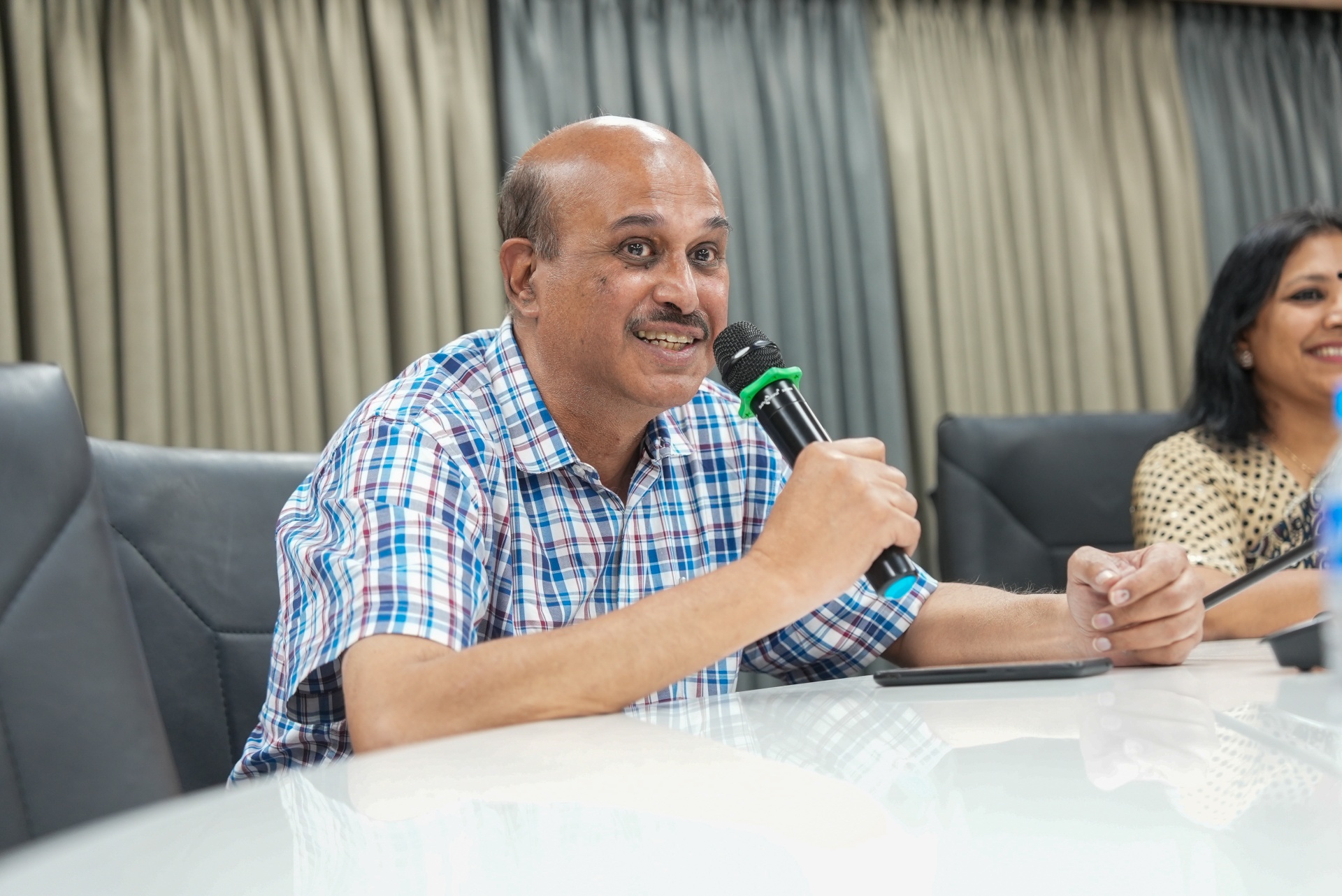
The exchange was reciprocal, and the gains flowed in both directions. Faculty members across departments described what hosting international students had given them. Dr. Sanjay Agal, Head of Department at the Faculty of Engineering and Technology, noted that the questions international students asked differed from regular classroom interactions, making the teaching and learning process more engaging for everyone in the room. The Indonesian student’s startup, meditation, and martial-arts ideas, recalled by Dr. Shveta Shah at the Parul Institute of Business Administration, gave the host faculty new perspectives in turn. The reciprocity confirms Dr. Preeti Nair‘s framing of the programme’s first agenda: learning from each other.
The benefit was not limited to faculty. Local students who served as buddies described their own learning.
A student buddy, Kaushal, was assigned to the Malaysian exchange student, Danish. Kaushal described this as a new experience where he got to know Malaysian culture through Danish while having a similar campus routine, along with sports like football and badminton integrated into daily life. For local students of Parul University, the buddy program is about getting international exposure at home itself through language, culture, and perspectives shared by international students on campus.
The CIRR team member Anuja Tidke, repeatedly credited by students across the cohort, captured the institutional posture that made this reciprocity possible, describing how the team works from the first day to make every international student feel comfortable, welcomed, and supported under the tagline Yahan Sab Possible Hai.
FAQs
What do international students say about studying at Parul University?
International students in the 2026 inbound exchange cohort at Parul University described their experiences positively across multiple themes. Belgium's Isaac Castro ended his Farewell speech with the university tagline Yahan possible hai, chalo Parul. Portugal's Tiago Marques said he had been made to feel at home and that the experience had nothing in common with a less welcoming prior exchange in Europe. Uzbekistan's Gulli Jovliyeva said she felt half Indian by the end of her term. Malaysia's Danish described learning to adapt to Indian communication and culture. Russia's Iaroslav Baranov said he was impressed by India's public health and education systems and would remember the country for a long time. The recurring themes across all accounts were cultural adaptation, cross-national friendship, faculty warmth, personal growth, and reluctance to leave.
Which countries' students shared experiences at the 2026 Parul University exchange?
The 2026 inbound Semester Exchange and Internship Program at Parul University documented experiences from students representing Belgium (Isaac Castro, Business Development, Artevelde University), Portugal (Tiago Joel Ferreira Marques, Chemical Engineering, Instituto Superior Técnico), Uzbekistan (Gulli Jovliyeva Ravshan Qizi, B.A English, Asian Technology University), Malaysia (Qaid Danish Bin Zamzuri and Priyankka Prabhathan, both Computer Science, INTI International University), Russia (Iaroslav Baranov, Public Health and Ayurveda, ITMO University), and Indonesia (Pierre L Eau Nardo, also known as Wang Binyang, BBA, Universitas Multimedia Nusantara). The students spent terms ranging from three to five months at the Vadodara campus, engaging in academic coursework, research, internships, and cultural immersion through the Center for International Relations and Research.
What was the academic experience like for international students at Parul University?
International students in the 2026 cohort described the academic experience at Parul University as practical, interactive, and supportive. Portugal's Tiago Marques contrasted the practical, hands-on approach at Parul with the more theoretical education at his home university, and valued the close student-faculty relationships that enabled active participation in research and discussion. Uzbekistan's Gulli Jovliyeva described interactive, discussion-based classes in literature, linguistics, and history that increased her confidence. The students consistently credited faculty members with being approachable and supportive, and several noted that the multicultural campus environment and the scale of activity across the large campus enriched their learning beyond what their home universities offered.
Did international students form friendships during their exchange at Parul University?
Friendship was among the most consistent themes across the 2026 international cohort's accounts. Students formed friendships both with local Indian students and across the international cohort itself. Belgium's Isaac, Portugal's Tiago, and Malaysia's Danish travelled together to New Delhi, an experience Tiago described as one of his most memorable. Malaysia's Danish was paired with a student buddy, Kaushal, who shared football, badminton, and daily campus life. The cross-national friendships, combined with integration into Indian student life, were what led multiple students to describe reluctance to leave at the end of their terms, with Uzbekistan's Gulli stating she felt half Indian.
What did Parul University faculty gain from hosting international students?
The exchange was reciprocal, with faculty describing genuine gains from hosting international students. Dr. Sanjay Agal, Head of Department at the Faculty of Engineering and Technology, noted that the questions international students asked differed from regular classroom interactions, making teaching and learning more engaging. Dr. Shweta Shah, Academic Head at the Parul Institute of Business Administration, described the exchange as a two-way learning process, recalling a student named Wang who shared ideas on startups, meditation, and martial arts. Faculty coordinator Alok Tiwari, who admitted initial hesitation about hosting an international student, described by term's end that he would genuinely miss the Portuguese student Tiago, citing his punctuality, discipline, and curiosity.
How long do international students stay at Parul University on exchange?
International students in the 2026 Parul University exchange cohort stayed for terms ranging from three to five months. Belgium's Isaac Castro and Russia's Iaroslav Baranov spent three months each. Portugal's Tiago Marques and Uzbekistan's Gulli Jovliyeva spent four months each. Malaysia's Danish Bin Zamzuri spent five months, the longest documented term in the cohort. The programme accommodates both semester-length academic exchanges and internship-focused terms, with the duration determined by the arrangement between the student's home university and Parul University's Center for International Relations and Research.