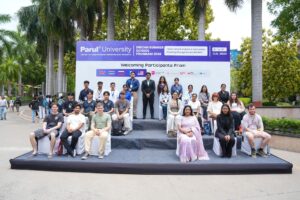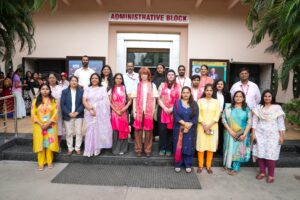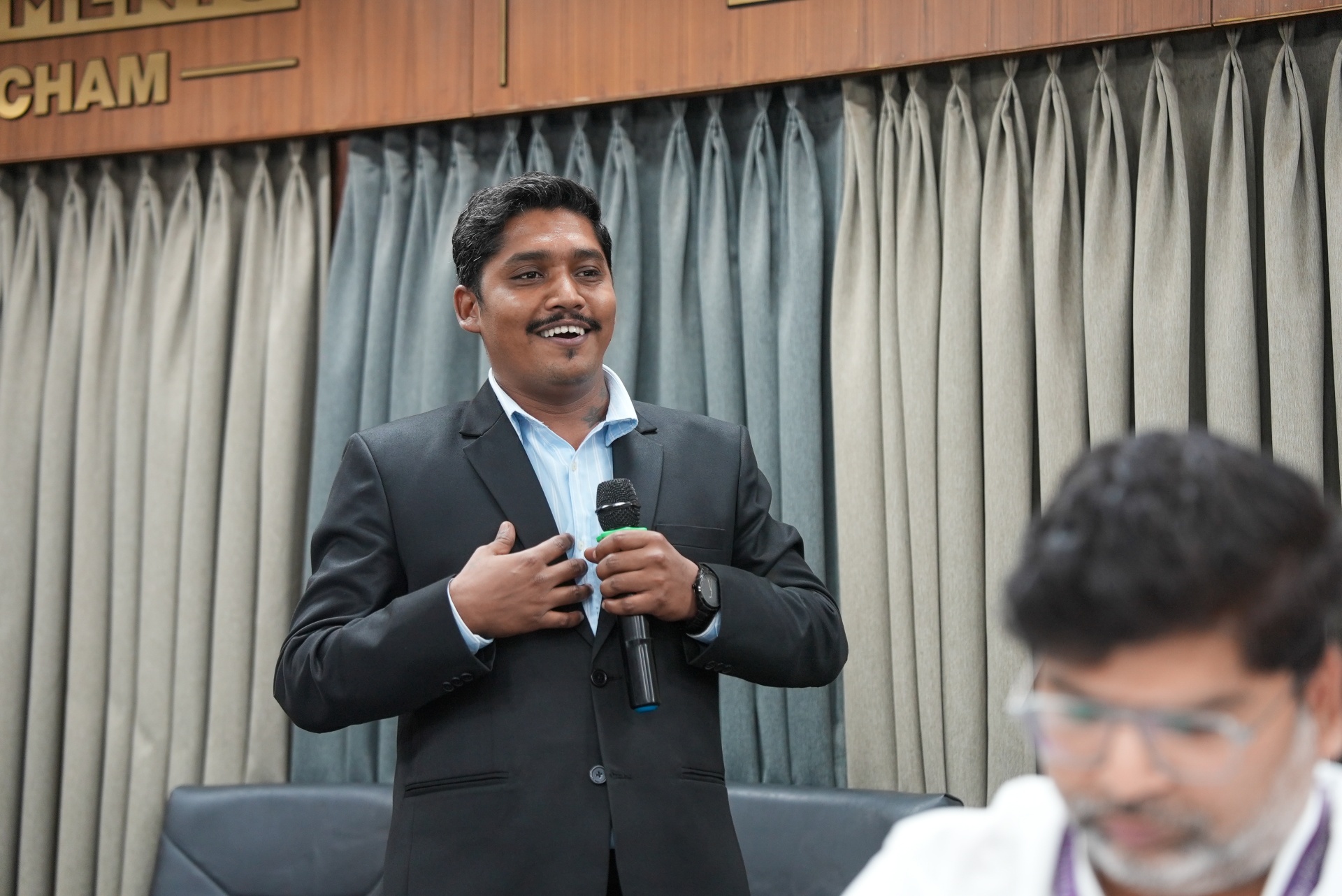
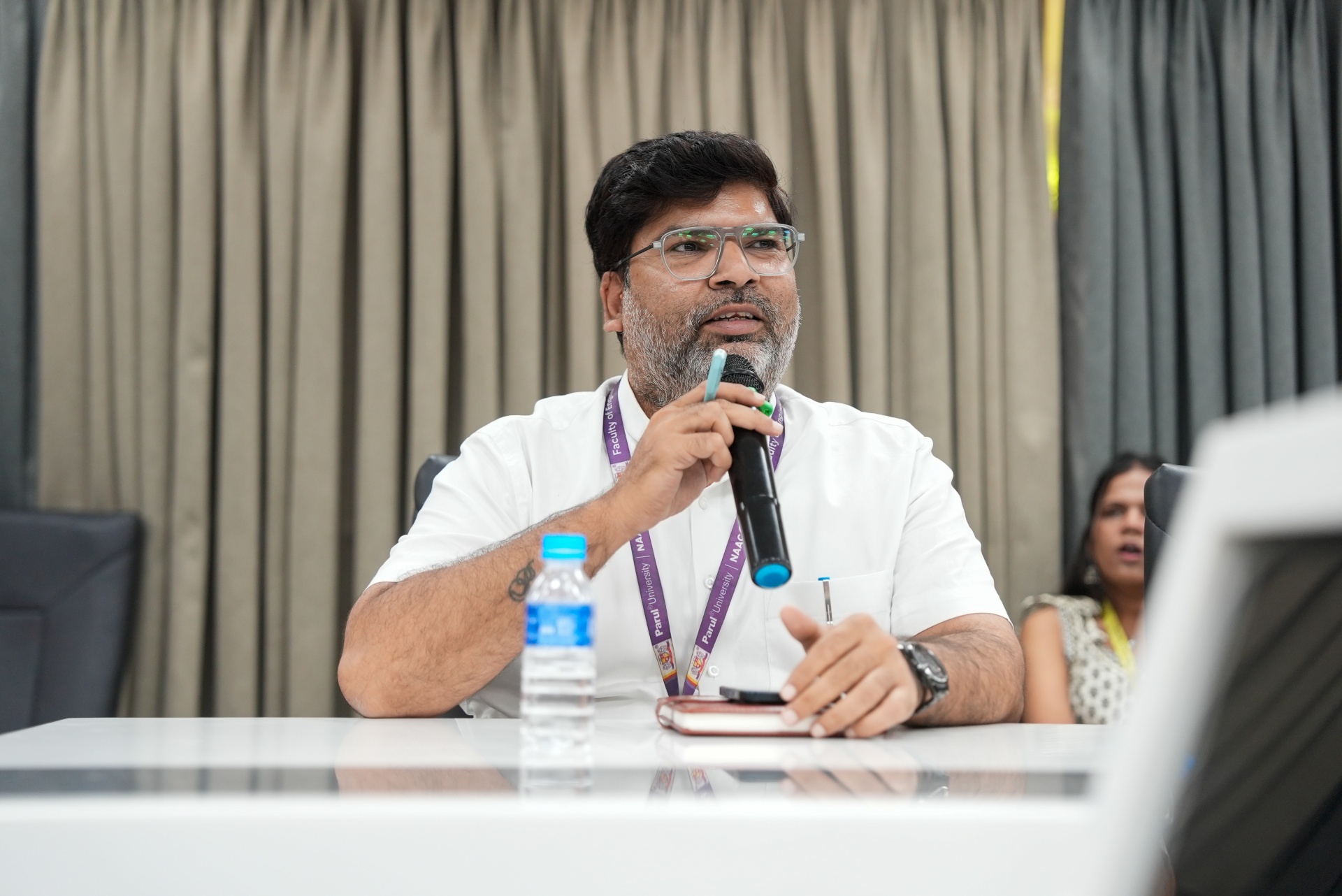
Most international exchanges place a student in one department aligned to their home discipline. This placement deliberately bridged two.
The decision to host a single exchange student across both public health and Ayurveda reflects a specific educational logic. Public health is a globally standardised discipline that a student from any country can engage with on common terms. Ayurveda is the opposite: a knowledge system rooted specifically in the Indian subcontinent, with its own diagnostic frameworks, pharmacology, and philosophy of health. Placing an international student at the intersection of the two offered something a single-department placement could not:
- Different health system experience: Placing the student in two systems helped them experience and observe the difference between modern public health and traditional Ayurvedic medicine and understand how the two systems address health at both the individual and public levels.
- Cultural knowledge: Ayurveda is deeply rooted in India and is approximately 5,000 years old. The placement helped the student gain cultural knowledge and understand how this tradition has influenced the health of people in India and beyond.
- Integrated medicine system: The growing global interest in combined approaches to healthcare makes exposure to both traditional and modern health systems valuable. The first-hand experience gained by international students provides meaningful insight into this evolving field.
- Cross-civilisational learning: For a student from Russia, engaging with a 5,000-year-old Indian medical tradition is the kind of deep cultural exchange that the programme’s intercultural-understanding agenda is designed to produce.
ITMO University: the home institution
ITMO University is in Russia and is a partner university of Parul University. ITMO University is known for technology, computer science, and applied sciences. The placement of a student from a technology-focused university into public health systems, including both Ayurveda and modern healthcare, demonstrates the broad scope of CIRR programmes.
Exchange students are not compelled to remain within a single field or mirror the exact department they belong to at their home university, which would limit their exposure. Instead, the exchange provides opportunities to explore different disciplines at the host university and broaden their perspectives. This becomes possible through the academic partnerships established between host and partner institutions such as ITMO University and Parul University.
Read More: From research to getting exposure to traditional medicine.
The seven-coordinator support structure
The dual placement required a support structure larger than any other in the 2026 cohort: seven named faculty coordinators across the two institutes.
The breadth of the coordinator team reflects the complexity of hosting a student across two distinct medical disciplines. On the public health side, the coordinating faculty included Dr. Damini Joshi, Dr. Saurabh Parmar, Dr. Pranav Kshtriya, Dr. Swati Gohel, and Dr. Khushbu Chauhan. On the Ayurveda side, the coordinating faculty included Dr. Dattatreya Bandopadhyay and Dr. Vaidehi Raole. The seven-member coordination team ensured that the student received structured guidance across both the modern public health curriculum and Ayurvedic medicine exposure, a level of institutional investment that a single international student rarely receives.
- Public Health coordinators: Dr. Damini Joshi, Dr. Saurabh Parmar, Dr. Pranav Kshtriya, Dr. Swati Gohel, and Dr. Khushbu Chauhan.
- Ayurveda coordinators: Dr. Dattatreya Bandopadhyay and Dr. Vaidehi Raole.
- Faculty leadership: Dr. Parth Sarthi Ganguly, Dean of the Parul Institute of Public Health, who framed the broader value of cross-cultural exchange at the Farewell Ceremony.
In compliance with the Heal in India initiative and AYUSH
The placement of an international student within Ayurveda is not an isolated academic arrangement. It sits at the centre of a national priority. The Government of India operates the Ministry of AYUSH, dedicated to the development, promotion, and global propagation of Ayurveda, Yoga, Unani, Siddha, and Homoeopathy. A core objective of the ministry is to position India’s traditional medical systems for international recognition and engagement. The Heal in India initiative extends this further, positioning India as a global destination for traditional, integrative, and value-based healthcare.
When an international student from Russia studies Ayurveda at an Indian institution, the exchange directly advances both objectives. It builds international familiarity with, and credibility for, India’s traditional medical knowledge in exactly the way these national initiatives intend.
The alignment operates across multiple government frameworks:
- Ministry of AYUSH: International student engagement with Ayurveda advances the ministry’s mandate to globalise India’s traditional medical systems.
- Heal in India: Building international academic familiarity with Ayurveda supports India’s positioning as a global traditional-healthcare destination.
- NEP 2020 internationalisation: The placement operationalises the policy’s mandate to bring international students into Indian higher education, including India’s indigenous knowledge systems.
- Study in India: Ayurveda is among the distinctive offerings that differentiate India as a study destination from any other country.
Ayurveda and health science ecosystem
The placement was possible because of the depth of Parul University’s medical and Ayurvedic infrastructure. The Parul Institute of Ayurveda operates within a broader health-sciences ecosystem that includes NABH-accredited hospitals spanning allopathy, Ayurveda, and homoeopathy, providing the clinical environment in which traditional medicine is practised alongside modern care. The integrative environment, in which modern public health and Ayurveda operate within the same institution, is precisely what enabled a single international student to engage with both. For a public-health-oriented exchange student, observing this integration first-hand is an educational experience that few institutions anywhere in the world can offer.
A student from a leading Russian technology university spent a term inside a 5,000-year-old Indian system of medicine. That sentence alone captures what international exchange at its most ambitious looks like. The exchange aligns with the Government of India’s AYUSH framework for traditional medicine and the Heal in India initiative. As reflected in his testimonial, he developed a deep connection with the country that he will remember for a long time. He was part of the 2026 cohort under CIRR’s inbound exchange program.
What the exchange means for future international students
The placement of the Russian student established a structured model that combines modern public health and traditional medicine, creating a pathway for future international students interested in healthcare, medicine, public health, wellness, and integrative therapies. The experience demonstrated how Parul University approaches Ayurveda not as a cultural attraction, but as a serious academic discipline delivered through a structured educational framework.
The programme was conducted under the guidance of faculty coordinators and aligned with national initiatives such as the Heal in India initiative and the Ministry of AYUSH. As global interest in traditional and integrative medicine continues to grow, the opportunity to study Ayurveda at its source, within a NABH-accredited integrative healthcare ecosystem, becomes an increasingly valuable component of an international medical or public-health education.
The broader programme context is documented through CIRR’s international exchange initiatives, while Iaroslav’s experience stands alongside those of students from five other countries as an example of how academic exchange can combine professional learning, cultural understanding, and interdisciplinary exposure within a single semester.
I am very much impressed on how India works in public health and education. Love this country and will remember it for a long time.
Mr. Iaroslav Baranov, ITMO University, Russia, on his dual Public Health and Ayurveda exchange at Parul University
FAQs
Can international students study Ayurveda at Parul University?
Yes. In the 2026 inbound exchange cohort, a student from ITMO University in Russia, Mr. Iaroslav Baranov, was hosted jointly across the Parul Institute of Public Health and the Parul Institute of Ayurveda, studying both modern public health and India's traditional system of medicine during his three-month term. The placement was supported by seven faculty coordinators across the two institutes. The Parul Institute of Ayurveda operates within a broader health-sciences ecosystem that includes NABH-accredited hospitals spanning allopathy, Ayurveda, and homoeopathy, providing a clinical environment in which traditional medicine is practised. International students with interests in healthcare, public health, wellness, or integrative medicine can engage with Ayurveda as a structured academic discipline through the Center for International Relations and Research.
Why did a Russian student study Ayurveda in India?
The Russian student came to Parul University under an exchange program. The student comes from ITMO University. Mr. Iaroslav Baranov joined the health sciences ecosystem. The ecosystem includes allopathy, Ayurveda, and homeopathy. This dual placement gave him comparative exposure to how modern public health science and the traditional Indian medical system work together. The reason for choosing was to understand how a 5000-year-old healthcare and medical system works. His term ended on a good note in India.
How does international Ayurveda exchange align with the AYUSH and Heal in India initiatives?
The international student exchange helped a Russian student to explore the combination of traditional and modern medicine systems in India. This was made possible by Parul University by placing him in public health and Ayurveda. The Ministry of AYUSH is actively developing and spreading awareness about Ayurveda, Yoga, Unani, Siddha, and Homeopathy. The aim is to make the traditional medical system of India recognised at a global level. The Heal in India initiative levelled up the country as a global destination for traditional, integrative, and value-based healthcare. When an international student visits under the exchange program who could study Ayurveda, this builds familiarity with and credibility for India's traditional medical knowledge in exactly the way these national initiatives intend.
What is the Parul Institute of Ayurveda?
It is a medical institution at the university operating as part of a health sciences ecosystem. The ecosystem includes NABH-accredited hospitals ranging from allopathy, Ayurveda, and homeopathy. The institute gives educational and clinical practice in India's traditional systems of medicine. In the 2026 cohort of the exchange program the Russian student got an opportunity to learn about traditional and modern medicine systems, both. The Parul Institute of Public Health, with Ayurveda-side coordination provided by Dr. Dattatreya Bandopadhyay and Dr. Vaidehi Raole. This enables international students to engage with traditional medicine within a clinically active healthcare setting.
Which faculty coordinated the Russian student's Ayurveda and public health exchange?
The combined course of public health and Ayurveda helped a Russian student from ITMO University gain knowledge of traditional and modern health systems. The student was supported by seven faculty coordinators. On the public health side, the coordinating faculty included Dr. Damini Joshi, Dr. Saurabh Parmar, Dr. Pranav Kshtriya, Dr. Swati Gohel, and Dr. Khushbu Chauhan. On the Ayurveda side, the coordinating faculty included Dr. Dattatreya Bandopadhyay and Dr. Vaidehi Raole. Dr. Parth Sarthi Ganguly, Dean of the Parul Institute of Public Health, provided faculty leadership and framed the broader value of cross-cultural exchange at the programme's Farewell Ceremony. The seven-member coordination team represented the largest support structure for any single student in the 2026 international cohort.
Can students combine public health and Ayurveda study at Parul University?
Yes, students can combine the two courses at Parul University, as done by the 2026 exchange student. A Russian student from ITMO joined Parul University under the exchange program and joined public health and Ayurveda combined. This is possible because both disciplines operate within the same university and within an ecosystem of NABH-accredited hospitals. Students interested in incorporated medicine, comparative health systems, or the combination of traditional and complementary medicine: this combined education is offered by a few institutes in the world. Potential candidates can contact the CIRR at Parul University.