Parul University research does not only happen in laboratories. Some of the most demanding work in modern science happens on supercomputers, where the properties of a material can be predicted before a single sample is ever made. Nisha Mahepal, a PhD research scholar at Parul University, works in exactly that field and was selected for two international training programmes at ICTP, one of the most respected institutions in theoretical physics.
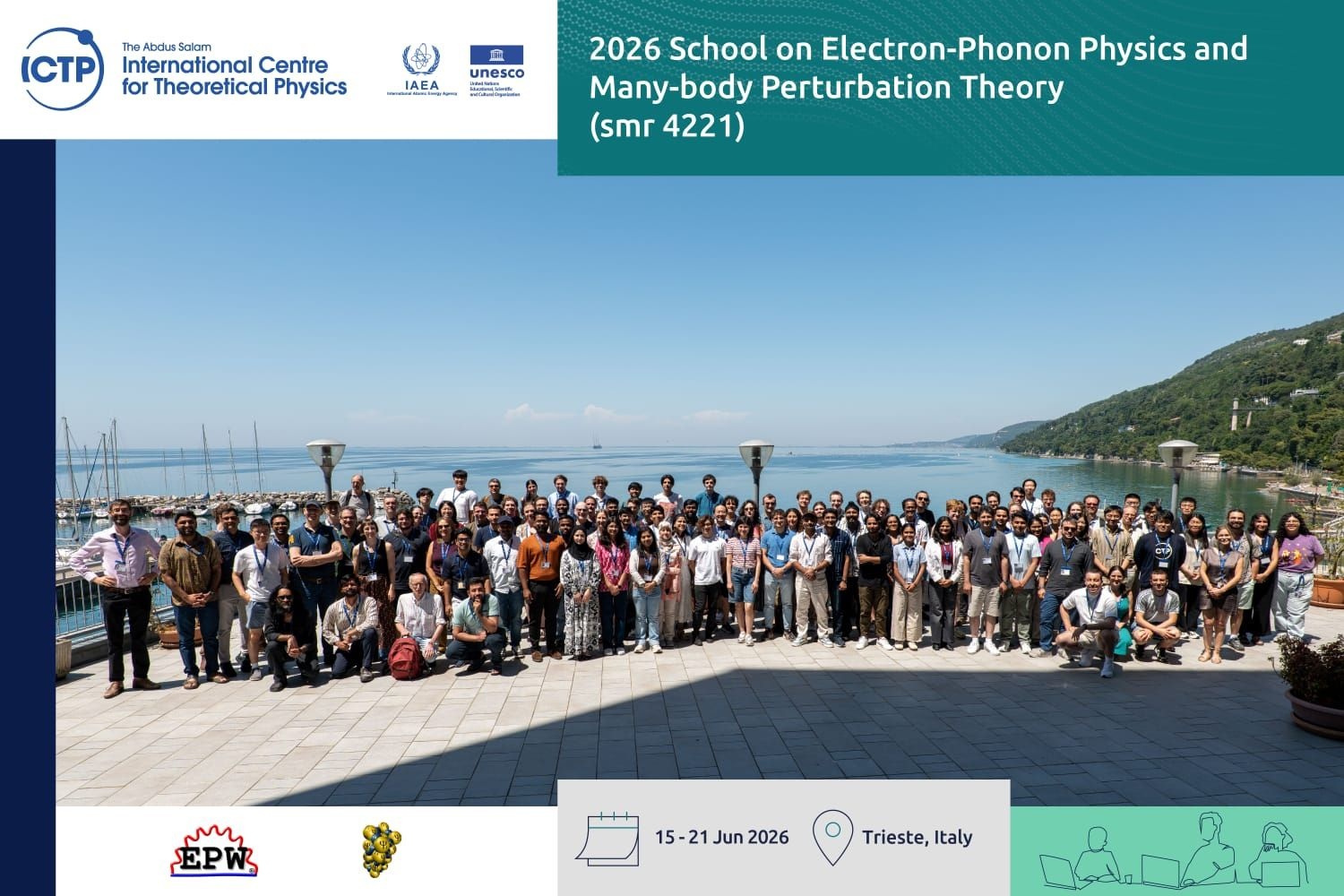
Dr. Trilok Akhani is the research supervisor of Nisha Mahepal. She travelled to Trieste in June 2026 to participate in programmes, showcase her research and to get real-time training from scientists. To get a thorough understanding of the significance of research and how it’s done, this is what she mastered at the university!
Nisha Mahepal’s Achievements & Milestones at ICTP
The achievement has three concrete parts, each verifiable on the certificates she received.
- Selected and participated: She was chosen for two programmes at ICTP, the Abdus Salam International Centre for Theoretical Physics in Trieste, both fully funded by the Centre.
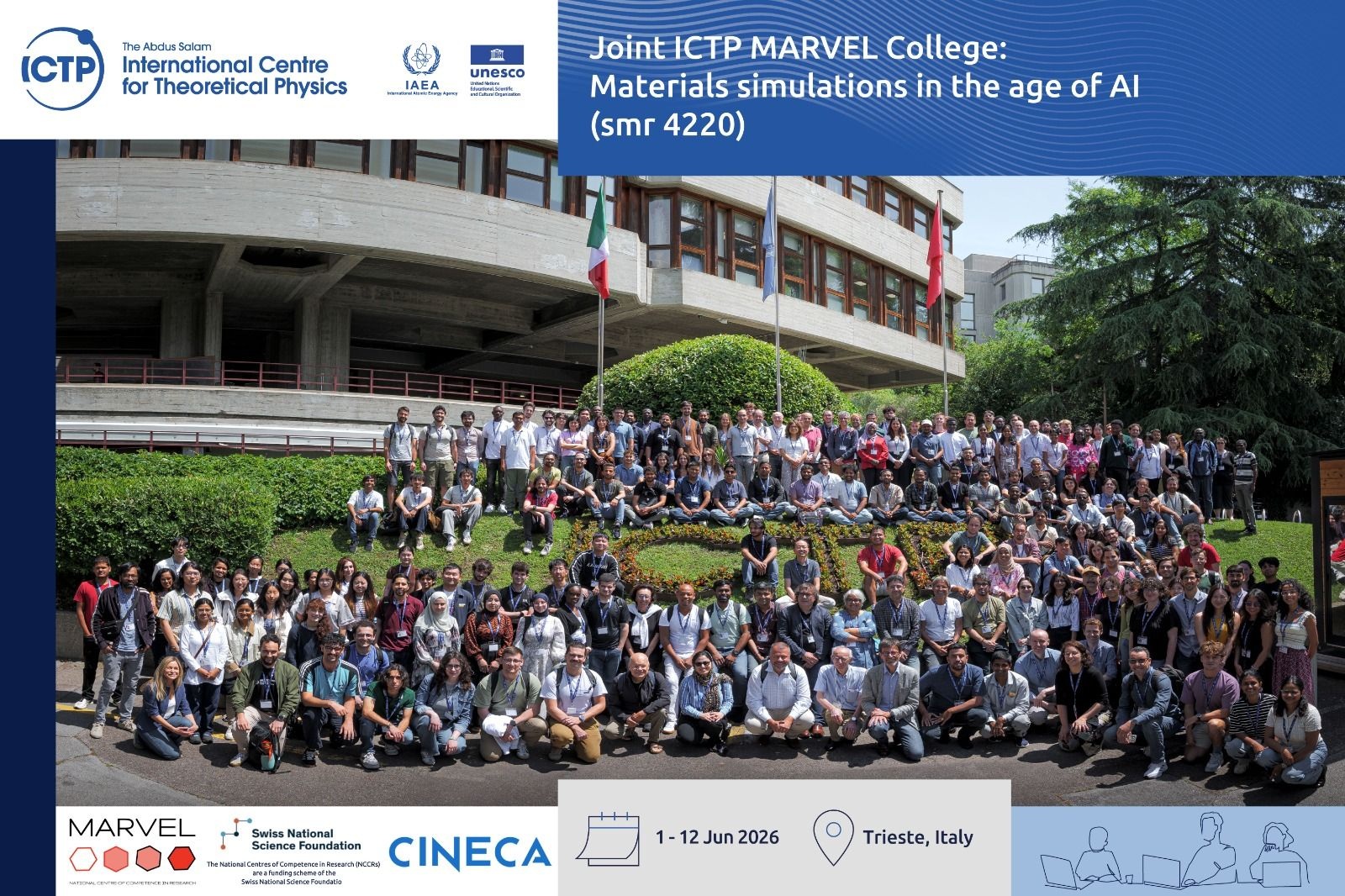
- Presented her research: She presented a research poster at the Joint ICTP–MARVEL College on Materials Simulations in the Age of AI, held from 1 to 12 June 2026.
- Completed advanced training: She completed the 2026 School on Electron–Phonon Physics and Many-body Perturbation Theory, held from 15 to 21 June 2026, and received certificates of participation and completion for both.
These are not open enrolments. ICTP selects participants rather than charging them; the international seats are limited, and the programmes are directed by leading computational physicists, including Nicola Marzari of EPFL and Feliciano Giustino of Oxford. For a PhD scholar from an Indian university, selection for both is a marker of work judged good enough to belong in that room.
“The material is predicted on a supercomputer before a single sample is ever made in a lab!”
What Is First-Principles Materials Research?
Nisha Mahepal’s work sits in a field called first-principles or density functional theory calculation. The idea is simpler than the name suggests.
Instead of making a material in a lab and then measuring what it does, which is slow and expensive, a researcher uses the laws of quantum mechanics to compute what the material should do, from the behaviour of its atoms and electrons upward. Given only the arrangement of atoms, the simulation predicts how the material holds together, how electricity moves through it, how it responds to light, pressure, and heat, and whether it is stable at all.
A useful analogy is crash-testing. Running a hundred crashes as accurate simulations does not replace the final physical test, but it tells engineers which few designs are worth building. Materials science works the same way, and the saving is large, because synthesising a single new compound in a laboratory is slow and costly. This is increasingly where advanced computing and artificial intelligence reshape how science is done, which is exactly what the Age of AI programme she attended was about.
The Research: Predicting a New Material Before It Is Made
Nisha’s doctoral research, carried out under Dr. Trilok Akhani’s supervision, applies this method to a newly explored material, strontium technetium nitride, written as SrTcN2. Because it is studied computationally, its behaviour can be mapped in detail without the cost of making it first. The calculations reported a consistent picture.
- Structural stability: The atoms hold together in a stable arrangement.
- Electronic behaviour: The material shows characteristics suited to semiconductor applications.
- Optical response: It interacts well with visible and ultraviolet light.
- Mechanical strength: It shows good elastic stability and mechanical robustness.
- Thermal stability: It stays stable across a wide range of temperatures.
Taken together, these predictions point to a material with potential in semiconductors, optoelectronics, photonics, and energy-efficient electronic components. None of this is a finished product. It is the early, rigorous groundwork that tells experimentalists which materials are worth the expense of making, which is exactly what computational materials science is for.
Why ICTP Selection Is Competitive, and What the Training Involved
The training took place at ICTP, the Abdus Salam International Centre for Theoretical Physics, a UNESCO Category 1 institute in Trieste founded in 1964 by the Nobel Laureate Abdus Salam. Part of its founding mission is to raise research capacity in developing countries, which is why its programmes draw applicants worldwide and why a place at one is a recognised marker for a researcher from an Indian university.
Selection weighs academic record, the research itself, the relevance of a scholar’s ongoing work, and a supervisor’s recommendation against a small number of international seats. Between the two programmes, the training covered the current frontier of the field.
- Advanced methods: Density functional theory, many-body perturbation theory using the GW approximation, and electron–phonon interactions.
- Optical physics: Excitonic effects and optical spectroscopy, directly relevant to how her material responds to light.
- AI and computing: AI-driven materials research, molecular dynamics, and high-performance scientific computing.
This feeds directly back into a live PhD: more accurate electronic-structure calculations, more reliable predictions of optical and transport properties, and a stronger footing for publication in high-impact international journals.
Parul University's Research Ecosystem
One scholar’s selection matters more when it sits inside a research base that can sustain it. Work of this kind needs serious computing and a serious research culture, and both exist here.
Parul University runs a state-sponsored Supercomputer Lab, the high-performance computing that first-principles work depends on, alongside a Micro Nano Research and Development Center approved by the Industries Commissionerate of Gujarat and a DSIR-recognised research and development centre. The wider effort is backed by more than 58 crore rupees in government-funded projects across over 300 studies.
The people match the infrastructure. Seven Parul University faculty appear in the Stanford-Elsevier list of the world’s top two per cent of scientists, across environmental science, pharmacy, and engineering. Nisha Mahepal’s ICTP selection in computational physics, achieved under Dr. Trilok Akhani’s guidance, is another strand of the same story: a university whose researchers are judged and funded at a global standard. That international engagement is what the university means by its own hashtag, #WeAreInternational, and it shows in concrete work like this rather than in slogans.
What This Signals for a Research Student
For a prospective PhD or postgraduate student weighing where to do research, an achievement like this is a more honest signal than a ranking. It shows that a scholar here can compete for, and win, a place at an international institution, that the university’s computing and funding can support frontier work, and that a supervisor’s recommendation carries weight abroad.
It also shows the shape of a modern research career: a live PhD strengthened by international training, a poster presented to global experts, and a pipeline toward high-impact publication, built on an Indian campus rather than only overseas. For a student who wants that path, the question that matters is whether the environment can support it, and Nisha Mahepal’s ICTP selection is evidence that it can.
Frequently Asked Questions
Who is Nisha Mahepal?
Nisha Mahepal is a PhD research scholar at Parul University, Vadodara, working in computational materials science under the supervision of Dr. Trilok Akhani. In June 2026, she was selected for two international programmes at ICTP in Trieste, Italy, where she presented a research poster and completed advanced training.
What did Nisha Mahepal present at ICTP?
She presented a research poster at the Joint ICTP–MARVEL College on Materials Simulations in the Age of AI, based on her doctoral work: a comprehensive first-principles investigation of the structural, electronic, optical, mechanical, and thermodynamic properties of the material SrTcN2.
What is first-principles or DFT materials research?
First-principles research, often called density functional theory, uses quantum mechanics to predict a material's properties by computer, from the behaviour of its atoms and electrons, rather than measuring them in a lab. It lets researchers understand and screen materials before the expense of making them, which accelerates materials discovery.
Was this a competitive award?
It was a competitive selection rather than a prize. Nisha Mahepal was selected for, presented research at, and completed two fully funded ICTP programmes, receiving certificates of participation and completion. At an institution of ICTP's standing, where seats are limited and selection is international, the selection itself is a significant achievement.
Does Parul University support international research?
Yes. Alongside this ICTP selection, Parul University backs research with more than 58 crore rupees in government funding across over 300 projects, runs a Supercomputer Lab and the Micro Nano Research and Development Center, and has seven faculty members in the Stanford-Elsevier list of the world's top two per cent of scientists.