Research culture is easy to claim and hard to demonstrate. One honest test is who a university can get into the room. On 27 June 2026, the Faculty of Commerce at Parul University convened an international conference on reimagining sustainable finance and business practices for inclusive growth, and the answer to that test was on display.
A Conference Built Around Inclusive Growth
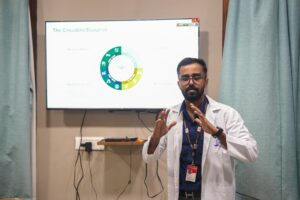
The conference ran in hybrid mode, with delegates present on campus in Vadodara and others joining online. That format matters for a research event: it widens who can take part, and it tests presenters under the same real conditions the working world runs on. When one presenter lost her internet connection mid-session, she reconnected, apologised, and finished. The composure was itself a lesson.
The theme was deliberately broad. Finance was the lens, but the questions underneath were social: how capital reaches the underserved, how transparency is enforced, and how policy shapes both.
The session discipline was part of the education. The chair held presenters to a strict three to five minutes and cut off overruns, a small cruelty that teaches a real professional skill: say the important thing first. At the close, the organisers marked the work with letters of appreciation and mementoes, a reminder that presenting original research before an expert panel takes nerve regardless of the finding.
The research itself was not lightweight. Papers drew on multi-year panel datasets, structural equation modelling, regression analysis, and established evaluation frameworks, the machinery of serious empirical work rather than opinion. The range, from corporate governance and carbon markets to rural banking and adolescent wellbeing, was unusually broad for a single faculty’s conference.
The Scholars in the Room
The credibility of an academic conference rests on who chairs and who presents. This one drew beyond Parul University’s own faculty.
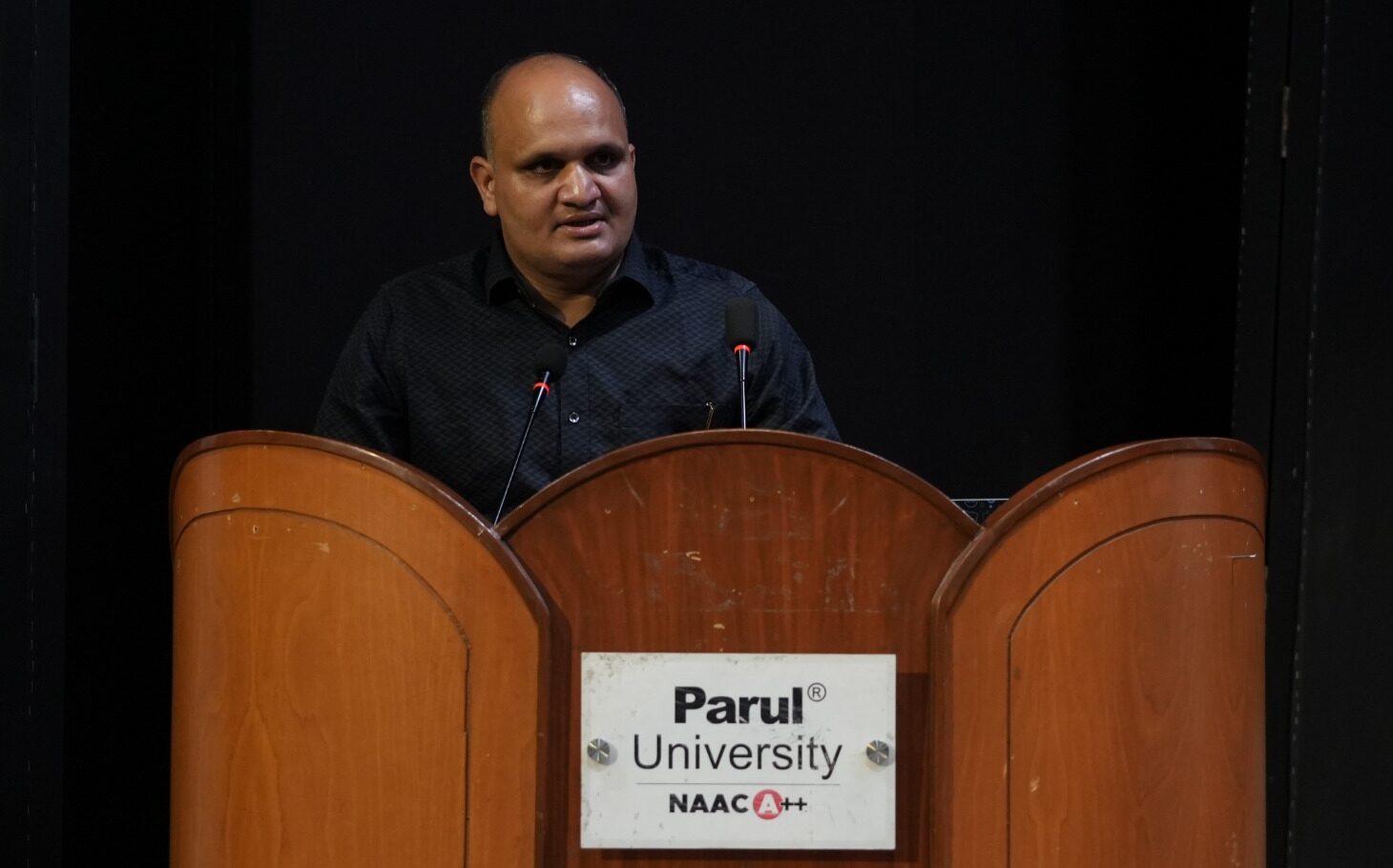
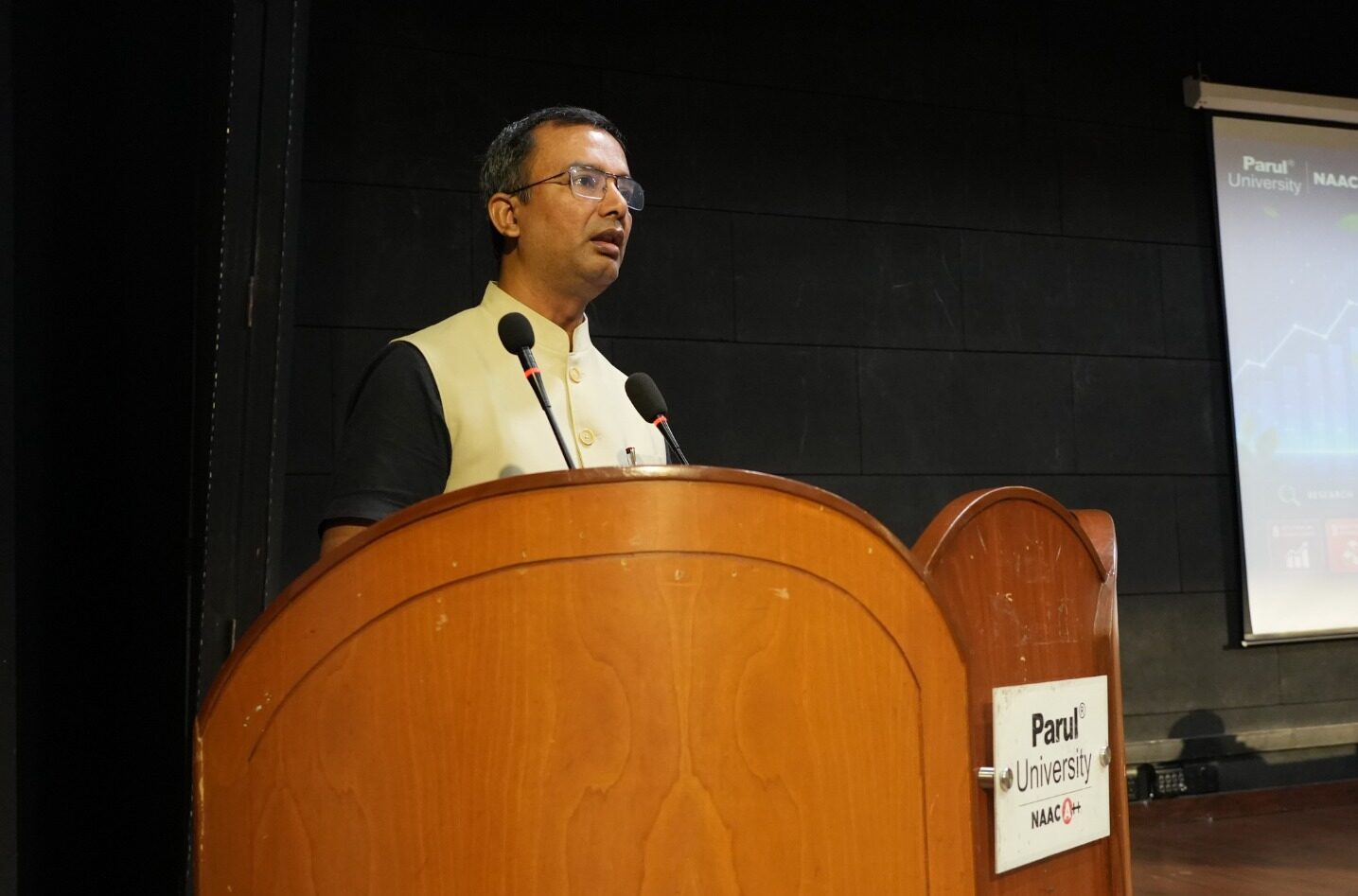
- Dr. Hamendra Kumar Dangi: Department of Commerce, Delhi School of Economics, University of Delhi, chaired the sustainable accounting and finance track.
- Nimesh Joshi: Professor at the School of Business, Auro University, Surat, chaired the policy, societal impact, and inclusion track.
- Presenting institutions: scholars came from Mohanlal Sukhadia University, St. Xavier’s College Kolkata, and others, alongside Parul University’s own researchers.
A conference that external institutions send scholars to and senior academics agree to chair, is doing something a brochure cannot fake.
The participants were not only professors. Research scholars, faculty, and postgraduate students presented alongside established academics, which is the point of a working conference: it puts a first-time presenter in the same room, under the same scrutiny, as a seasoned researcher.
Two Tracks, One Question: How Finance Serves Society
The research split into two tracks that answered the same question from different angles.
Sustainable accounting, auditing, taxation, and finance
This track carried the technical core: ESG disclosure and insurer performance, digital governance maturity, blockchain for carbon verification, the ripple effects of United States climate policy on Indian firms, and forensic accounting in banking. The substance of that research is synthesised in a companion article on sustainable finance and ESG in India.
Policy applications, societal impact, and inclusion
The second track turned to society directly: school choice and the state of government education, financial inclusion and gender gaps in rural banking, state-level sustainability governance, adolescent mental health, and international student mobility. It was research aimed at people, not just markets.
The Frameworks the Conference Produced
A conference earns its keep when it produces tools, not just talks. Two proposals from the finance track stood out.
- The DGTA framework: a Digital Governance, Transparency and Accountability model that lets a company measure how mature its digital governance actually is, rather than assert it.
- A Carbon Accounting Verification Authority: a proposed body to harmonise blockchain standards, evidence law, and carbon-market rules so net-zero claims can be independently verified.
Both target the same weakness in sustainability practice: the distance between a claim and a proof. Alongside them, applied studies offered working methods, from the CAMEL framework used to rank the financial health of housing-finance companies to forensic-accounting techniques for detecting banking fraud that ordinary audits miss.
Research That Looked Beyond the Balance Sheet
A few presentations show the range better than a summary can.
- School choice: a study on why Indian parents move children from government to private schools argued the fix is quality, not closure.
“Government schools should be schools which parents prefer because of quality, not lack of options.” – Ms. Riya, presenter
- Adolescent mental health: a school-based intervention study found that teaching students about mental health measurably improved how they managed it, and argued it belongs in the curriculum alongside maths and science.
- Student mobility: a study on why Indian students study abroad framed a challenge examined in a dedicated companion article below.
- Financial inclusion: a field study in rural Himachal Pradesh found banking schemes serve men and women unequally in housing and employment-guarantee programmes, even where basic accounts reach parity.
- Green governance: a comparison of state environmental spending found coordination between departments, not funding, to be the binding constraint.
- Banking integrity: a study argued forensic accounting is now essential because traditional audits miss modern fraud, cybercrime, and statement manipulation.
The students chose topics about people: poor farmers, anxious teenagers, families making hard choices.
What a Hybrid Format Taught the Presenters
A hybrid conference tests more than research. It tests composure, because the technology fails in front of everyone.
One presenter lost her internet connection mid-talk, fixed it, rejoined, apologised, and finished, supported by a co-presenter who happened to be her closest friend. Another took time to share his screen and was invited to keep speaking from a backup copy rather than freeze. Of the twenty-five researchers listed in one track, fifteen presented. None of that is incidental. Handling a live failure without losing the thread is exactly the skill a professional career demands, and a hybrid seminar hall rehearses it better than any classroom.
What the Conference Says About Research at Parul University
The convening power reflects a wider base than one event. Seven Parul University faculty appear in the Stanford-Elsevier list of the world’s top two percent of scientists, across environmental science, pharmacy, and engineering, and the university runs dedicated research centres backed by both public and private funding.
- 315 funded projects supported by more than 58 crore rupees in government grants and over 4 crore rupees in private funding.
- Seven top-2% scientists recognised in the Stanford-Elsevier global rankings.
Convening power reflects a wider research base. Parul University backs research with more than 58 crore rupees in government-funded projects across more than 300 funded studies, and is accredited NAAC A++ with a CGPA of 3.55. Events like this are where that infrastructure becomes visible: not as a statistic, but as scholars arguing over evidence in a seminar hall. The deeper dive into the finance research is in the sustainable finance and ESG companion article, and the study-abroad findings are in a dedicated article on Indian student mobility.
Why Research Culture Matters to a Student
For a prospective student, a conference like this is not a line item. It is a preview of the environment. A campus that convenes original research, invites external scrutiny, and holds its own students to the same three-minute discipline is a campus where learning is treated as a live activity rather than a delivered product. That environment is the real advantage a research-active university offers, and it is visible only in events like this one. A student who studies where evidence is argued over, rather than only recited, absorbs the habit of asking for proof, and that habit outlasts any single course.
Frequently Asked Questions
What was the Parul University sustainable finance conference about?
It was an international conference on reimagining sustainable finance and business practices for inclusive growth, hosted by the Faculty of Commerce at Parul University on 27 June 2026. It covered ESG, green finance, governance, and social inclusion across two research tracks in hybrid mode.
Who chaired the Parul University commerce conference?
The finance track was chaired by Prof. Dr. Hamendra Kumar Dangi of the Delhi School of Economics, University of Delhi, and the policy and inclusion track by Dr. Nimesh Joshi of Auro University, Surat. Scholars from several institutions presented alongside Parul University researchers.
Does Parul University support research?
Yes. Parul University backs research with more than 58 crore rupees in government-funded projects across more than 300 funded studies, is accredited NAAC A++ with a 3.55 CGPA, and convenes conferences that draw external scholars and chairs, as this event did.