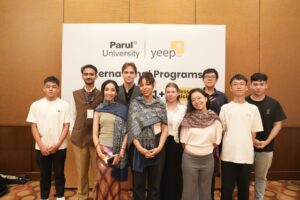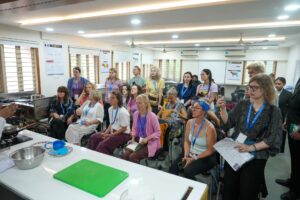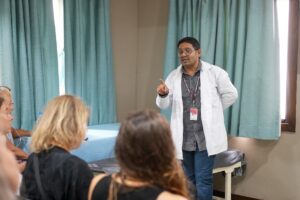
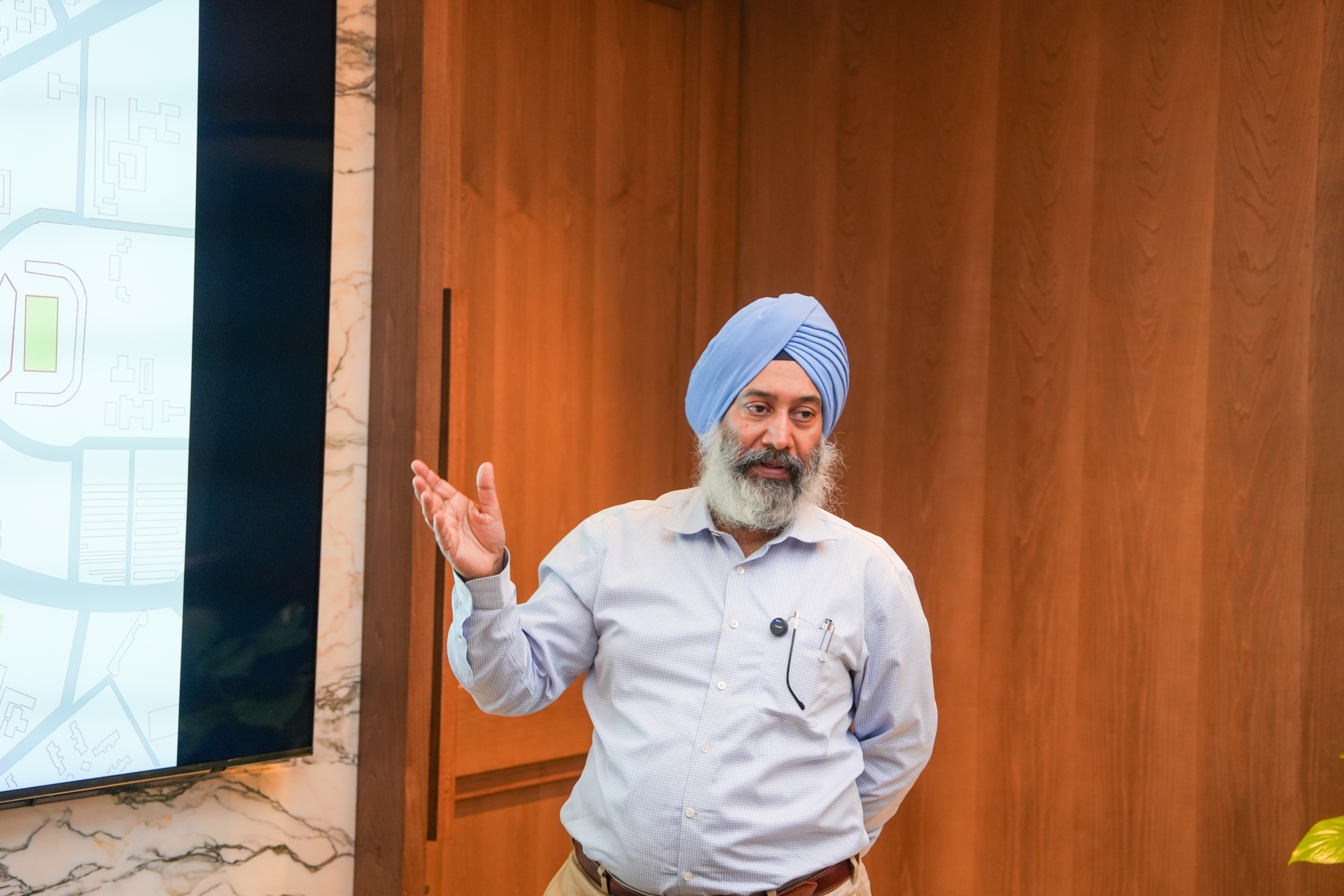
Between 24 March and 27 March 2026, students of Parul Institute of Architecture travelled to Delhi for a structured four-day architecture tour. The cohort included students across the first, second, and third years of the B.Arch programme at Parul University, all of whom had entered the programme after qualifying the National Aptitude Test in Architecture (NATA). The tour was designed to take students out of the studio and into eleven working environments where Indian architecture is actually being designed, governed, and built.
The eleven venues spanned the full operational spectrum of the architecture profession in India. Three private architecture practices, one government statutory body for urban aesthetics, one regulatory body for the profession, one municipal corporation, one heritage trust, one infrastructure construction major, one urban-conservation firm, and the country’s apex architecture education institution. The speakers ranged from the founder of a major design firm to a sitting government adviser to the principal director of a heritage organisation.
Eleven sessions across four days is a high-density schedule. Eleven speakers from eleven institutions, each working at a different layer of the architecture profession, is a different kind of education from what a classroom can offer. The students returned to Vadodara not only with notes but with a working map of where the architecture profession actually operates in India and what kinds of careers it opens.
The eleven speakers, in brief
The full speaker list, with their roles and venues, runs as follows.
- Mr Gurmeet Singh Chauhan, Founder, Design Forum International (DFI): the morning session on sketching, environmental psychology, the master plan of New Delhi, voids and shadows, and innovation without disruption. Covered in detail in the dedicated deep-dive article.
- Rajesh Satish, Managing Head, Center of Science and Excellence (CSE): an afternoon session on sustainable architecture, passive design, the American Embassy case study, why architects must learn mechanical engineering, and the Tajara campus. Covered in the dedicated deep-dive article.
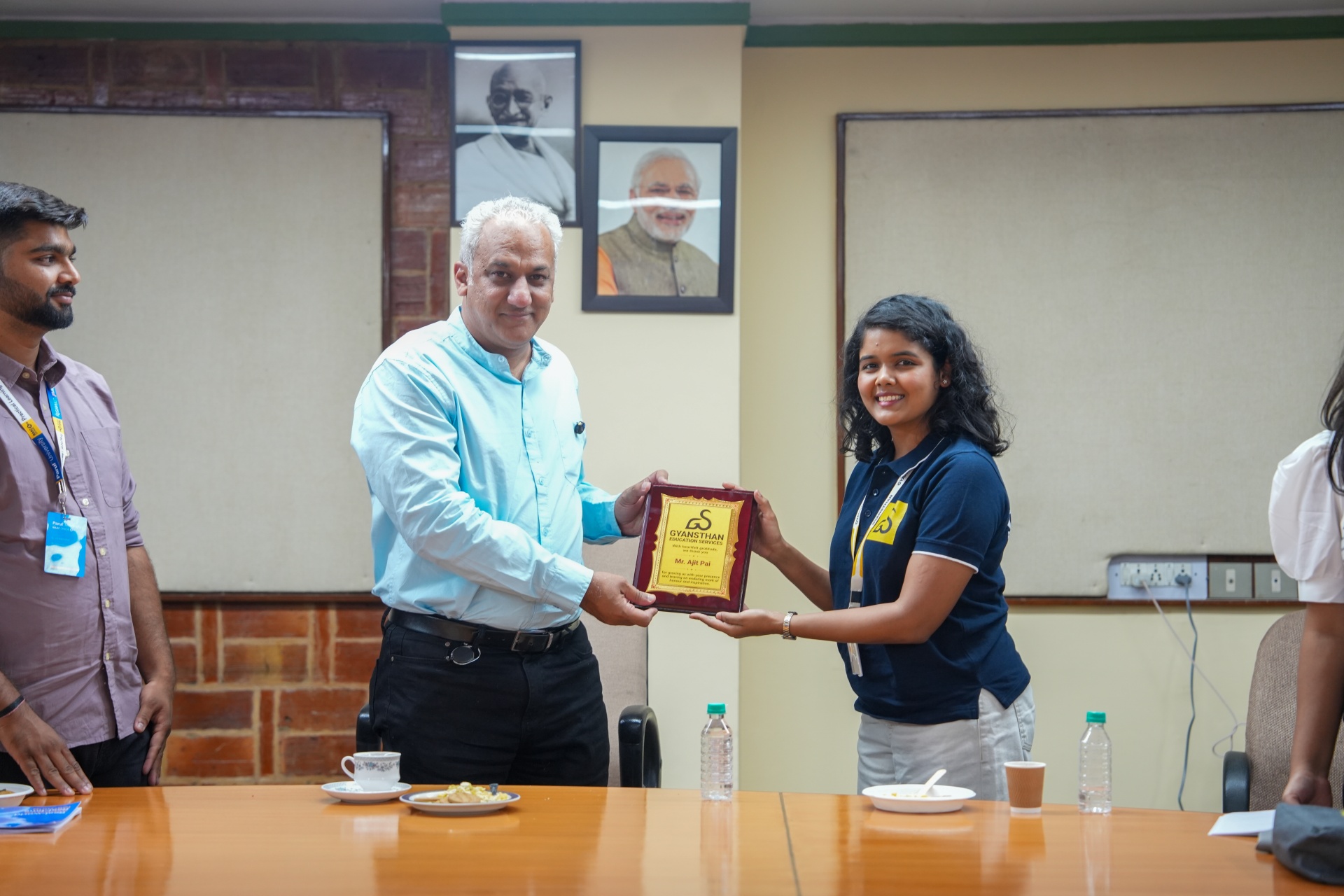
- Ajit Pai, Chairman, Delhi Urban Art Commission (DUAC): a session on aesthetics as cultural framework, AI in architecture, urban density as the solution rather than the problem, and the political economy of Indian cities.
- Deepak Kumar, Administrative Officer, Council of Architecture (COA): the institutional view of how architecture is regulated in India, what the Chartered Architect framework means, and how the profession’s curriculum, publication, training, and arbitration mechanisms work.
- Amita Goel, Associate Principal and Head of Communications, Studio Lotus: 300+ projects, zero design repetition, including the RAAS Chhatrasagar restoration, Royal Enfield flagship stores, the Dharavi project, and the EICMA Haly exhibition in Italy.
- Ashok Singh, Head of Architecture Department, New Delhi Municipal Corporation (NDMC): the public-sector view from one of India’s best-managed urban zones, including the Lutyens’ Bungalow Zone, public space improvement, and the practical realities of architecture in heavily regulated heritage areas.
- Madhav Raman, Co-Founder and Principal Architect, Anagram Architects: climate-culture intersection, NASA scientific visualisation collaborations, the Gurgaon farmhouse, anthropometry, and 12 designs across 120 sites.
- Shivi and Ms. Pooja, Principal Architects and Project Managers, Morphogenesis: how large architecture firms operate at scale, sustainable architecture across warm, hot, dry, and humid Indian climates, the software stack large firms use, and the Morphogenesis SOUL design framework.
- Vijaya Amujure, Principal Director, INTACH (Indian Trust for Art and Cultural Heritage): thirty years of heritage restoration, materials analysis across historical timelines, the politics of choosing what to restore, and water-bank heritage.
- Ravikanth Shukla, Project Manager, AFCONS Infrastructure: the engineering side of Delhi Metro alignment construction, Chenab Bridge construction techniques, large-span structures, and Mechanical Electrical Plumbing (MEP) integration with structural architecture.
- Virendra Paul, Director, School of Planning and Architecture (SPA) Delhi: the academic anchor of the tour, covering how architecture takes shape across different Indian regions, RIBA framework, NASA and NOSPLAN as student bodies, and how SPA Delhi educates the next generation.
Four days of sessions
Day one and day two of the tour anchored at the more conceptual end of the profession. Mr Gurmeet Singh Chauhan’s morning session at Design Forum International ran long, with the students openly engaging on questions of mosaic architecture, symmetry, and tile work in heritage Delhi. Ar. Rajesh Satish followed at the Center of Science and Excellence with the afternoon session on sustainable architecture, building from his initial career as an urban planner and his work on the American Embassy resource-conservation project from 2009.
Day three moved into the government and regulatory layer of the profession. The Delhi Urban Art Commission session with Dr Ajit Pai was the most policy-dense of the four days, covering the failure of the 73rd and 74th Constitutional Amendments to devolve power to urban local bodies, the political economy of Delhi versus Gurgaon and Noida, and the role of AI as both a productivity tool and a risk to intellectual depth. The Council of Architecture session with Mr Deepak Kumar provided the institutional view of how the profession itself is regulated.
Day four anchored at the private-practice and infrastructure end. Studio Lotus, Morphogenesis, and Anagram Architects gave students three different windows into how major Indian architecture firms operate. INTACH and AFCONS bracketed the heritage-conservation and large-scale-construction extremes of the profession. The tour closed with the School of Planning and Architecture, Delhi, providing the educational frame that the next generation of architects, planners, and urban designers comes through.
Themes that ran across all eleven sessions
Four themes emerged across speakers who did not coordinate their content with each other.
- Sketching, observation, and refusal to outsource the eye to a camera: Gurmeet Singh Chauhan’s instruction to put the camera down and sketch was echoed by Ar. Rajesh Satish’s instruction to sit on an empty site before drawing a single line. Both warned students that contemporary architectural education risks producing graduates who can render but not see.
- Sustainability is not a style; it is a practice: Rajesh Satish, Ms Amita Goel at Studio Lotus, the Morphogenesis principals, and Mr Madhav Raman at Anagram Architects all warned against treating sustainable architecture as an aesthetic. The integration of mechanical, electrical, and plumbing systems with passive design and local materials is the substantive form. Glass-box buildings with potted plants outside were specifically called out as cosmetic non-solutions.
- Heritage is not nostalgia; it is technical knowledge: Gurmeet Singh Chauhan’s story of the road that bent around Kroll Manzil rather than demolishing Sher Shah Suri’s 500-year-old monument was paralleled by INTACH‘s institutional commitment to heritage restoration as a professional discipline requiring materials analysis across historical timelines.
- Indian architecture has to be Indian: Rajesh Satish told students to add a corner of Indian adobe brick to even the most modern glass office, because people will gravitate to it. Dr. Ajit Pai warned against archaic preservation that prevents the densification cities need. The tension between these two positions is itself the working condition of contemporary Indian architecture.
Deep-dive articles in this series
Three full deep-dive articles are available on individual speakers. The session with Mr. Gurmeet Singh Chauhan at Design Forum International covers sketching, environmental psychology, the master plan of New Delhi with the Kroll Manzil road, voids and shadows, perspective and human vision, climatology, and Mr. Chauhan’s principle that innovation does not require disruption.
The session with Ar. Rajesh Satish on sustainable architecture covers passive architecture, the American Embassy resource-conservation case study, why architects must learn mechanical engineering, the Tajara campus as a working green building, the Ungoogleable advice to sit on empty land before designing, and the warning against cookie-cutter corporate design.
The session with Dr. Ajit Pai at the Delhi Urban Art Commission covers aesthetics as a cultural framework, the politics of Indian urban governance, density versus sprawl, the role of AI as both a productivity tool and a risk to intellectual depth, and Dr Pai’s challenge to the next generation of architects to question established norms.
Additional articles cover the private architecture firms session with Studio Lotus, Morphogenesis, and Anagram Architects, the government and regulatory bodies session with the Council of Architecture, NDMC, and SPA Delhi, and the heritage and infrastructure session with INTACH and AFCONS. This article maps each session at the tour to the relevant programmes at Parul Institute of Architecture.
What students of Parul Institute of Architecture take back
Tours of this kind are an investment institutions make in the difference between graduates who have seen one studio for five years and graduates who have spent four days inside eleven working environments. A student who has stood inside the Council of Architecture and the New Delhi Municipal Corporation, who has met the chairman of the body that regulates the visual quality of every public building in Delhi, who has watched a heritage trust principal director walk through the materials analysis of a thirty-year restoration project, and who has heard three of India’s leading architecture firms describe their actual operations, is not the same student who left Vadodara.
The B.Arch programme at Parul University anchors at a NAAC A++ accredited institution at a 3.55 CGPA, documented in the Foundation Day of Dr Parul Patel and the university’s accreditation history. The Master of Design in Interior Design & Master of Planning extend the pathway into specialisation. The Bachelor of Architecture and the Bachelor of Design – Building and Infrastructure complete the architecture and design programme portfolio.
FAQs
Which speakers did Parul Institute of Architecture students meet at the Delhi tour in 2026?
Parul Institute of Architecture students met eleven speakers across the Delhi tour from 24 to 27 March 2026: Mr Gurmeet Singh Chauhan (Founder, Design Forum International), Ar. Rajesh Satish (Managing Head, Center of Science and Excellence), Dr. Ajit Pai (Chairman, Delhi Urban Art Commission), Mr. Deepak Kumar (Administrative Officer, Council of Architecture), Ms. Amita Goel (Associate Principal, Studio Lotus), Mr. Ashok Singh (Head of Architecture Department, NDMC), Mr. Madhav Raman (Co-Founder, Anagram Architects), Ms. Shivi and Ms. Pooja (Principal Architects, Morphogenesis), Ms. Vijaya Amujure (Principal Director, INTACH), Dr. Ravikanth Shukla (Project Manager, AFCONS Infrastructure), and Dr. Virendra Paul (Director, School of Planning and Architecture Delhi).
What did Parul University students learn at the Delhi Architecture Tour?
Parul University B.Arch students at the Delhi Architecture Tour learned across themes including sketching as a discipline of observation, environmental psychology and human-centred design, the master plan of New Delhi and its heritage protections, sustainable and passive architecture, the integration of mechanical engineering with architectural design, urban governance and the role of statutory bodies, heritage restoration as a technical discipline, large-span infrastructure construction including metro alignment and the Chenab Bridge, and the regulatory framework of the Council of Architecture in India.
Which institutions did Parul Institute of Architecture students visit in Delhi?
Parul Institute of Architecture students visited eleven institutions across Delhi from 24 to 27 March 2026: Design Forum International (DFI), the Center of Science and Excellence (CSE), the Delhi Urban Art Commission (DUAC), the Council of Architecture (COA), Studio Lotus, the New Delhi Municipal Corporation (NDMC), Anagram Architects, Morphogenesis, the Indian Trust for Art and Cultural Heritage (INTACH), AFCONS Infrastructure, and the School of Planning and Architecture (SPA) Delhi.
Does Parul University offer a B.Arch programme?
Yes. Parul Institute of Architecture at Parul University, Vadodara, offers a five-year Bachelor of Architecture (B.Arch) programme approved by the Council of Architecture, India. Admission is through the National Aptitude Test in Architecture (NATA). The institute also offers a Master of Architecture, a Master of Architecture in Urban Design, a Bachelor of Planning, and a Bachelor of Interior Design. Parul University holds NAAC A++ accreditation at a 3.55 CGPA and is a Category 1 University with Grant of Graded Autonomy.
How long was the Parul University Delhi Architecture Tour?
The Parul University Architecture Tour to Delhi ran for four days, from 24 March to 27 March 2026. Students of the Parul Institute of Architecture across the first, second, and third years of the B.Arch programme participated, with eleven sessions held across eleven institutions and venues over the four days.