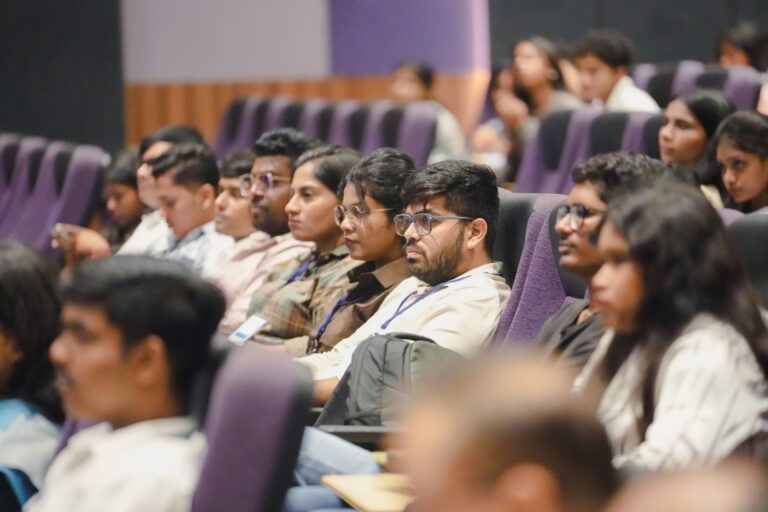
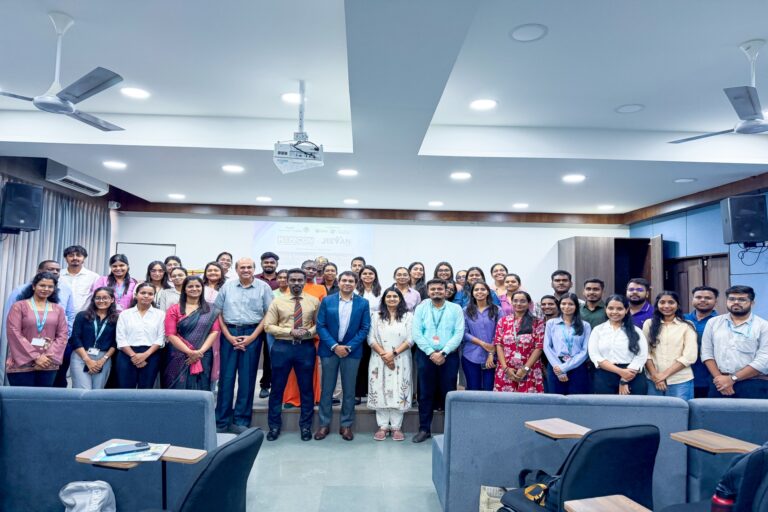
When starting a venture today, it will rarely stay within one culture for long. As the horizon increases, the team expands, the customer range grows, and maybe the number of partners and investors also increases, who are from different continents. Hence, someone planning to start a business should know how to work in multicultural teams; this is a core entrepreneurial skill. The Young Entrepreneur Exchange Program (YEEP) 2026 at Parul University attempts to prepare students for cross-cultural team building. Students from India and Switzerland were deliberately mixed into teams to make them work in teams together. Their experience and learnings are a guide to how cross-cultural collaborations take place.
Entrepreneurs Shall Have a Global Mindset: Why It Matters
For founders and entrepreneurs, they must have a curious mind. And when they global mindset, they try to understand other cultures; their ability to adapt and expand globally also remains in scope. It broadens the scope; it opens access to international markets, partners, and talent. Once you start to consider global business scopes, it improves your problem-solving abilities, because you get more than one perspective and combining them can help you avoid high costs caused by misreading. This can sink cross-border ventures. In a world where a startup in Vadodara might sell to customers in Zurich, the founders who can think and work globally have a decisive edge.
Start by Building Human Connection
To build a team with multicultural personnel, teams begin with trust and not with tasks directly. Trust should be built to have a smooth workflow. At YEEP, students learn through ice-breaking sessions before working on startups and related ideas. YEEP focuses on cross-cultural teambuilding skills through cultural exchange, sharing food, music, language and stories, and this goes without saying that collaboration requires a foundation of trust, mutual respect and comfort. It takes time, space and courage to work openly with people of other cultures, and building trust is also tough, but once attained at the initial stage, it helps you avoid personal disagreements, as these differences in views are taken as a productive part of the business.
Skills That Make Multicultural Teams Work
- Cultural awareness: understand that teammates carry different defaults around time, hierarchy, and communication, and do not mistake difference for deficiency.
- Adaptable communication: flex between direct and indirect styles depending on who you are working with, and confirm understanding rather than assuming it.
- Active listening and patience: give space for different working rhythms and ways of expressing ideas.
- Shared goals over individual ego: align the team around a common outcome, which bridges cultural differences faster than any rule.
- Curiosity: treat cultural difference as a source of better ideas, not an obstacle to manage.
Diversity as a Competitive Advantage
Handled well, a multicultural team is not harder, it is better. Different cultural perspectives surface assumptions a homogeneous team would miss, generate a wider range of solutions, and build products that work for more kinds of people. The India-Switzerland teams at YEEP combined Indian adaptability and market intuition with Swiss structure and precision, a pairing that made their ventures stronger than either group would have built alone. That is the real promise of diversity: not merely fairness, but capability.
How Parul University Builds Global Entrepreneurs
Few campuses offer this at scale. With students from more than 75 countries, a Centre for International Relations and Research (CIRR), partnerships such as the one with Bern University of Applied Sciences, and programmes like YEEP, Parul University immerses students in genuine cross-cultural collaboration. Combined with PIERC’s startup ecosystem, 300-plus ventures, Rs 60 crore-plus in revenue, this produces founders who are not only technically capable but globally fluent. Explore it through international programmes and management studies.
Also Read: Business Communication For Cross-Cultural Ventures: High Context & Low Context